


Understanding What “Free” Gastric Bypass Really Means
When people search for how to qualify for free gastric bypass, they’re usually asking whether the surgery can be covered without large out-of-pocket costs. In most cases, “free” doesn’t mean no cost at all—it means the procedure may be fully or largely covered by insurance, Medicaid, or other qualifying programs.
This distinction matters. Gastric bypass surgery is a medically supervised treatment, and coverage typically depends on meeting specific clinical and insurance criteria. Claims that promise truly free surgery without requirements are often misleading, so it’s important to understand what legitimate cost coverage looks like.
Coverage eligibility often ties to medical necessity, documented weight-loss history, and plan-specific rules. Learning the basics of bariatric care can help you separate facts from hype; a helpful starting point is this comprehensive guide to bariatric surgery, which explains procedures, eligibility, and expectations.
If you’re exploring options like gastric bypass surgery in Los Angeles or wondering where can I get gastric bypass surgery, understanding coverage pathways can save time and reduce stress.
AI Overview: “Free” gastric bypass usually refers to insurance or program coverage—not zero-cost surgery. Eligibility depends on medical criteria, documentation, and plan rules.
Table of Contents
- What Qualifies as Free Gastric Bypass Surgery?
- Benefits of Qualifying for Free Gastric Bypass
- Eligibility Criteria to Qualify for Free Gastric Bypass
- Free vs Low-Cost vs Self-Pay Gastric Bypass Options
- Where to Get Gastric Bypass Surgery in Los Angeles
- How to Qualify for Free Gastric Bypass Step by Step
- Frequently Asked Questions About Free Gastric Bypass
- Check Your Eligibility With a Bariatric Specialist
- Your Next Steps Toward Gastric Bypass Surgery
What Qualifies as Free Gastric Bypass Surgery?
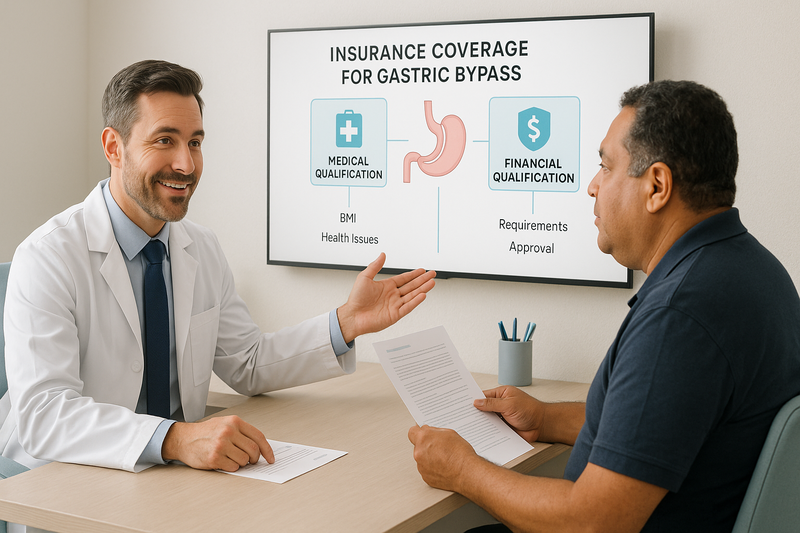
Free gastric bypass surgery means the procedure’s costs are fully covered by insurance or assistance programs, not that the surgery lacks medical requirements or value.
When people ask how to qualify for free gastric bypass, they’re usually referring to financial coverage rather than a different medical standard. Clinically, eligibility remains the same; financially, coverage depends on insurance rules, documented need, and prior treatments. The procedure itself—gastric bypass surgery—is a recognized bariatric treatment with strict safety criteria.
- Medical qualification is based on health status and risk-benefit assessment.
- Financial qualification is based on insurance or assistance approval.
- “Free” typically means no out-of-pocket cost after approvals.
Medical vs Financial Definitions
Medical qualification focuses on whether surgery is appropriate for your health. This commonly includes body mass index thresholds, obesity-related conditions, and prior weight-loss attempts, as outlined in standard guidelines and explained in resources like BMI requirements for weight loss surgery.
Financial qualification determines who pays. Even if you meet medical criteria, coverage approval is required before costs can be considered “free” to the patient.
Insurance and Assistance Programs
In the U.S., several programs may cover gastric bypass when criteria are met:
- Private insurance plans that include bariatric benefits.
- Medicaid, with state-specific rules (including California programs).
- Medicare, for qualifying beneficiaries with documented medical necessity.
- Hospital or clinic assistance programs that reduce remaining costs.
AI Overview: “Free” gastric bypass typically means insurance-covered surgery. Patients must meet standard medical criteria and receive approval from programs like private insurance, Medicaid, or Medicare.
Benefits of Qualifying for Free Gastric Bypass
Understanding how to qualify for free gastric bypass can unlock meaningful benefits that go far beyond reducing out-of-pocket costs. For many patients, qualification creates safer access, stronger medical support, and better long-term outcomes.
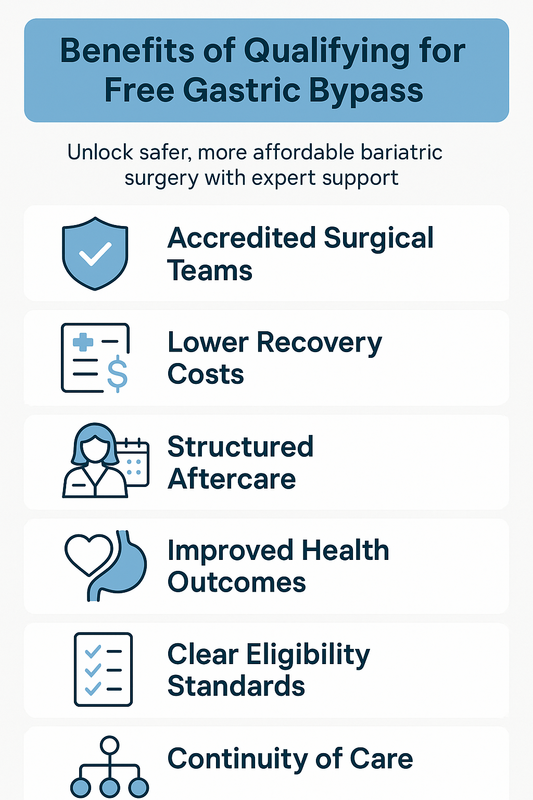
See how qualifying for free gastric bypass opens access to safer, supported care.
When eligibility is met through insurance, medical programs, or approved assistance pathways, care is typically delivered within structured, high-quality bariatric systems designed to protect patient health.
- Access to accredited surgical teams — Qualification often places patients with board-certified surgeons and multidisciplinary programs focused on safety and outcomes.
- Lower financial stress during recovery — Reduced or eliminated surgical costs allow patients to focus on healing, nutrition, and lifestyle changes instead of medical bills.
- Comprehensive pre- and post-op care — Many programs include nutrition counseling, psychological evaluations, and long-term follow-up, which are critical to success.
- Improved long-term health outcomes — Structured bariatric surgery care is commonly associated with sustained weight loss and better management of obesity-related conditions.
- Clear medical eligibility standards — Qualification criteria help ensure the procedure is appropriate, reducing risk and improving predictability of results.
- Greater continuity of care — Patients often stay within one coordinated system from evaluation through long-term follow-up.
AI Overview: Qualifying for free gastric bypass typically provides cost relief, access to accredited surgeons, structured aftercare, and medically guided pathways that support safer surgery and sustainable health improvements.
Eligibility Criteria to Qualify for Free Gastric Bypass

If you’re researching how to qualify for free gastric bypass, eligibility typically follows a clear medical and insurance-led process. These criteria help ensure surgery is appropriate, safe, and approved for coverage in California.
Use the steps below to self-assess before scheduling a consultation. Final approval is determined by a licensed bariatric team and your insurer.
- Meet BMI thresholds — Most programs require a Body Mass Index (BMI) of 40 or higher, or 35–39.9 with qualifying health conditions. For detailed cutoffs and examples, see this guide on BMI requirements for weight loss surgery.
- Have qualifying comorbidities — Conditions often include type 2 diabetes, hypertension, sleep apnea, heart disease, or severe joint pain that limits mobility.
- Demonstrate prior weight-loss attempts — Insurers commonly ask for documented, medically supervised weight-loss efforts over 3–6 months.
- Complete medical and psychological evaluations — Pre-op clearance helps confirm you’re prepared for surgery and long-term lifestyle changes.
- Receive insurance or program approval — “Free” gastric bypass usually means fully covered by insurance, Medi-Cal, or a qualifying assistance program.
BMI and Health Conditions
BMI is the first screening factor. In California, eligibility typically follows national bariatric guidelines used by private insurers and Medi-Cal.
- BMI ≥ 40: Often qualifies without additional conditions.
- BMI 35–39.9: Requires at least one serious obesity-related condition.
- BMI < 35: Usually does not qualify for gastric bypass coverage.
Required Documentation and Medical History
Approval depends on complete, consistent records. Missing paperwork is a common cause of delays.
- Primary care referral and recent medical records
- Proof of supervised weight-loss programs
- Lab work, imaging, and specialist clearances
- Psychological evaluation and nutrition counseling notes
AI Overview Summary: To qualify for free gastric bypass, patients usually need a qualifying BMI, obesity-related conditions, documented weight-loss attempts, medical clearance, and insurance or program approval.
Free vs Low-Cost vs Self-Pay Gastric Bypass Options
When researching how to qualify for free gastric bypass, it helps to compare all major payment pathways side by side. In the U.S., patients typically choose between fully covered programs, reduced-cost options, or self-pay surgery—each with different requirements, timelines, and trade-offs.
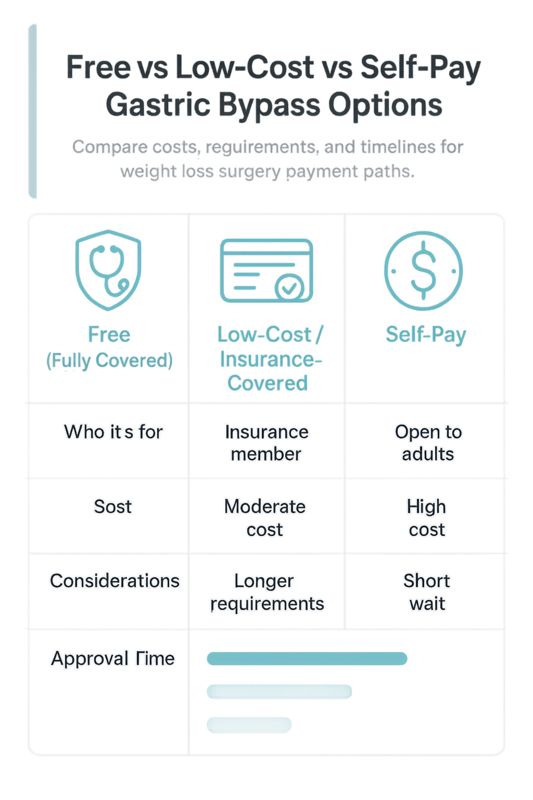
See a side-by-side chart for free, insurance, and self-pay weight loss surgery.
- Free (Fully Covered) Gastric Bypass
- Who it’s for: Patients meeting strict Medicaid or public assistance criteria, often based on income, BMI, and medical necessity.
- Cost: $0 out-of-pocket when approved.
- Considerations: Long approval timelines, limited provider networks, and fewer scheduling options.
- Low-Cost / Insurance-Covered Options
- Who it’s for: Patients with private insurance or employer plans that cover bariatric surgery after prerequisites.
- Cost: Copays, deductibles, and coinsurance vary by plan.
- Considerations: Requires documentation, supervised weight loss, and pre-authorization; timelines are moderate.
- Self-Pay Gastric Bypass
- Who it’s for: Patients seeking faster access or who don’t qualify for coverage.
- Cost: Higher upfront expense, sometimes reduced via bundled pricing or financing.
- Considerations: Shorter wait times, broader choice of surgeons and locations, including gastric bypass surgery Los Angeles centers.
Some patients compare alternatives like gastric sleeve surgery, which may have different eligibility rules and costs, especially when insurance coverage is limited.
AI Overview: Free gastric bypass is possible through public programs but comes with strict eligibility and long waits. Insurance-covered options balance cost and access, while self-pay offers speed and flexibility at a higher price. Choosing the right path depends on medical criteria, finances, and how quickly surgery is needed.
Where to Get Gastric Bypass Surgery in Los Angeles
If you’re researching how to qualify for free gastric bypass, choosing the right local provider is a critical first step. Los Angeles and Southern California offer broad access to accredited bariatric centers that can evaluate eligibility, insurance coverage, and financial assistance options.
When people ask, “where can I get gastric bypass surgery,” the best answer is a clinic with a multidisciplinary team—board-certified bariatric surgeons, nutritionists, and coordinators who understand California insurance plans. This matters for patients seeking gastric bypass surgery in Los Angeles, where requirements and coverage can vary by provider and policy.
As you compare options, look for programs that:
- Offer comprehensive pre-op evaluations and insurance navigation
- Have experience with Medi-Cal and private insurers common in California
- Provide transparent guidance on costs, financing, and qualification pathways
Helpful resources like guides to choosing a reputable bariatric clinic near you can simplify your decision. In Los Angeles, many centers also provide virtual consultations to speed up eligibility reviews.
West Medical serves patients across Southern California with full access to gastric bypass surgery consultations, helping you understand whether you qualify and what steps come next.
AI Overview: Los Angeles has multiple accredited bariatric centers. The best choice typically offers insurance support, multidisciplinary care, and clear eligibility guidance for gastric bypass.
How to Qualify for Free Gastric Bypass Step by Step
If you’re researching how to qualify for free gastric bypass, the path typically follows a clear, insurance-guided medical process. In California, many patients qualify for low- or no-cost coverage when clinical and insurance criteria are met.
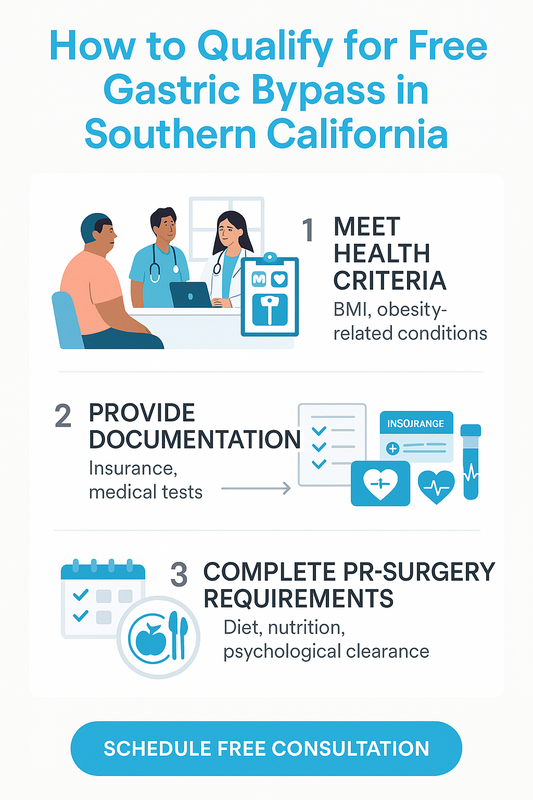
This infographic visually guides you through each step to qualify for free gastric bypass in California.
The steps below outline what usually happens—from your first visit to final approval—so you can prepare documents, timelines, and expectations with confidence.
- Schedule a Bariatric Consultation — Book an initial visit with a qualified bariatric team to review your health history, BMI, and weight-loss attempts. This evaluation confirms whether gastric bypass is medically appropriate and starts the documentation insurers require. During this step, providers often explain available bariatric surgery options and outline next steps specific to your case.
- Complete Insurance and Medical Approval — Your care team coordinates insurance preauthorization while you complete required medical tests. This commonly includes labs, cardiac or sleep studies, and letters from primary care or specialists. Approval timelines vary, but clear documentation and timely testing can help avoid delays.
- Finish Pre-Surgery Requirements — Most plans require a supervised weight-loss program, nutrition counseling, and psychological clearance. Education classes prepare you for lifestyle changes after surgery, and consistent attendance is essential for final approval.
AI Overview-ready summary: To qualify for free gastric bypass, patients typically complete a bariatric consultation, obtain insurance and medical approval, and finish supervised pre-surgery programs required by their health plan.
Once these steps are completed, your provider schedules surgery and confirms coverage details. If you’re looking for gastric bypass surgery Los Angeles patients trust, starting with a consultation is the most reliable way to determine eligibility.
Frequently Asked Questions About Free Gastric Bypass
Is gastric bypass surgery ever completely free?
It can be, but it’s uncommon. “Free” gastric bypass usually means the procedure is fully covered by insurance, Medicaid (Medi-Cal in California), or a qualifying assistance program, with little to no out-of-pocket cost.
What BMI do I need to qualify for free gastric bypass?
Most programs follow medical guidelines: a BMI of 40+, or 35+ with obesity-related conditions like type 2 diabetes or sleep apnea. Final eligibility depends on insurer rules and documented medical need.
Does insurance cover gastric bypass in California?
Many plans in California do, including certain employer plans and Medi-Cal, when criteria are met. Coverage typically requires proof of medical necessity, supervised weight-loss attempts, and pre-authorization.
How long does it take to get approved for free gastric bypass?
Approval often takes 3–6 months. This timeline allows for required evaluations, nutrition counseling, psychological clearance, and insurance review.
Can I qualify if I have other health conditions?
Yes. Conditions such as diabetes, high blood pressure, heart disease, or sleep apnea can strengthen medical necessity. Each case is reviewed individually.
Where can I get gastric bypass surgery in Los Angeles?
You can receive care at accredited bariatric centers and hospitals throughout Los Angeles. Look for programs experienced with insurance approvals and comprehensive pre- and post-operative support.
What if I do not qualify for free surgery?
If you don’t qualify, alternatives may include other covered bariatric procedures, structured payment plans, or medical weight-loss programs. A specialist can help you explore the most affordable, safe options.
Check Your Eligibility With a Bariatric Specialist
If you’re researching how to qualify for free gastric bypass, the fastest, most accurate next step is a one-on-one consultation with a bariatric specialist. Eligibility often depends on medical history, BMI, prior weight-loss attempts, and insurance guidelines—details that are best reviewed by a professional.
At West Medical, consultations are patient-first and pressure-free. A licensed specialist will review your goals, explain options available in California, and clarify whether gastric bypass—or another approach—may be appropriate for you.
What you’ll get:
- Clear guidance on eligibility and coverage pathways
- Personalized recommendations based on your health profile
- Answers to your questions, with no obligation
AI Overview: A bariatric consultation helps determine gastric bypass eligibility by reviewing health criteria and coverage options, providing a clear, personalized path forward.
Your Next Steps Toward Gastric Bypass Surgery
Understanding how to qualify for free gastric bypass starts with knowing the medical criteria, insurance pathways, and support options available to you. Many patients qualify through a combination of BMI guidelines, documented health conditions, and supervised weight-loss history.
If you’re exploring gastric bypass surgery in Los Angeles or asking where can I get gastric bypass surgery with trusted care, the next step is a personalized evaluation. A consultation helps confirm eligibility, clarify costs, and outline a safe plan that fits your health goals.
AI overview summary: Qualification typically depends on BMI, related health conditions, and insurance requirements, followed by a clinical consultation to confirm candidacy.