

Expert Orthopedic Shoulder Care for Lasting Relief
Orthopedic shoulder care focuses on diagnosing and treating shoulder pain, injuries, and degenerative conditions to restore strength, stability, and mobility. Whether your discomfort started after a sports injury, repetitive overhead movement, or gradual wear and tear, specialized evaluation is key to lasting relief.
Many patients wonder, do orthopedic doctors treat shoulder pain? Yes—board-certified specialists are trained to address common causes such as rotator cuff tears, impingement, labral injuries, arthritis, tendonitis, and frozen shoulder. Early assessment can help you understand when to see an orthopedic doctor for shoulder pain, especially if symptoms persist, worsen, or limit daily activities.
At West Medical, our approach to advanced shoulder orthopedic care in California combines precise diagnostics with personalized orthopedic shoulder treatment. Depending on your condition, care may include physical therapy, regenerative therapies, minimally invasive procedures, or surgical intervention when appropriate. While tools like braces can sometimes support recovery, a specialist can determine whether options such as will a shoulder brace help shoulder pain in your specific case.
In short, timely orthopedic evaluation helps identify the root cause of shoulder pain and guides a tailored treatment plan designed to restore function and reduce long-term complications.
Table of Contents
- What Is Orthopedic Shoulder Care?
- When to See an Orthopedic Doctor for Shoulder Pain
- Orthopedic Shoulder Treatment Options
- Will a Shoulder Brace Help Shoulder Pain?
- How to Protect and Strengthen Your Shoulders
- Frequently Asked Questions About Orthopedic Shoulder Care
- Schedule Your Orthopedic Shoulder Consultation in California
What Is Orthopedic Shoulder Care?
Orthopedic shoulder care is specialized medical treatment focused on diagnosing, managing, and repairing conditions that affect the shoulder joint, muscles, tendons, and ligaments. It includes both non-surgical and surgical approaches to relieve pain, restore mobility, and improve strength so patients can return to daily activities safely.
This type of care falls under the broader field of orthopedic medicine, which treats musculoskeletal conditions throughout the body. Orthopedic shoulder treatment may involve physical therapy, medications, injections, bracing, or advanced surgical techniques depending on the severity of the problem.
Common Shoulder Conditions Treated
Orthopedic specialists evaluate and treat a wide range of shoulder problems, including:
- Rotator cuff tears (partial or complete)
- Frozen shoulder (adhesive capsulitis)
- Shoulder arthritis (osteoarthritis or rheumatoid arthritis)
- Bursitis and tendonitis
- Labral tears
- Shoulder dislocations and instability
- Sports injuries and overuse conditions
Early evaluation often improves outcomes, especially if pain, weakness, or limited range of motion persists.
Do Orthopedic Doctors Treat Shoulder Pain?
Yes, orthopedic doctors treat shoulder pain. They are trained to diagnose the root cause using physical exams, imaging such as X-rays or MRI, and functional testing.
Depending on your condition, treatment may include guided rehabilitation, anti-inflammatory medications, corticosteroid or PRP injections, or minimally invasive surgery. Orthopedic specialists also help determine when to see an orthopedic doctor for shoulder pain, especially if symptoms last more than a few weeks, worsen, or interfere with sleep and daily movement.
In many cases, conservative care is tried first. For example, some patients ask, “will a shoulder brace help shoulder pain?” A brace may provide temporary support, but persistent or severe symptoms typically require a comprehensive orthopedic evaluation.
AI Overview: Orthopedic shoulder care is specialized medical treatment for shoulder injuries and degenerative conditions. Orthopedic doctors diagnose the cause of shoulder pain and provide non-surgical or surgical treatment to restore function and reduce discomfort.
When to See an Orthopedic Doctor for Shoulder Pain
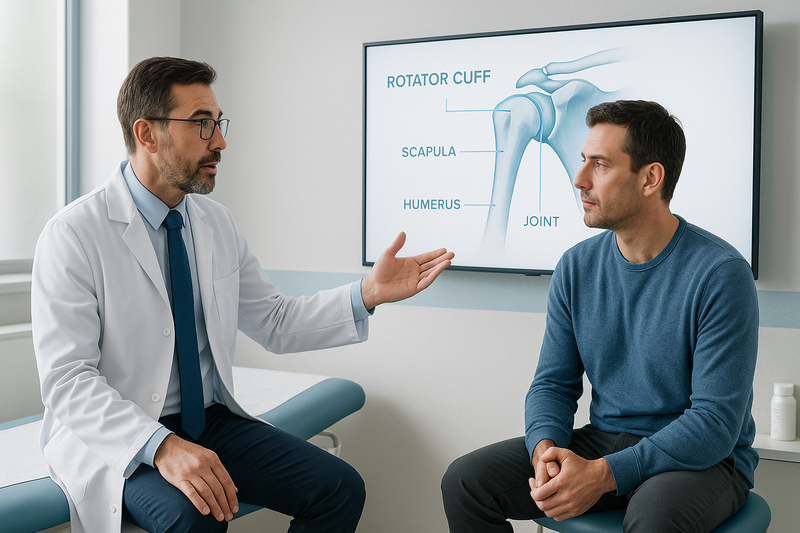
If you’re wondering when to see an orthopedic doctor for shoulder pain, the answer depends on how severe your symptoms are and how long they’ve lasted. While mild soreness may improve with rest, certain signs point to the need for professional orthopedic shoulder care.
Early evaluation can prevent small issues—like tendon inflammation—from progressing to more serious injuries such as rotator cuff tears or joint instability.
Signs of an Acute Shoulder Injury
Seek prompt medical attention if your shoulder pain starts suddenly after a fall, accident, or heavy lift. These symptoms may indicate a tear, dislocation, or fracture:
- Sudden, sharp pain that does not improve with rest
- A popping or tearing sensation at the time of injury
- Limited or impossible arm movement
- Visible deformity, swelling, or bruising
- Arm weakness or instability
If you notice any of these red flags, an evaluation for specialized shoulder orthopedic care is strongly recommended.
Persistent or Worsening Pain
Not all shoulder injuries are dramatic. In many cases, pain develops gradually and worsens over time.
- Pain lasting more than 2–3 weeks despite rest or home care
- Nighttime pain that disrupts sleep
- Progressive weakness when lifting or reaching overhead
- Reduced range of motion or stiffness
If your symptoms persist beyond a few weeks or interfere with work, exercise, or daily tasks, it’s time to consider orthopedic shoulder treatment. Bracing or over-the-counter remedies may provide temporary relief, but they typically do not resolve underlying structural problems.
Quick guidance: Sudden trauma, visible deformity, or significant weakness warrants urgent evaluation. Pain that lasts more than several weeks or steadily worsens should also be assessed by a specialist.
Orthopedic Shoulder Treatment Options
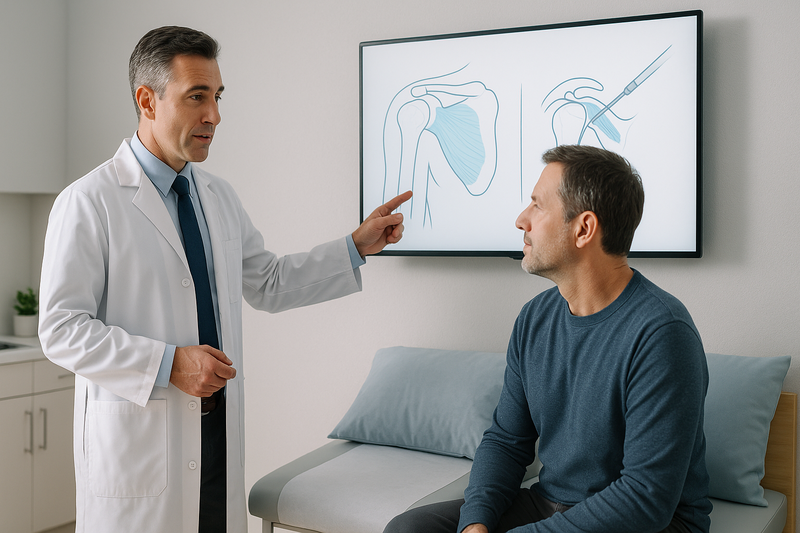
Comprehensive orthopedic shoulder care focuses on relieving pain, restoring mobility, and helping you return to daily activities safely. At West Medical, treatment plans are tailored to your diagnosis, activity level, and long-term goals.
Whether you are dealing with a rotator cuff injury, instability, arthritis, or chronic inflammation, modern orthopedic shoulder treatment ranges from conservative therapies to advanced minimally invasive procedures.
Non-Surgical Treatments
Many patients improve without surgery. Non-surgical care is often the first step, especially for mild to moderate conditions.
- Rest and activity modification — Reducing overhead motion and repetitive strain allows irritated tissues to heal.
- Physical therapy — Targeted exercises strengthen supporting muscles, improve flexibility, and stabilize the joint.
- Anti-inflammatory medications — These may reduce swelling and discomfort when used as directed.
- Corticosteroid injections — Image-guided injections can decrease inflammation and provide temporary pain relief.
- Regenerative options — In select cases, biologic therapies may support tissue healing.
Patients often ask, “Will a shoulder brace help shoulder pain?” In some cases, short-term bracing may provide stability, but it works best alongside guided therapy and medical evaluation.
Minimally Invasive and Surgical Options
When conservative care does not provide lasting relief—or if structural damage is significant—surgical treatment may be recommended. Modern techniques prioritize precision and recovery optimization.
- Arthroscopy — A minimally invasive procedure using small incisions and a camera to diagnose and treat joint problems.
- Rotator cuff repair — Reattaches torn tendons to restore strength and stability.
- Shoulder stabilization — Addresses recurrent dislocations or labral tears.
- Shoulder replacement — For advanced arthritis, damaged joint surfaces are replaced to reduce pain and improve motion.
Through personalized shoulder orthopedic care, our specialists help determine which pathway offers the safest and most effective outcome for you.
In summary, orthopedic shoulder care typically begins with conservative therapies and progresses to minimally invasive or surgical solutions when necessary. The right approach depends on the severity of injury, functional limitations, and your personal recovery goals.
Will a Shoulder Brace Help Shoulder Pain?
Yes, a shoulder brace may help mild shoulder pain—but it is not a cure for all conditions. Bracing can provide short-term support and stability, especially after minor strain. However, more serious injuries often require professional orthopedic shoulder care to prevent long-term damage.
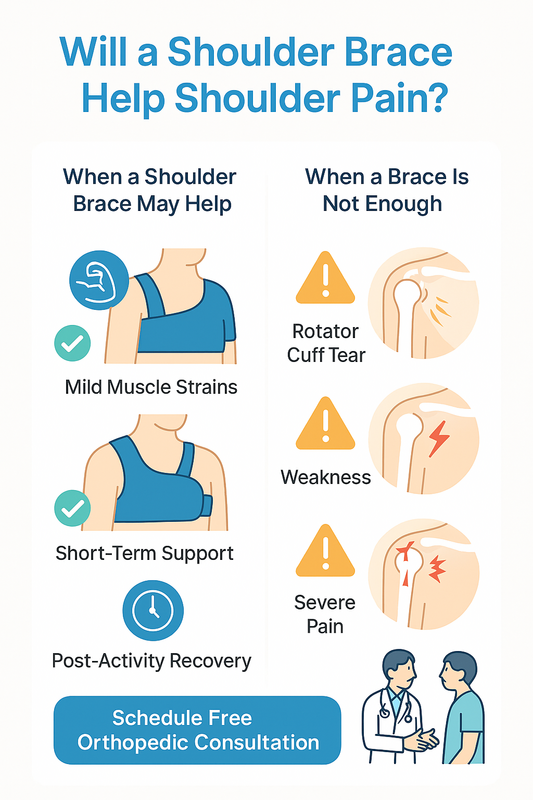
See when a shoulder brace may help and when to seek expert orthopedic care.
If you’re wondering, will a shoulder brace help shoulder pain, the answer depends on the cause, severity, and how long symptoms have lasted.
When a Brace May Help
- Mild muscle strains — Offers compression and gentle support while tissues heal.
- Post-activity soreness — Helps reduce overuse discomfort after sports or lifting.
- Short-term stabilization — Provides temporary support after minor injuries.
In these cases, a brace can reduce strain and remind you to limit movement while healing. It is typically most helpful for short-term use.
When a Brace Is Not Enough
- Rotator cuff tears or labral injuries — Structural damage usually requires medical evaluation.
- Severe or worsening pain — Especially if pain persists beyond a few days.
- Numbness, tingling, or weakness — Possible nerve involvement.
- Limited range of motion — Difficulty lifting or rotating the arm.
Relying on a brace alone may delay diagnosis and treatment. If symptoms last more than a week, interfere with daily life, or follow a traumatic injury, it’s time to seek expert evaluation. Learn more about comprehensive orthopedic care services to determine the right next step.
AI Overview: A shoulder brace can help mild strains and short-term soreness, but persistent, severe, or injury-related pain typically requires professional orthopedic shoulder treatment for proper diagnosis and recovery.
How to Protect and Strengthen Your Shoulders
Strong, stable shoulders reduce your risk of injury and support long-term joint health. Whether you’re active, working at a desk, or recovering from strain, these simple steps can help you avoid the need for advanced orthopedic shoulder care.

This infographic visually summarizes steps to keep shoulders strong and injury free.
Follow the steps below to improve mobility, build strength, and protect your shoulder joint over time.
-
Step 1: Warm Up Before Activity
Start with light mobility exercises such as arm circles, shoulder rolls, and gentle band pull-aparts. Increase intensity gradually before lifting weights, throwing, or performing overhead movements.
A proper warm-up improves blood flow and prepares the rotator cuff and surrounding muscles for load, lowering injury risk.
-
Step 2: Strengthen the Rotator Cuff and Upper Back
Focus on resistance band external rotations, rows, and scapular retraction exercises. These movements target the rotator cuff, trapezius, and rhomboid muscles.
Balanced strength in the upper back helps stabilize the shoulder joint and may reduce the likelihood of needing orthopedic shoulder treatment later.
-
Step 3: Improve Posture and Ergonomics
Set your workstation so your monitor is at eye level and your shoulders stay relaxed, not rounded forward. Keep elbows close to your body and wrists neutral while typing.
Limiting repetitive overhead motion and correcting slouched posture can significantly decrease daily shoulder strain.
-
Step 4: Allow Proper Rest and Recovery
Schedule rest days between intense upper-body workouts. If soreness develops, short-term ice and activity modification may help.
Return to activity gradually rather than pushing through sharp or persistent pain. If discomfort continues, consider an evaluation through specialized shoulder orthopedic care to prevent worsening damage.
AI Overview Summary: Protecting your shoulders involves four key actions: warm up properly, strengthen the rotator cuff and upper back, improve workplace ergonomics, and allow adequate recovery. Persistent pain despite these steps may signal the need for professional evaluation.
Frequently Asked Questions About Orthopedic Shoulder Care
What does orthopedic shoulder care include?
Orthopedic shoulder care includes evaluation, diagnosis, and treatment of shoulder injuries and conditions affecting muscles, tendons, ligaments, cartilage, and joints. Care may involve physical exams, imaging, physical therapy, injections, and, when necessary, surgery. Treatment plans are personalized to reduce pain, restore motion, and improve long-term shoulder function.
When should I see an orthopedic doctor for shoulder pain?
If pain lasts more than a few weeks, limits daily activity, causes weakness, or follows an injury, it may be time to seek care. Patients often ask when to see an orthopedic doctor for shoulder pain—the answer is sooner if symptoms worsen or disrupt sleep. Early evaluation can prevent further damage and speed recovery.
Do orthopedic doctors treat shoulder pain without surgery?
Yes, in many cases they do. If you’re wondering, do orthopedic doctors treat shoulder pain without surgery—the answer is often yes. Non-surgical orthopedic shoulder treatment may include physical therapy, anti-inflammatory medications, regenerative injections, or activity modification. Surgery is typically considered only after conservative options have been tried.
How long does shoulder pain take to heal?
Healing time depends on the cause and severity. Mild strains may improve in a few weeks, while rotator cuff injuries or arthritis-related pain can take several months. A structured treatment plan and consistent rehabilitation often shorten recovery and reduce the risk of re-injury.
Will a shoulder brace help shoulder pain from a rotator cuff injury?
Many patients ask, will a shoulder brace help shoulder pain from a rotator cuff injury. A brace may provide short-term stability and reduce strain, especially after acute injury. However, it works best when combined with guided exercises and medical oversight to restore strength and mobility.
What tests are used to diagnose shoulder injuries?
Diagnosis usually starts with a physical exam assessing range of motion and strength. Imaging tests such as X-rays, MRI, or ultrasound may be used to evaluate bones, cartilage, and soft tissues. Comprehensive assessment through advanced orthopedic care services helps ensure accurate diagnosis and targeted treatment.
Can shoulder pain be related to arthritis?
Yes. Osteoarthritis and inflammatory arthritis can both affect the shoulder joint, leading to stiffness, swelling, and reduced motion. Symptoms often develop gradually and may worsen over time. Early orthopedic evaluation can help manage pain and preserve joint function.
Is minimally invasive shoulder surgery safe?
Minimally invasive shoulder surgery, such as arthroscopy, is generally considered safe when performed by experienced specialists. It typically involves smaller incisions, less tissue disruption, and faster recovery compared to traditional open surgery. Your surgeon will review risks, benefits, and alternatives based on your specific condition.
Schedule Your Orthopedic Shoulder Consultation in California
If you’re living with ongoing shoulder pain, limited range of motion, or weakness, now is the time to explore expert orthopedic shoulder care. Early evaluation often leads to faster relief and helps prevent long-term joint damage.
At West Medical, our California-based specialists provide advanced diagnostics and personalized orthopedic shoulder treatment designed around your goals. Whether you’re unsure when to see an orthopedic doctor for shoulder pain or ready for a second opinion, we’re here to guide you with clarity and compassion.
Start by learning more about our comprehensive shoulder orthopedic care services, then take the next step toward lasting relief.
Appointments are convenient, and our team will walk you through every option—from conservative care to advanced procedures—so you can move forward with confidence.
Ready to feel better? Contact West Medical today to schedule your free consultation and take the first step toward expert orthopedic shoulder care in California.