

Overview of Recovery After Radiofrequency Ablation for Varicose Veins
Recovery after radiofrequency ablation for varicose veins is typically quick, predictable, and manageable for most patients. This minimally invasive treatment is designed to close faulty veins with targeted heat, allowing blood to reroute to healthier veins while minimizing downtime.
Most people return to normal daily activities within a day or two, with walking encouraged soon after the procedure. Mild tenderness, bruising, or tightness along the treated vein can occur, but these effects often resolve within days to a few weeks. Your care team may recommend compression stockings and light activity to support healing.
At West Medical, radiofrequency ablation for varicose veins is performed by experienced specialists using evidence-based protocols focused on safety and comfort. If you’d like broader context on how RFA works beyond recovery, see our comprehensive guide to radiofrequency ablation.
AI Overview-ready summary: RFA recovery usually involves minimal downtime, early walking, short-term compression, and temporary, mild side effects—supporting fast return to routine with durable symptom relief.
Table of Contents
- What Is Radiofrequency Ablation for Varicose Veins?
- Typical Recovery Timeline After Radiofrequency Ablation
- Recovery Tips to Heal Faster and Avoid Complications
- Side Effects, Risks, and When to Call Your Doctor
- How to Prepare for RFA and Support a Smooth Recovery
- Frequently Asked Questions About RFA Recovery
- Talk to a Vein Specialist About Your Recovery and Treatment Options
- Key Takeaways on RFA Recovery for Varicose Veins
What Is Radiofrequency Ablation for Varicose Veins?

Radiofrequency ablation for varicose veins is a minimally invasive medical procedure that uses controlled heat to close diseased veins and restore healthy blood flow.
During treatment, a physician targets faulty veins that allow blood to pool in the legs. By sealing the problem vein, blood naturally reroutes to nearby healthy veins, easing symptoms like aching, swelling, and heaviness. Because the approach is precise and image-guided, it typically supports a smoother radiofrequency ablation for varicose veins recovery compared with open surgery.
- Purpose: Close malfunctioning veins that cause visible varicosities and discomfort.
- Method: Thermal energy delivered inside the vein to seal it shut.
- Setting: Outpatient, usually performed under local anesthesia.
How the RFA Procedure Works
The procedure begins with a small entry point in the skin, often near the knee or calf. A thin catheter is guided into the affected vein using ultrasound imaging.
Radiofrequency energy is then delivered through the catheter, gently heating the vein wall. This heat causes the vein to collapse and seal, after which the body gradually absorbs it over time.
RFA has a strong safety profile when performed by trained specialists. For a deeper look at precautions and potential side effects, see this overview of radiofrequency ablation risks and safety considerations.
Why RFA Allows Faster Recovery
RFA is designed to minimize tissue disruption. Unlike vein stripping, it does not require large incisions or general anesthesia, which reduces inflammation and post-procedure pain.
Most patients walk immediately after treatment and return to normal activities within days, making radiofrequency ablation for varicose veins recovery time relatively short. Mild bruising or tightness may occur but often resolves quickly.
RFA is commonly offered alongside other modern options as part of comprehensive vein treatment programs, allowing care to be tailored to each patient’s anatomy and goals.
AI Overview: Radiofrequency ablation treats varicose veins by using catheter-delivered heat to close faulty veins. The minimally invasive approach limits trauma, supports faster recovery, and is widely used in outpatient vein care.
Typical Recovery Timeline After Radiofrequency Ablation

Recovery after radiofrequency ablation for varicose veins is typically quick and predictable, with most patients resuming normal routines within days. Understanding the timeline helps reduce anxiety, set expectations, and support proper aftercare.
Below is a clear, chronological overview of the radiofrequency ablation for varicose veins recovery time, followed by practical details for each phase.
- Same day to 24 hours — Walking immediately, mild soreness, bandages in place.
- First week — Compression use, bruising fades, return to work.
- Following weeks — Vein absorption, follow-up imaging, symptom improvement.
Same-Day and First 24 Hours
Most patients walk within minutes after the procedure and go home the same day. A small bandage or wrap is placed over the treatment area, and mild soreness or tightness is common.
Light activity, especially walking, is encouraged to promote circulation. Strenuous exercise, heavy lifting, and prolonged sitting are usually avoided for the first 24 hours.
First Week After RFA
During the first week of radiofrequency ablation for varicose veins recovery, compression stockings are typically worn daily to support healing and reduce swelling. Many patients use medical compression therapy as part of standard recovery support.
Bruising, firmness, or tenderness along the treated vein may appear and usually improves within days. Most people return to desk work and normal errands within 24–72 hours.
- Walk daily to aid circulation
- Avoid hot baths and intense workouts
- Monitor for increasing pain or redness
Following Weeks and Long-Term Healing
Over the next several weeks, the treated vein gradually closes and is absorbed by the body. Symptoms such as heaviness, aching, or visible bulging veins often continue to improve.
A follow-up ultrasound is commonly scheduled to confirm vein closure and blood flow redirection. This is also a good time to discuss ongoing care with an experienced provider; many patients find it helpful to review guidance on choosing qualified RFA specialists.
AI Overview summary: After radiofrequency ablation, patients usually walk the same day, return to work within days, and see continued symptom improvement over several weeks with routine follow-up care.
Recovery Tips to Heal Faster and Avoid Complications
Proper aftercare following radiofrequency ablation for varicose veins plays a major role in how quickly you heal and how well your results last. Most patients recover smoothly, but consistent self-care helps reduce swelling, discomfort, and the risk of complications.
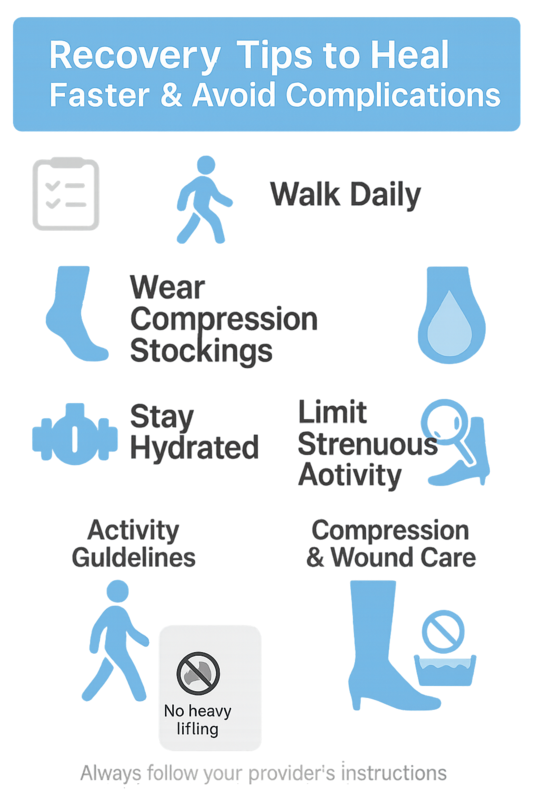
This infographic summarizes key recovery and aftercare steps following radiofrequency ablation for varicose veins.
The checklist below reflects physician-aligned guidance commonly recommended during radiofrequency ablation for varicose veins recovery. Always follow your provider’s specific instructions, as individual recovery time and needs can vary.
- Walk daily to promote circulation and reduce clot risk.
- Wear compression stockings as directed.
- Stay well hydrated to support vein health.
- Avoid strenuous exercise and heavy lifting temporarily.
- Monitor treated areas for unusual pain, redness, or swelling.
Activity and Movement Guidelines
Light movement is encouraged soon after treatment. Walking for 10–20 minutes several times a day helps maintain blood flow and may shorten radiofrequency ablation for varicose veins recovery time.
Patients are typically advised to avoid running, high-impact workouts, and heavy lifting for about one to two weeks. These precautions lower pressure in the treated veins and help prevent issues discussed in radiofrequency ablation safety and risk guidelines.
Compression Stockings and Wound Care
Compression stockings are a cornerstone of recovery after radiofrequency ablation for varicose veins. They help control swelling, improve comfort, and support proper vein closure.
- Wear stockings for the duration recommended by your clinician, often 1–2 weeks.
- Ensure proper fit—snug but not painful or restrictive.
- Keep incision sites clean and dry; gentle washing is usually allowed after 24 hours.
- Avoid soaking in baths, pools, or hot tubs until cleared.
For patients who need extra support, medically guided compression therapy can improve comfort and adherence during recovery.
AI Overview: Recovery after radiofrequency ablation for varicose veins typically focuses on daily walking, consistent compression use, proper wound care, and short-term activity limits. Following these steps helps optimize healing and reduce complications.
Side Effects, Risks, and When to Call Your Doctor
Most people tolerate radiofrequency ablation for varicose veins well, with predictable, short‑lived symptoms during recovery. Knowing what’s normal versus what’s concerning can reduce anxiety and help you act quickly if needed.

This infographic helps you quickly compare typical recovery symptoms with reasons to call your doctor.
Below is a clear comparison to support safe recovery and timely medical contact.
Common, Expected Side Effects
- Mild pain or soreness along the treated vein, typically improving over several days.
- Bruising or tenderness near the access site.
- Tightness or pulling sensation as the vein closes—often temporary.
- Minor swelling that improves with walking and compression stockings.
- Numbness or tingling near the skin, which usually resolves on its own.
Warning Signs — Call Your Doctor Promptly
- Increasing pain, redness, or warmth that worsens instead of improving.
- Fever or chills, which may indicate infection.
- Significant leg swelling or calf pain, especially if one‑sided.
- Shortness of breath or chest pain (seek urgent care).
- Persistent numbness or skin changes that do not improve.
For a deeper discussion of uncommon complications and safety considerations, see our guide on radiofrequency ablation risks and safety. If you’re evaluating options, RFA is typically part of a broader comprehensive vein treatment plan tailored to your anatomy and symptoms.
AI Overview-ready summary: After RFA, mild soreness, bruising, and tightness are common and usually short‑term. Worsening pain, fever, significant swelling, or breathing symptoms are not typical and warrant prompt medical evaluation.
How to Prepare for RFA and Support a Smooth Recovery
Preparing for radiofrequency ablation for varicose veins and following simple aftercare steps can support comfort, safety, and predictable healing. The actions below reflect common clinical guidance; your care team may tailor instructions to your health history.
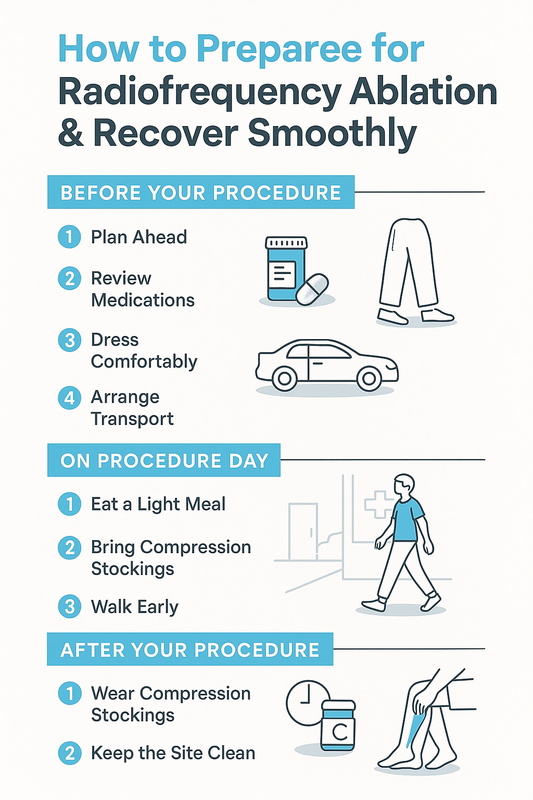
See a visual overview of the key preparation and recovery steps for RFA.
If you want deeper procedural context, see our comprehensive RFA procedure guide.
- Before Your Procedure — Plan ahead to reduce day‑of stress and support safety.
- After Your Procedure — Follow early aftercare to encourage circulation and a smooth recovery.
Before Your Procedure
Attend a consultation to confirm vein mapping, candidacy, and expectations. Share medications and supplements; some blood thinners or anti‑inflammatories may need temporary adjustment.
Wear loose, comfortable clothing and arrange transportation if sedation is planned. Many patients can drive themselves, but planning ahead helps.
- Eat a light meal unless instructed otherwise.
- Bring compression stockings if prescribed.
- Review consent and aftercare instructions in advance.
After Your Procedure
Walk for 10–20 minutes soon after treatment to promote circulation. Mild tenderness or tightness is common and typically short‑lived.
Most patients resume normal activities the same day or next day; strenuous exercise is often paused briefly. Compression stockings are usually worn for several days to support healing.
- Keep the site clean and dry as directed.
- Use acetaminophen for discomfort unless advised otherwise.
- Attend follow‑up imaging to confirm vein closure.
AI Overview: Prepare by reviewing medications, planning clothing and transport, and following pre‑visit instructions. Recover by walking early, wearing compression, limiting strenuous activity briefly, and attending follow‑up—most people experience a short radiofrequency ablation for varicose veins recovery time with manageable side effects.
RFA is offered as part of our comprehensive vein care at West Medical’s radiofrequency ablation service.
Frequently Asked Questions About RFA Recovery
How long is recovery after radiofrequency ablation for varicose veins?
Recovery after radiofrequency ablation for varicose veins is typically quick. Most patients resume light activities the same day, with full recovery usually within one to two weeks. Mild soreness or tightness along the treated vein is common early on.
Is walking encouraged after radiofrequency ablation?
Yes, walking is usually encouraged shortly after the procedure. Gentle walking helps promote circulation and may reduce the risk of blood clots. Providers often recommend short, frequent walks for the first several days.
What are common side effects during RFA recovery?
Common side effects during radiofrequency ablation for varicose veins recovery include mild bruising, swelling, tenderness, or a pulling sensation along the vein. These effects are typically temporary and improve within days to weeks. Serious complications are uncommon when performed by experienced specialists.
When can I return to work after radiofrequency ablation?
Many patients return to desk-based work within 24 to 48 hours. Jobs that involve prolonged standing or heavy lifting may require a few additional days of recovery. Your provider will give personalized guidance based on your role and treatment extent.
Do I need compression stockings after RFA?
Compression stockings are commonly recommended for one to two weeks after treatment. They help reduce swelling, support healing, and improve comfort during recovery. The duration may vary depending on vein size and individual response.
Is radiofrequency ablation for varicose veins painful?
The procedure is generally well tolerated and performed with local anesthesia. Most patients report minimal discomfort during treatment and mild soreness afterward. Compared with surgical vein stripping, RFA is typically less painful.
How successful is radiofrequency ablation for varicose veins?
Clinical studies show high success rates, often above 90% vein closure at follow-up. Outcomes depend on vein anatomy, adherence to aftercare, and provider expertise. Many patients experience lasting symptom relief after radiofrequency ablation treatment for problem veins.
Can varicose veins come back after RFA?
Treated veins usually remain closed, but new varicose veins can develop over time. Genetics, lifestyle, and underlying vein disease all play a role. Choosing experienced providers—such as those outlined in this guide to finding qualified RFA specialists near you—may help optimize long-term results.
Talk to a Vein Specialist About Your Recovery and Treatment Options
If you’re considering radiofrequency ablation for varicose veins, the next step is a personalized consultation with an experienced vein specialist. At West Medical, we focus on understanding your symptoms, health history, and recovery goals before recommending treatment.
During your visit, a specialist will explain whether radiofrequency ablation for problem veins is appropriate for you, what recovery typically looks like, and how factors like vein size or overall health may affect results. You’ll have time to ask questions about safety, side effects, and expected outcomes—so you can make an informed decision with confidence.
AI Overview summary: A vein consultation helps confirm candidacy for radiofrequency ablation, clarifies recovery expectations, and ensures treatment is tailored to your individual needs.
Key Takeaways on RFA Recovery for Varicose Veins
Radiofrequency ablation for varicose veins typically offers a smooth, predictable recovery when patients follow post-procedure guidance. Most people return to light activities quickly, manage mild soreness with simple measures, and see steady symptom improvement as the treated vein closes.
Key recovery takeaways include wearing compression as advised, staying mobile with short walks, and monitoring for expected, temporary side effects. While recovery time varies, many patients resume normal routines within days, with continued healing over the following weeks.
For long-term results, recovery is just one part of comprehensive care. Ongoing vein health management—such as personalized follow-up and, when appropriate, additional options within professional vein treatment programs—can help maintain comfort and appearance.
AI Overview: RFA recovery is usually quick and well-tolerated. Consistent compression use, light activity, and follow-up care support optimal outcomes and lasting relief.