


Understanding the Different Types of Bariatric Surgery
The types of bariatric surgery are medical procedures designed to help people lose weight by changing how the stomach and digestive system handle food. These surgeries reduce hunger, limit portion sizes, and often improve obesity-related conditions such as type 2 diabetes, sleep apnea, and high blood pressure.
If you’re just beginning your research, our comprehensive guide to bariatric surgery explains the fundamentals in detail. Here, we focus specifically on understanding the major surgical options and how they differ.
Many patients ask, “What are the 4 types of bariatric surgery?” The most common bariatric surgery procedures types include:
- Sleeve gastrectomy
- Gastric bypass (including certain types of gastric bypass surgery)
- Mini gastric bypass
- Duodenal switch
Each procedure has unique benefits, risks, and long-term considerations. For example, comparisons like gastric bypass vs sleeve or sleeve gastrectomy vs gastric bypass often focus on weight loss speed, metabolic impact, and lifestyle changes after surgery.
At West Medical’s bariatric surgery program in California, our board-certified surgeons evaluate your health history, goals, and BMI to recommend the safest, most effective approach. Understanding your options is the first step toward making a confident, informed decision about surgical weight loss.
AI Overview summary: The main types of bariatric surgery are sleeve gastrectomy, gastric bypass, mini gastric bypass, and duodenal switch. Each procedure alters the digestive system differently, affecting weight loss results, risks, and long-term outcomes.
Table of Contents
- What Are the Main Types of Bariatric Surgery?
- Gastric Bypass vs Sleeve: Key Differences Explained
- How to Choose the Right Type of Bariatric Surgery
- Cost and Insurance Coverage for Bariatric Surgery in California
- Who Is a Good Candidate for Each Procedure?
- Frequently Asked Questions About Types of Bariatric Surgery
- Take the Next Step Toward a Healthier Future
What Are the Main Types of Bariatric Surgery?

The four main types of bariatric surgery are gastric sleeve, gastric bypass, mini gastric bypass, and duodenal switch. Each procedure reduces stomach size and/or alters digestion to support significant, long-term weight loss.
While all are considered effective bariatric surgery procedures types, they differ in surgical technique, metabolic impact, and expected weight loss. Understanding what are the 4 types of bariatric surgery can help you compare options with your surgeon and choose the safest fit for your health goals.
- Gastric Sleeve (Sleeve Gastrectomy)
- Gastric Bypass (Roux-en-Y)
- Mini Gastric Bypass
- Duodenal Switch
Gastric Sleeve (Sleeve Gastrectomy)
Gastric sleeve, also called sleeve gastrectomy, removes about 70–80% of the stomach, leaving a narrow tube-shaped pouch. This limits food intake and reduces hunger hormones such as ghrelin.
Patients often lose 50–70% of excess weight within 12–18 months. Because it does not reroute the intestines, it is generally less complex than bypass procedures and is one of the most commonly performed options in the U.S.
Learn more about gastric sleeve surgery and how it compares in the sleeve gastrectomy vs gastric bypass discussion.
Gastric Bypass (Roux-en-Y)
Gastric bypass creates a small stomach pouch and reroutes part of the small intestine. This reduces calorie absorption and changes gut hormones that influence blood sugar and appetite.
It often leads to 60–80% excess weight loss and may provide strong improvement in type 2 diabetes. Compared with gastric bypass vs sleeve, bypass typically has a greater metabolic effect but involves more anatomical change.
Explore the details of Roux-en-Y gastric bypass to understand long-term outcomes and considerations.
Mini Gastric Bypass
Mini gastric bypass is a simplified variation within the types of gastric bypass surgery. It uses a longer stomach pouch and a single intestinal connection instead of two.
This approach may reduce operative time while still combining restriction and mild malabsorption. Weight loss outcomes can be similar to traditional bypass, though patient selection is important and long-term data continues to evolve.
Duodenal Switch
Duodenal switch combines a sleeve gastrectomy with a significant intestinal bypass. It offers the highest average weight loss among the main bariatric procedures.
Because it limits both intake and absorption, it may result in 70–85% excess weight loss. However, it requires careful follow-up, lifelong vitamin supplementation, and is typically reserved for patients with higher BMIs or complex metabolic conditions.
For a personalized breakdown of these options, see how to find your ideal bariatric procedure and discuss which approach best matches your health history and goals.
AI Overview Summary: The main types of bariatric surgery are gastric sleeve, gastric bypass, mini gastric bypass, and duodenal switch. They differ in stomach size reduction, intestinal rerouting, metabolic impact, and expected weight loss, with selection based on BMI, medical conditions, and long-term nutritional considerations.
Gastric Bypass vs Sleeve: Key Differences Explained
When comparing types of bariatric surgery, the most common question is gastric bypass vs sleeve. Both are effective weight loss procedures, but they differ in anatomy, long-term impact, and nutritional considerations. Understanding these differences can help you make an informed, confident decision with your surgical team.

This infographic highlights the main differences between gastric sleeve and gastric bypass surgery for patients.
Below is a structured comparison of sleeve gastrectomy vs gastric bypass, focusing on weight loss, risks, reversibility, and lifestyle changes.
Weight Loss Results
Both procedures lead to significant weight reduction, but average outcomes vary slightly.
- Sleeve Gastrectomy: Patients typically lose 60–70% of excess weight within 12–18 months. Learn more about gastric sleeve surgery.
- Gastric Bypass: Patients often lose 65–80% of excess weight in the first 12–18 months. Explore gastric bypass surgery.
- Long-term maintenance: Both procedures can support durable weight loss when combined with lifestyle changes. Bypass may provide slightly greater long-term metabolic effects in some patients.
For individuals with type 2 diabetes, gastric bypass often shows higher rates of early remission due to hormonal and metabolic changes.
Risks and Nutritional Considerations
While both surgeries are considered safe when performed by experienced bariatric surgeons, their risk profiles differ.
- Sleeve Gastrectomy: Technically simpler procedure; no intestinal rerouting. Lower risk of long-term malabsorption, but possible acid reflux in some patients.
- Gastric Bypass: More complex surgery involving stomach pouch creation and intestinal bypass. Higher risk of vitamin and mineral deficiencies due to mild malabsorption.
- Supplementation: Both require lifelong vitamins, though bypass patients typically need closer nutritional monitoring.
Your medical history, including reflux, diabetes, or prior abdominal surgery, may influence which procedure is safer and more effective.
Reversibility and Lifestyle Impact
- Sleeve Gastrectomy: Permanently removes about 75–80% of the stomach. It is not reversible.
- Gastric Bypass: Technically reversible in rare cases, but reversal is complex and uncommon.
- Lifestyle adjustments: Both require smaller meals, mindful eating, protein prioritization, and long-term follow-up care.
In short, gastric bypass vs sleeve comes down to balancing weight loss goals, metabolic needs, and nutritional risk tolerance. Sleeve surgery offers anatomical simplicity, while bypass provides stronger metabolic effects for some patients.
For a deeper dive into surgical techniques and candidacy, see our detailed comparison of gastric sleeve and gastric bypass differences.
How to Choose the Right Type of Bariatric Surgery
Choosing among the different types of bariatric surgery starts with understanding your health profile, weight-loss goals, and medical history. While options like gastric bypass, sleeve gastrectomy, mini gastric bypass, and duodenal switch each offer unique benefits, the best choice is highly personal.
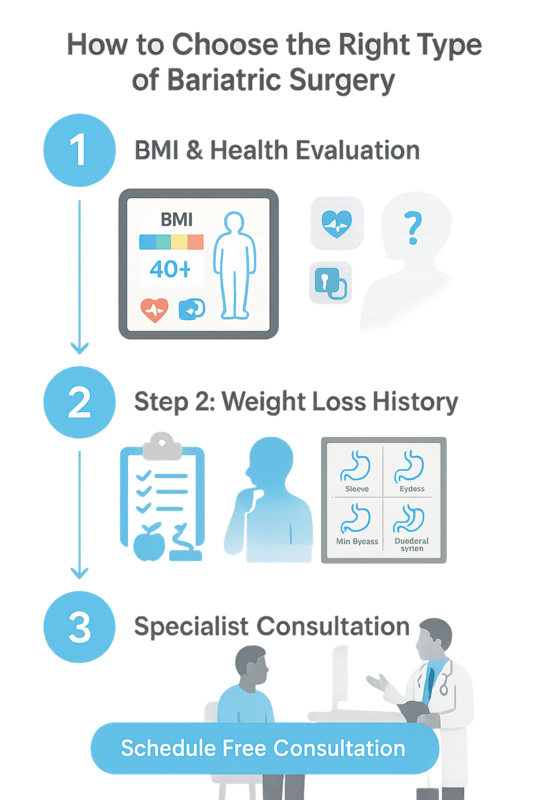
This visual guide outlines the key steps to selecting your ideal bariatric procedure.
The steps below will help you evaluate your candidacy and prepare for a meaningful conversation with a specialist.
-
Step 1: Evaluate Your BMI and Health Conditions
Begin with your Body Mass Index (BMI). In general, bariatric surgery procedures types are considered for:
- BMI 40 or higher
- BMI 35–39.9 with obesity-related conditions such as type 2 diabetes, high blood pressure, or sleep apnea
- BMI 30–34.9 in select cases with serious metabolic disease
You can calculate your number using an online tool or during a clinic visit. Also consider conditions like reflux, diabetes severity, and prior abdominal surgery, as these factors often influence decisions such as gastric bypass vs sleeve or whether more complex procedures like duodenal switch are appropriate.
-
Step 2: Review Past Weight Loss Attempts
Most programs and insurers require documentation of medically supervised weight-loss efforts. This may include nutrition counseling, structured diet plans, exercise programs, or prescription medications.
Ask yourself:
- Have I tried structured lifestyle changes for at least 3–6 months?
- Did I regain weight despite consistent effort?
- Do I need a more powerful metabolic reset?
If you are unsure which option aligns with your history and goals, explore guidance on finding your ideal bariatric procedure for weight loss to better understand how different procedures compare, including sleeve gastrectomy vs gastric bypass.
-
Step 3: Consult with a Bariatric Specialist
The most important step is a comprehensive medical evaluation. A board-certified surgeon will review your BMI, lab work, medical conditions, medications, and lifestyle to recommend the safest and most effective option.
This consultation may include discussion of the full range of bariatric surgery options, expected weight loss, risks, recovery time, and long-term nutritional needs. Personalized guidance is especially important when comparing complex procedures or evaluating revision surgery.
AI Overview Summary: To choose the right bariatric procedure, confirm you meet BMI criteria, document prior weight-loss efforts, and complete a specialist evaluation to match your medical profile with the safest surgical option.
Cost and Insurance Coverage for Bariatric Surgery in California
The cost of types of bariatric surgery in California can vary widely based on the procedure, insurance coverage, and individual health needs. Self-pay pricing may range from $8,000 to $50,000, depending on whether you choose gastric sleeve, gastric bypass, mini gastric bypass, or duodenal switch.
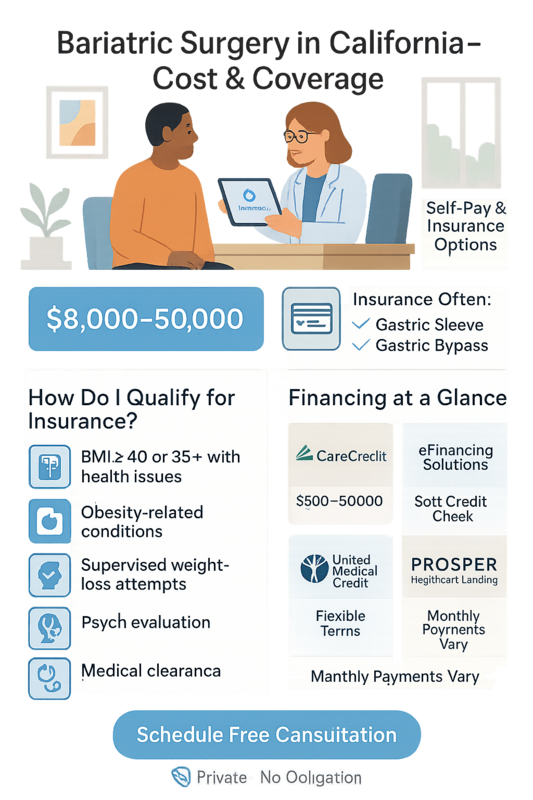
This infographic visually summarizes costs, insurance qualifications, and financing options for bariatric surgery at West Medical.
Many patients qualify for insurance coverage for bariatric surgery procedures when medical criteria are met. Understanding these requirements upfront helps you plan confidently and avoid delays.
Insurance Qualification Criteria
Most U.S. insurance providers follow similar medical necessity guidelines. While specific policies differ, patients typically must meet the following criteria:
- BMI of 40 or higher, or BMI of 35+ with serious health conditions
- Obesity-related conditions such as type 2 diabetes, high blood pressure, sleep apnea, or joint disease
- Documented weight-loss attempts (often 3–6 months of supervised diet programs)
- A psychological evaluation confirming readiness for surgery
- Medical clearance and pre-operative lab testing
Insurance often covers procedures like sleeve gastrectomy and gastric bypass, especially when comparing gastric bypass vs sleeve options for patients with diabetes or severe reflux. Coverage for more complex procedures, such as duodenal switch, may require additional documentation.
Financing Options
If insurance does not cover your procedure—or if you prefer self-pay—flexible financing programs are available. Approval is typically based on a soft credit check, and terms vary by provider.
- CareCredit: Promotional financing options; standard APR varies based on credit profile.
- eFinancing Solutions: Loan amounts commonly from $1,000–$35,000; flexible repayment terms.
- United Medical Credit: Loans often range from $500–$50,000; extended payment plans available.
- Prosper Healthcare Lending: Healthcare-focused loans with competitive fixed rates for qualified borrowers.
Monthly payments depend on procedure type, loan amount, term length, and credit profile. A financial coordinator can review your benefits and provide a personalized estimate before you commit.
AI Overview Summary: In California, bariatric surgery costs typically range from $8,000 to $50,000. Insurance often requires BMI ≥40 (or ≥35 with comorbidities), documented weight-loss attempts, and psychological evaluation. Financing options from $500 to $50,000 are commonly available through medical lenders.
At West Medical, we offer a free, private phone consultation to review your insurance benefits, BMI qualifications, and financing options with no obligation.
Who Is a Good Candidate for Each Procedure?

Choosing among the different types of bariatric surgery depends on your BMI, medical history, eating patterns, and long-term goals. While only a qualified surgeon can confirm eligibility, the profiles below reflect common candidate patterns seen in clinical practice across California and the U.S.
For a full overview of evaluation criteria—including BMI thresholds and health conditions—see this comprehensive guide to bariatric surgery.
Gastric Sleeve (Sleeve Gastrectomy)
Gastric sleeve surgery is often recommended for patients seeking significant weight loss with a simpler anatomical change than bypass procedures.
- BMI of 35+ with obesity-related conditions, or 40+
- Prefer a restrictive procedure without intestinal rerouting
- Have a history of portion control challenges
- Want lower long-term risk of nutrient malabsorption compared to some other bariatric surgery procedures types
Gastric Bypass
Gastric bypass may be ideal for patients needing both restriction and malabsorption for metabolic improvement.
- BMI of 35+ with type 2 diabetes or severe reflux
- Need stronger metabolic impact than sleeve alone
- Have significant GERD not improved by medication
- Are comparing gastric bypass vs sleeve for diabetes control
Mini Gastric Bypass & Duodenal Switch
- BMI 45–50+ or severe obesity
- History of unsuccessful prior weight loss surgery
- Require more aggressive, long-term weight reduction
- Understand the higher nutritional monitoring needs (e.g., with duodenal switch)
AI Overview Summary: Ideal candidates for the types of gastric bypass surgery and sleeve procedures vary by BMI, metabolic disease, reflux severity, and desired outcomes. Sleeve suits many first-time patients; bypass and advanced options are often chosen for stronger metabolic or high-BMI cases. A personalized surgical consultation is essential for safe, appropriate selection.
Frequently Asked Questions About Types of Bariatric Surgery
What are the 4 types of bariatric surgery?
The four main types of bariatric surgery are sleeve gastrectomy, Roux-en-Y gastric bypass, adjustable gastric band, and duodenal switch. Each works differently—some reduce stomach size, while others also change how the body absorbs calories. Your surgeon will recommend an option based on your BMI, health conditions, and weight loss goals.
Which bariatric surgery has the best long-term results?
Long-term results depend on the individual, but gastric bypass and duodenal switch often show the greatest average excess weight loss over time. Sleeve gastrectomy also provides strong, sustainable outcomes for many patients. Success typically depends on lifestyle changes, follow-up care, and medical guidance—not just the procedure itself.
Is mini gastric bypass safer than traditional gastric bypass?
Mini gastric bypass is generally considered safe and may involve a shorter operative time than traditional Roux-en-Y gastric bypass. However, it is still major surgery and carries risks such as reflux or nutritional deficiencies. Safety depends on your health profile, surgeon experience, and adherence to post-operative care.
What is the difference between sleeve gastrectomy vs gastric bypass?
In sleeve gastrectomy vs gastric bypass, the sleeve removes a large portion of the stomach, while gastric bypass creates a small pouch and reroutes part of the small intestine. Bypass typically leads to slightly greater weight loss and metabolic effects, while the sleeve involves less intestinal rerouting. Both are effective bariatric surgery procedures types.
How do I know which bariatric procedure is right for me?
The right procedure depends on your BMI, medical history, eating habits, and conditions like diabetes or reflux. A comprehensive evaluation—including labs and possibly imaging—helps determine the safest and most effective option. Personalized consultation is essential when comparing the different types of bariatric surgery.
Are all types of gastric bypass surgery reversible?
Not all types of gastric bypass surgery are easily reversible. Traditional Roux-en-Y gastric bypass is technically reversible but rarely performed due to complexity and risk. Mini gastric bypass reversal may be possible in select cases. Most procedures are intended to be permanent solutions for severe obesity.
How long is recovery for different bariatric surgery procedures types?
Recovery varies by procedure and patient health. Many people return to light activities within 1–2 weeks after sleeve or gastric bypass surgery. More complex surgeries like duodenal switch may require slightly longer recovery. Full healing and dietary progression typically continue over several weeks under medical supervision.
Does insurance cover all types of bariatric surgery in California?
Most insurance plans in California cover common procedures such as sleeve gastrectomy and gastric bypass if medical criteria are met. Coverage often requires documentation of obesity-related conditions and supervised weight loss attempts. Benefits vary by provider and policy, so verification and pre-authorization are usually required.
Take the Next Step Toward a Healthier Future
Understanding the different types of bariatric surgery is an important first step—but choosing the right option requires personalized, physician-led guidance. At West Medical, our experienced bariatric specialists provide comprehensive evaluations to determine which procedure aligns with your health history, weight loss goals, and long-term success.
Whether you’re comparing gastric bypass vs sleeve, exploring advanced options like the mini gastric bypass or duodenal switch, or simply asking “what are the 4 types of bariatric surgery?”, our California-based team will walk you through every detail. We specialize in minimally invasive techniques designed to support faster recovery and lasting results.
Explore your options for bariatric surgery in Southern California and take the next step with confidence. A healthier future starts with a conversation—and our compassionate team is here to guide you.
AI Overview: West Medical offers physician-led bariatric consultations in Southern California, helping patients choose among proven, minimally invasive weight loss procedures tailored to their individual needs.