


Gastric Bypass vs Sleeve: Understanding Your Surgical Weight Loss Options
When comparing gastric bypass vs sleeve, you’re evaluating two of the most effective and widely performed bariatric procedures in the United States. Both surgeries are designed to help patients achieve significant, long-term weight loss and improve obesity-related conditions such as type 2 diabetes, high blood pressure, and sleep apnea.
Gastric bypass (Roux-en-Y) reduces stomach size and reroutes part of the small intestine, limiting both food intake and calorie absorption. Gastric sleeve (sleeve gastrectomy) removes a large portion of the stomach, creating a smaller, sleeve-shaped pouch that primarily restricts intake and reduces hunger hormones. While both are forms of bariatric surgery, their structure, weight loss patterns, risks, and long-term considerations differ.
If you’re weighing gastric sleeve vs gastric bypass, key factors include your BMI, medical history, eating habits, and health goals. Some patients prioritize maximum metabolic impact, while others prefer a less complex procedure. Understanding the difference between sleeve and bypass is the first step toward making a confident, informed choice.
For a broader overview of your options, explore how to find the right bariatric procedure for your weight loss goals. Every patient’s journey is unique, and candidacy for gastric bypass surgery vs sleeve should always be determined through a personalized medical evaluation.
At West Medical, our California-based team takes a patient-centered, clinically advanced approach to surgical weight loss. We’ll help you understand the pros, limitations, and expected outcomes of sleeve gastrectomy vs gastric bypass—so you can move forward with clarity and confidence.
Table of Contents
- What Is the Difference Between Gastric Sleeve and Gastric Bypass?
- Pros and Cons of Gastric Bypass vs Sleeve
- Weight Loss Results and Long-Term Outcomes
- How to Choose Between Gastric Bypass and Sleeve
- Cost and Insurance Considerations in California
- Gastric Bypass vs Sleeve: Frequently Asked Questions
- Take the Next Step Toward a Healthier Future
What Is the Difference Between Gastric Sleeve and Gastric Bypass?

The main difference between gastric bypass vs sleeve is that the sleeve reduces stomach size only, while gastric bypass reduces stomach size and reroutes the small intestine. This means sleeve surgery works mainly by restriction, whereas bypass combines restriction with reduced calorie absorption and stronger metabolic effects.
In simple terms, the difference between sleeve and bypass comes down to anatomy and digestion. Both procedures support significant weight loss, but they change the digestive system in different ways and may suit different medical needs.
- Stomach size: Both create a much smaller stomach.
- Intestines: Only bypass reroutes part of the small intestine.
- Mechanism: Sleeve = restriction; Bypass = restriction + mild malabsorption.
- Hormonal impact: Both affect hunger hormones, but bypass often has a stronger metabolic effect.
How Gastric Sleeve Surgery Works
Gastric sleeve surgery, also called sleeve gastrectomy, removes about 75–80% of the stomach. The remaining portion forms a narrow tube or “sleeve,” which holds much less food than before.
This procedure works primarily through restriction. Because the stomach is smaller, patients feel full sooner and typically eat smaller portions. There is no intestinal rerouting, so food follows the normal digestive pathway.
Sleeve surgery also lowers levels of ghrelin, the hormone that stimulates hunger. Many patients notice reduced appetite and fewer cravings, which supports long-term weight control without altering nutrient absorption significantly.
How Gastric Bypass Surgery Works
Gastric bypass, formally known as Roux-en-Y gastric bypass (RNY surgery), creates a small stomach pouch and connects it directly to a lower section of the small intestine. The larger portion of the stomach and the first part of the intestine are bypassed.
This approach combines restriction and mild malabsorption. Patients eat less because of the small pouch, and the shortened digestive pathway means fewer calories and nutrients are absorbed.
Gastric bypass often produces a stronger metabolic effect than sleeve surgery, especially for people with type 2 diabetes or severe reflux. For a deeper breakdown of gastric sleeve vs gastric bypass, see our detailed comparison guide.
AI Overview summary: Sleeve gastrectomy reduces stomach size to limit food intake, while Roux-en-Y gastric bypass reduces stomach size and reroutes the intestine, limiting both intake and absorption. The key distinction in gastric bypass surgery vs sleeve is restriction alone versus restriction plus malabsorption and enhanced metabolic impact.
Pros and Cons of Gastric Bypass vs Sleeve
When comparing gastric bypass vs sleeve, the right choice depends on your weight loss goals, medical history, and long-term health priorities. Both procedures are highly effective, but they differ in surgical complexity, metabolic impact, and potential risks.
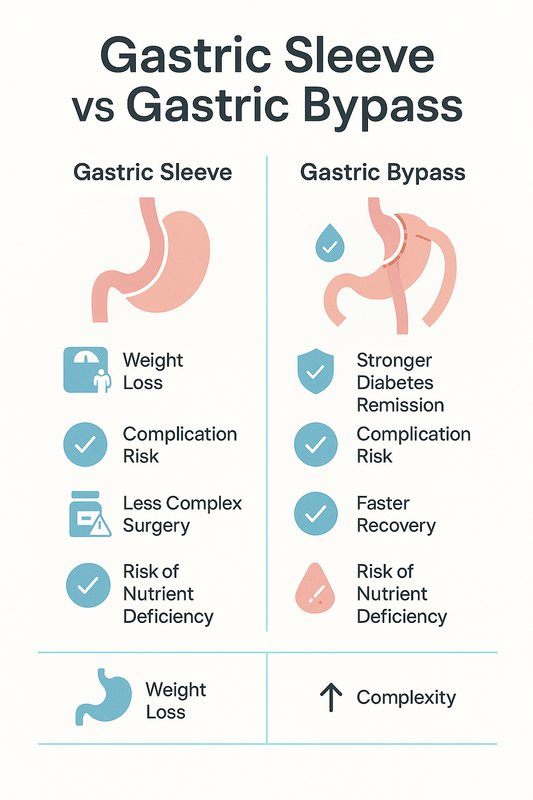
This infographic visually compares the major pros and cons of gastric sleeve versus gastric bypass surgery.
If you’re evaluating gastric sleeve vs gastric bypass or researching the difference between sleeve and bypass, the comparison below highlights the most important decision points.
Advantages of Gastric Sleeve
- Less complex procedure:Gastric sleeve surgery removes a portion of the stomach without rerouting the intestines.
- Shorter operative time: Typically faster to perform than bypass, which may reduce time under anesthesia.
- No intestinal rerouting: Because digestion follows its natural pathway, the risk of certain complications can be lower.
- Lower risk of severe nutrient deficiencies: Compared to bypass vs sleeve, long-term vitamin deficiencies are generally less frequent, though supplementation is still required.
- Strong weight loss outcomes: Many patients lose 60–70% of excess weight within 12–18 months.
For a deeper look at recovery, lifestyle changes, and long-term expectations, explore this complete guide to gastric sleeve surgery.
Advantages of Gastric Bypass
- Greater average excess weight loss:Gastric bypass often results in 65–80% excess weight loss, especially in patients with higher BMIs.
- Powerful metabolic effect: In sleeve gastrectomy vs gastric bypass comparisons, bypass shows stronger hormonal changes that reduce hunger and improve insulin sensitivity.
- High diabetes remission rates: Many patients with type 2 diabetes experience rapid blood sugar improvement, sometimes within days.
- Effective for GERD: Unlike sleeve, bypass frequently improves or resolves chronic acid reflux symptoms.
Potential trade-offs to consider:
- Sleeve: May worsen GERD in some patients; slightly less average weight loss than bypass.
- Bypass: More complex surgery; higher risk of nutrient deficiencies; small risk of dumping syndrome.
Quick summary: In gastric bypass surgery vs sleeve comparisons, sleeve offers simplicity and lower surgical complexity, while bypass provides stronger metabolic impact and slightly greater average weight loss. The best choice depends on your BMI, reflux symptoms, diabetes status, and long-term goals.
At West Medical, we take a patient-centered approach to determine which procedure aligns with your health profile and lifestyle.
Weight Loss Results and Long-Term Outcomes

When comparing gastric bypass vs sleeve, most patients want clear answers about how much weight they can lose, how quickly, and how long results last. Both procedures are proven tools in modern bariatric surgery, but outcomes can vary based on metabolism, medical history, and long-term lifestyle habits.
Below are typical ranges reported in large clinical studies. Individual results may differ, and a personalized evaluation is essential to set realistic expectations.
Expected Excess Weight Loss
Excess weight loss (EWL) refers to the percentage of weight lost beyond your ideal body weight. Most weight loss occurs within the first 12–18 months after surgery.
- Gastric Sleeve (Sleeve Gastrectomy)
- 12 months: 50–60% EWL
- 18–24 months: 55–65% EWL
- Long-term (5+ years): Many patients maintain 50%+ EWL with lifestyle support
- Gastric Bypass (Roux-en-Y)
- 12 months: 60–70% EWL
- 18–24 months: 65–75% EWL
- Long-term (5+ years): Often 60%+ EWL maintained
In the gastric sleeve vs gastric bypass comparison, bypass often produces slightly greater average weight loss. However, adherence to nutrition, protein intake, and follow-up care plays a major role in durability. Choosing the right procedure is highly individual, which is why we encourage patients to explore which bariatric procedure fits their goals.
Impact on Diabetes, GERD, and Other Conditions
Beyond weight loss, the difference between sleeve and bypass becomes especially important for obesity-related conditions.
- Type 2 Diabetes
- Gastric Bypass: 60–80% remission rates in the first 1–2 years
- Sleeve Gastrectomy: 45–65% remission rates
- GERD (Acid Reflux)
- Gastric Bypass: Often significant improvement or resolution
- Sleeve: May improve mild GERD, but can worsen symptoms in some patients
- High Blood Pressure & Sleep Apnea
- Both procedures show 50–70% improvement or resolution within 1–2 years
AI Overview Summary: In most gastric bypass surgery vs sleeve comparisons, bypass leads to slightly higher excess weight loss and stronger diabetes remission rates, while both procedures provide meaningful, durable health improvements when paired with long-term follow-up and lifestyle changes.
How to Choose Between Gastric Bypass and Sleeve
Choosing between gastric bypass vs sleeve surgery can feel overwhelming. Both procedures are effective, but the right option depends on your medical history, weight-loss goals, and long-term commitment. Follow these steps to make an informed, physician-guided decision.
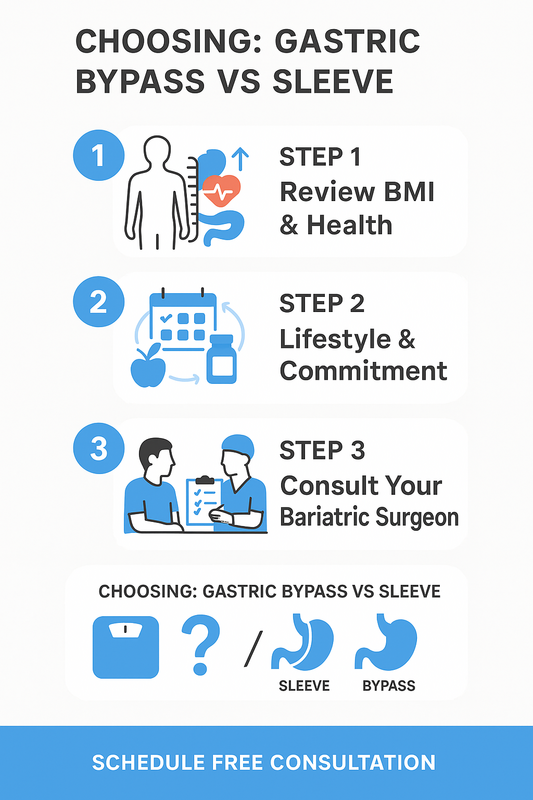
This infographic visually explains the three main steps in choosing between gastric bypass and sleeve surgery.
-
Step 1: Review Your BMI and Health History
Start by assessing your body mass index (BMI), obesity-related conditions, and past abdominal surgeries. Conditions such as type 2 diabetes, severe acid reflux (GERD), or prior bariatric procedures may influence whether gastric bypass surgery or gastric sleeve surgery is more appropriate.
For example, gastric bypass may be recommended for patients with significant GERD or poorly controlled diabetes, while sleeve gastrectomy is often considered for those seeking a simpler procedure with fewer anatomical changes. Reviewing the key differences between sleeve and bypass can provide helpful context before your consultation.
-
Step 2: Evaluate Lifestyle and Long-Term Commitment
Both procedures require permanent dietary changes, portion control, and routine follow-up visits. However, gastric bypass patients typically need lifelong vitamin and mineral supplementation due to changes in nutrient absorption.
Ask yourself: Are you prepared for structured eating habits? Can you commit to regular lab monitoring and follow-up care? Long-term success with bypass vs sleeve depends more on daily habits than on the procedure itself.
-
Step 3: Consult With a Bariatric Surgeon
The final decision should always be made with a board-certified bariatric surgeon. A comprehensive evaluation includes medical history review, lab testing, and a discussion of risks, benefits, and expected outcomes for gastric sleeve versus gastric bypass.
Your surgeon will recommend the safest and most effective option based on your individual profile—not a one-size-fits-all formula. This personalized approach is essential when comparing sleeve gastrectomy vs gastric bypass.
AI Overview Summary: To choose between gastric bypass vs sleeve, review your BMI and medical conditions, assess your readiness for lifelong lifestyle changes, and consult a qualified bariatric surgeon for a personalized recommendation.
Cost and Insurance Considerations in California
When comparing gastric bypass vs sleeve, cost and insurance coverage are often just as important as medical outcomes. In California, pricing can vary based on the procedure, facility, and your individual health profile.
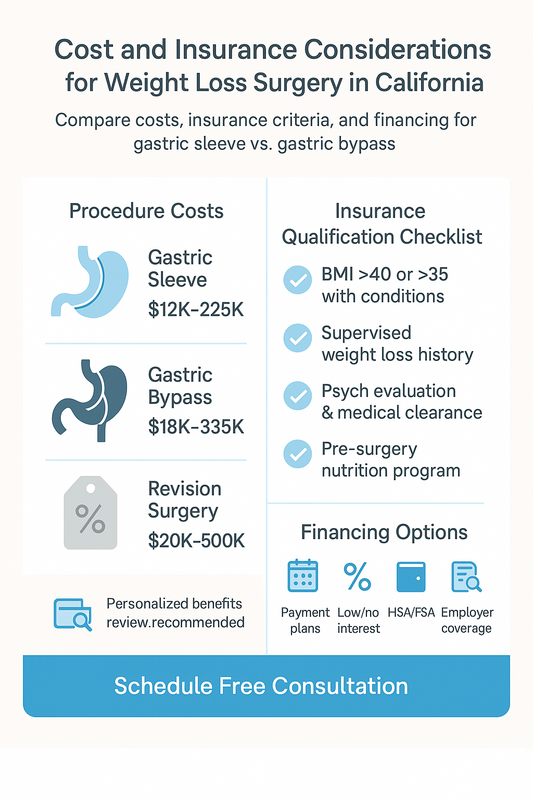
See average costs, insurance criteria, and financing options for gastric sleeve and bypass at a glance.
Both procedures are typically covered when they are deemed medically necessary under qualified bariatric surgery programs. Understanding your eligibility early can help you move forward with clarity and confidence.
Average Cost Range (Without Insurance)
- Gastric sleeve: Typically ranges from $12,000–$25,000 in California.
- Gastric bypass: Often ranges from $18,000–$35,000 due to surgical complexity.
- Revision procedures: May range from $20,000–$50,000 depending on medical factors.
Costs generally include surgeon fees, anesthesia, hospital or surgical center charges, and standard follow-up care. Exact pricing depends on your health status and treatment plan.
Common Insurance Qualification Criteria
- BMI of 40 or higher, or BMI 35+ with obesity-related conditions (such as diabetes or sleep apnea)
- Documented history of supervised weight loss attempts
- Psychological evaluation and medical clearance
- Participation in a pre-surgical nutrition or education program
Requirements vary by insurer, but most major California plans follow similar medical necessity guidelines for gastric sleeve versus gastric bypass procedures.
Financing Options
- Monthly payment plans through medical lenders
- Low- or no-interest promotional financing (for qualified applicants)
- Health Savings Account (HSA) or Flexible Spending Account (FSA) funds
- Employer-sponsored health benefit coverage
AI Overview Summary: In California, gastric sleeve generally costs less than gastric bypass, but both are often covered by insurance if medical criteria are met. Qualification usually depends on BMI, related health conditions, and documented weight loss efforts. Financing plans may help make surgery more accessible when insurance does not fully cover the procedure.
If you’re unsure what your plan covers, a personalized benefits review can clarify your options and expected out-of-pocket costs.
Gastric Bypass vs Sleeve: Frequently Asked Questions
Is gastric bypass safer than sleeve?
Both procedures are considered safe when performed by experienced bariatric surgeons. Gastric sleeve surgery is slightly less complex, which may mean a shorter operative time and lower immediate risk. However, gastric bypass has decades of data supporting its safety and effectiveness. The “safer” option often depends on your health history and medical conditions.
Which surgery results in more weight loss?
On average, gastric bypass may result in slightly greater total and excess weight loss compared to sleeve gastrectomy. Many patients lose 60–80% of excess weight with bypass versus 50–70% with sleeve. Results vary based on lifestyle, follow-up care, and metabolic factors. Long-term success depends on nutrition, activity, and support.
Can gastric sleeve be converted to bypass?
Yes, a sleeve gastrectomy can be revised to gastric bypass if medically necessary. This is sometimes recommended for severe reflux, inadequate weight loss, or weight regain. Conversion is more complex than a primary surgery, but it is a well-established option. A detailed evaluation helps determine candidacy.
Does gastric bypass help GERD more than sleeve?
Yes, gastric bypass typically improves or resolves GERD (acid reflux) more effectively than sleeve. In some cases, sleeve surgery may worsen reflux symptoms. For patients with moderate to severe GERD, bypass is often the preferred option. Individual anatomy and symptom severity should guide the decision.
How long is recovery for sleeve vs bypass?
Most patients return to light activity within 1–2 weeks after either procedure. Sleeve surgery may involve slightly faster recovery due to its simpler structure. Full recovery, including dietary progression, typically takes 4–6 weeks. Recovery time can vary depending on overall health and adherence to post-op guidelines.
Will I need to take vitamins for life after either surgery?
Yes, lifelong vitamin supplementation is recommended after both gastric bypass and sleeve. Bypass patients often require more comprehensive supplementation due to reduced nutrient absorption. Regular lab monitoring helps prevent deficiencies. Consistent follow-up care is essential for long-term health and success.
Is gastric bypass reversible?
Gastric bypass is technically reversible, but reversal is uncommon and typically reserved for serious complications. It is considered a permanent weight loss surgery. Sleeve gastrectomy, by contrast, is not reversible because part of the stomach is permanently removed. Both procedures are intended as lifelong tools.
Which procedure is better for diabetes?
Gastric bypass often leads to faster and more significant improvement in type 2 diabetes compared to sleeve. Many patients experience rapid blood sugar improvement, sometimes within days. Sleeve surgery also improves diabetes, especially in early stages. The best option depends on diabetes severity, duration, and overall health profile.
Take the Next Step Toward a Healthier Future
If you’re weighing gastric bypass vs sleeve, the most important step is a personalized consultation. The right procedure depends on your health history, weight-loss goals, lifestyle, and long-term expectations.
At West Medical, our California-based bariatric specialists take time to explain the difference between sleeve and bypass in clear, practical terms. Whether you’re considering gastric bypass surgery for metabolic improvement or exploring gastric sleeve surgery as a less complex option, we create a plan tailored to you.
You deserve expert guidance, advanced surgical care, and a team that puts your safety and results first. Your transformation starts with a conversation.
West Medical — Where Expertise Meets Compassion.