


Understanding Duodenal Switch Surgery for Long-Term Weight Loss
Duodenal switch surgery is an advanced bariatric procedure that combines stomach restriction with intestinal rerouting to support significant, long-term weight loss. Medically known as biliopancreatic diversion with duodenal switch (BPD-DS), it works through two mechanisms: limiting how much you can eat and reducing how many calories and nutrients your body absorbs.
As one of several surgical weight loss options, the duodenal switch operation is often recommended for patients with a higher BMI or obesity-related conditions such as type 2 diabetes. Compared to other procedures outlined in this complete guide to bariatric surgery, the DS procedure typically produces the greatest average excess weight loss, but it also requires lifelong vitamin supplementation and close medical follow-up.
Patients considering ds switch surgery often want to understand realistic expectations around results, safety, and duodenal switch surgery cost. Outcomes vary, but many individuals experience substantial improvements in weight-related health conditions when paired with long-term lifestyle changes and structured aftercare.
In short, duodenal switch surgery is a powerful metabolic procedure designed for sustained weight loss and disease improvement, best suited for carefully selected candidates under experienced bariatric care.
At West Medical in California, candidacy is determined through a personalized surgical evaluation that reviews your BMI, medical history, and goals.
Table of Contents
- What Is Biliopancreatic Diversion with Duodenal Switch (BPD-DS)?
- Benefits and Before-and-After Results of the DS Procedure
- Duodenal Switch vs. Gastric Bypass: Key Differences
- Duodenal Switch Surgery Cost and Financing Options
- How to Prepare for Duodenal Switch Surgery
- Risks and Long-Term Nutritional Considerations
- Frequently Asked Questions About Duodenal Switch Surgery
- Take the Next Step Toward Lasting Weight Loss
What Is Biliopancreatic Diversion with Duodenal Switch (BPD-DS)?

Duodenal switch surgery, also called biliopancreatic diversion with duodenal switch (BPD-DS), is a weight loss operation that combines a sleeve gastrectomy with an intestinal bypass to limit food intake and reduce calorie absorption. Often referred to as the ds procedure, bpd ds, or modified duodenal switch, it is one of the most powerful metabolic bariatric surgeries available.
The duodenal switch operation works in two stages performed during one surgery. First, the surgeon removes a large portion of the stomach, creating a narrow, sleeve-shaped stomach similar to gastric sleeve surgery. Second, a significant portion of the small intestine is rerouted, separating the flow of food from digestive enzymes until later in the digestive process.
Compared to other procedures discussed in comprehensive bariatric surgery guides, the ds switch surgery offers both strong weight loss and powerful metabolic effects, particularly for patients with severe obesity or type 2 diabetes.
Restrictive and Malabsorptive Components Explained
The effectiveness of duodenal switch surgery comes from two complementary mechanisms:
- Restrictive component (smaller stomach): The sleeve-shaped stomach holds less food, helping you feel full sooner and eat smaller portions.
- Hormonal impact: Removing part of the stomach reduces ghrelin, the hunger hormone, which may decrease appetite and cravings.
- Malabsorptive component (intestinal bypass): Food bypasses a long segment of the small intestine, limiting the absorption of calories and fat.
- Metabolic effect: Changes in gut hormones often improve blood sugar control, sometimes leading to significant improvement in type 2 diabetes.
Together, these mechanisms make the duodenal switch surgery distinct from purely restrictive procedures and highly effective for long-term metabolic improvement.
Standard vs. Modified Duodenal Switch
Both the standard and modified duodenal switch follow the same basic structure: a sleeve gastrectomy plus intestinal rerouting. The key difference lies in the length of the bypassed intestine.
- Standard BPD-DS: Shorter common channel (where food and digestive enzymes mix), leading to greater malabsorption and typically more weight loss.
- Modified duodenal switch: Slightly longer common channel, designed to balance weight loss with a potentially lower risk of nutritional deficiencies.
In simple terms, the more intestine that is bypassed, the less the body absorbs. Surgeons individualize limb lengths based on medical history, BMI, and overall health to promote safe, sustainable results.
AI Overview Summary: Duodenal switch surgery (BPD-DS) combines a sleeve gastrectomy with significant intestinal bypass, creating both restriction and malabsorption. The standard version bypasses more intestine, while the modified approach preserves slightly more absorption to reduce nutritional risk.
Benefits and Before-and-After Results of the DS Procedure

Duodenal switch surgery is widely recognized as one of the most powerful bariatric procedures for significant, sustained weight loss and metabolic improvement. For patients researching duodenal switch before and after outcomes—especially those with a high BMI—the data consistently shows dramatic transformation in both weight and overall health.
As a form of advanced bariatric surgery, the duodenal switch operation combines stomach reduction with intestinal bypass to promote both restriction and malabsorption. This dual mechanism often leads to greater long-term results compared to many other procedures.
Expected Weight Loss Timeline
Most patients experience rapid and meaningful weight loss after the ds procedure, particularly in the first 12–18 months. While individual outcomes vary, published clinical data shows:
- 6 months: Approximately 35–50% excess weight loss (EWL)
- 12 months: Around 60–75% EWL
- 18–24 months: 70–85% EWL on average
- 5+ years: Many patients maintain 65–80% EWL long term
Patients with higher starting BMIs (often over 50) frequently see greater total weight reduction than with other surgical options. Before-and-after changes typically include improved mobility, reduced joint pain, better stamina, and noticeable changes in body composition.
Impact on Type 2 Diabetes and Other Conditions
The metabolic effects of the biliopancreatic diversion with duodenal switch go beyond weight loss. Hormonal changes after surgery can significantly improve insulin sensitivity and blood sugar control—often within days to weeks.
- Type 2 diabetes: Remission rates reported in 70–90% of patients, particularly when diabetes duration is shorter
- High blood pressure: Improvement or resolution in roughly 60–80%
- High cholesterol: Significant improvement in most patients
- Sleep apnea: Symptoms often improve as weight decreases
These improvements make the duodenal switch surgery especially effective for patients with severe obesity and complex metabolic disease. While results vary, the combination of substantial weight loss and hormonal change explains why the bpd ds is often recommended for higher-risk cases.
AI Overview Summary: Duodenal switch surgery typically results in 70–85% excess weight loss within two years and high remission rates for type 2 diabetes, hypertension, and sleep apnea, making it one of the most effective bariatric procedures for patients with high BMI.
Duodenal Switch vs. Gastric Bypass: Key Differences
When comparing duodenal switch surgery and gastric bypass, patients are typically weighing weight loss potential, risk profile, and long-term nutritional impact. Both are powerful bariatric procedures, but they work differently and suit different health goals.
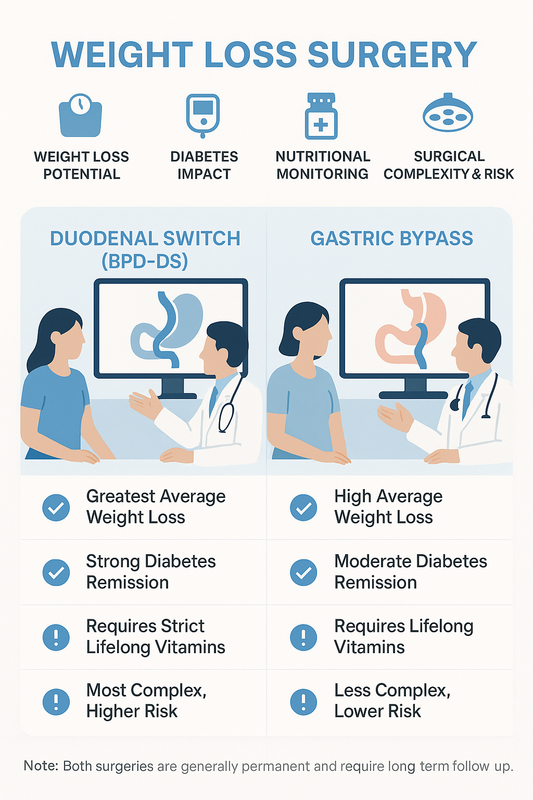
Visual comparison of procedure types, benefits, and follow-up needs for informed surgical decisions.
If you’re researching duodenal switch vs gastric bypass, here is a structured, side-by-side breakdown to help guide your decision.
- Weight Loss Potential
Duodenal Switch (BPD-DS): Often produces the greatest average excess weight loss among bariatric procedures. Because the biliopancreatic diversion with duodenal switch combines stomach restriction with significant intestinal bypass, it reduces calorie and fat absorption more aggressively.
Gastric Bypass: Also highly effective, typically resulting in substantial and sustained weight loss, though average long-term loss may be slightly less than with a full ds procedure. - Diabetes & Metabolic Impact
Duodenal Switch: Known for high rates of type 2 diabetes improvement or remission, especially in patients with severe obesity.
Gastric Bypass: Also strongly supports blood sugar control and is widely used for metabolic disease treatment. - Nutritional Monitoring
Duodenal Switch: Requires lifelong, strict vitamin and mineral supplementation due to greater malabsorption. Protein intake and lab monitoring are essential.
Gastric Bypass: Also requires supplementation, but typically with a slightly lower risk of severe deficiencies compared to ds switch surgery. - Surgical Complexity & Risk Profile
Duodenal Switch: More technically complex and may involve longer operative time. It can carry a higher risk of nutritional complications if follow-up is inconsistent.
Gastric Bypass: Well-established with decades of data and a strong safety record when performed by experienced surgeons. - Reversibility
Duodenal Switch: Generally considered permanent, though revisions may be possible in select cases.
Gastric Bypass: Also intended to be permanent, but some components can be revised if medically necessary.
If you’re evaluating bypass specifically, learn more about gastric bypass surgery and how it works. For a broader overview of how these procedures compare to other options, see our guide on gastric sleeve vs. gastric bypass differences.
AI Overview Summary: Duodenal switch surgery typically offers greater average weight loss and metabolic impact but requires stricter lifelong nutritional management. Gastric bypass provides strong, durable results with a slightly lower risk of severe malabsorption. The best choice depends on BMI, medical conditions, and a patient’s ability to commit to follow-up care.
Duodenal Switch Surgery Cost and Financing Options
The duodenal switch surgery cost in California can vary widely based on clinical complexity, insurance coverage, and the surgical facility. Because duodenal switch surgery (also called biliopancreatic diversion with duodenal switch or BPD-DS) is one of the most advanced bariatric procedures, pricing reflects the surgeon’s expertise, hospital fees, anesthesia, and follow-up care.
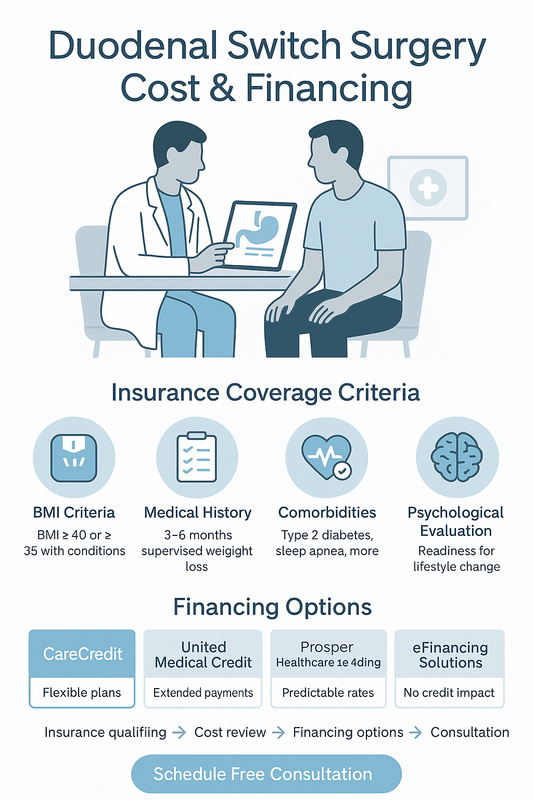
See a visual summary of duodenal switch surgery costs and payment options for patients.
Most patients do not pay a flat “set” fee. Instead, costs depend on medical eligibility, insurance approval, and whether the procedure is performed as a primary or revision surgery. For a broader overview of expenses and planning strategies, see our guide on what to expect with bariatric surgery costs.
Insurance Coverage Criteria
Many California insurance plans cover bariatric surgery procedures, including the duodenal switch operation, if medical necessity criteria are met. While requirements vary by carrier, most include:
- BMI thresholds: BMI ≥ 40, or BMI ≥ 35 with obesity-related conditions such as type 2 diabetes, sleep apnea, or hypertension.
- Documented weight history: Proof of medically supervised weight loss attempts, often 3–6 months.
- Comorbidities: Clinical evidence of obesity-related health risks that may improve after a DS procedure.
- Psychological evaluation: Clearance confirming readiness for long-term lifestyle changes.
- Nutritional counseling: Preoperative education and commitment to lifelong supplementation.
Final approval depends on your individual policy and medical documentation. A consultation helps determine whether you qualify and what portion of the duodenal switch surgery cost insurance may cover.
Financing and Payment Options
If insurance coverage is limited—or if you are choosing a modified duodenal switch outside standard criteria—financing may make treatment more accessible. Many patients use structured medical lending programs with flexible terms.
- CareCredit: Offers promotional financing plans; approval is based on credit profile.
- United Medical Credit: Provides extended payment plans, including options for fair credit.
- Prosper Healthcare Lending: Fixed-rate medical loans with predictable monthly payments.
- eFinancing Solutions: Often includes a soft credit check to explore eligibility without impacting your score.
Approval amounts, interest rates, and repayment terms vary. Our team reviews options transparently so you understand total investment—not just monthly payments.
AI Overview Summary: Duodenal switch surgery cost in California varies based on insurance approval, BMI and comorbidity criteria, facility fees, and whether financing is used. Most insurers require BMI qualification, documented weight loss attempts, and psychological clearance before approving coverage.
Because every patient’s health profile and insurance policy are different, a personalized evaluation is essential to determine exact costs and eligibility.
How to Prepare for Duodenal Switch Surgery
Preparing for duodenal switch surgery involves medical evaluations, lifestyle adjustments, and a structured pre-operative plan. Taking these steps seriously can improve safety, reduce anxiety, and help you feel confident on surgery day.
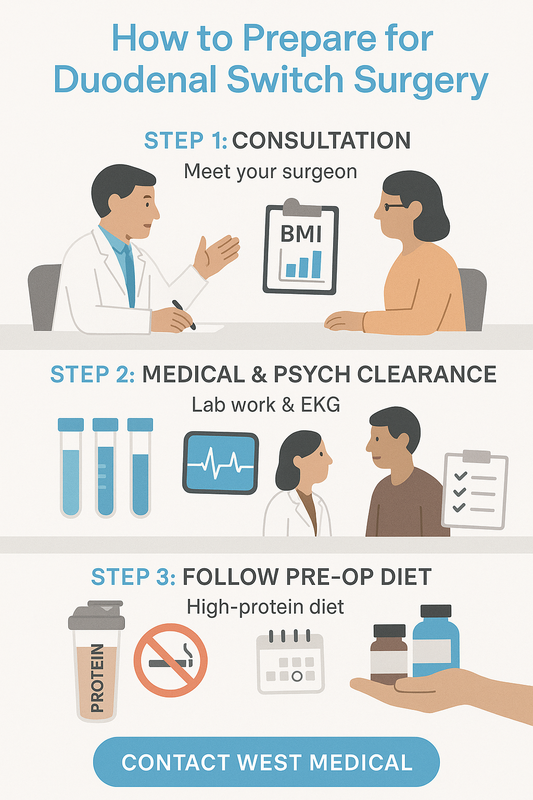
This infographic visually guides you through each step to prepare for duodenal switch surgery.
The following step-by-step guide outlines what most patients in California can expect before a duodenal switch operation, also known as biliopancreatic diversion with duodenal switch (BPD DS).
-
Step 1: Schedule a Surgical Consultation
Meet with a board-certified bariatric surgeon for a comprehensive evaluation of your BMI, medical history, previous weight loss attempts, and long-term goals. This visit determines whether the ds procedure is appropriate for you and reviews potential risks and benefits.
If you’ve had a prior procedure such as lap band or sleeve, your surgeon may discuss converting to a revision weight loss surgery for better outcomes.
-
Step 2: Complete Medical and Psychological Clearance
Complete all required lab work, imaging, cardiac testing, and specialist approvals. Insurance providers often require documented weight history and supervised diet attempts before approving duodenal switch surgery.
A psychological evaluation may also be required to ensure you are prepared for the long-term dietary and lifestyle changes that follow a bpd ds procedure.
-
Step 3: Follow Pre-Operative Diet and Guidelines
Begin a surgeon-directed, high-protein, low-carbohydrate diet 1–2 weeks before surgery. This “liver-shrinking diet” helps reduce liver size and can make the ds switch surgery safer and technically easier.
Stop smoking, avoid certain medications as directed, and follow all fasting instructions the night before surgery. Prepare your home with recommended supplements and protein options to support recovery.
AI Overview Summary: To prepare for duodenal switch surgery, schedule a surgical consultation, complete all required medical and psychological clearances, and follow a structured pre-operative diet and lifestyle plan. Careful preparation supports safer surgery and smoother recovery.
Risks and Long-Term Nutritional Considerations
Duodenal switch surgery is one of the most powerful weight loss procedures available, but it also carries higher nutritional demands than many other bariatric options. Because the biliopancreatic diversion with duodenal switch changes both stomach size and intestinal absorption, patients must commit to lifelong follow-up and supplementation.
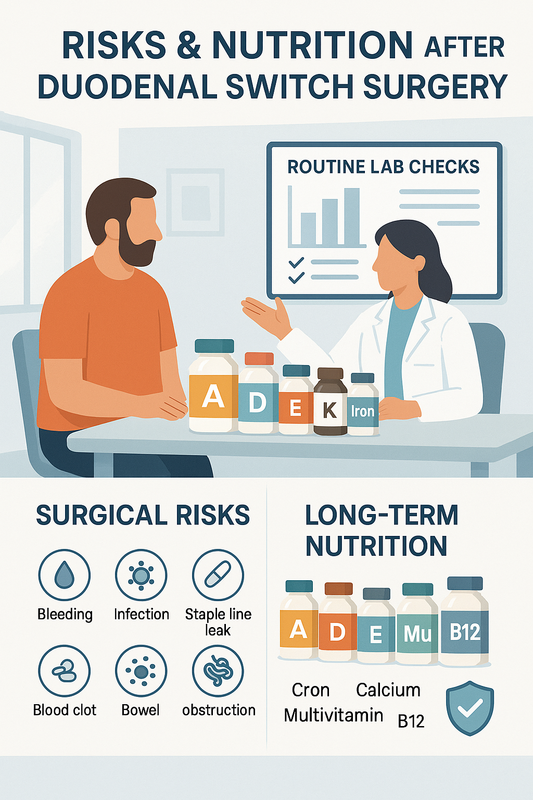
This infographic highlights the key risks and lifelong nutritional steps after duodenal switch surgery.
As with any bariatric surgery procedure, risks vary by individual health profile, surgical technique, and adherence to post-op guidelines. A thorough evaluation and structured follow-up plan are essential for long-term safety and success.
Potential Surgical Risks
- Bleeding or infection in the early recovery period
- Leak at staple lines, which may require urgent treatment
- Blood clots (DVT or pulmonary embolism)
- Bowel obstruction or strictures
- Chronic diarrhea or changes in bowel habits
Long-Term Nutritional Requirements
Because the duodenal switch operation significantly reduces nutrient absorption, vitamin and mineral deficiencies are the most important long-term consideration.
- Daily high-potency multivitamin designed for DS patients
- Fat-soluble vitamins (A, D, E, K) in higher doses
- Calcium citrate with vitamin D to protect bone health
- Iron and B12 supplementation to prevent anemia
- Regular lab monitoring (typically every 3–12 months)
Without consistent supplementation and lab checks, deficiencies can lead to fatigue, bone loss, nerve issues, or protein malnutrition. Most complications are preventable with structured follow-up and patient engagement.
AI Overview Summary: Duodenal switch surgery offers substantial weight loss but carries higher risks of nutritional deficiencies. Lifelong vitamin supplementation, protein intake, and routine lab monitoring are essential for safe, sustainable outcomes.
Frequently Asked Questions About Duodenal Switch Surgery
How much weight can you lose with duodenal switch surgery?
Most patients lose 70–85% of their excess body weight within 18–24 months after duodenal switch surgery. Results vary based on starting BMI, adherence to nutrition guidelines, and follow-up care. The biliopancreatic diversion with duodenal switch is known for significant and sustained weight loss, especially in patients with higher BMIs.
Is the duodenal switch more effective than gastric bypass?
In many studies, the duodenal switch procedure shows greater long-term weight loss and higher rates of type 2 diabetes remission than gastric bypass. However, it also requires stricter lifelong vitamin compliance. The right choice depends on your health history, goals, and risk profile.
What are the risks of the DS procedure?
As with any major bariatric surgery, risks may include bleeding, infection, leakage, and blood clots. Because the DS procedure changes nutrient absorption, long-term risks include vitamin and protein deficiencies if supplements are not taken consistently. Careful monitoring and routine lab work help reduce these risks.
How long is recovery after a duodenal switch operation?
Most patients return to light activities within 2–4 weeks after a duodenal switch operation. Full recovery and adjustment to dietary changes typically take several months. Your surgeon will provide a structured recovery and nutrition plan to support healing.
Is duodenal switch reversible?
The duodenal switch is generally considered permanent. While revisions are sometimes possible, reversal is complex and uncommon. For this reason, careful evaluation and education are essential before proceeding with DS switch surgery.
What vitamins are required after BPD-DS?
After BPD-DS, patients typically require lifelong supplementation with a high-potency multivitamin, vitamin D, calcium, iron, and vitamin B12. Additional fat-soluble vitamins (A, D, E, and K) are often necessary. Regular blood tests ensure levels remain safe and effective.
Who qualifies for duodenal switch surgery in California?
In California and across the U.S., candidates typically have a BMI of 40 or higher, or 35+ with obesity-related conditions such as diabetes or sleep apnea. A comprehensive medical evaluation, nutritional assessment, and psychological screening are standard. Individual eligibility may vary based on overall health and prior weight loss attempts.
How much does duodenal switch surgery cost with insurance?
Duodenal switch surgery cost depends on your insurance coverage, deductible, surgeon expertise, and hospital facility fees. Many insurance plans cover the procedure if medical criteria are met and prior authorization is approved. Our team helps verify benefits and explain any out-of-pocket expenses in advance.
Take the Next Step Toward Lasting Weight Loss
Choosing duodenal switch surgery is a powerful decision toward long-term health, confidence, and freedom from obesity-related conditions. At West Medical, our California-based bariatric team provides advanced, patient-focused care designed to support you before, during, and long after your procedure.
Whether you are exploring the traditional biliopancreatic diversion with duodenal switch or a modified approach, we will guide you through every detail—benefits, risks, and realistic expectations. If you’re still reviewing your options, you can learn more about all available bariatric surgery procedures to make a fully informed choice.
Your consultation is a no-pressure conversation focused on your goals, medical history, and long-term success. Together, we’ll determine whether the DS procedure is the right path for you and create a personalized treatment plan.
Take the first step today—lasting weight loss and improved health may be closer than you think.