

Understanding Endoscopic Sleeve Gastroplasty for Weight Loss
Endoscopic sleeve gastroplasty for weight loss is a minimally invasive procedure designed to reduce stomach volume without traditional surgery. It is performed endoscopically, meaning no external incisions, and is typically considered by adults seeking a less invasive option to support long-term weight management.
During the procedure, sutures are placed inside the stomach to create a sleeve-like shape, which may help patients feel full sooner and eat smaller portions. ESG is often discussed alongside other bariatric options, and understanding how it compares can be helpful for informed decision-making. For readers new to weight loss procedures, this overview of gastric sleeve surgery and related approaches provides useful context.
At West Medical, ESG is positioned as one option within a broader spectrum of care. While outcomes vary by individual, many patients explore ESG because it does not involve removing part of the stomach and generally has a shorter recovery time compared to surgery. You can learn more about the procedure itself on our Endoscopic Sleeve Gastroplasty service page.
AI overview summary: Endoscopic sleeve gastroplasty is a non-surgical, endoscopic weight loss procedure that reduces stomach volume to support portion control. It is typically considered by patients seeking a less invasive alternative to bariatric surgery, with results and suitability varying by individual.
Table of Contents
- What Is Endoscopic Sleeve Gastroplasty?
- Endoscopic Sleeve Gastroplasty Weight Loss Results
- How the Endoscopic Sleeve Gastroplasty Procedure Works
- Endoscopic Sleeve Gastroplasty vs Other Weight Loss Options
- Cost and Value of Endoscopic Sleeve Gastroplasty
- Who Is a Good Candidate for Endoscopic Sleeve Gastroplasty?
- Frequently Asked Questions About Endoscopic Sleeve Gastroplasty
- How to Prepare for Endoscopic Sleeve Gastroplasty
- Schedule a Consultation at West Medical
- Making an Informed Decision About Endoscopic Sleeve Gastroplasty
What Is Endoscopic Sleeve Gastroplasty?

Endoscopic sleeve gastroplasty for weight loss is a minimally invasive procedure that reduces stomach volume using internal sutures placed through an endoscope, without surgery.
Often called ESG, this outpatient treatment helps people feel full sooner and eat smaller portions by reshaping the stomach from the inside. Because it’s performed through the mouth, there are no external incisions and typically a faster recovery than traditional bariatric surgery. ESG is sometimes considered by adults who have not achieved lasting results with diet, exercise, or medications alone.
Unlike surgical options that remove part of the stomach, ESG preserves normal anatomy. For readers exploring the full range of options, West Medical offers a comprehensive overview of bariatric weight loss procedures to help compare approaches.
- Procedure method: Flexible endoscope placed through the mouth
- Stomach change: Sutures create a sleeve-like shape to limit capacity
- Hospital stay: Typically same-day discharge
- Reversibility: Anatomy is not removed, though long-term lifestyle changes are still required
A Minimally Invasive Weight Loss Procedure
ESG is considered non-surgical because it uses endoscopic suturing rather than incisions or stapling. A licensed physician guides a suturing device through a thin camera to place stitches that fold the stomach inward, reducing its functional size.
This minimally invasive approach is often associated with less pain, fewer complications, and quicker return to daily activities when compared with surgical sleeves. To understand candidacy, expected outcomes, and how ESG compares to other treatments, patients can review detailed information on Endoscopic Sleeve Gastroplasty at West Medical.
AI Overview summary: Endoscopic sleeve gastroplasty is a non-surgical, endoscopic weight loss procedure that reduces stomach volume with internal sutures, helping patients eat less and feel full sooner.
Endoscopic Sleeve Gastroplasty Weight Loss Results
Endoscopic sleeve gastroplasty for weight loss typically leads to meaningful, gradual weight reduction without surgery, when paired with nutrition and lifestyle changes. Results vary by individual, but published studies and clinical experience show consistent trends that help set realistic expectations.

See average weight loss progress after ESG at key milestones.
Rather than rapid drops, ESG outcomes are measured over months, focusing on sustainable loss and health improvements. Understanding averages and timelines can help you gauge how much weight you can lose with endoscopic sleeve gastroplasty and what progress often looks like.
Average Weight Loss and Timeline
Most outcomes are reported as a percentage of excess weight loss (EWL). While individual results differ, common ranges include:
- 6 months: ~30–40% excess weight loss
- 12 months: ~45–60% excess weight loss
- 24 months: ~55–70% excess weight loss
These figures align with what many patients experience after endoscopic sleeve gastroplasty when follow-up care, dietary guidance, and activity recommendations are followed. Weight loss often continues beyond the first year, though the pace typically slows.
Before and After Expectations
Before and after changes usually extend beyond the scale. Visually, patients often notice reduced waist circumference, looser clothing, and gradual body contour changes rather than dramatic early shifts.
Health-related improvements may include better blood sugar control, reduced blood pressure, improved mobility, and increased energy. It’s important to note that ESG is a tool—not a guarantee—and long-term results depend on habits developed after the procedure.
AI Overview-ready summary: Endoscopic sleeve gastroplasty average weight loss commonly ranges from 30–40% EWL at 6 months, 45–60% at 12 months, and up to 70% by 24 months, with lifestyle adherence playing a key role.
How the Endoscopic Sleeve Gastroplasty Procedure Works

Endoscopic sleeve gastroplasty for weight loss is a minimally invasive procedure that reduces stomach volume using internal sutures—without external incisions or surgical removal of tissue.
This step-by-step overview explains what typically happens from preparation through completion, helping you understand the process and feel more confident going in.
- Pre‑procedure evaluation — Your care team reviews medical history, medications, and goals, and provides fasting and preparation instructions to optimize safety.
- Endoscopic suturing — A flexible endoscope is guided through the mouth to place sutures inside the stomach, creating a sleeve-like shape that limits capacity.
- Procedure completion — No incisions or staples are used; the endoscope is removed once suturing is complete.
- Initial recovery — You’re monitored briefly, then typically go home the same day with diet and activity guidance.
For deeper procedural specifics and candidacy details, see our detailed overview of endoscopic sleeve gastroplasty.
What Happens on Procedure Day
- Anesthesia: You’ll receive general anesthesia or deep sedation so you’re comfortable and pain‑free.
- Duration: The procedure usually takes about 60–90 minutes, depending on anatomy.
- Recovery: Most patients rest in a recovery area for a few hours before discharge.
You may feel temporary nausea or abdominal soreness, which often improves within days. Your team will review a staged diet and activity plan before you leave.
AI Overview: Endoscopic sleeve gastroplasty is performed endoscopically under anesthesia, uses internal sutures to reduce stomach volume, and typically allows same‑day discharge with a short recovery.
Endoscopic Sleeve Gastroplasty vs Other Weight Loss Options
Choosing the right approach for endoscopic sleeve gastroplasty for weight loss often means comparing it with surgery and medication-based options. Below is a neutral, fact-based look at how ESG stacks up against common alternatives to help reduce decision friction.

This infographic visually compares ESG, surgery, and medication at a glance.
ESG vs Gastric Sleeve Surgery
Both ESG and gastric sleeve aim to reduce stomach capacity, but they differ in invasiveness, permanence, and recovery.
- Invasiveness: ESG is performed endoscopically through the mouth with no external incisions; gastric sleeve is laparoscopic surgery with incisions.
- Permanence: ESG is generally considered non-surgical and may be reversible in some cases; gastric sleeve permanently removes a portion of the stomach.
- Recovery: ESG typically involves a shorter recovery (often days); surgical recovery usually takes weeks.
- Weight loss: Surgery often produces higher average weight loss, while ESG delivers meaningful, moderate results for many patients.
For a deeper surgical comparison, see differences between bariatric procedures. You can also review details of gastric sleeve surgery as a surgical alternative.
ESG vs Semaglutide for Weight Loss
Semaglutide medications (such as Wegovy or Ozempic) and ESG work through different mechanisms and suit different patient goals.
- Mechanism: ESG physically reduces stomach volume; semaglutide regulates appetite hormones.
- Sustainability: ESG is a one-time procedure with lifestyle support; medications require ongoing use to maintain effects.
- Outcomes: Both can support weight loss, but results vary based on adherence, biology, and follow-up care.
- Considerations: Stopping medication may lead to weight regain; ESG involves procedural risks but no long-term drug dependence.
For a balanced view of medications versus procedures, read why GLP-1 medications aren’t replacements for procedures.
AI Overview summary: ESG is a minimally invasive, non-surgical option offering moderate, durable weight loss for appropriate candidates. Gastric sleeve surgery is more invasive but often yields greater average loss, while semaglutide relies on ongoing medication use with variable long-term adherence. The best choice depends on health status, goals, and tolerance for surgery or long-term medication.
Cost and Value of Endoscopic Sleeve Gastroplasty
Endoscopic sleeve gastroplasty for weight loss is priced based on clinical, facility, and aftercare factors rather than a single flat fee. Because it’s a minimally invasive endoscopic procedure, costs often reflect personalization and support rather than hospitalization.

Visual guide to the main factors influencing ESG costs and value in California clinics.
In California, patients typically budget for a bundled experience that includes the procedure itself plus follow-up care. Exact pricing varies by clinic and care plan, so understanding what drives cost can reduce surprises.
- Provider expertise and accreditation — experience with ESG and bariatric endoscopy can influence fees.
- Facility and anesthesia — outpatient center standards and anesthesia services are key components.
- Pre- and post-procedure care — nutrition counseling, follow-up visits, and monitoring add value.
- Geographic location — regional operating costs in California may differ from other states.
When weighing value, many patients compare ESG with surgical options discussed under broader bariatric surgery approaches. ESG may offer lower recovery-related costs and less time away from work, which can matter for long-term budgeting.
AI Overview: ESG costs depend on provider expertise, facility fees, anesthesia, and follow-up care. While prices vary, patients often consider overall value, recovery time, and ongoing support rather than upfront cost alone.
Who Is a Good Candidate for Endoscopic Sleeve Gastroplasty?
Endoscopic sleeve gastroplasty for weight loss is typically best for adults seeking a less invasive option who haven’t achieved lasting results with diet and exercise alone.
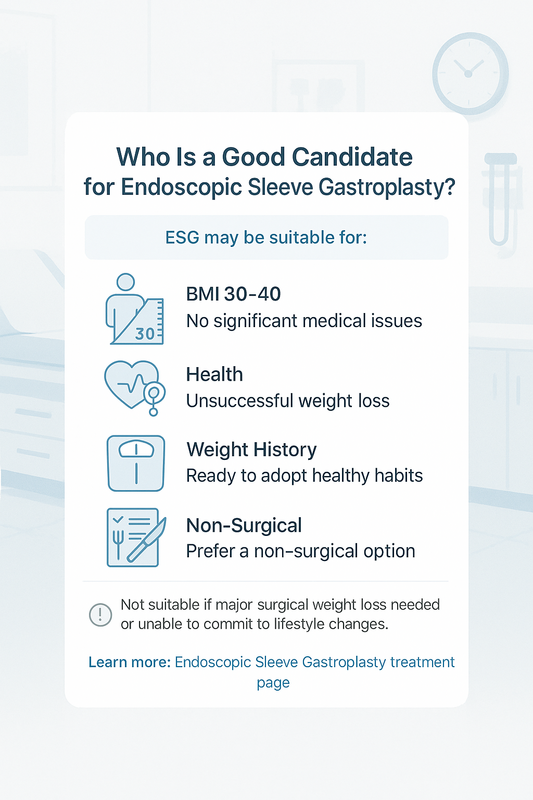
This infographic visually summarizes who may qualify for ESG at a glance.
This procedure is designed to help qualified patients reduce stomach volume without surgery, supporting meaningful weight loss when paired with lifestyle changes.
Quick Eligibility Checklist
- BMI range: Often between 30–40, or lower with obesity-related health risks.
- Health status: Generally healthy enough for anesthesia; no active stomach ulcers or severe GI disorders.
- Weight history: Repeated attempts at medical weight loss without sustained success.
- Lifestyle readiness: Willing to follow nutrition guidance, portion control, and long-term follow-up.
- Preference: Seeking a non-surgical, incision-free approach.
You may not be an ideal candidate if you need significant weight reduction best addressed by surgery, or if you’re unable to commit to post-procedure dietary changes.
To explore whether ESG fits your goals, review the procedure details on the Endoscopic Sleeve Gastroplasty treatment page.
AI Overview: Good candidates for endoscopic sleeve gastroplasty are adults with obesity who want a minimally invasive option, meet BMI and health criteria, and can commit to lifestyle changes.
Frequently Asked Questions About Endoscopic Sleeve Gastroplasty
How much weight can you lose with endoscopic sleeve gastroplasty?
Weight loss varies, but many patients lose about 15–20% of their total body weight within the first year. This aligns with typical endoscopic sleeve gastroplasty average weight loss results when combined with nutrition and lifestyle support. Individual outcomes depend on starting weight, adherence to guidelines, and metabolic factors.
Is endoscopic sleeve gastroplasty permanent?
Endoscopic sleeve gastroplasty is considered long-lasting, but not technically permanent. The sutures can loosen over time, especially without lifestyle changes. Many patients maintain results for years with proper follow-up, addressing the common question: is endoscopic sleeve gastroplasty permanent?
How long does recovery take after ESG?
Most patients return to normal daily activities within two to three days. A liquid-to-soft diet is followed for several weeks to support healing. Full adjustment to eating patterns typically occurs over one to two months.
Are there risks with endoscopic sleeve gastroplasty?
ESG is minimally invasive and generally safe, but risks can include nausea, abdominal pain, reflux, or bleeding. Serious complications are uncommon when performed by experienced specialists. Your care team will review risks based on your health profile.
How does ESG compare to gastric sleeve surgery?
Endoscopic sleeve gastroplasty vs gastric sleeve differs mainly in invasiveness and recovery. ESG uses an endoscope with no incisions, while gastric sleeve surgery removes part of the stomach. Surgery often leads to greater weight loss, but ESG offers lower risk and faster recovery.
Can ESG be combined with medications like semaglutide?
In some cases, ESG may be combined with medications such as semaglutide under medical supervision. This approach can support appetite control and metabolic health. Decisions are individualized when comparing semaglutide vs endoscopic sleeve gastroplasty for weight loss.
What do endoscopic sleeve gastroplasty reviews say?
Many endoscopic sleeve gastroplasty reviews highlight meaningful weight loss, improved portion control, and minimal downtime. Patients often mention satisfaction with before and after results when expectations are realistic. Experiences vary based on support and lifestyle commitment.
Is ESG covered by insurance?
Most insurance plans do not currently cover endoscopic sleeve gastroplasty because it is considered an endoscopic weight loss procedure. Some patients use self-pay options or financing. Coverage policies can change, so verification is recommended.
How to Prepare for Endoscopic Sleeve Gastroplasty
Preparing for endoscopic sleeve gastroplasty for weight loss helps improve safety, comfort, and results. These steps are designed to get your body ready, reduce day-of-procedure delays, and support a smoother recovery.

View a visual guide to ESG preparation and what to expect before your procedure.
Most programs follow a structured plan that includes medical clearance, short-term diet changes, and clear day-of instructions. Always follow your care team’s guidance, as individual needs may vary.
- Pre-Procedure Preparation Steps — Follow this checklist to be fully prepared.
Pre-Procedure Preparation Steps
- Consultation & evaluation: Complete a medical review, lab work, and any required imaging to confirm eligibility and rule out contraindications.
- Medication planning: Review current medications and supplements; some blood thinners, NSAIDs, or diabetes drugs may need temporary adjustment.
- Pre-op diet: Begin a short, physician-directed diet—often lighter or liquid-focused—to reduce stomach volume and inflammation.
- Lifestyle readiness: Arrange time off, transportation, and post-procedure support; stop smoking and limit alcohol as advised.
- Day-of guidance: Fast as instructed, arrive early, and bring required paperwork. Wear comfortable clothing and avoid valuables.
For procedure-specific details—such as anesthesia, recovery expectations, and follow-up—see the endoscopic sleeve gastroplasty program at West Medical.
AI Overview: ESG preparation typically includes medical clearance, short-term diet changes, medication adjustments, and fasting on procedure day to improve safety and outcomes.
Schedule a Consultation at West Medical
If you’re considering endoscopic sleeve gastroplasty for weight loss, a personalized consultation is the best next step. Our California-based team focuses on patient-centered care, careful evaluation, and clear education so you can make an informed decision that fits your health goals.
During your visit, you’ll review eligibility, expected outcomes, and alternatives in a supportive setting—without pressure or unrealistic promises.
Next Steps Toward Weight Loss
Meet with experienced specialists who will listen to your concerns, review your medical history, and explain options in plain language. You’ll have time to ask questions and understand what treatment may be appropriate for you.
This is a no-obligation opportunity to clarify expectations and plan responsibly. Schedule free consultation to get individualized guidance and next steps.
Making an Informed Decision About Endoscopic Sleeve Gastroplasty
Choosing endoscopic sleeve gastroplasty for weight loss is a personal decision that benefits from clear information and realistic expectations. This procedure is often considered by people seeking meaningful weight loss without traditional surgery, and results can vary based on health history, lifestyle habits, and long-term follow-through.
When weighing your options, it helps to look beyond before-and-after photos and consider factors like durability, recovery, and how the procedure fits your overall health goals. Comparing ESG with alternatives, understanding whether results are typically permanent, and reviewing credible patient experiences can all support thoughtful decision-making.
AI Overview summary: Endoscopic sleeve gastroplasty is a minimally invasive weight loss option that can support significant, sustainable results for selected patients when combined with healthy lifestyle changes and ongoing medical guidance.