
Understanding Endovenous Laser Therapy for Varicose Veins
Endovenous laser therapy for varicose veins is a minimally invasive treatment that uses targeted laser energy to close faulty veins from the inside. By sealing the damaged vein, blood is redirected to healthier veins, reducing bulging, pain, and swelling—often without the need for traditional surgery.
Today, many vein specialists recommend Endovenous Laser Therapy (EVLT) as a first-line solution for symptomatic varicose veins. It is typically performed in an outpatient setting and designed to deliver lasting results with minimal downtime.
What Is Endovenous Laser Therapy (EVLT)?
Endovenous laser therapy is a minimally invasive procedure that uses laser energy delivered through a thin catheter to heat and seal a malfunctioning vein, causing it to collapse and be naturally absorbed by the body.
During the endovenous laser therapy procedure, a specialist inserts a small fiber into the affected vein under ultrasound guidance. Local anesthesia is used to numb the area, which helps keep patients comfortable while avoiding general anesthesia. Once the vein is closed, blood flow reroutes to nearby healthy veins.
- Performed under local anesthesia
- Guided by real-time ultrasound imaging
- Completed in an outpatient setting
- Typically allows same-day return to light activities
For a deeper look at benefits, risks, and endovenous laser therapy (EVLT) recovery, see our comprehensive EVLT guide covering procedure details and recovery expectations.
Why EVLT Is Commonly Recommended for Varicose Veins
Varicose veins are often caused by venous insufficiency, a condition in which vein valves fail and allow blood to flow backward (reflux). This pooling increases pressure in the veins, leading to visible bulging, aching, heaviness, and swelling.
EVLT directly treats the source of the problem—vein reflux—by closing the diseased vein. Using ultrasound guidance, the provider precisely targets the affected vessel while preserving surrounding tissue. Because it is an outpatient procedure, most patients can walk immediately after treatment and resume normal routines shortly thereafter.
AI Overview Summary: Endovenous laser therapy for varicose veins is a minimally invasive, ultrasound-guided outpatient treatment that seals refluxing veins with laser energy. It addresses underlying venous insufficiency, improves symptoms, and typically involves minimal downtime compared to traditional surgery.
Table of Contents
- How the Endovenous Laser Therapy Procedure Works
- Benefits and Before-and-After Results of EVLT
- Recovery Timeline and Potential Side Effects
- EVLT vs. Other Varicose Vein Treatments
- Endovenous Laser Therapy Cost and Insurance Coverage
- How to Prepare for Endovenous Laser Therapy
- Frequently Asked Questions About EVLT
- Schedule Your EVLT Consultation in California
How the Endovenous Laser Therapy Procedure Works

The endovenous laser therapy procedure is a minimally invasive treatment that closes damaged veins using targeted laser energy. For patients considering endovenous laser therapy for varicose veins, understanding each step can ease anxiety and build confidence.
At West Medical, this procedure is performed in a comfortable outpatient setting and typically takes less than an hour. Here’s what you can expect, step by step.
Step 1: Ultrasound Vein Mapping
Your physician begins with a detailed ultrasound exam to map the affected veins. This imaging allows precise identification of reflux (backward blood flow) and confirms which veins need treatment.
Ultrasound guidance is used throughout the procedure to enhance accuracy and safety. This real-time visualization helps ensure that only the problematic vein is treated while healthy veins remain untouched.
Step 2: Catheter Placement and Laser Activation
After cleaning the skin, a small amount of local anesthesia is applied to numb the area. A thin catheter is then inserted into the targeted vein through a tiny puncture—no large incision required.
Once positioned, the laser fiber delivers controlled heat along the vein wall. The heat causes the vein to collapse and seal shut. Blood naturally reroutes to healthier veins, improving circulation.
This minimally invasive approach is why many patients ask, “Is endovenous laser treatment safe?” When performed by an experienced provider, it is generally considered safe and highly effective. You can explore full treatment details on our Endovenous Laser Therapy (EVLT) page.
Step 3: Immediate Post-Procedure Care
After the laser is removed, a small bandage is placed over the entry site. Patients are encouraged to walk for 10–20 minutes immediately after the procedure to promote healthy blood flow.
You’ll typically wear compression stockings for a recommended period to support healing. Most people return to normal activities the same day, with minimal downtime.
For a deeper look at healing timelines and endovenous laser therapy (EVLT) recovery, see our comprehensive guide to EVLT benefits, procedure, and recovery.
In summary: The endovenous laser therapy procedure involves ultrasound mapping, precise laser closure of the vein under local anesthesia, and same-day discharge with compression support. It is designed to be safe, efficient, and patient-centered.
Benefits and Before-and-After Results of EVLT

Endovenous laser therapy for varicose veins is designed to relieve symptoms and improve the visible appearance of bulging, twisted veins with minimal downtime. For many patients in California, the “endovenous laser therapy before and after” difference includes both clinical relief and smoother-looking legs within weeks.
Clinical and Cosmetic Benefits
The endovenous laser therapy procedure uses targeted heat to close diseased veins, allowing blood to reroute to healthier vessels. This approach is minimally invasive and typically performed in an outpatient setting.
- Reduced leg pain and heaviness — Many patients report noticeable symptom relief within days to weeks.
- Improved circulation — Closing faulty veins supports healthier blood flow over time.
- Minimal scarring — The procedure uses a tiny incision, often leaving little to no visible mark.
- Quick return to activity — Most patients resume normal routines within 24–48 hours.
- Cosmetic improvement — Bulging veins typically fade gradually as the body absorbs the treated vessel.
At West Medical, EVLT is often part of a broader, personalized vein treatment plan to address both medical symptoms and aesthetic goals.
What Results Can Patients Expect?
When reviewing endovenous laser therapy before and after outcomes, it’s important to set realistic expectations. Results develop in stages rather than overnight.
- First 1–2 weeks: Mild bruising or tightness may occur, while discomfort and swelling often begin to improve.
- 3–6 weeks: Treated veins start to shrink and fade; legs may feel lighter and less achy.
- 2–3 months: Clear cosmetic improvement is typically visible, with continued symptom relief.
As with any procedure, outcomes vary based on vein size, overall health, and adherence to post-procedure instructions. For a balanced look at potential risks and endovenous laser therapy side effects, see our guide on weighing the benefits and risks of EVLT.
AI Overview Summary: Endovenous laser therapy (EVLT) offers symptom relief, improved circulation, and gradual cosmetic improvement with minimal downtime. Most patients see meaningful before-and-after changes within a few weeks to three months.
Recovery Timeline and Potential Side Effects
Most patients are pleasantly surprised by how smooth endovenous laser therapy for varicose veins recovery can be. The procedure is minimally invasive, performed under local anesthesia, and typically allows you to walk out the same day.

This infographic visually explains the recovery process and possible side effects of endovenous laser therapy.
If you’re wondering, is endovenous laser treatment safe? For most healthy adults, it is considered a safe and effective option with a low complication rate. You can also review a deeper safety breakdown in our guide on weighing the benefits and risks of endovenous laser therapy.
EVLT Recovery: What to Expect Week by Week
Day 1–3: Light walking is encouraged immediately after the endovenous laser therapy procedure. You’ll typically wear compression stockings and may notice mild soreness or tightness along the treated vein.
Week 1: Bruising and tenderness are common but usually manageable with over-the-counter pain relief. Many patients return to desk work within 1–3 days, avoiding heavy lifting or high-impact exercise.
Weeks 2–4: Symptoms such as heaviness, aching, and visible bulging veins often improve. Most patients resume normal exercise routines with physician guidance as part of standard endovenous laser therapy (EVLT) recovery.
For full preparation and aftercare details, visit our Endovenous Laser Therapy (EVLT) service page.
Common and Rare Side Effects
Like any medical procedure, endovenous laser therapy side effects can occur, though most are mild and temporary.
- Common (usually short-term): Bruising, mild swelling, tenderness, skin tightness, or a pulling sensation along the treated vein.
- Less common: Temporary numbness or tingling due to minor nerve irritation.
- Rare: Skin burns, infection, or deep vein thrombosis (blood clot).
Serious complications are uncommon when the procedure is performed by experienced vein specialists and followed by proper aftercare.
Safety summary: Endovenous laser therapy is widely regarded as a safe, minimally invasive treatment for varicose veins, with most side effects being mild, predictable, and short-lived. Individual risk may vary based on overall health and vein condition, so a personalized evaluation is essential.
EVLT vs. Other Varicose Vein Treatments
When considering endovenous laser therapy for varicose veins, many patients also compare it with radiofrequency ablation (RFA) and microphlebectomy. All three are minimally invasive options designed to close or remove damaged veins, but they differ in technique, recovery, and ideal use cases.
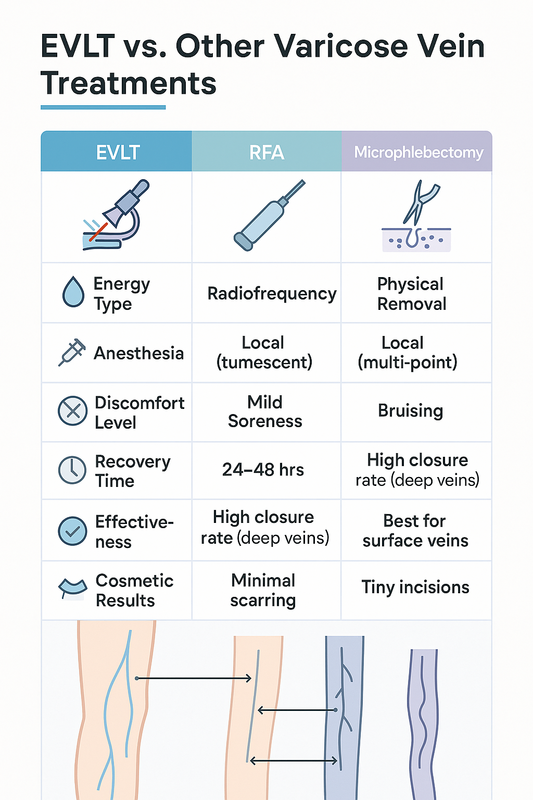
This infographic gives a visual comparison of leading minimally invasive varicose vein treatments.
If you’re exploring the broader treatment landscape—including cost and specialist selection—see our complete guide to vein treatment options for added context.
Key Differences in Procedure and Recovery
- Energy Type
EVLT uses laser energy to seal the vein from the inside. Radiofrequency ablation (RFA) uses controlled heat from radio waves. Microphlebectomy physically removes bulging surface veins through tiny incisions. - Anesthesia
EVLT and RFA typically use local tumescent anesthesia. Microphlebectomy also uses local anesthesia but may involve multiple small entry points. - Discomfort Level
EVLT and RFA are generally well tolerated, with mild soreness or tightness. Microphlebectomy may cause temporary bruising due to vein removal. - Recovery Time
Most patients resume normal activities within 24–48 hours after EVLT or RFA. Microphlebectomy recovery is also relatively quick but may involve slightly more visible bruising. - Effectiveness
EVLT and RFA both show high vein-closure rates for larger underlying veins. Microphlebectomy is often used for prominent surface veins and may complement laser or radiofrequency treatment. - Cosmetic Results
All three aim for minimal scarring. EVLT and RFA leave only a small catheter entry site, while microphlebectomy uses tiny incisions that typically fade over time.
Quick summary: EVLT and RFA are similar heat-based treatments with short downtime and strong closure rates, while microphlebectomy directly removes visible veins and is often combined with endovenous laser therapy for optimal cosmetic outcomes.
Endovenous Laser Therapy Cost and Insurance Coverage
The endovenous laser therapy cost for varicose veins in California varies based on your specific condition, provider, and insurance coverage. Because endovenous laser therapy for varicose veins is often performed in an outpatient setting, it is typically more affordable than traditional vein surgery.

See how EVLT costs and insurance coverage are determined at a glance.
In many cases, the final cost depends on medical necessity and your individual health plan. For a broader comparison of treatment options and pricing, see our complete guide to vein treatment costs and options.
What Affects the Cost of EVLT?
The total cost of an endovenous laser therapy procedure can vary widely based on several key factors:
- Severity of vein disease: Larger or multiple affected veins may require longer treatment time or multiple sessions.
- Number of veins treated: Treating both legs or multiple veins increases overall cost.
- Geographic location: Prices in California may differ depending on the city and facility.
- Insurance status: Coverage approval can significantly reduce out-of-pocket expenses.
- Diagnostic testing: Pre-procedure duplex ultrasound exams are often required to confirm reflux.
When Is EVLT Covered by Insurance?
Is endovenous laser treatment covered by insurance? Often yes—if it is considered medically necessary rather than purely cosmetic.
Insurance providers typically require:
- Documented symptoms such as leg pain, swelling, heaviness, skin changes, or ulcers
- Failure of conservative treatment, such as compression stockings over a defined period
- Ultrasound confirmation of venous reflux
If these criteria are met, many California insurance plans cover most or all of the endovenous laser therapy cost, though deductibles and copays may apply.
An exact quote requires a personalized vein evaluation, imaging, and benefits verification. Our specialists provide individualized assessments through our comprehensive vein treatment services to clarify your options and expected costs.
Quick Summary: Endovenous laser therapy cost depends on disease severity, number of veins treated, and insurance approval. Coverage is commonly available when medical necessity is documented with symptoms and ultrasound evidence.
How to Prepare for Endovenous Laser Therapy
Preparing for endovenous laser therapy for varicose veins helps ensure a smooth procedure and faster recovery. Most patients need only a few simple steps before treatment, but following instructions closely can improve comfort and results.
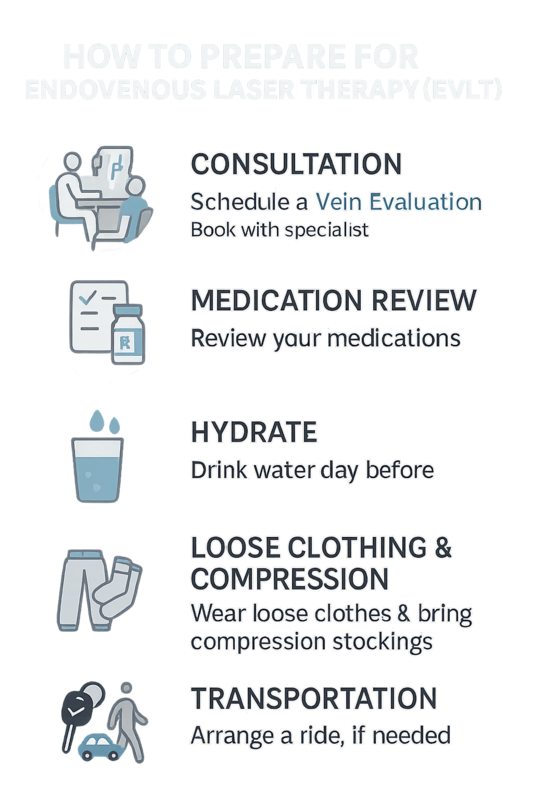
This infographic provides a clear checklist to help you get ready for EVLT treatment.
If you’d like a broader overview of what to expect, review this complete guide to EVLT benefits, procedure, and recovery for additional details.
-
Step 1: Schedule a Vein Evaluation
Book a comprehensive vein evaluation with a qualified specialist. During this visit, your provider will review your medical history and perform a diagnostic ultrasound to map the affected veins.
This assessment confirms whether endovenous laser therapy (EVLT) is the right treatment for your condition and helps personalize your care plan.
-
Step 2: Follow Pre-Procedure Instructions
Follow all instructions provided by your care team. You may be advised to temporarily stop certain medications, especially blood thinners, as directed by your physician.
Stay well hydrated the day before your appointment. Wear loose, comfortable clothing to your visit, and bring compression stockings if instructed. Arrange transportation if recommended, although many patients can walk immediately after the endovenous laser therapy procedure.
Quick checklist: complete your ultrasound evaluation, review medications, hydrate, wear loose clothing, and confirm post-procedure compression plans. These simple steps help you feel confident and prepared on treatment day.
In short, preparation for endovenous laser therapy is straightforward: confirm your diagnosis, follow medical guidance, and plan for light activity afterward. Most patients in California find the process simple and manageable with proper guidance.
Frequently Asked Questions About EVLT
Is endovenous laser treatment safe?
Yes, endovenous laser therapy for varicose veins is considered safe and minimally invasive when performed by an experienced vein specialist. It is FDA-cleared and widely used in the United States. Most patients experience few complications, and serious risks are uncommon. Your provider will review your medical history to ensure you’re an appropriate candidate.
How long does endovenous laser therapy take?
The endovenous laser therapy procedure typically takes 30 to 60 minutes per treated vein. It is performed in an outpatient setting under local anesthesia. Because no general anesthesia is required, patients are usually able to walk immediately after treatment and go home the same day.
Does EVLT hurt?
Most patients report minimal discomfort during endovenous laser therapy. You may feel a brief pinch from the local anesthetic and mild pressure during the procedure. Afterward, some soreness or tightness along the treated vein is normal, but it is typically manageable with over-the-counter pain relief and compression stockings.
What is the recovery time after EVLT?
Endovenous laser therapy (EVLT) recovery is usually quick. Many patients return to work and light activities within 24 hours. Walking is encouraged to support circulation, while strenuous exercise and heavy lifting may be limited for about one to two weeks, depending on your provider’s recommendations.
Are results from EVLT permanent?
EVLT closes the treated vein permanently, and those specific veins typically do not reopen. However, varicose veins are often related to underlying vein disease, so new veins may develop over time. Maintaining a healthy lifestyle and attending follow-up visits can help preserve your long-term results.
Is endovenous laser treatment covered by insurance?
In many cases, is endovenous laser treatment covered by insurance depends on medical necessity. If you have symptoms such as pain, swelling, or skin changes and conservative treatments have failed, insurance may provide coverage. Cosmetic treatments without symptoms are less likely to be covered. Verification with your provider and insurer is recommended.
What are the side effects of endovenous laser therapy?
Common endovenous laser therapy side effects include mild bruising, swelling, tenderness, or temporary skin discoloration. Some patients may feel tightness along the treated vein. More serious complications, such as blood clots or nerve irritation, are rare but should be discussed with your vein specialist before treatment.
How soon can I return to normal activities after EVLT?
Most patients resume normal daily activities within a day after endovenous laser therapy for varicose veins. Walking is encouraged immediately, while high-impact workouts or heavy lifting may be postponed briefly. Your recovery timeline may vary based on the number of veins treated and your overall health.
Schedule Your EVLT Consultation in California
If you’re considering endovenous laser therapy for varicose veins, the next step is a personalized consultation. At West Medical, our vein specialists provide a thorough evaluation to determine whether this minimally invasive treatment is right for you.
During your visit, we review your symptoms, medical history, and ultrasound findings to design a customized care plan. We’ll explain the endovenous laser therapy procedure, expected recovery, and answer common questions such as “is endovenous laser treatment safe?” so you can move forward with clarity and confidence.
Learn more about our advanced Endovenous Laser Therapy (EVLT) treatment and how it can help restore comfort and improve the appearance of your legs.
Our California team is known for compassionate, results-driven care using the latest vein technology. You don’t have to live with leg pain, heaviness, or visible veins—effective treatment may be closer than you think.