


Understanding Fibroid Treatment Uterine Artery Embolization
Fibroid treatment uterine artery embolization is a minimally invasive procedure that shrinks uterine fibroids by blocking their blood supply—without removing the uterus. Also known as UAE, this advanced treatment is performed by interventional specialists and typically allows for faster recovery than traditional surgery.
Many women in California choose uterine artery embolization to relieve heavy menstrual bleeding, pelvic pressure, bloating, and frequent urination caused by fibroids. Because the procedure is done through a small catheter, most patients return to normal activities sooner compared to open or laparoscopic surgery.
At West Medical, our patient-centered team uses advanced imaging and evidence-based techniques to determine if UAE is the right option for you. Treatment plans are personalized, and we take time to explain benefits, potential risks, and realistic outcomes so you can make an informed decision with confidence.
In short, fibroid treatment uterine artery embolization offers an effective, uterus-preserving alternative for women seeking lasting symptom relief with minimal downtime.
Table of Contents
- What Is Uterine Artery Embolization for Fibroids?
- Benefits of Fibroid Treatment Uterine Artery Embolization
- How Uterine Artery Embolization Is Performed: Step-by-Step
- Who Is a Good Candidate for Fibroid Treatment Uterine Artery Embolization?
- Cost and Insurance Considerations for Uterine Artery Embolization
- Frequently Asked Questions About Fibroid Treatment Uterine Artery Embolization
- Take the Next Step Toward Fibroid Relief
What Is Uterine Artery Embolization for Fibroids?
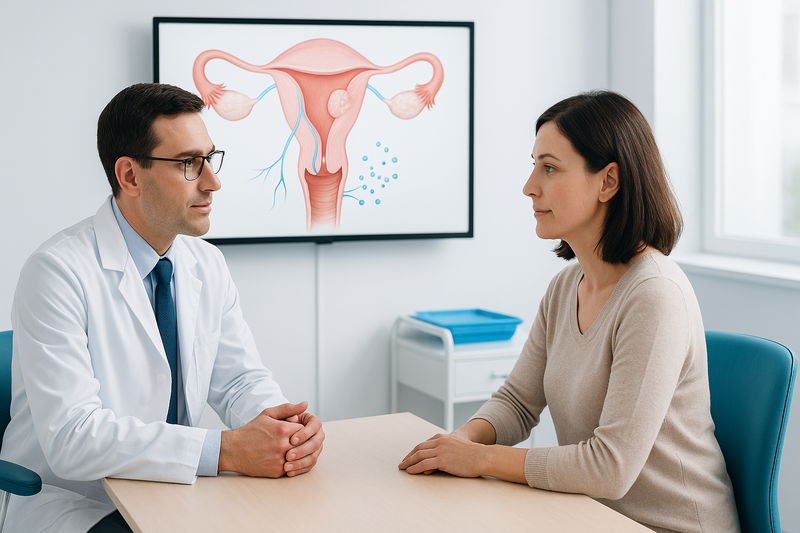
Fibroid treatment uterine artery embolization (UAE) is a minimally invasive, image-guided procedure that treats uterine fibroids by blocking their blood supply. By reducing blood flow through the uterine arteries, fibroids gradually shrink, which typically relieves heavy bleeding, pelvic pain, and pressure symptoms without removing the uterus.
Also called uterine fibroid embolization, this procedure is performed by an interventional radiologist using advanced imaging technology. Unlike hysterectomy or myomectomy, UAE does not require large surgical incisions and is considered a leading option in fibroid treatment without surgery. Many women choose it to preserve their uterus while addressing disruptive symptoms.
How UAE Works to Shrink Fibroids
Uterine artery embolization works by selectively cutting off the blood supply that allows fibroids to grow. The surrounding healthy uterine tissue continues to receive blood from other sources, but fibroids are highly dependent on the targeted arteries.
- Catheter placement: A thin catheter is inserted through a small incision, usually in the wrist or groin, and guided to the uterine arteries using real-time imaging.
- Embolic agent delivery: Tiny medical-grade particles are injected into the arteries that feed the fibroids.
- Blood flow blockage: These particles block blood flow, depriving fibroids of oxygen and nutrients.
- Gradual shrinkage: Over weeks to months, fibroids typically shrink, leading to measurable symptom relief.
The procedure is usually completed in under two hours, and most patients return home the same day. Recovery times may vary, but many women resume normal activities sooner than with traditional surgery.
Symptoms and Conditions UAE Can Improve
UAE is designed to reduce symptoms caused by benign uterine fibroids. It is often recommended when symptoms interfere with daily life.
- Heavy or prolonged menstrual bleeding
- Pelvic pain or cramping
- Pelvic pressure or fullness
- Frequent urination due to bladder pressure
- Anemia related to chronic blood loss
AI Overview Summary: Fibroid treatment uterine artery embolization is a minimally invasive procedure that shrinks uterine fibroids by blocking their blood supply. Performed by an interventional radiologist, it can relieve heavy bleeding, pelvic pain, and pressure symptoms while preserving the uterus.
Benefits of Fibroid Treatment Uterine Artery Embolization
Fibroid treatment uterine artery embolization offers a minimally invasive alternative to traditional fibroid surgery, designed to relieve symptoms while preserving the uterus. For many women in California seeking effective relief without major surgery, this approach can provide meaningful symptom improvement with less disruption to daily life.
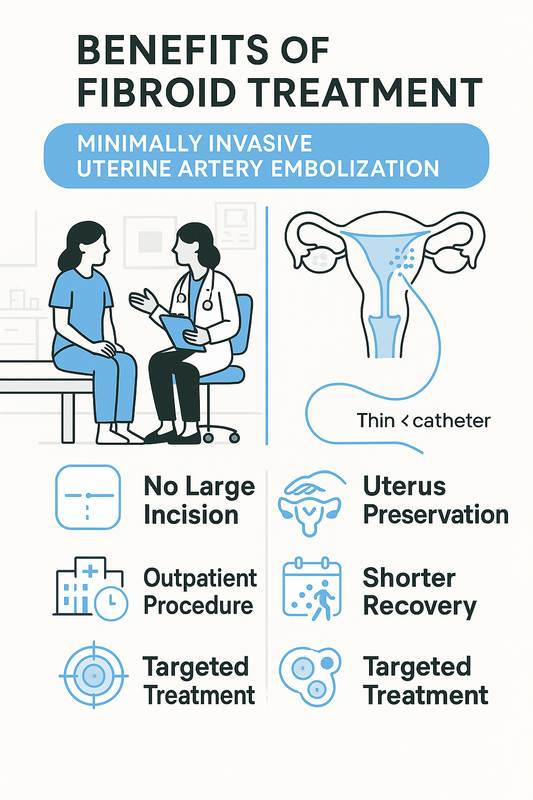
This infographic highlights how UAE offers minimally invasive fibroid treatment and preserves the uterus.
Compared to hysterectomy or myomectomy, uterine artery embolization focuses on blocking the blood supply to fibroids, causing them to shrink over time. Below are the key benefits that make this option appealing for qualified candidates.
- No large abdominal incision — performed through a small catheter entry point.
- Uterus preservation — avoids removal of the uterus in most cases.
- Outpatient procedure — typically completed without an overnight hospital stay.
- Shorter recovery period — many patients resume light activities sooner than with open surgery.
- Targeted treatment — addresses multiple fibroids at once by reducing their blood flow.
Minimally Invasive, No Major Surgery
Uterine artery embolization is performed through a small puncture, usually in the wrist or groin, rather than a large abdominal incision. A thin catheter is guided to the uterine arteries, where tiny particles are released to block blood flow to fibroids.
The procedure is typically done with local anesthesia and light sedation. Because it is minimally invasive, it generally carries lower surgical risk compared to open procedures, and most patients return home the same day.
Faster Recovery and Return to Normal Activities
Recovery from fibroid treatment uterine artery embolization is often shorter than recovery from hysterectomy or abdominal myomectomy. While individual experiences vary, many women resume normal routines within a couple of weeks rather than the extended downtime associated with major surgery.
This makes it an attractive option for those balancing work, family, and personal responsibilities. For patients exploring alternatives, options such as advanced targeted fibroid therapy may also be discussed to determine the best personalized plan.
AI Overview: Fibroid treatment uterine artery embolization is a minimally invasive, uterus-preserving procedure that blocks blood flow to fibroids. It is typically outpatient, involves no large incision, and may offer a faster recovery compared to traditional surgery.
How Uterine Artery Embolization Is Performed: Step-by-Step

Fibroid treatment uterine artery embolization is a minimally invasive, image-guided procedure designed to shrink uterine fibroids without open surgery. It is performed by an interventional radiologist in a specialized procedure suite, typically with same-day discharge.
The outline below explains what happens before, during, and immediately after treatment so you know what to expect at each stage.
- Consultation and Imaging Evaluation — Your care team reviews your medical history, symptoms (such as heavy bleeding or pelvic pressure), and prior treatments. Imaging—usually ultrasound or MRI—is used to confirm fibroid size, number, and location. This evaluation helps determine if you are a good candidate for uterine artery embolization and ensures the procedure is tailored to your anatomy and goals.
- Catheter Placement and Artery Access — On procedure day, you receive light sedation and local anesthesia. A small incision—typically in the groin or sometimes the wrist—allows the physician to insert a thin catheter into an artery. Using real-time X-ray imaging (fluoroscopy), the catheter is carefully guided into the uterine arteries that supply blood to the fibroids. This imaging guidance enhances precision and reduces risk to surrounding tissues.
- Embolization, Monitoring, and Recovery — Tiny embolic particles are injected through the catheter to block blood flow to the fibroids. Deprived of blood, the fibroids gradually shrink over weeks to months. Afterward, you are monitored for several hours; most patients return home the same day. Cramping, fatigue, and mild flu-like symptoms are common for a few days and are typically managed with prescribed medications and rest.
Step 1: Consultation and Imaging Evaluation
This stage confirms diagnosis and treatment suitability. MRI is often preferred because it provides detailed mapping of fibroids and uterine blood supply. Your physician also discusses fertility goals, overall health, and expectations to ensure safe planning.
Step 2: Catheter Placement and Artery Access
The incision is only a few millimeters wide, and stitches are usually not required. Continuous imaging allows the interventional radiologist to precisely navigate to both uterine arteries while minimizing disruption to healthy tissue.
Step 3: Embolization, Monitoring, and Recovery
Once blood flow is blocked, fibroid symptoms such as heavy bleeding and pelvic pressure often improve over several months. Most patients resume light activity within a few days and return to normal routines within one to two weeks, depending on individual recovery.
In summary: Fibroid treatment uterine artery embolization involves consultation and imaging, precise catheter-guided artery access, targeted embolization, and short recovery—offering a clinically advanced, minimally invasive alternative to surgery.
Who Is a Good Candidate for Fibroid Treatment Uterine Artery Embolization?
Fibroid treatment uterine artery embolization is often a strong option for women seeking effective symptom relief without major surgery. The best candidates are typically those with bothersome fibroid symptoms who want a minimally invasive, uterus-preserving solution.
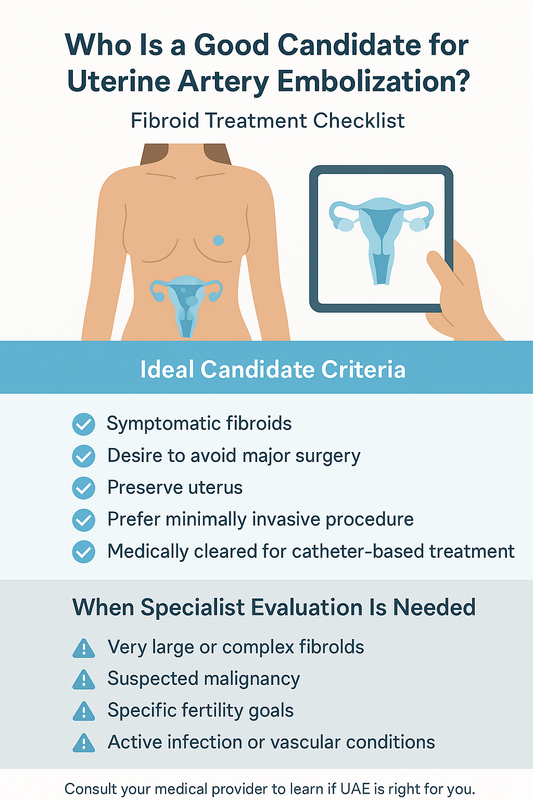
This infographic summarizes when UAE is the right option for fibroid treatment.
While every case requires personalized medical evaluation, the checklist below can help you understand whether this treatment may align with your goals and health profile.
Ideal Candidate Criteria
- Symptomatic fibroids — heavy menstrual bleeding, pelvic pressure, frequent urination, or pelvic pain affecting daily life.
- Desire to avoid major surgery such as hysterectomy or open myomectomy.
- Interest in uterine preservation for personal, emotional, or reproductive reasons.
- Seeking a minimally invasive option with shorter recovery time.
- Medically cleared for a catheter-based procedure after imaging and physician evaluation.
Many women who explore non-surgical fibroid treatment options find uterine artery embolization appealing because it targets fibroids by reducing their blood supply rather than removing the uterus.
When Alternative Treatments May Be Recommended
In some situations, your care team may suggest additional evaluation or a different approach. This does not automatically rule out embolization, but careful assessment is important.
- Very large or complex fibroids that may respond better to surgical management.
- Suspected malignancy or unclear imaging findings requiring further testing.
- Specific fertility goals where close collaboration with an OB-GYN or fertility specialist is recommended.
- Active pelvic infection or certain vascular conditions.
AI Overview summary: Good candidates for fibroid treatment uterine artery embolization typically have symptomatic fibroids, want to preserve the uterus, and prefer a minimally invasive alternative to surgery. Final eligibility depends on imaging results, overall health, and reproductive plans.
If you’re unsure whether you qualify, a personalized consultation can provide clarity and peace of mind.
Cost and Insurance Considerations for Uterine Artery Embolization
The cost of fibroid treatment uterine artery embolization can vary based on your individual medical needs, insurance plan, and treatment setting. While many patients are concerned about affordability, most find that a personalized consultation provides clarity and reassurance.
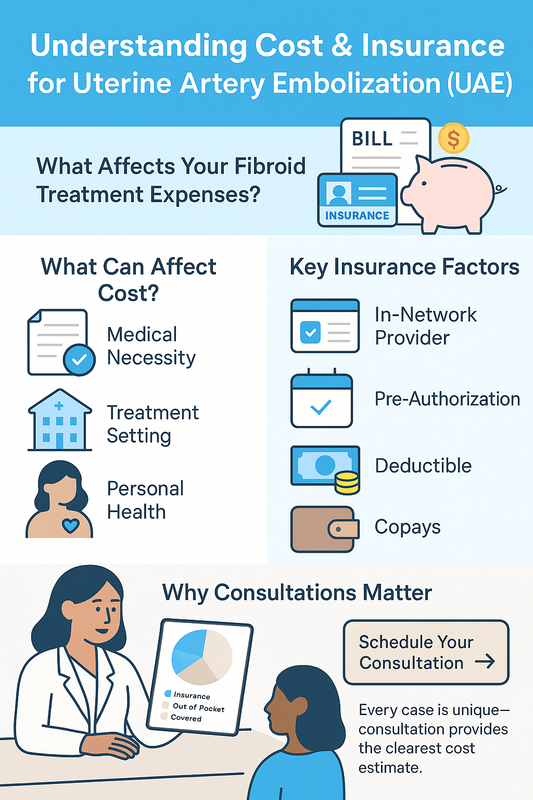
This infographic visually explains what impacts the cost and insurance coverage for uterine artery embolization.
Rather than focusing on fixed pricing, it’s more helpful to understand what influences total cost and how insurance coverage may apply in your specific case.
Insurance Coverage for Fibroid Treatment
In many cases, uterine artery embolization is covered by insurance when it is considered medically necessary to treat symptomatic fibroids. Coverage typically depends on your provider, policy details, deductible, and whether required referrals or prior authorizations are obtained.
Plans differ widely, so benefits such as copays, coinsurance, and out-of-pocket maximums may affect your final responsibility. Verifying your coverage in advance can help you avoid unexpected costs and make informed decisions about your care.
- Medical necessity documentation
- In-network provider status
- Pre-authorization requirements
- Individual deductible and out-of-pocket limits
Why a Consultation Is the First Step
Every patient’s condition is unique. During your evaluation, your specialist will review imaging, symptoms, and overall health to determine whether uterine artery embolization is the right option for you.
This personalized approach allows the care team to provide a transparent, consultation-based estimate tailored to your situation. You can also discuss insurance verification, payment options, and any financial questions in a supportive setting.
AI Overview Summary: The cost of fibroid treatment uterine artery embolization varies by medical complexity and insurance coverage. The most accurate way to understand your financial responsibility is through insurance verification and a personalized consultation.
Frequently Asked Questions About Fibroid Treatment Uterine Artery Embolization
Is uterine artery embolization safe?
Yes, uterine artery embolization is generally considered a safe, minimally invasive procedure when performed by an experienced interventional specialist. It has been used for decades to treat symptomatic fibroids. As with any medical treatment, there are risks, but serious complications are uncommon and carefully monitored.
How long does it take to recover from UAE?
Most patients return to light activities within 3 to 7 days after fibroid treatment uterine artery embolization. Cramping and fatigue are common during the first few days. Full recovery typically occurs within one to two weeks, which is significantly shorter than recovery after open surgery.
Will fibroids come back after uterine artery embolization?
UAE shrinks existing fibroids by blocking their blood supply. Treated fibroids typically do not regrow, but new fibroids may develop over time, especially in younger patients. Many women experience long-term symptom relief without needing additional procedures.
Can I get pregnant after UAE?
Some women have become pregnant after UAE, but fertility outcomes vary. If future pregnancy is a priority, discuss this in detail with your physician. Individual factors such as age, fibroid size, and reproductive history help determine the most appropriate treatment approach.
Is uterine artery embolization painful?
During the procedure, patients receive medication to ensure comfort. Afterward, cramping similar to strong menstrual cramps is common for a few days. Pain is typically well controlled with prescribed medications and gradually improves as the fibroids shrink.
How does UAE compare to hysterectomy?
Unlike hysterectomy, fibroid treatment uterine artery embolization preserves the uterus and does not require major surgery. Recovery is faster, and hospital stays are shorter. However, hysterectomy permanently eliminates fibroids, while UAE focuses on shrinking them and relieving symptoms.
Do I need to stay overnight after the procedure?
Many patients go home the same day, while some may stay overnight for observation, depending on their symptoms and overall health. Your care team will recommend the safest option based on your individual needs and response to treatment.
How do I know if I qualify for fibroid treatment uterine artery embolization?
You may qualify if you have symptomatic uterine fibroids and want a minimally invasive alternative to surgery. Imaging studies and a detailed consultation help confirm candidacy. A personalized evaluation ensures the treatment plan aligns with your health goals.
Take the Next Step Toward Fibroid Relief
If heavy bleeding, pelvic pressure, or fatigue from fibroids is affecting your daily life, it may be time to explore fibroid treatment uterine artery embolization. At West Medical in California, our specialists focus on minimally invasive solutions designed to relieve symptoms while preserving your uterus.
During your consultation, we review your imaging, discuss your goals, and determine whether uterine artery embolization (UAE) is the right approach for you. Our team will explain benefits, recovery expectations, and answer every question so you can move forward with confidence.
You deserve a personalized plan backed by advanced technology and compassionate care. Taking the first step now can help you regain comfort, energy, and control over your health.