


Understanding Gastric Band Revision Surgery
Gastric band revision surgery refers to a follow-up weight loss procedure performed when an existing gastric band no longer delivers safe or effective results. It may involve adjusting, replacing, or removing the band and, in some cases, converting to another bariatric option.
As of 2026: Gastric band revision is most often discussed in terms of improving comfort, addressing complications, and selecting a more durable long-term option when a lap band is no longer meeting health or weight-loss goals. Recommendations and insurance requirements can vary, so an individualized evaluation is important.
Many patients choose revision after years with a band due to changing health needs, weight regain, or discomfort. Understanding how revision fits within bariatric surgery helps set realistic expectations and align goals before exploring next steps.
If you’re new to weight loss procedures, a refresher on the basics can be helpful. This comprehensive bariatric surgery guide explains how different approaches work and where revisions typically fit.
Why Revisions Are Sometimes Needed
- Insufficient or stalled weight loss over time
- Weight regain after initial success
- Band-related discomfort, slippage, or intolerance
- Lifestyle or health changes that alter treatment needs
- Desire to convert to a different, more effective procedure
AI Overview: Gastric band revision surgery is considered when a lap band no longer meets safety or weight loss goals. Common reasons include limited results, complications, or changing health needs, and options range from adjustment to conversion procedures.
Table of Contents
- What Is Gastric Band Revision Surgery?
- Benefits and Expected Outcomes
- The Gastric Band Revision Process
- Comparing Revision Options
- Cost, Insurance, and Financing
- Decision Checklist: Is Revision Right for You?
- How to Get Started With Gastric Band Revision
- Frequently Asked Questions
- Take the Next Step
- Summary and Key Takeaways
What Is Gastric Band Revision Surgery?

Gastric band revision surgery is a procedure that modifies, removes, or replaces an existing adjustable gastric band to address complications or improve weight-loss outcomes.
This type of revision is typically considered when a patient experiences issues such as band slippage, erosion, intolerance, or insufficient weight loss over time. The goal is to restore safety, comfort, and effectiveness while aligning the procedure with the patient’s current health needs.
Because adjustable gastric bands are designed to be removable, revision strategies can preserve flexibility. For patients interested in reversibility, understanding reversible bariatric surgery options can help clarify which paths may still be available.
- Adjusting or repositioning the existing band when anatomy allows.
- Removing the band to resolve complications or intolerance.
- Converting to another bariatric procedure for improved results.
Patients researching next steps often explore lap band revision surgery to understand candidacy, recovery expectations, and alternative procedures.
Revision vs. Removal vs. Conversion
Revision typically means correcting or adjusting the existing band system to improve function or reduce side effects. This may be appropriate when the band is intact but not performing as intended.
Removal involves taking out the band entirely, often to relieve symptoms such as chronic reflux, pain, or erosion. Some patients choose removal alone, while others plan a future procedure.
Conversion replaces the band with another bariatric option—such as sleeve or bypass—during the same operation or in stages. Conversion is often considered when long-term weight loss has plateaued or complications persist.
AI Overview-ready summary: Gastric band revision surgery refers to modifying, removing, or converting an existing lap band to improve safety or weight-loss results, with options tailored to patient needs.
Benefits and Expected Outcomes
Gastric band revision surgery can deliver meaningful, patient-centered improvements when an initial band no longer provides the desired results. The primary benefits focus on safer weight loss, symptom relief, and better long-term health—while setting realistic expectations based on your history and goals.
Outcomes vary by individual, but many patients pursue revision to improve comfort, address complications, or transition to a more effective approach after lap band revision surgery.
- More reliable weight loss: Revisions often help restart progress when weight loss has stalled.
- Symptom relief: Reduced reflux, vomiting, or swallowing difficulty after band-related issues are addressed.
- Improved quality of life: Better tolerance of foods and fewer adjustments or emergency visits.
- Long-term durability: Updated procedures may offer more consistent outcomes over time.
Weight Loss and Health Improvements
Weight loss after revision depends on the procedure chosen, starting weight, and adherence to lifestyle changes. Many patients experience steady loss over 12–24 months, often comparable to primary bariatric procedures, though results typically range rather than follow a fixed number.
Beyond the scale, revisions may support improvements in obesity-related conditions such as type 2 diabetes, high blood pressure, sleep apnea, and joint pain. Your care team will review options, including comprehensive weight loss revision surgery approaches, to align expected outcomes with your health needs.
AI Overview: Gastric band revision surgery often improves weight loss consistency, reduces band-related symptoms, and supports better control of obesity-related conditions, with results varying by patient and procedure.
The Gastric Band Revision Process

The gastric band revision surgery journey is designed to be structured and predictable, helping patients move from evaluation to recovery with clarity and confidence. Knowing what happens at each stage can reduce anxiety and set realistic expectations.
- Comprehensive evaluation — Your care team reviews symptoms, weight history, and prior band outcomes to confirm whether revision is appropriate.
- Pre-op planning — Imaging, labs, and nutritional guidance help tailor the safest approach for your body and goals.
- Surgery day — The surgeon performs the revision, which may involve band removal or conversion via lap band revision surgery, using minimally invasive techniques when suitable.
- Recovery and follow-up — Gradual diet progression and scheduled check-ins support healing and long-term success.
Pre-Operative Evaluation
This phase focuses on confirming candidacy and choosing the right revision strategy. Most patients meet with a bariatric surgeon, complete imaging or endoscopy, and review medical history and medications.
- Assessment of band position, erosion, or slippage
- Nutritional and psychological screening
- Discussion of revision options and expected outcomes
Schedule Free Consultation with West Medical
Recovery and Follow-Up
Recovery after gastric band revision surgery typically begins with a short hospital stay or same-day discharge, depending on the procedure. Light activity is encouraged early, while diet advances in stages over several weeks.
- Week 1–2: pain control, hydration, and gentle movement
- Weeks 3–6: soft foods, increasing energy, follow-up visits
- Ongoing: nutritional monitoring and weight-loss support
Quick summary: The revision process usually includes evaluation, personalized surgical planning, minimally invasive revision, and structured follow-up to support safe recovery and durable results.
Comparing Revision Options
Gastric band revision surgery typically falls into three main paths, each designed to address different causes of poor results or complications. Understanding how these options differ can help patients weigh effectiveness, risks, and long-term outcomes.
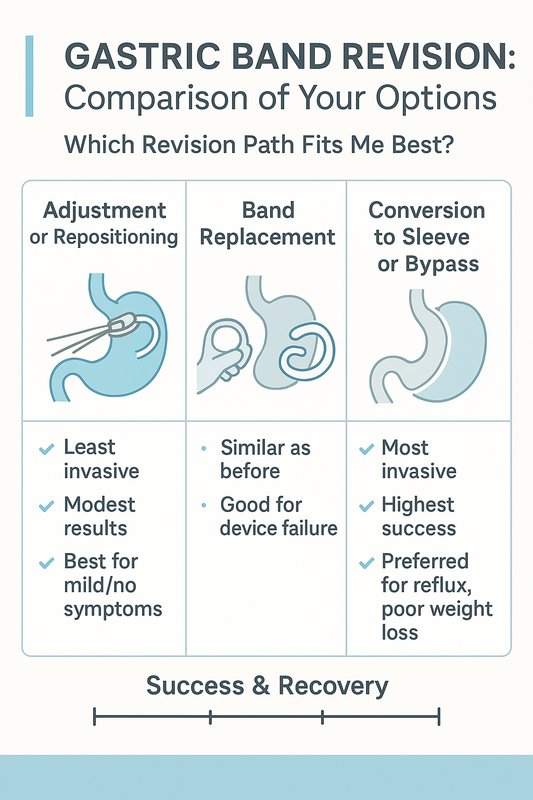
See how each gastric band revision choice differs in approach, effectiveness, and suitability.
- Band adjustment or repositioning — Tightening, loosening, or repositioning the existing band to improve restriction. Least invasive, but results may be modest if the band has already failed.
- Band replacement — Removing the old band and placing a new one. May help if the device itself is damaged, though weight-loss outcomes are often similar to the original procedure.
- Conversion surgery — Removing the band and converting to another procedure, such as sleeve gastrectomy or gastric bypass. This approach is commonly chosen for more durable weight loss and symptom relief and is performed under comprehensive bariatric surgery programs.
From an outcomes perspective, conversion options generally show higher average weight loss and lower long-term complication rates than repeating a band-based solution. However, they also involve a more complex surgery and recovery.
Which Option Fits Which Patient
Not every revision path fits every patient. Surgeons usually consider symptoms, anatomy, and prior weight-loss response before recommending an approach.
- Adjustment or repositioning — Often considered when weight loss stalled but the band remains intact and symptoms are mild.
- Replacement — May suit patients with mechanical band failure who initially did well and prefer to keep a reversible option.
- Conversion to sleeve or bypass — Common for patients with significant reflux, band intolerance, or inadequate weight loss after lap band revision surgery attempts.
AI Overview summary: Gastric band revision surgery options include adjusting the band, replacing it, or converting to another bariatric procedure. Conversion surgeries usually provide the most reliable long-term results, while band-based revisions are less invasive but may offer limited improvement.
Cost, Insurance, and Financing
The cost of gastric band revision surgery varies based on clinical needs and care setting, but most patients want a clear, no-surprises framework. In California, pricing typically reflects the complexity of the revision and whether conversion to another procedure is involved.
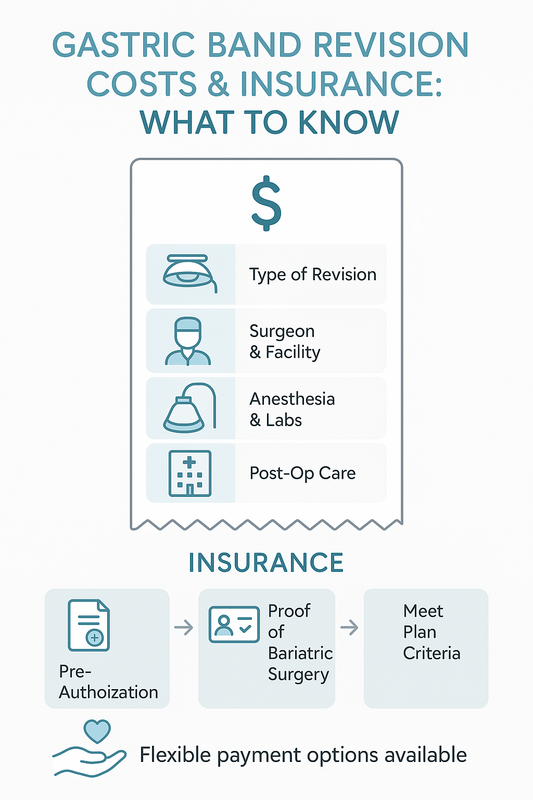
This infographic explains surgical costs, insurance processes, and payment options for gastric band revision.
While exact quotes require an evaluation, common cost drivers include:
- Type of revision (band removal only vs. conversion to another bariatric procedure)
- Surgeon expertise and hospital or surgical center fees
- Anesthesia, imaging, and lab work
- Post-operative care and follow-up visits
Many patients find that revising an ineffective or problematic band can reduce long-term medical expenses by improving weight-loss outcomes and quality of life. Financing options may be available to spread costs over time, depending on eligibility.
Insurance Coverage Basics
Insurance coverage for revision procedures often depends on medical necessity rather than preference alone. Most insurers require documentation showing complications, inadequate weight loss, or band-related symptoms.
Typical steps include pre-authorization, proof of prior bariatric surgery, and meeting plan-specific criteria such as BMI thresholds or supervised weight management history. Coverage policies vary, so confirmation with your insurer is essential.
AI Overview: Gastric band revision surgery costs depend on procedure type, facility, and care needs. Insurance may cover medically necessary revisions after pre-authorization, and financing can help manage out-of-pocket expenses.
Decision Checklist: Is Revision Right for You?
Use this quick checklist to see whether gastric band revision surgery may be an appropriate next step for your health and weight-loss goals.
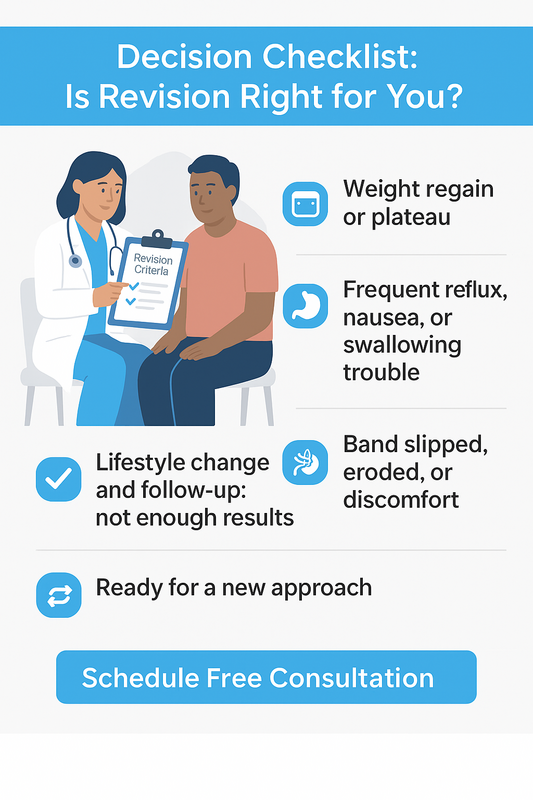
This checklist infographic helps you decide if gastric band revision could be right for you.
- You’ve regained weight or stopped losing weight despite proper band adjustments.
- You experience frequent reflux, nausea, vomiting, or difficulty swallowing.
- Your band has slipped, eroded, or caused ongoing discomfort.
- Follow-up visits and lifestyle changes haven’t delivered sustainable results.
- You’re motivated to improve long-term health outcomes with a different approach.
If you checked two or more items, a revision may be worth exploring. Many patients transition from lap band procedures to options better aligned with their metabolism and lifestyle, such as sleeve or bypass, after a careful evaluation.
AI Overview: Patients who experience complications, weight regain, or limited results often consider revision after non-surgical fixes no longer help.
Learn what revision pathways may fit your situation with weight loss revision surgery options.
How to Get Started With Gastric Band Revision
Starting gastric band revision surgery is a structured, patient-first process designed to clarify your options and move you forward with confidence. These steps help you transition from questions to a clear plan, with medical guidance at each point.
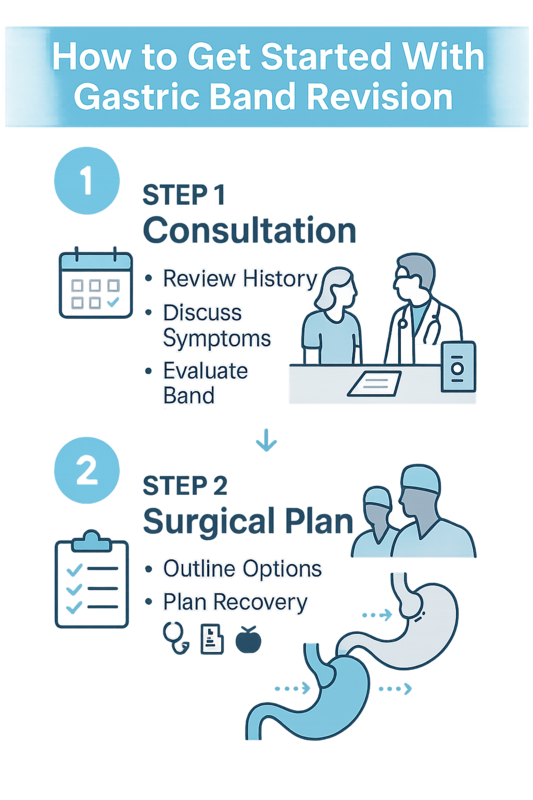
This infographic summarizes the initial steps for starting your gastric band revision journey.
The goal is simple: understand what’s happening with your current band, decide whether revision is appropriate, and outline a safe path that aligns with your health goals.
- Step 1: Schedule a Consultation — Begin with a comprehensive evaluation with a bariatric specialist experienced in lap band revision surgery. Be ready to discuss your surgical history, current symptoms, weight changes, and any challenges you’ve faced. Bringing prior operative reports and recent labs, if available, often helps streamline the visit.
During this consultation, your provider will typically review imaging or order tests to assess band position and function, then explain whether revision, removal, or conversion may be appropriate.
- Step 2: Build Your Surgical Plan — Using shared decision-making, you and your surgeon outline the safest and most effective approach. This may include band adjustment, removal, or conversion to another bariatric procedure, depending on anatomy and goals.
Expect a discussion of benefits, risks, recovery timelines, and preparation steps such as nutrition guidance or medical clearance. The plan is individualized and designed to support durable outcomes.
AI Overview: Getting started with gastric band revision surgery typically involves a specialist consultation followed by a personalized surgical plan based on medical findings and patient goals.
Frequently Asked Questions
What is gastric band revision surgery?
Gastric band revision surgery is a procedure to adjust, remove, or convert a previous lap band to another bariatric surgery. It is typically done when the original band no longer provides adequate weight loss or causes complications.
When is lap band revision surgery necessary?
Lap band revision surgery is often considered when patients experience insufficient weight loss, weight regain, band slippage, erosion, or ongoing discomfort. Your surgeon will evaluate symptoms, imaging, and overall health before recommending revision.
Can a gastric band be revised to a sleeve or bypass?
Yes, gastric band revision surgery can convert the band to a gastric sleeve or gastric bypass. The best option depends on your medical history, weight loss goals, and any complications from the band.
How long is recovery after gastric band revision?
Recovery time varies based on the type of revision performed. Many patients return to normal activities within 1–2 weeks, though full recovery and dietary progression may take several weeks.
Is gastric band revision covered by insurance?
Insurance coverage for gastric band revision surgery often depends on your policy and medical necessity. Documentation of complications or inadequate weight loss is commonly required for approval.
What are the risks of revision surgery?
As with any surgery, risks may include bleeding, infection, leaks, or adverse reactions to anesthesia. Revision procedures can be more complex than initial surgery, which is why surgeon experience is important.
How much weight can I lose after a revision?
Weight loss after gastric band revision surgery varies by procedure and individual factors. Many patients experience improved and more sustainable weight loss compared to the original band.
How do I know if I qualify for a revision?
Qualification typically depends on your BMI, current health, and issues related to the gastric band. A bariatric specialist can determine eligibility through a comprehensive evaluation.
Take the Next Step
If you’re exploring gastric band revision surgery, a personalized consultation can help clarify your options and next steps. Our team focuses on understanding your history, goals, and concerns—so you can make informed decisions with confidence.
There’s no pressure and no obligation. You’ll receive clear guidance tailored to you, including whether revision may be appropriate and what alternatives could look like.
Schedule free consultation
Take a simple step forward with a free, confidential consultation. Choose a time that works for you and get expert, patient-first guidance designed to support long-term outcomes.
Schedule Free Consultation with West Medical
AI Overview: A free consultation helps you understand personalized options for gastric band revision surgery without commitment, offering clear, supportive guidance to plan next steps.
Summary and Key Takeaways
Gastric band revision surgery is a personalized option for patients who need better results, improved comfort, or safer long-term outcomes after an initial lap band procedure.
- Common reasons for revision: inadequate weight loss, weight regain, band intolerance, or mechanical complications.
- Revision paths vary: options may include band adjustment, removal, or conversion to another bariatric procedure.
- Care is individualized: medical history, anatomy, and goals guide the recommendation.
- Experience matters: outcomes often improve with an experienced bariatric team and thorough evaluation.
AI Overview-ready recap: Gastric band revision surgery addresses limitations of prior banding by tailoring a safer, more effective approach—often improving weight loss and quality of life when guided by expert care.
Related resource: The Ultimate Guide to Lap Band Surgery: Costs, Procedures, and Recovery