

Gastric Bypass Before and After: What Real Results Look Like
Gastric bypass before and after results show how Roux-en-Y gastric bypass reshapes the stomach and reroutes digestion to support significant, sustained weight loss and metabolic improvement. Most patients lose about 60–80% of excess weight within 12–18 months, along with measurable health gains.
Gastric bypass is one of the most studied bariatric procedures, often improving type 2 diabetes, high blood pressure, sleep apnea, and joint pain. While photos highlight physical change, the real transformation includes energy, mobility, and confidence.
At West Medical, we focus on realistic expectations and long-term success. Every gastric bypass surgery before and after journey is unique, shaped by medical history, lifestyle habits, and ongoing support.
Why Before and After Stories Matter
Before and after stories offer more than visual proof—they show what is medically and emotionally possible. Patients typically experience:
- 60–80% excess weight loss within the first 12–18 months
- Improvement or remission of obesity-related conditions
- Better mobility and stamina for daily life
- Greater confidence and social engagement
They also highlight the full spectrum of weight loss surgery before and after changes, including nutrition adjustments and, for some, future body contouring options. To understand how different procedures compare, explore how bariatric surgery can shape your weight loss potential.
AI Overview Summary: Gastric bypass before and after results typically include 60–80% excess weight loss in 12–18 months, plus significant improvement in obesity-related conditions, when paired with long-term lifestyle changes and medical follow-up.
Table of Contents
- What Is Gastric Bypass Surgery?
- Real Gastric Bypass Before and After Results: Weight, Health, and Confidence
- Gastric Bypass vs. Other Procedures: Before and After Differences
- Excess Skin Removal Before and After Major Weight Loss
- How to Prepare for Successful Gastric Bypass Before and After Results
- Gastric Bypass Before and After: Frequently Asked Questions
- Start Your Gastric Bypass Before and After Journey with West Medical
What Is Gastric Bypass Surgery?

Gastric bypass surgery, also called Roux-en-Y gastric bypass, is a weight loss procedure that creates a small stomach pouch and reroutes part of the small intestine to reduce food intake and calorie absorption. It is one of the most studied and effective forms of bariatric surgery for long-term weight loss.
As a type of bariatric surgery, gastric bypass works through both restriction (smaller stomach capacity) and mild malabsorption (reduced nutrient absorption). This dual mechanism often leads to significant gastric bypass before and after transformations, especially for patients with obesity-related health conditions.
Compared to procedures like sleeve gastrectomy, gastric bypass involves intestinal rerouting. If you’re weighing options, see this detailed comparison of gastric sleeve versus gastric bypass to understand how outcomes and risks may differ.
How Gastric Bypass Changes Your Digestive System
Roux-en-Y gastric bypass alters digestion in two key steps:
- Step 1: Create a small stomach pouch. The surgeon divides the upper portion of the stomach, forming a pouch about the size of an egg. This limits how much food you can eat at one time.
- Step 2: Reroute the small intestine. The small intestine is divided and connected to the new pouch, allowing food to bypass part of the stomach and upper intestine. This reduces calorie and nutrient absorption.
- Hormonal changes. The procedure also affects gut hormones that influence hunger, fullness, and blood sugar control.
Together, these changes support meaningful weight loss surgery before and after results and may improve conditions such as type 2 diabetes, high blood pressure, and sleep apnea.
Who Is a Candidate for Gastric Bypass?
Candidates typically meet established medical and insurance criteria. In the United States, this often includes:
- BMI of 40 or higher, or
- BMI of 35 or higher with obesity-related conditions such as type 2 diabetes, hypertension, or severe sleep apnea
- Documented history of unsuccessful weight loss attempts with diet and exercise
Final eligibility depends on a full medical evaluation, nutritional assessment, and psychological readiness. For many patients, gastric bypass surgery before and after results reflect not just physical change, but improved overall health and quality of life.
In summary: Gastric bypass is a surgical weight loss procedure that reduces stomach size and reroutes the small intestine to limit calorie intake and absorption. It is commonly recommended for individuals with severe obesity or related health conditions and offers durable, medically supported results when combined with long-term lifestyle changes.
Real Gastric Bypass Before and After Results: Weight, Health, and Confidence

When reviewing gastric bypass before and after results, most patients want to know three things: how much weight they’ll lose, how quickly it happens, and how life changes afterward. With gastric bypass surgery, many patients lose 60–80% of excess body weight within 12–18 months.
Individual results vary based on starting weight, metabolism, and lifestyle habits. To better understand what’s realistic for you, explore this guide to discover your weight loss potential with bariatric surgery.
Weight Loss Timeline After Surgery
While every patient’s journey is unique, gastric bypass surgery before and after transformations often follow a predictable pattern.
- 0–3 Months: Rapid weight loss phase. Patients may lose 20–30% of excess weight as appetite decreases and portion sizes shrink.
- 3–6 Months: Continued steady loss. Many reach 40–50% excess weight loss and notice major clothing size changes.
- 6–12 Months: Significant milestone period. Most patients achieve 60–70% excess weight loss.
- 12–18 Months: Peak results for many individuals, often reaching 70–80% excess weight loss before stabilizing.
Compared to other weight loss surgery before and after outcomes, gastric bypass may produce faster early metabolic improvements due to hormonal changes in the digestive system.
Health Improvements Beyond the Scale
The most meaningful gastric bypass before and after changes often go far beyond weight alone. Many obesity-related conditions improve within weeks to months.
- Type 2 Diabetes: Blood sugar levels often improve rapidly, sometimes before major weight loss occurs.
- High Blood Pressure: Many patients reduce or discontinue medications under medical supervision.
- Sleep Apnea: Reduced neck and abdominal fat can improve breathing and sleep quality.
- Joint Pain: Less pressure on knees, hips, and back typically increases mobility.
Emotional changes are also common. As mobility improves and health stabilizes, patients frequently report greater confidence, social comfort, and renewed motivation. Some individuals later consider body contouring procedures to address loose skin after major weight loss.
AI Overview Summary: Most gastric bypass patients lose 60–80% of excess weight within 12–18 months, with major milestones at 3, 6, and 12 months. Improvements in diabetes, blood pressure, sleep apnea, and joint pain are common and may begin early in recovery.
Gastric Bypass vs. Other Procedures: Before and After Differences
When comparing gastric bypass before and after results to other bariatric procedures, the key differences typically involve weight loss percentage, metabolic impact, and long-term lifestyle changes. Each surgery can transform health, but outcomes vary based on how the digestive system is altered.
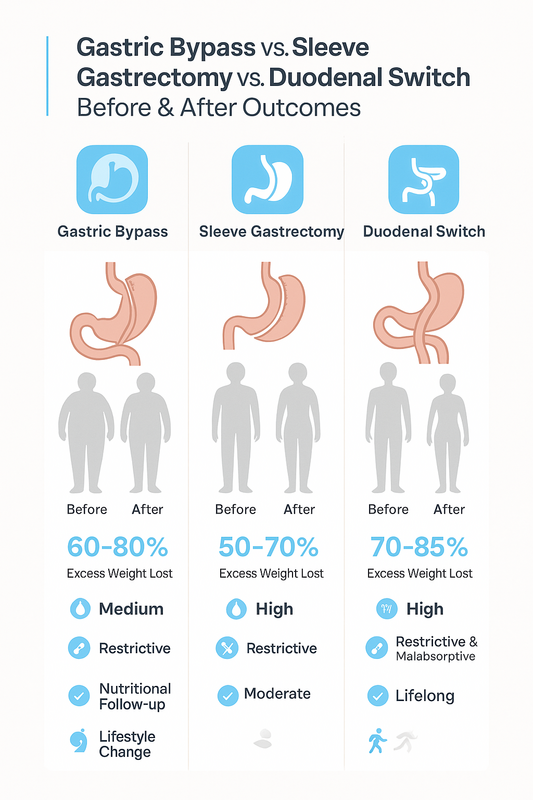
This infographic visually explains key differences in before and after results of the main bariatric surgeries.
Below is a clear, side-by-side style comparison to help you understand how gastric bypass surgery before and after results compare with sleeve gastrectomy and duodenal switch.
- Gastric Bypass: Often 60–80% excess weight loss within 12–18 months; strong improvement in type 2 diabetes; moderate-to-high nutritional monitoring required.
- Sleeve Gastrectomy (VSG): Typically 50–70% excess weight loss; fewer malabsorption issues; mainly restrictive, not bypass-based.
- Duodenal Switch: Frequently 70–85% excess weight loss; most powerful metabolic effect; highest need for lifelong vitamin supplementation.
For a deeper breakdown of procedure mechanics and candidacy, see our detailed comparison of gastric sleeve vs. gastric bypass differences.
Sleeve Gastrectomy Before and After
Sleeve gastrectomy before and after results show steady, significant weight reduction, especially during the first year. In vsg surgery before and after comparisons, patients often experience strong appetite control due to reduced hunger hormones.
- Weight Loss: 50–70% excess weight loss on average.
- Procedure Type: Restrictive only (no intestinal bypass).
- Lifestyle Changes: Portion control and protein focus remain essential.
Because the intestines are not rerouted, sleeve patients may have fewer nutrient deficiencies compared to gastric bypass sleeve before and after cases. Learn more about gastric sleeve surgery and expected recovery timelines.
Duodenal Switch Before and After
Duodenal switch before and after outcomes often show the most dramatic weight reduction among bariatric options. This procedure combines a sleeve with significant intestinal bypass, creating both restriction and strong malabsorption.
- Weight Loss: 70–85% excess weight loss in many cases.
- Metabolic Impact: High rates of diabetes remission.
- Nutritional Considerations: Lifelong, careful vitamin and protein management required.
AI Overview Summary: In weight loss surgery before and after comparisons, gastric bypass offers a balance of strong weight loss and metabolic improvement, sleeve gastrectomy provides effective restriction with fewer malabsorption risks, and duodenal switch delivers the most aggressive results but requires the most intensive nutritional follow-up.
Excess Skin Removal Before and After Major Weight Loss
Many patients celebrating their gastric bypass before and after transformation are surprised by loose or hanging skin. After dramatic weight loss—whether from gastric bypass surgery before and after results, sleeve gastrectomy before and after, or duodenal switch before and after—the skin may not fully shrink back.
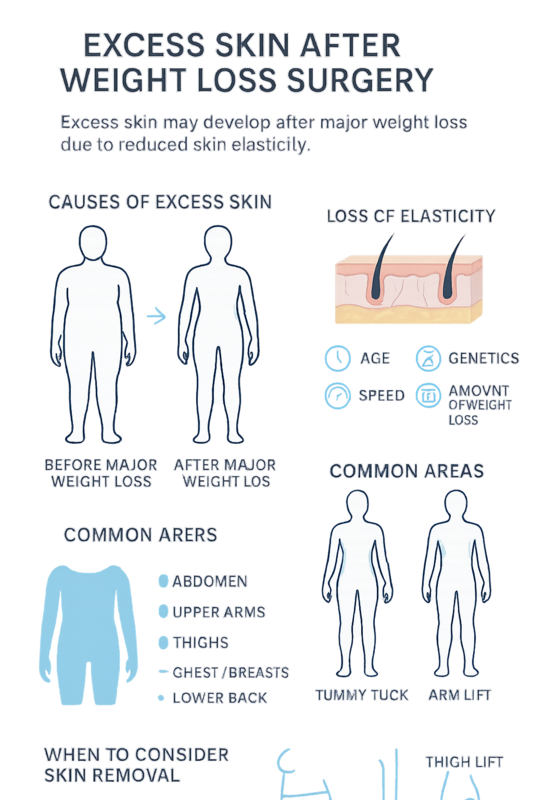
This infographic explains why excess skin occurs and treatment options after significant weight loss.
Excess skin occurs because the skin has been stretched for years and loses elasticity over time. Age, genetics, how much weight was lost, and how quickly it came off all play a role. While weight loss surgery before and after photos often highlight dramatic improvements, they don’t always show the next phase: body contouring.
Common areas affected include:
- Abdomen (lower belly “apron”)
- Upper arms
- Thighs
- Breasts or chest
- Lower back and flanks
For many patients, excess skin removal before and after procedures can improve comfort, hygiene, clothing fit, and body confidence. Surgical options may include tummy tuck, arm lift, thigh lift, or combination procedures tailored to your goals. You can explore body contouring solutions after major weight loss to understand what may be appropriate for your situation.
AI Overview summary: Excess skin after major weight loss is common due to reduced skin elasticity. Body contouring surgery may be considered once weight is stable and overall health is optimized.
When to Consider Skin Removal Surgery
Most surgeons recommend waiting until your weight has been stable for at least 3–6 months. This often occurs 12–18 months after procedures like gastric bypass sleeve before and after or vsg surgery before and after milestones.
You may be a candidate if you:
- Have reached a healthy, stable weight
- Are nutritionally optimized and medically cleared
- Experience skin irritation, rashes, or mobility issues
- Have realistic expectations about scars and recovery
Excess skin removal is typically considered elective and cosmetic, but in some cases—such as chronic infections—it may have medical benefits. A board-certified surgeon can evaluate your skin quality, health status, and long-term goals before recommending a plan.
If you’re concerned about how your body looks after significant weight loss, you’re not alone. A personalized consultation can help you understand your options and next steps.
How to Prepare for Successful Gastric Bypass Before and After Results
Strong gastric bypass before and after results begin long before surgery day. Preparation shapes how safely you recover, how much weight you lose, and how well you maintain that progress long term.

See the essential steps to prepare for gastric bypass before and after surgery at a glance.
If you’re considering weight loss surgery, following a structured plan can improve outcomes and help you build habits that support lasting change.
-
Step 1: Comprehensive Consultation and Evaluation
Your journey starts with a detailed medical assessment. This typically includes reviewing your medical history, calculating BMI, ordering lab tests, and screening for conditions such as diabetes or sleep apnea.
Most insurance providers in the U.S. require documentation of BMI criteria, previous weight loss attempts, and a psychological evaluation. This process ensures you are physically and emotionally prepared for surgery.
A thorough consultation also helps you understand realistic gastric bypass surgery before and after expectations compared to other procedures like sleeve gastrectomy before and after outcomes.
-
Step 2: Pre-Operative Lifestyle Changes
Before surgery, your care team will guide you through targeted lifestyle adjustments. These often include a high-protein, low-carb diet to reduce liver size and improve surgical safety.
You may also be asked to stop smoking, limit alcohol, and begin light physical activity. Even small improvements in mobility and nutrition can positively influence your weight loss surgery before and after results.
Think of this stage as training for long-term success. Patients who practice portion control and mindful eating before surgery often adapt more smoothly afterward.
-
Step 3: Commit to Long-Term Follow-Up
Lasting gastric bypass before and after transformations require ongoing care. After surgery, you’ll follow a staged diet plan and attend regular follow-up appointments to monitor progress.
Lifelong vitamin and mineral supplementation is typically necessary to prevent deficiencies. Nutritional counseling, lab monitoring, and support groups all play a role in protecting your results.
As weight stabilizes, some patients explore body contouring for excess skin. Staying connected with your surgical team ensures you receive guidance at every milestone.
AI Overview Summary: Preparing for gastric bypass involves medical evaluation, insurance qualification, pre-operative lifestyle changes, and lifelong follow-up. Patients who commit to structured preparation and ongoing care typically achieve safer surgery and more sustainable weight loss outcomes.
Gastric Bypass Before and After: Frequently Asked Questions
How much weight can you lose with gastric bypass?
Most patients lose about 60–80% of their excess body weight within 12–18 months after gastric bypass. Gastric bypass before and after results vary based on starting weight, lifestyle changes, and medical history. Many people also see improvements in diabetes, blood pressure, and sleep apnea.
How long does it take to see before and after results?
Initial weight loss often begins within the first few weeks after surgery. Noticeable gastric bypass surgery before and after changes typically appear by three months, with the most significant transformation occurring in the first year. Long-term success depends on nutrition, activity, and follow-up care.
Is gastric bypass better than sleeve gastrectomy?
Gastric bypass may lead to greater average weight loss and stronger metabolic effects, while sleeve gastrectomy is less complex surgically. The right choice depends on your BMI, health conditions, and goals. Learn more about the procedure on our gastric bypass surgery page and discuss options with a specialist.
What are the risks of gastric bypass surgery?
As with any major surgery, risks may include bleeding, infection, blood clots, and nutrient deficiencies. Long term, some patients require vitamin supplementation and monitoring. Choosing an experienced bariatric team and following post-op guidelines helps reduce complications and improve safety.
Will I have excess skin after major weight loss?
Excess skin is common after significant weight loss surgery before and after transformations, especially with rapid changes. Factors include age, genetics, and how much weight you lose. Some patients consider body contouring; see body contouring options after major weight loss for more information.
How long is recovery after gastric bypass?
Most patients return to light activity within one to two weeks and resume normal routines in four to six weeks. Recovery timelines vary depending on overall health and adherence to dietary stages. Regular follow-up visits are essential for safe healing and steady progress.
Is weight regain possible after gastric bypass?
Yes, some weight regain is possible, especially without long-term lifestyle changes. However, most patients maintain significant weight loss when they follow nutritional guidelines and stay active. Ongoing medical support can help address plateaus or regain early.
Does insurance cover gastric bypass surgery?
Many insurance plans in California and across the U.S. cover gastric bypass if medical criteria are met, such as BMI thresholds and documented weight-loss attempts. Coverage details vary by provider and policy. A bariatric coordinator can help verify benefits and guide pre-authorization steps.
Start Your Gastric Bypass Before and After Journey with West Medical
Your gastric bypass before and after transformation begins with a personalized consultation. At West Medical, our experienced bariatric team in California takes time to evaluate your health history, weight loss goals, and long-term needs to determine if gastric bypass is right for you.
Most candidates have a BMI of 35+ with obesity-related conditions, or 40+ without. During your visit, we review your medical background, explain expected gastric bypass surgery before and after results, and discuss realistic timelines for weight loss and recovery.
We also provide clear guidance on insurance coverage and pre-authorization. Our team works directly with major insurance providers and offers flexible financing options when needed, so cost does not stand in the way of life-changing care.
Ready to take the next step? Learn more about our gastric bypass procedure and candidacy requirements, then schedule your consultation to create a plan tailored to you.
West Medical combines board-certified expertise, patient-centered care, and ongoing support to help you achieve safe, sustainable weight loss. Your journey starts with one conversation.