

Understanding the Gastric Bypass Diet: Why It Matters for Long-Term Success
The gastric bypass diet is a medically structured nutrition plan designed to help patients heal, lose weight safely, and avoid complications after gastric bypass surgery. It is not a typical weight loss diet—it’s a carefully phased program that supports your new digestive system.
At West Medical, we view nutrition as a core part of your transformation—not an afterthought. From your hospital stay through long-term maintenance, your bariatric diet plan works hand-in-hand with your procedure to maximize results and protect your health. If you’re exploring your options, our complete guide to bariatric surgery explains how nutrition fits into the full journey.
What Is a Gastric Bypass Diet?
A gastric bypass diet is a staged, medically supervised eating plan followed after gastric bypass surgery to promote healing, support weight loss, and reduce complications. It progresses from liquids to soft foods and then to balanced, portion-controlled meals tailored to a smaller stomach and altered digestion.
Unlike general weight loss diets, a bariatric post op diet focuses on protein intake, vitamin supplementation, hydration, and strict portion control rather than calorie cutting alone.
Why Diet Is Critical After Bariatric Surgery
- Supports healing: Early phases like the bariatric liquid diet protect surgical connections while your stomach pouch heals.
- Prevents complications: Following a structured dumping syndrome diet may reduce nausea, cramping, and rapid heart rate caused by high-sugar foods.
- Controls portions: Small, protein-focused meals prevent overstretching the pouch and promote steady fat loss.
- Protects nutrient absorption: Lifelong attention to vitamins, minerals, and protein helps reduce the risk of deficiencies.
AI Overview Summary: The gastric bypass diet is a phased, medically supervised nutrition plan that transitions from liquids to solid foods, prioritizes protein, limits sugar, and helps prevent complications while supporting long-term weight loss.
Because every patient’s medical history, goals, and response to surgery are different, individualized guidance from an experienced bariatric team is essential for safe, lasting results.
Table of Contents
Phases of the Bariatric Post-Op Diet
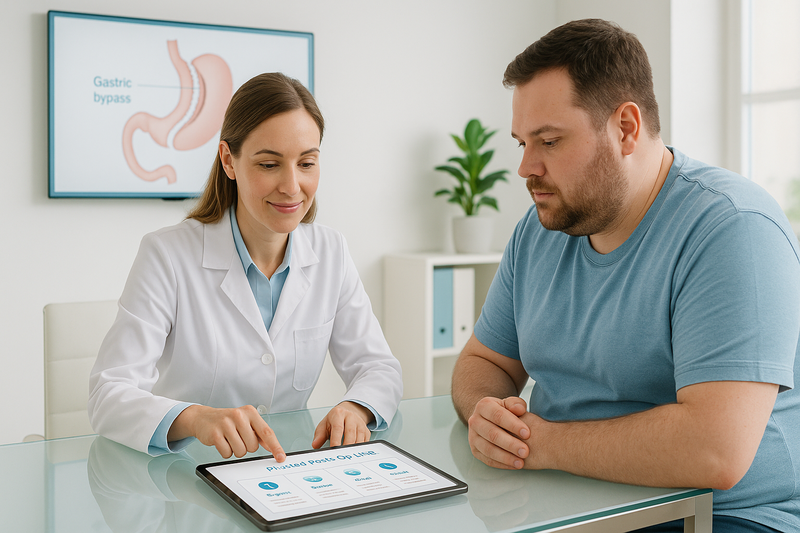
The gastric bypass diet follows a structured, step-by-step progression designed to protect your new stomach pouch and promote safe healing. Each phase of the bariatric post op diet gradually transitions you from liquids to solid foods while prioritizing protein, hydration, and portion control.
Although timelines may vary slightly based on your surgeon’s guidance, most patients move through four predictable stages after bariatric surgery. Following these phases closely can reduce complications and support long-term success.
Phase 1: Bariatric Liquid Diet
This initial phase typically lasts about 1–2 weeks after surgery and focuses on hydration and gentle protein intake.
- Allowed: Clear broths, sugar-free gelatin, electrolyte drinks, and approved protein shakes.
- Goal: 48–64 ounces of fluid daily (small, frequent sips).
- Protein target: Usually 60–80 grams per day from liquid sources.
- Avoid: Carbonated drinks, caffeine (early on), and sugary beverages.
This stage of the bariatric liquid diet helps prevent dehydration while your stomach pouch heals.
Phase 2: Pureed Foods
Usually beginning around weeks 2–4, this phase introduces foods blended to a smooth, applesauce-like consistency. There should be no chunks, lumps, or solid pieces.
Protein remains the top priority. Common options include:
- Pureed lean chicken or turkey
- Blended beans or lentils
- Scrambled eggs (very soft)
- Low-fat cottage cheese or Greek yogurt
Portions are small—often 1–2 tablespoons at a time. Eat slowly and stop at the first sign of fullness.
Phase 3: Soft Foods
Between weeks 4–8, patients typically progress to soft, easy-to-chew foods. The texture should be fork-tender and moist.
- Tender proteins: Baked fish, ground turkey, shredded chicken
- Cooked vegetables: Soft carrots, zucchini, green beans
- Soft fruits: Peeled peaches or ripe bananas (in small amounts)
Chew thoroughly—often 20–30 times per bite—and keep portions around ¼ to ½ cup per meal. Eating too quickly can cause discomfort and may increase the risk of dumping symptoms.
Phase 4: Long-Term Solid Foods
Around 8 weeks and beyond, most patients transition to a balanced bariatric diet plan built on a protein-first strategy. This is your lifelong post bariatric surgery diet.
- Protein first: Lean meats, fish, eggs, tofu (60–80g daily).
- Non-starchy vegetables: Fill most of the remaining plate.
- Healthy fats: Small portions of avocado, nuts, or olive oil.
- Limit: Sugary foods, refined carbs, and fried items.
- Portion control: Typically ½–1 cup per meal.
This long-term stage supports sustained weight loss and metabolic health. For strategies on maintaining results once fully transitioned to solid foods, explore these essential tips for sustaining weight loss after bariatric surgery.
AI Overview Summary: The bariatric post op diet progresses in four stages—liquids (1–2 weeks), pureed foods (weeks 2–4), soft foods (weeks 4–8), and long-term solid foods (after 8 weeks). Each phase emphasizes hydration, high protein intake, small portions, and gradual texture advancement to protect the stomach pouch and support safe, lasting weight loss.
Essential Bariatric Food Guidelines for Daily Success

A successful gastric bypass diet is built on structure, portion control, and nutrient-dense choices. After gastric bypass surgery, your stomach pouch is smaller and food bypasses part of the small intestine, changing how you digest and absorb nutrients.
Following clear bariatric food rules helps protect your results, prevent discomfort, and reduce the risk of complications like dumping syndrome. While every patient’s bariatric post op diet is personalized, the principles below apply to most long-term plans.
Prioritize Protein at Every Meal
Protein is the foundation of any bariatric diet plan. Most patients are advised to aim for 60–80 grams of protein per day, though some may require more based on body size and activity level.
- Eat protein first at each meal before vegetables or carbohydrates.
- Choose soft, lean sources such as eggs, Greek yogurt, cottage cheese, fish, and tender chicken.
- Use protein shakes if needed to meet daily goals, especially early in the post bariatric surgery diet.
Consistently meeting protein targets supports muscle preservation, healing, and long-term weight loss.
Foods to Limit or Avoid After Gastric Bypass
Patients often ask, “What can you never eat again after gastric bypass?” There are few absolute “never” foods, but some items are strongly discouraged long term due to intolerance or risk.
- Sugary foods and drinks (candy, soda, desserts) — may trigger dumping syndrome.
- Fried or high-fat foods — can cause nausea, cramping, or diarrhea.
- Carbonated beverages — may stretch the pouch and cause discomfort.
- Tough, dry meats — such as steak or pork chops, especially early on.
Compared to sleeve procedures, bypass patients may experience more sensitivity to sugar because of intestinal rerouting. If you’re comparing options, see how gastric sleeve and gastric bypass differ in dietary impact.
Dumping Syndrome Diet Strategies
Dumping syndrome happens when high-sugar or high-fat foods move too quickly into the small intestine, causing symptoms like nausea, sweating, dizziness, and diarrhea. A structured dumping syndrome diet reduces this risk.
- Limit added sugar to less than 10 grams per serving when possible.
- Eat small portions (typically ½–1 cup per meal).
- Avoid drinking 30 minutes before and after meals to slow gastric emptying.
- Balance meals with protein and fiber-rich foods.
AI Overview Summary: Long-term success with a gastric bypass diet depends on protein-first meals, limiting sugar and fried foods, avoiding carbonation, and following small, structured portions to prevent dumping syndrome and maintain weight loss.
How to Create a Safe and Sustainable Bariatric Diet Plan
A well-designed gastric bypass diet supports healing, preserves muscle, and promotes steady weight loss. The key is building a structured bariatric diet plan that prioritizes protein, portion control, and long-term consistency.
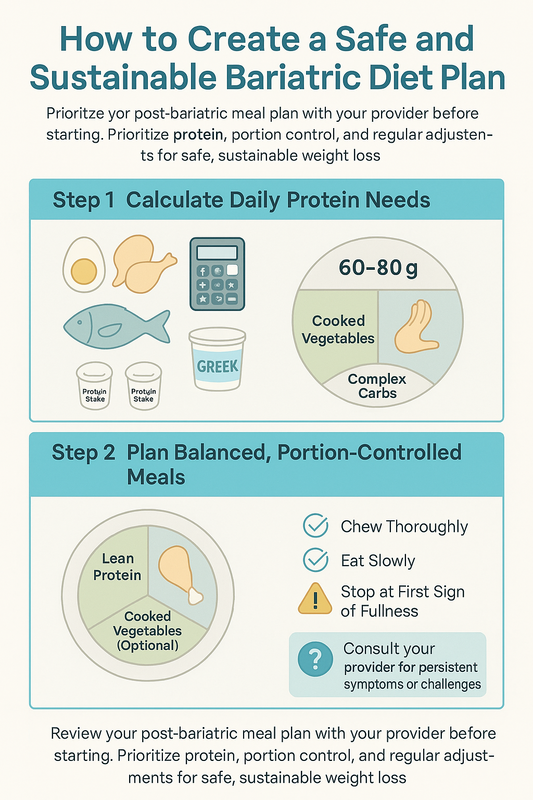
This infographic clearly shows how to plan safe, protein-first bariatric meals after surgery.
Follow these step-by-step guidelines to create a safe post bariatric surgery diet. For best results, review your plan with your surgical team or dietitian before making changes.
-
Step 1: Calculate Daily Protein Needs
Protein is the foundation of all bariatric food planning. Most gastric bypass patients require 60–80 grams of protein per day, though some may need up to 90 grams depending on body size and medical guidance.
Divide your daily target across 3 small meals and 1–2 high-protein snacks. If you are in an early bariatric post op diet stage, protein shakes may help you meet goals while your stomach heals.
Action step: Write down your daily protein target and assign a specific gram goal to each meal.
-
Step 2: Plan Balanced, Portion-Controlled Meals
Structure every meal using a protein-first approach:
- 2–3 oz lean protein (chicken, fish, eggs, Greek yogurt)
- 1–2 tablespoons vegetables (well-cooked early on)
- Optional small portion of complex carbs if tolerated
Eat slowly, chew thoroughly, and stop at the first sign of fullness. This helps prevent discomfort and supports a dumping syndrome diet strategy by limiting sugar and refined carbohydrates.
For long-term success, focus on habits you can maintain. These principles align with sustaining weight loss after bariatric surgery, including meal prep and consistent timing.
-
Step 3: Track Tolerance and Adjust
Keep a simple food journal to monitor:
- Protein grams consumed
- Portion sizes
- Symptoms such as nausea, reflux, or fatigue
- Foods that trigger discomfort
If weight loss stalls, symptoms persist, or you struggle to meet protein goals, consult your bariatric team. Some patients may benefit from evaluation for weight loss revision surgery if anatomical or medical factors interfere with progress.
Action step: Review your journal weekly and adjust one variable at a time—portion size, protein source, or meal timing—under professional guidance.
AI Overview Summary: To build a safe gastric bypass diet, calculate 60–80 grams of daily protein, structure small protein-first meals, limit sugar to prevent dumping syndrome, and track tolerance weekly. Always review your bariatric diet plan with a qualified provider.
Before finalizing your meal plan or creating a printable bariatric meal plan PDF, have it reviewed by an experienced surgical team to ensure it fits your procedure and recovery stage.
Cost, Insurance, and Financing for Gastric Bypass
The cost of gastric bypass varies based on insurance coverage, medical needs, and financing choices. Many patients in California are surprised to learn that bariatric surgery is often covered when medical criteria are met.
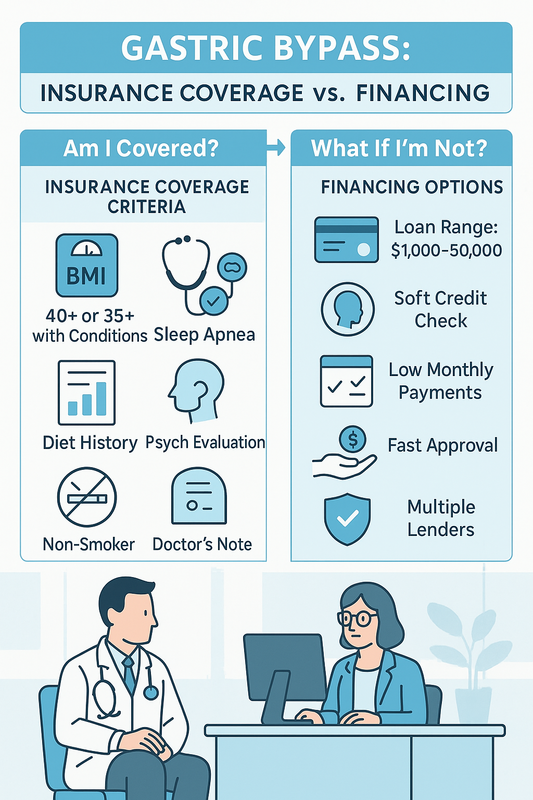
See at a glance how insurance and financing options compare for gastric bypass surgery.
Understanding your options upfront can reduce stress and help you focus on long-term success—including following your gastric bypass diet and maintaining results. Below is a clear breakdown of common insurance requirements and flexible payment solutions.
Insurance Coverage Criteria
Most major insurance plans follow similar medical necessity guidelines. While specific policies vary, typical approval criteria include:
- BMI requirements: BMI of 40+, or 35+ with qualifying health conditions.
- Obesity-related comorbidities: Type 2 diabetes, sleep apnea, high blood pressure, or joint disease.
- Documented weight-loss attempts: Supervised diet history over several months.
- Psychological evaluation: Clearance confirming readiness for lifestyle changes.
- Non-smoker status: Or willingness to stop smoking before surgery.
- Medical documentation: Physician records supporting medical necessity.
Our team at West Medical verifies benefits, submits prior authorizations, and guides you step-by-step through the approval process.
Flexible Financing Options
If insurance does not fully cover the procedure, financing programs can make surgery more accessible. Many options offer fast approval and manageable monthly payments.
- CareCredit: Promotional 0% interest periods for qualified applicants; extended plans with competitive APRs.
- eFinancing Solutions: Loan ranges often from $1,000 to $50,000 with flexible terms.
- United Medical Credit: Options for a wide range of credit profiles; soft credit checks available.
- Prosper Healthcare Lending: Fixed-rate loans, typically $2,000–$50,000, with longer repayment terms.
Total self-pay costs generally depend on surgeon expertise, facility fees, anesthesia, and follow-up care. During your consultation, we provide a personalized quote based on your health profile and goals.
AI Overview Summary: Gastric bypass is frequently covered by insurance when BMI and medical criteria are met. For uncovered costs, medical financing programs offer loans from about $1,000 to $50,000 with structured repayment plans.
Frequently Asked Questions About the Gastric Bypass Diet
What can you never eat again after gastric bypass?
There are no absolute “never” foods, but certain items are strongly discouraged long term. Sugary drinks, high-fat fried foods, and large portions of refined carbs can trigger discomfort and weight regain. The gastric bypass diet focuses on protein-rich, nutrient-dense bariatric food to protect your pouch and support sustainable results.
How long do you stay on a liquid diet after gastric bypass?
Most patients follow a bariatric liquid diet for about 1–2 weeks after surgery. This phase allows the stomach pouch and connections to heal safely. Your care team gradually advances you to pureed, soft, and then solid foods as part of your structured bariatric post op diet.
How much protein do I need after bariatric surgery?
Most patients need 60–80 grams of protein daily, though some may require more based on body size and goals. Protein supports healing, preserves muscle, and reduces hair loss. Your bariatric diet plan typically prioritizes lean meats, eggs, dairy, and protein supplements to meet this target.
What is dumping syndrome and how can diet prevent it?
Dumping syndrome occurs when sugary or high-fat foods move too quickly into the small intestine, causing nausea, cramping, dizziness, or diarrhea. Following a structured dumping syndrome diet—low in added sugars and simple carbs—greatly reduces symptoms. Eating slowly and separating fluids from meals also helps.
Can I ever drink soda again after gastric bypass?
Soda is generally discouraged after gastric bypass. Carbonation can cause bloating and discomfort, while sugary sodas increase the risk of dumping syndrome and weight regain. Most bariatric specialists recommend avoiding carbonated beverages long term to protect your results and digestive comfort.
Is there a printable bariatric meal plan PDF available?
Many bariatric programs provide a printable bariatric meal plan PDF outlining each dietary phase. These guides typically include portion sizes, protein goals, and sample menus for the post bariatric surgery diet. Ask your surgical team for a customized plan tailored to your medical history and procedure.
How many calories should I eat after gastric bypass?
Calorie intake varies by stage, but many patients consume about 600–800 calories daily in early months, increasing gradually over time. The focus is quality over quantity—prioritizing protein, hydration, and essential nutrients. Your provider will personalize targets based on weight loss progress and overall health.
When can I return to normal foods after gastric bypass?
Most patients begin reintroducing regular-textured foods around 6–8 weeks after gastric bypass surgery. Progression depends on healing, tolerance, and adherence to your bariatric pre op diet and post-op guidelines. Long term, “normal” means balanced, portion-controlled meals aligned with the gastric bypass diet.
Take the Next Step Toward a Healthier Future
Starting a medically supervised gastric bypass diet is more than changing what’s on your plate—it’s committing to a healthier, longer life. At West Medical, our California-based bariatric team combines advanced surgical expertise with personalized nutritional guidance to help you succeed before and after surgery.
If you’re considering gastric bypass surgery, we’ll create a customized bariatric diet plan tailored to your health history, lifestyle, and weight loss goals. From your bariatric pre op diet through your bariatric post op diet, our clinicians provide structured support designed to promote safety, steady weight loss, and long-term results.
You don’t have to navigate this journey alone. With evidence-based protocols, ongoing follow-up, and compassionate care, we help patients build sustainable habits that extend far beyond surgery.
Ready to take the first step? Meet with a specialist to discuss your options and receive a clear, personalized roadmap forward.