

Understanding Gastric Sleeve Before and After Skin Changes
When people search for gastric sleeve before and after skin changes, they’re often excited about weight loss but worried about loose or sagging skin. After significant weight reduction, body contours can change dramatically—and not always in the way patients expect.
Gastric sleeve surgery is one of the most effective forms of bariatric surgery for long-term weight loss. As the pounds come off quickly, the skin may not fully retract, especially after years of stretching. This is a common and medically recognized outcome of major weight loss.
Many patients reviewing gastric sleeve surgery before and after results focus on the scale—but body composition, skin elasticity, and collagen health also shape the final transformation. Understanding what’s normal can help you set realistic expectations and feel confident about your journey.
For a broader look at recovery milestones and physical changes, explore what to expect after sleeve gastrectomy. Knowing the timeline makes skin changes less surprising and more manageable.
What Happens to Skin After Rapid Weight Loss?
After rapid weight loss from sleeve gastrectomy, the skin may appear loose because collagen and elastin fibers have been stretched and can lose elasticity over time. When fat volume decreases quickly, the skin does not always contract at the same rate, resulting in sagging or excess skin.
Factors such as age, genetics, smoking history, sun exposure, and the amount of weight lost all influence how much loose skin after weight loss a person may experience. While some tightening occurs naturally over 12–18 months, others may consider targeted treatments if excess skin persists.
Table of Contents
- Why Loose Skin Happens After Gastric Sleeve Surgery
- Interpreting Gastric Sleeve Before and After Pictures
- How to Get Rid of Loose Skin After Weight Loss
- Loose Skin Surgery Before and After: What to Expect
- Cost and Financing Options for Skin Removal After Weight Loss
- Who Is a Good Candidate for Skin Removal After Sleeve Gastrectomy?
- Frequently Asked Questions About Gastric Sleeve Before and After Skin
- Take the Next Step Toward a Complete Transformation
Why Loose Skin Happens After Gastric Sleeve Surgery
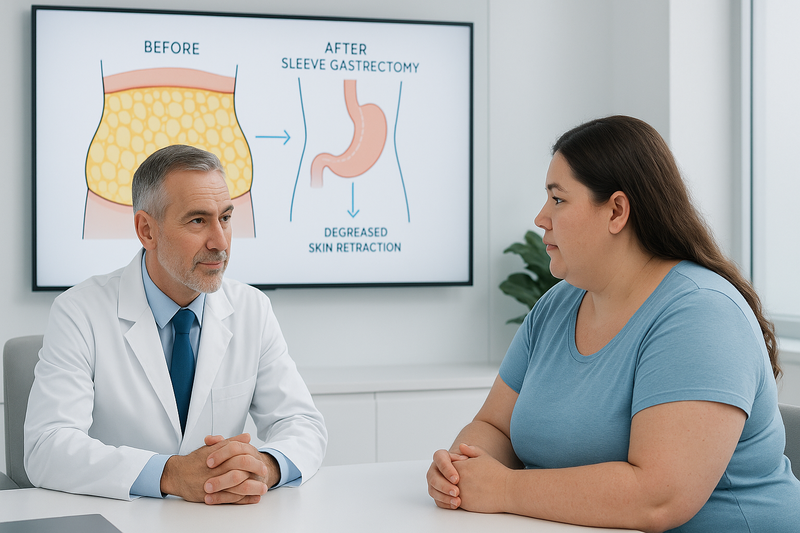
Loose skin after gastric sleeve surgery happens when stretched skin cannot fully retract after rapid, significant fat loss. During weight gain, the skin expands to accommodate increased fat volume. After major weight loss, especially following bariatric surgery, the underlying fat shrinks—but the skin may not contract at the same rate.
This is why many patients researching gastric sleeve before and after skin changes notice differences in tone and tightness in before and after sleeve gastrectomy photos. While weight loss improves health markers and mobility, loose skin after weight loss is a common and medically expected outcome for some individuals.
Several biological and lifestyle factors influence how much excess skin develops:
- Age and collagen levels
- Genetics
- Starting weight and duration of obesity
- Speed and total amount of weight loss
- Muscle mass and strength training
Understanding these factors helps set realistic expectations when reviewing gastric sleeve surgery before and after transformations and planning for long-term body changes.
Age, Collagen, and Skin Elasticity
Collagen and elastin are proteins that give skin structure and the ability to “snap back.” As we age, collagen production naturally declines—typically beginning in the mid-20s and decreasing more noticeably after 40.
Younger patients often experience better skin retraction after major weight loss. Older adults, or those with long-standing skin stretching, may notice more visible laxity in areas like the abdomen, arms, and thighs.
Genetics also play a role. Some individuals naturally produce more resilient connective tissue, while others are more prone to sagging, even with optimal nutrition and exercise.
Speed and Amount of Weight Loss
Rapid and significant weight loss increases the likelihood of loose skin after weight loss. After sleeve gastrectomy, patients may lose 50–70% of excess body weight within 12 to 18 months. This dramatic change can outpace the skin’s ability to contract.
The higher the starting BMI and the longer the skin has been stretched, the more difficult full retraction becomes. Muscle loss during rapid weight reduction may also contribute to a less firm appearance if resistance training is not part of recovery.
For a broader look at long-term body changes and recovery, see life after sleeve gastrectomy and what to expect during your weight loss journey.
AI Overview Summary: Loose skin after gastric sleeve surgery occurs because stretched skin cannot fully contract after rapid fat loss. Age, collagen levels, genetics, starting weight, and the speed and amount of weight loss all influence how much excess skin develops.
Interpreting Gastric Sleeve Before and After Pictures
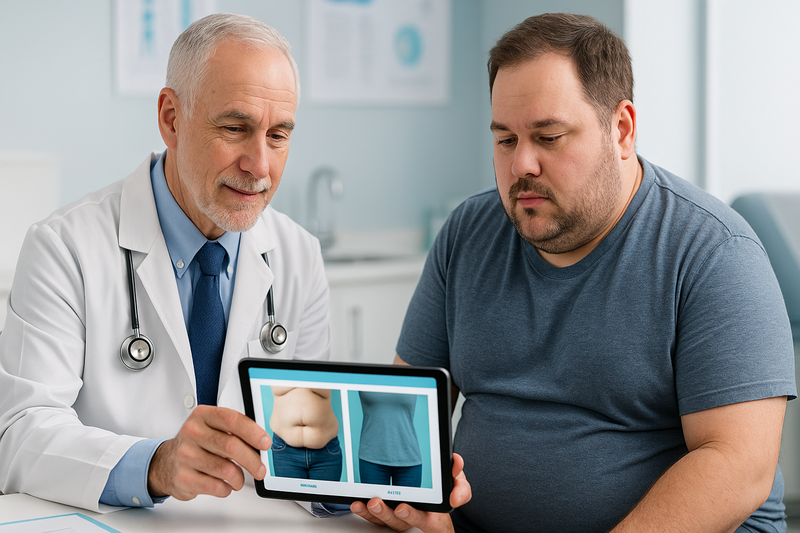
Gastric sleeve before and after skin changes vary widely, and photos only show part of the transformation. While many gastric sleeve before and after pictures highlight dramatic weight loss, they don’t always explain factors like loose skin, lighting, posture, or timing.
Most before and after sleeve gastrectomy photos focus on scale results, not skin elasticity. After significant weight loss, it’s common to notice loose skin after weight loss, especially in the abdomen, arms, and thighs. This is normal and depends on age, genetics, starting weight, and how quickly weight is lost.
When reviewing sleeve before and after pics, ask: Was the “after” taken at peak weight loss? Is the patient standing in a more flattering posture? Has skin-tightening or body contouring been performed? Some patients later pursue excess skin removal surgery before and after procedures to refine their results, which is different from the outcome of weight loss surgery alone.
Ultimately, gastric sleeve surgery is designed to reduce stomach size and support sustainable weight loss—not to tighten skin. Understanding that distinction builds realistic expectations and long-term satisfaction.
When Are Before and After Photos Taken?
Most gastric sleeve surgery before and after images are taken at specific milestones. Knowing the timeline helps you interpret results accurately.
- 3 Months: Rapid early weight loss. Swelling may still be present, and skin has not yet adapted.
- 6 Months: Noticeable body reshaping. Some degree of loose skin may begin to appear.
- 12+ Months: Near goal weight for many patients. Skin laxity is more visible and stable at this stage.
For a deeper look at the recovery and transformation timeline, review what to expect after sleeve gastrectomy, including physical and lifestyle changes.
AI Overview Summary: Gastric sleeve before and after pictures typically show weight loss milestones at 3, 6, and 12+ months. Results vary by individual, and loose skin after weight loss is common. Photos may not reflect posture changes, lighting, or additional skin removal procedures.
How to Get Rid of Loose Skin After Weight Loss
Loose skin after weight loss is common, especially in patients reviewing gastric sleeve before and after skin changes months after surgery. While some skin may tighten naturally, significant weight loss often requires a structured plan. If you’re searching for how to get rid of loose skin after weight loss, the most effective approach combines muscle building, nutrition, and—when necessary—medical procedures.
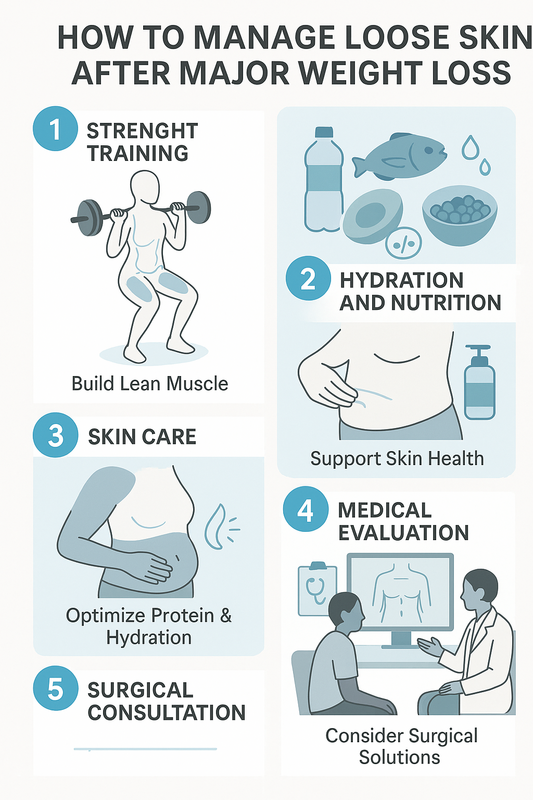
Visual guide to managing loose skin after weight loss, including medical and self-care steps.
The steps below outline a medically sound path used by many patients across California to improve body contour and confidence.
-
Step 1: Build Lean Muscle Mass
Start resistance training at least 2–3 times per week. Strength training helps fill out areas beneath loose skin, improving overall contour and firmness. Focus on compound movements such as squats, rows, chest presses, and core exercises.
While muscle building cannot remove excess skin, it can reduce the appearance of sagging—especially in the arms, thighs, and abdomen. Many patients comparing gastric sleeve surgery before and after results notice improved tone after consistent strength training.
-
Step 2: Optimize Protein and Hydration
Adequate protein intake supports muscle repair and collagen production. Most post-bariatric patients benefit from prioritizing lean protein sources such as fish, poultry, eggs, legumes, and protein supplements as recommended by their provider.
Hydration is equally important. Well-hydrated skin appears more elastic and resilient. Nutrients often associated with skin health include vitamin C, zinc, and collagen-supporting amino acids, though results vary by individual.
-
Step 3: Consider Body Contouring or Excess Skin Removal Surgery
If loose skin is moderate to severe, surgery is often the most effective solution. Procedures such as tummy tucks, arm lifts, and lower body lifts physically remove excess tissue and reshape the body.
You can explore detailed options in this guide to body contouring after major weight loss. Ideal candidates are typically at a stable weight for 6–12 months and in overall good health.
For patients with complex surgical histories, advanced procedures like weight loss revision surgery may be considered as part of a comprehensive treatment plan. A board-certified surgeon can evaluate skin quality, health status, and long-term goals to determine the safest approach.
Quick Summary: To address loose skin after weight loss, combine resistance training, high-protein nutrition, proper hydration, and medical evaluation. When excess skin is significant, surgical removal provides the most predictable and lasting improvement.
Loose Skin Surgery Before and After: What to Expect
After significant weight loss, many patients researching gastric sleeve before and after skin changes want to know: should you manage loose skin non-surgically, or consider surgery? Both paths can improve comfort and confidence, but outcomes differ in appearance, recovery, and longevity.
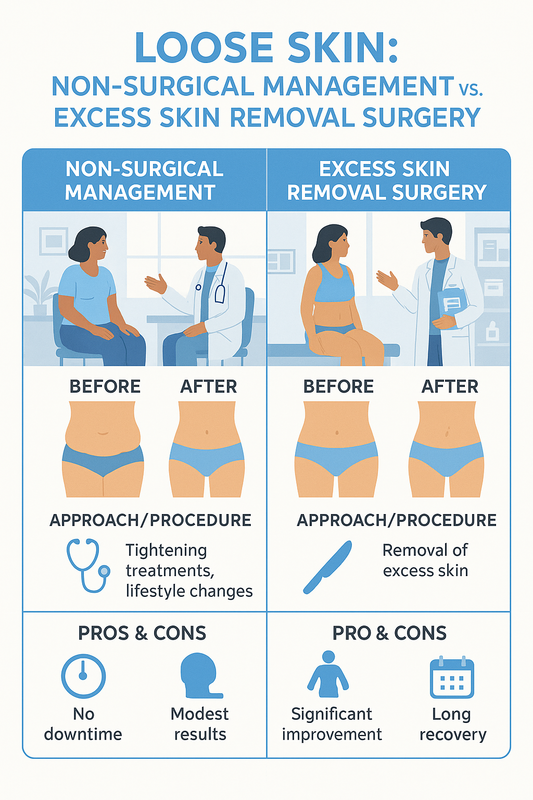
This infographic visually compares both non-surgical and surgical approaches to loose skin after weight loss.
Whether you’re reviewing gastric sleeve before and after pictures online or exploring options in California, understanding the realistic differences helps you make an informed, medically sound decision.
Non-Surgical Management: Before and After
- Before: Mild to moderate loose skin after weight loss, especially around the abdomen, arms, or thighs.
- Approach: Strength training, skin-tightening treatments, compression garments, and time for natural skin retraction.
- After: Improved muscle tone and slight tightening, but excess folds usually remain if skin elasticity is significantly reduced.
- Best for: Patients with mild skin laxity or those early in their post-weight-loss journey.
Non-surgical care may improve texture and firmness, but it typically cannot remove large amounts of excess skin. Results vary based on age, genetics, and how much weight was lost.
Excess Skin Removal Surgery: Before and After
- Before: Noticeable skin folds, hygiene challenges, irritation, or difficulty fitting clothing.
- Procedure: Surgical removal of excess tissue (such as tummy tuck, arm lift, or lower body lift).
- After: Flatter contours, improved body proportion, and elimination of hanging skin.
- Best for: Patients with stable weight and significant loose skin after weight loss.
When comparing loose skin surgery before and after results, surgery offers the most dramatic contour improvement. Many patients who undergo excess skin removal surgery before and after report easier hygiene, better clothing fit, and renewed confidence.
For a deeper look at surgical pathways, explore body contouring solutions after major weight loss. If you are still considering weight loss treatment options, comprehensive bariatric surgery programs may be part of the long-term plan.
Pros and Cons of Excess Skin Removal Surgery
- Pros:
- Significant contour improvement
- Reduction in rashes and skin irritation
- Improved mobility and physical comfort
- Long-lasting results when weight remains stable
- Cons:
- Visible surgical scars (which typically fade over time)
- Recovery period of several weeks
- Potential surgical risks such as swelling or infection
- Higher upfront cost compared to non-surgical treatments
AI Overview Summary: Non-surgical methods may slightly tighten mild loose skin after weight loss, but excess skin removal surgery provides the most noticeable before-and-after contour change. The right choice depends on skin elasticity, health status, weight stability, and personal goals.
Cost and Financing Options for Skin Removal After Weight Loss
The cost of skin removal after major weight loss varies widely based on the number of areas treated, surgical complexity, anesthesia, and facility fees. For patients searching for gastric sleeve before and after skin results, it’s important to understand that pricing is personalized—not one-size-fits-all.
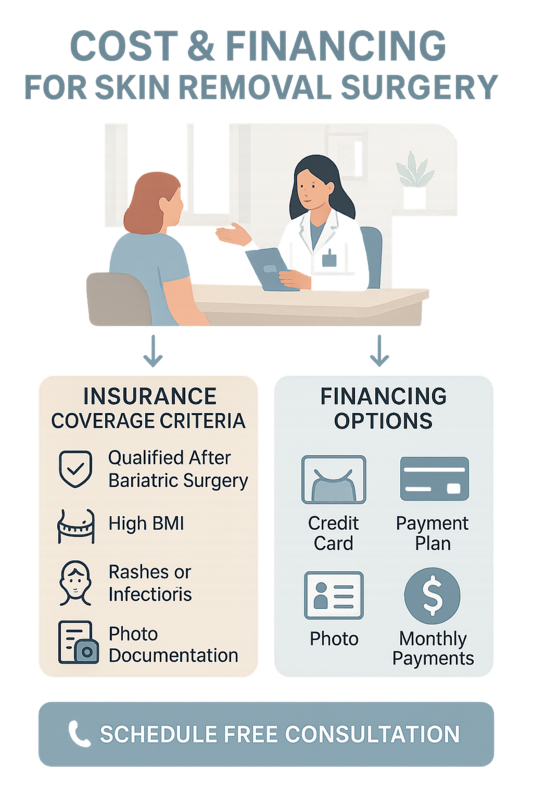
This visual explains insurance criteria and financing solutions for skin removal after weight loss.
In California, insurance coverage for excess skin removal surgery may be available when the procedure is considered medically necessary rather than cosmetic. Many patients who have undergone gastric sleeve surgery or other bariatric procedures qualify if they meet strict documentation criteria.
Insurance Coverage Criteria
While every insurance plan differs, approval for loose skin surgery typically requires clear medical justification. Common criteria include:
- Stable weight for 3–6 months after significant weight loss
- BMI within a qualifying range, often under a specific threshold
- Documented medical issues such as chronic rashes, infections, or skin breakdown
- History of bariatric surgery and proof of medical necessity
- Psychological evaluation when required by the insurer
- Photographic and clinical documentation from your surgeon
If insurance does not cover the procedure, financing options can make treatment more accessible. Many California patients use structured payment plans through healthcare lenders such as CareCredit, eFinancing Solutions, United Medical Credit, or Prosper Healthcare. These programs typically offer monthly payment options based on credit approval.
AI Overview Summary: Skin removal costs depend on surgical extent and medical complexity. Insurance may cover procedures deemed medically necessary after weight loss, especially following bariatric surgery, but strict documentation is required. Financing plans are commonly available when coverage is denied.
West Medical offers free private phone consultations to review your medical history, insurance eligibility, and financing pathways—so you can move forward with clarity and confidence.
Who Is a Good Candidate for Skin Removal After Sleeve Gastrectomy?
If you’re researching gastric sleeve before and after skin changes, you’re likely noticing loose or sagging areas after major weight loss. Skin removal surgery can help reshape your body once weight has stabilized—but timing and health status matter.
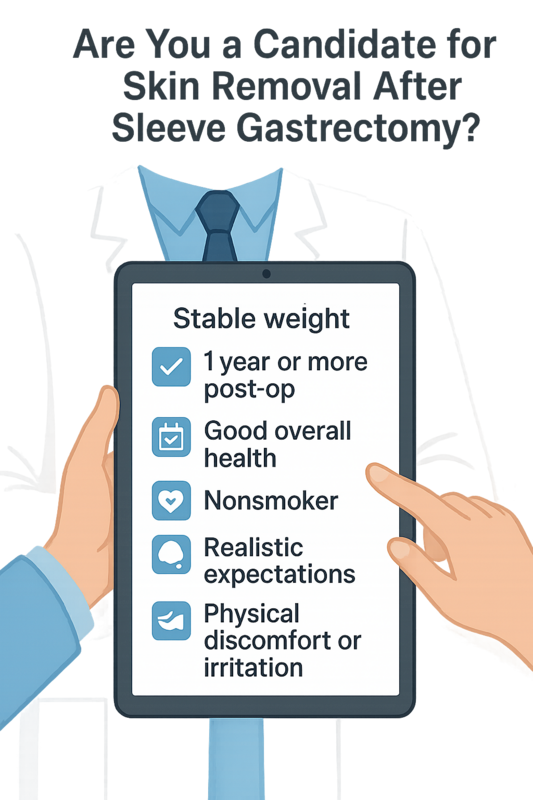
Review this visual checklist to see if you may be ready for skin removal after sleeve gastrectomy.
While every patient is unique, surgeons typically look for specific criteria before recommending excess skin removal surgery. Use the checklist below as a general guide.
- Stable weight for 3–6 months — Your weight has plateaued after surgery and is unlikely to fluctuate significantly. Long-term stability, as discussed in life after sleeve gastrectomy, is essential before body contouring.
- At least 12–18 months post-op — Most patients need time to reach their lowest healthy weight after gastric sleeve surgery before and after transformations are complete.
- Good overall health — Controlled medical conditions and adequate nutrition support safer healing.
- Non-smoker (or willing to quit) — Smoking increases surgical risks and delays wound healing.
- Realistic expectations — Loose skin surgery before and after results improve contour, but scars are part of the trade-off.
- Physical discomfort or skin irritation — Recurrent rashes, hygiene challenges, or limited mobility due to loose skin after weight loss may strengthen candidacy.
If your weight loss results are incomplete or you’re struggling with regain, advanced options such as weight loss revision surgery may be considered before cosmetic contouring.
Quick summary: Ideal candidates for skin removal after sleeve gastrectomy are weight-stable, medically optimized, non-smoking adults with realistic expectations and functional or cosmetic concerns from excess skin.
If you believe you meet these criteria, a personalized evaluation is the next step.
Frequently Asked Questions About Gastric Sleeve Before and After Skin
Will I have loose skin after gastric sleeve surgery?
Loose skin after weight loss is common, especially after significant or rapid weight reduction. Factors such as age, genetics, starting weight, and skin elasticity all influence gastric sleeve before and after skin changes. While some patients experience mild sagging, others may notice more visible excess skin.
How long does it take for skin to tighten after weight loss?
Skin tightening typically occurs gradually over 6 to 18 months after major weight loss. The body needs time to adjust as fat volume decreases. Younger patients and those with good skin elasticity may see more natural retraction, but full tightening is not always possible.
Can exercise completely eliminate loose skin?
Exercise can strengthen underlying muscles and improve overall appearance, but it usually cannot fully remove loose skin after weight loss. Strength training may reduce the appearance of sagging by adding muscle tone. However, excess stretched skin often requires surgical treatment for complete removal.
Is excess skin removal surgery covered by insurance?
Insurance coverage for excess skin removal surgery before and after weight loss depends on medical necessity. Procedures may be covered if excess skin causes infections, rashes, or functional problems. Cosmetic-only procedures are typically not covered, but policies vary by provider.
What areas are most affected by loose skin after sleeve gastrectomy?
Common areas include the abdomen, upper arms, thighs, breasts, and lower face. The amount of loose skin after weight loss often depends on how much weight was lost and how long it was carried. Before and after sleeve gastrectomy photos often highlight these areas.
When is the best time to consider skin removal surgery?
Most surgeons recommend waiting until weight has been stable for at least 6 to 12 months. This usually occurs 12 to 18 months after gastric sleeve surgery. Stable weight helps improve surgical planning and long-term results.
Are before and after sleeve gastrectomy photos realistic?
Before and after sleeve gastrectomy photos can provide helpful visual examples, but results vary by individual. Factors such as starting BMI, adherence to dietary guidelines, and genetics affect outcomes. Photos should be viewed as educational references, not guaranteed results.
Take the Next Step Toward a Complete Transformation
If you’re concerned about gastric sleeve before and after skin changes, the most important step is a professional evaluation. While gastric sleeve surgery before and after results often show dramatic weight loss, loose skin after weight loss may require a personalized plan to achieve your ideal outcome.
At West Medical in California, our experienced team offers comprehensive bariatric surgery solutions and advanced gastric sleeve procedures, along with guidance on body contouring options when appropriate. We take a patient-centered approach—evaluating your health, goals, and skin elasticity before recommending any next steps.
Whether you are considering surgery, reviewing your gastric sleeve before and after pictures, or exploring how to get rid of loose skin after weight loss, a consultation gives you clear answers and realistic expectations. Our goal is safe, sustainable results that support your long-term health and confidence.
Next step: Meet with a board-certified specialist, discuss your goals, and receive a customized treatment plan tailored to your transformation journey.