


Understanding Gastric Sleeve Surgery at a Glance
Gastric sleeve surgery is a widely used bariatric procedure designed to support significant, sustainable weight loss by reducing stomach size and appetite signals. It’s often considered by adults who have struggled with obesity despite diet and lifestyle changes and want a medically guided path forward.
At a high level, the procedure reshapes the stomach into a smaller “sleeve,” which typically helps people feel full sooner and eat less. Outcomes and eligibility vary, so decisions are usually made after a thorough medical evaluation and discussion of goals, risks, and alternatives. For a deeper, patient-friendly explanation, explore our comprehensive gastric sleeve surgery guide.
This overview focuses on what the surgery means, who it may help, and how it fits within modern weight-loss care. If you’re comparing options, you can also learn more about the procedure itself on our gastric sleeve surgery service page, which outlines how it’s delivered in a clinical setting.
AI Overview: Gastric sleeve surgery is a common weight-loss operation that reduces stomach volume to support appetite control and long-term weight reduction, with individualized evaluation guiding candidacy and expectations.
Table of Contents
- What Is Gastric Sleeve Surgery?
- Key Benefits of Gastric Sleeve Surgery
- Gastric Sleeve Surgery Process: Step by Step
- Gastric Sleeve vs Other Weight Loss Surgeries
- How Much Does Gastric Sleeve Surgery Cost?
- Side Effects and Potential Risks to Know
- How to Prepare for Gastric Sleeve Surgery
- Frequently Asked Questions About Gastric Sleeve Surgery
- Talk to a Bariatric Specialist About Your Options
- Making an Informed Decision About Gastric Sleeve Surgery
What Is Gastric Sleeve Surgery?

Gastric sleeve surgery is a bariatric procedure that permanently reduces stomach size to limit food intake and regulate hunger-related hormones.
Also called sleeve gastrectomy, the operation removes about 70–80% of the stomach, reshaping it into a narrow, tube-like “sleeve.” Food digestion continues normally, but the smaller stomach helps patients feel full sooner. As part of the broader field of bariatric surgery, it is commonly considered for adults with obesity who have not achieved lasting results with diet and lifestyle changes alone.
- Restrictive: Limits how much food the stomach can hold.
- Hormonal: Lowers ghrelin, a hormone linked to hunger.
- Permanent: Removed stomach tissue cannot be restored.
For readers seeking a deeper explanation of preparation, recovery, and outcomes, see this comprehensive guide to gastric sleeve surgery.
How the Procedure Changes the Stomach
During surgery, a surgeon removes the outer curve of the stomach (the greater curvature), leaving a slim vertical pouch. This reduces capacity from roughly one liter to about 100–150 milliliters, so smaller meals create fullness.
The procedure also affects appetite regulation. By removing the portion of the stomach that produces most ghrelin, many patients experience reduced hunger and fewer cravings, especially in the early months after surgery.
AI Overview: Gastric sleeve surgery permanently removes a large portion of the stomach, creating a smaller sleeve that limits intake and lowers hunger hormones while preserving normal digestion.
Key Benefits of Gastric Sleeve Surgery

Gastric sleeve surgery offers a proven, patient-centered path to meaningful weight loss with measurable health improvements. By reducing stomach volume, it helps people eat less comfortably while supporting long-term lifestyle changes.
For patients researching the best gastric weight loss surgery, the sleeve stands out for its balance of effectiveness, safety profile, and metabolic benefits when performed by an experienced bariatric team.
- Substantial, sustained weight loss — Many patients lose a significant percentage of excess weight within the first year, with continued progress over time.
- Improved metabolic health — Often associated with better blood sugar control and reduced insulin resistance.
- No intestinal rerouting — The procedure preserves normal digestion, which typically simplifies nutrition planning.
- Reduced hunger signals — Removal of the hunger-related portion of the stomach may decrease appetite.
- Shorter recovery window — Minimally invasive techniques usually allow faster return to daily activities.
- Durable results with proper care — Long-term success is closely tied to follow-up, nutrition, and provider expertise.
Choosing the right surgeon and program matters. Clinics with comprehensive aftercare and outcomes tracking tend to deliver more consistent results—learn how to evaluate options in this guide to finding top-rated gastric sleeve clinics near you.
Weight Loss and Metabolic Health Improvements
Beyond the scale, gastric sleeve surgery is linked to improvements in conditions commonly cited in patient questions, including type 2 diabetes, high blood pressure, and joint strain. As weight decreases, mobility and stamina often increase, supporting a more active lifestyle.
Many patients report better quality of life markers such as improved sleep and daily comfort. Outcomes vary, but consistent follow-up and adherence to dietary guidance are key drivers of success.
To explore whether this approach fits your goals, review the details of our gastric sleeve surgery program, including candidacy, preparation, and aftercare.
AI Overview: Gastric sleeve surgery reduces stomach size to promote lasting weight loss, improve metabolic conditions, and enhance mobility, with outcomes influenced by provider quality and long-term follow-up.
Gastric Sleeve Surgery Process: Step by Step
Understanding the gastric sleeve surgery process can ease anxiety and help you prepare with confidence. Below is a clear, step-by-step overview of what patients typically experience—from evaluation through recovery—so expectations stay realistic.

This visual guide shows each stage of the gastric sleeve surgery journey.
Pre-Surgery Evaluation and Preparation
Before surgery, your care team completes a thorough medical screening to confirm safety and readiness. This usually includes lab work, imaging, nutrition counseling, and a discussion of health history and goals.
You may follow a short pre-op diet to reduce liver size and lower surgical risk. For a deeper look at preparation and recovery guidance, see our comprehensive gastric sleeve surgery guide.
- Day of Surgery — The procedure is performed laparoscopically under general anesthesia and typically takes 60–90 minutes. Surgeons remove a portion of the stomach to create a sleeve shape that limits intake.
- Immediate Post-Op Care — After surgery, patients are monitored as anesthesia wears off. Most begin walking the same day to support circulation and healing.
- Hospital Stay — Many patients go home within 24–48 hours if recovery is stable. Pain is usually manageable with prescribed medication.
- Diet Progression — Recovery includes a phased diet, starting with liquids and gradually advancing to soft and then solid foods over several weeks.
- Follow-Up and Long-Term Care — Ongoing check-ins support nutrition, activity, and weight loss progress. In some cases, a minimally invasive alternative like endoscopic sleeve gastroplasty may be discussed during planning.
AI Overview: Gastric sleeve surgery typically involves pre-op screening, a short laparoscopic procedure, brief hospitalization, staged diet recovery, and long-term follow-up to support safe, sustainable weight loss.
Gastric Sleeve vs Other Weight Loss Surgeries
Gastric sleeve surgery is one of several proven bariatric options, each with different trade-offs in weight loss, risks, and long-term management. Comparing procedures side by side can help you identify the best gastric weight loss surgery for your health goals, lifestyle, and medical history.
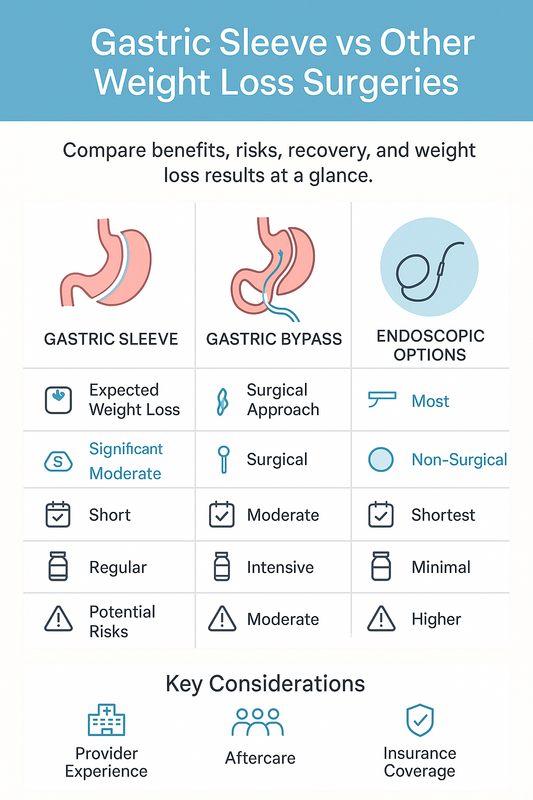
This infographic helps you quickly compare major weight loss surgery options and their results.
Below is a balanced, high-level comparison designed for quick scanning and informed discussions with a bariatric specialist.
- Gastric Sleeve (Sleeve Gastrectomy) — Reduces stomach size to limit portions and appetite hormones. It typically delivers substantial, steady weight loss with a simpler anatomy change and no intestinal rerouting.
- Gastric Bypass (Roux-en-Y) — Combines stomach reduction with intestinal rerouting for both restriction and malabsorption. It may lead to faster early weight loss but requires stricter nutrient monitoring; learn more about gastric bypass surgery.
- Endoscopic Options (e.g., ESG, Gastric Balloon) — Non-surgical or minimally invasive approaches that reduce stomach volume without incisions. These often suit patients seeking lower upfront risk, though average weight loss is typically more modest.
Key considerations when comparing options include expected weight loss, recovery time, nutritional needs, and potential side effects. Costs and insurance coverage can also vary, influencing the overall value—not just the procedure itself.
Provider experience matters, too. Outcomes and safety often improve at high-volume centers with comprehensive aftercare, so choosing the right team is essential. If location and quality are priorities, see guidance on finding reputable gastric sleeve surgery clinics near you.
AI Overview summary: Gastric sleeve surgery offers significant weight loss with a simpler surgical approach than bypass, while endoscopic options trade lower risk for less dramatic results. The “best” choice depends on medical needs, risk tolerance, and long-term commitment to follow-up care.
How Much Does Gastric Sleeve Surgery Cost?
Gastric sleeve surgery cost in the U.S. typically falls within a broad range rather than a single price. Most patients see estimates that vary based on medical needs, location, and care setting.
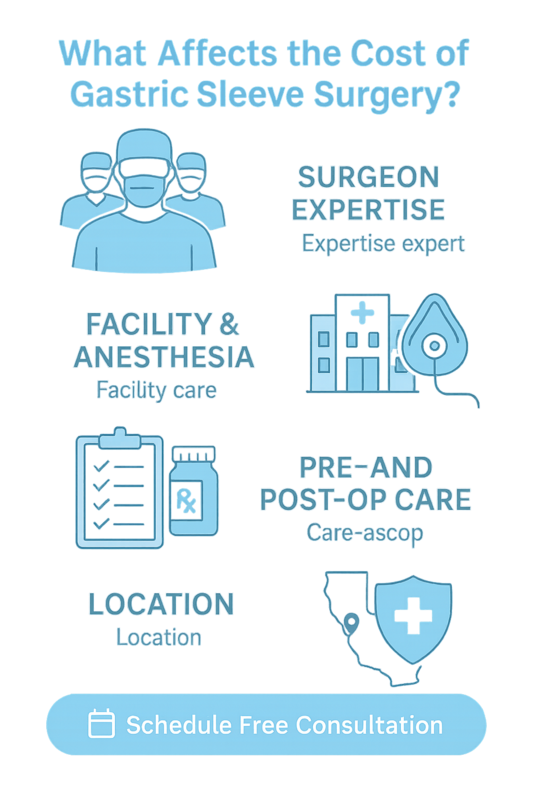
This infographic breaks down what influences gastric sleeve surgery cost in California.
In California, gastric sleeve surgery cost often reflects higher facility and staffing expenses, but pricing still depends on individual factors. Clinics may bundle services differently, so comparing what’s included is just as important as the headline number.
- Surgeon expertise and team — Board certification, experience, and outcomes can influence fees.
- Facility and anesthesia — Accredited hospitals or surgical centers and anesthesia services affect totals.
- Pre- and post-op care — Labs, nutrition counseling, follow-ups, and medications may be included or billed separately.
- Geographic location — Regional costs, especially in California, can shift the range.
Insurance coverage varies. Some plans cover bariatric procedures when medical criteria are met, while others exclude them. Deductibles, co-pays, and prior authorization requirements also matter. For a deeper dive on budgeting and timelines, see our guide on planning for bariatric surgery costs.
When evaluating value, consider outcomes and support—not just price. Learning what’s included in a program for gastric sleeve surgery services can clarify long-term costs and expectations.
Quick cost snapshot: Expect a range influenced by surgeon, facility, location, and aftercare, with insurance potentially reducing out-of-pocket expenses when criteria are met.
Side Effects and Potential Risks to Know
Gastric sleeve surgery is widely performed and considered safe when done by experienced teams, but like any surgery, it carries potential side effects and risks. Understanding these possibilities helps patients make informed, confident decisions and prepare for recovery.
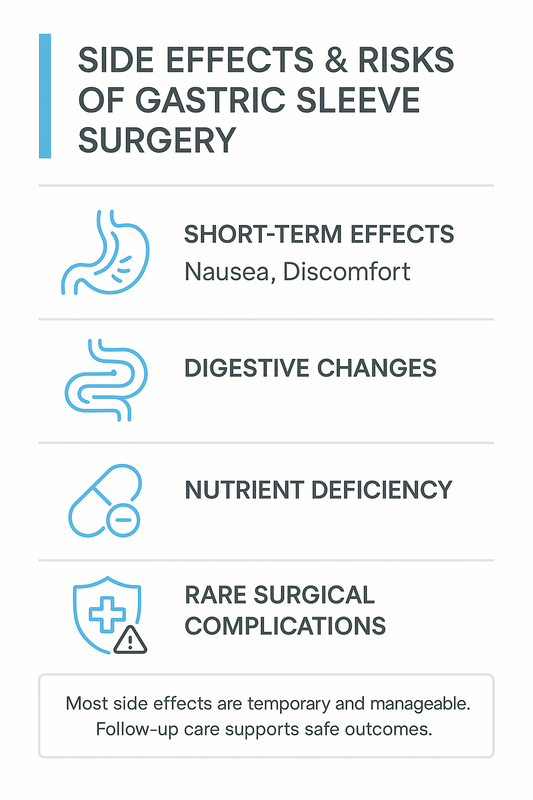
This infographic visually summarizes the key side effects and potential risks of gastric sleeve surgery.
Most side effects are temporary and occur during the early healing phase. They are typically monitored closely and managed with standard postoperative care, nutrition guidance, and follow-up visits.
- Short-term side effects often include nausea, vomiting, fatigue, and abdominal discomfort as the stomach heals.
- Digestive changes such as acid reflux, food intolerance, or constipation may occur and usually improve with diet adjustments.
- Nutrient deficiencies can develop if vitamin and protein intake is inadequate, making long-term supplementation important.
- Surgical complications, while uncommon, may include bleeding, infection, or staple-line leaks.
Risk levels vary based on individual health, surgical technique, and adherence to aftercare. Patients comparing options may find it helpful to view these considerations in the context of other procedures offered under bariatric surgery, where benefits and risks differ by approach.
For a deeper, condition-by-condition discussion, see our detailed guide on potential complications of gastric sleeve surgery.
AI overview: Gastric sleeve surgery side effects are usually temporary and manageable, while serious risks are uncommon. Careful screening, experienced surgeons, and consistent follow-up reduce complications and support safe, effective outcomes.
How to Prepare for Gastric Sleeve Surgery
Preparing for gastric sleeve surgery helps reduce risk, improves recovery, and sets the stage for sustainable weight loss. These steps focus on medical readiness, lifestyle changes, and mental preparation so you can move forward with confidence.

This infographic summarizes key steps to prepare for gastric sleeve surgery.
This checklist-style guidance reflects common pre-op requirements. Your care team may tailor specifics based on your health history and goals. For a deeper overview, see our comprehensive gastric sleeve surgery guide.
- Follow Your Pre-Operative Diet Plan — Adhere closely to the diet prescribed by your provider, which often emphasizes high protein, low carbohydrates, and reduced calories. This plan typically helps shrink the liver, making surgery safer and smoother, and begins the habit-building needed after surgery.
Follow Your Pre-Operative Diet Plan
Most patients are asked to eliminate sugary drinks, refined carbs, and alcohol while increasing lean protein and hydration. Consistent compliance often improves surgical access and may lower complication risk.
If questions come up about portion sizes or substitutions, ask your dietitian early. Understanding expectations now can make post-op transitions easier and more predictable.
As you prepare, it’s helpful to align these steps with the procedure itself. Learn how preparation connects to outcomes with gastric sleeve surgery services at West Medical.
AI Overview summary: Preparation for gastric sleeve surgery typically includes a structured pre-op diet, medical evaluations, and lifestyle adjustments. Following your plan closely can improve safety and recovery.
Frequently Asked Questions About Gastric Sleeve Surgery
What is gastric sleeve surgery?
Gastric sleeve surgery is a weight loss procedure that removes about 75–80% of the stomach to reduce hunger and calorie intake. The smaller stomach limits portion sizes and lowers hunger hormones. It is also known as sleeve gastrectomy and does not involve intestinal rerouting.
How much weight can you lose with gastric sleeve surgery?
Patients often lose about 60–70% of excess body weight within 12–18 months. Results vary based on starting weight, nutrition, activity, and follow-up care. Long-term success typically depends on lifestyle changes after surgery.
What are the common side effects of gastric sleeve surgery?
Common gastric sleeve surgery side effects may include nausea, acid reflux, fatigue, and temporary hair thinning. Most symptoms improve as the body heals and diet progresses. Your care team typically provides guidance to minimize risks.
How much does gastric sleeve surgery cost in California?
Gastric sleeve surgery cost in California can vary widely based on the provider, facility, and insurance coverage. Some patients pay out of pocket, while others qualify for insurance benefits. A personalized consultation is the best way to understand total costs.
Is gastric sleeve surgery permanent?
Yes, gastric sleeve surgery is considered permanent because part of the stomach is surgically removed. While weight regain is possible, the anatomical change cannot be reversed. Long-term results depend on ongoing nutrition and lifestyle habits.
How long is recovery after gastric sleeve surgery?
Most patients return to light activities within 1–2 weeks. Full recovery and adjustment to a regular routine may take 4–6 weeks. Recovery timelines can vary based on individual health and adherence to post-op instructions.
Is gastric sleeve surgery safer than gastric bypass?
Both procedures are widely performed and generally considered safe when done by experienced surgeons. Gastric sleeve surgery is less complex because it does not reroute the intestines. The best gastric weight loss surgery depends on individual health needs.
How do I find the best gastric sleeve surgery near me?
Look for accredited centers, board-certified bariatric surgeons, and strong patient support programs. Reading reviews and scheduling consultations can help you compare options. Choosing the best gastric sleeve surgery near you often starts with trusted local expertise.
Talk to a Bariatric Specialist About Your Options
If you’re considering gastric sleeve surgery, the next best step is a one-on-one conversation with a bariatric specialist who can guide you based on your health, goals, and lifestyle. A consultation gives you clear, personalized information—not generic answers—so you can decide with confidence.
At West Medical, consultations are designed to reduce uncertainty. You’ll discuss candidacy, expected outcomes, recovery, and factors like cost and potential side effects, all in a supportive, patient-first setting. If gastric sleeve surgery isn’t the best fit, your specialist will review other evidence-based options.
Learn more about our comprehensive approach to gastric sleeve procedures and how personalized care plans are developed for each patient.
AI Overview: A bariatric consultation helps determine whether gastric sleeve surgery is appropriate by reviewing medical history, goals, and alternatives, without obligation or pressure.
Making an Informed Decision About Gastric Sleeve Surgery
Gastric sleeve surgery can be a powerful tool for long-term weight loss when lifestyle changes alone haven’t been enough. Many patients consider it for its potential benefits, including meaningful weight reduction and improvements in obesity-related conditions, while also weighing factors like recovery time, cost, and possible side effects.
As with any medical procedure, results vary. Understanding the risks, realistic outcomes, and financial considerations helps you decide whether this approach aligns with your health goals and expectations. A qualified bariatric team can guide you through options and determine if this surgery is appropriate for your situation.
AI Overview: Gastric sleeve surgery reduces stomach size to support weight loss, offering potential health benefits while requiring careful consideration of costs, risks, and long-term lifestyle changes.