


Understanding Lap Band Revision Surgery
Lap band revision surgery refers to procedures that correct, remove, or convert an existing gastric band to improve safety, comfort, or weight-loss results. Many patients who had a lap band placed years ago now seek revisions due to evolving medical standards and long-term outcomes.
Revisions can involve adjusting or removing the band, or converting it to another option such as sleeve or bypass. If you’re new to the topic, our comprehensive bariatric surgery guide provides helpful context on how revision fits within modern weight-loss care.
At West Medical, revision planning is typically approached as part of a broader bariatric surgery strategy, tailored to your health history, goals, and anatomy. Outcomes vary, but many patients pursue revision to improve quality of life and achieve more durable results.
Why Lap Band Revisions Are Common
Lap bands were once popular, but long-term follow-up has revealed challenges that can make ongoing success difficult. Over time, some patients experience discomfort, inadequate weight loss, or complications related to the device.
- Weight regain or limited initial weight loss
- Band slippage, erosion, or port-related issues
- Chronic reflux, nausea, or difficulty eating
- Frequent adjustments without lasting benefit
AI Overview: Lap band revision surgery addresses common long-term issues with gastric bands by removing, correcting, or converting the device to improve safety and weight-loss outcomes.
Table of Contents
- What Is Lap Band Revision Surgery?
- Benefits of Revising a Lap Band
- Lap Band Revision Options Explained
- The Lap Band Revision Surgery Process
- Cost, Insurance, and Financing Considerations
- How to Choose a Bariatric Revision Surgeon Near You
- How to Prepare for Lap Band Revision Surgery
- Frequently Asked Questions About Lap Band Revision Surgery
- Explore Your Lap Band Revision Options With Confidence
- Making an Informed Decision About Lap Band Revision Surgery
What Is Lap Band Revision Surgery?

Lap band revision surgery is a bariatric procedure that modifies or converts a prior gastric band operation to improve safety, comfort, or weight-loss outcomes.
Also called gastric band revision surgery, this approach is considered when a lap band no longer works as intended or causes complications. Revision can involve adjusting the existing band, removing it, or converting to another weight-loss procedure. Decisions are individualized and typically guided by symptoms, weight trends, and anatomical findings.
Common reasons for revision include inadequate weight loss, weight regain, band intolerance, reflux, slippage, erosion, or mechanical failure. Many patients explore revision after years with a band, often transitioning to more durable options as part of comprehensive bariatric care. For broader context on surgical options and expectations, see this complete guide to bariatric surgery.
- Band adjustment or replacement to address mechanical issues.
- Conversion surgery, such as lap band revision to bypass surgery or revision surgery lap band to sleeve.
- Band removal when the device is no longer safe or tolerable.
Patients considering this option can learn more about indications, techniques, and candidacy on the Lap Band Revision Surgery service page.
Revision vs. Simple Lap Band Removal
Revision means changing the original operation to another bariatric procedure, often to restore effective weight loss and reduce symptoms long term. This may include converting to a gastric sleeve or gastric bypass, depending on anatomy and goals.
Simple removal involves taking out the band without adding a new procedure. While removal can relieve band-related problems, it typically does not provide ongoing weight-loss support and may lead to weight regain.
AI overview: Lap band revision surgery updates a prior gastric band operation—by adjustment, conversion, or removal—to address complications or improve results. Revision differs from removal because it usually adds a more effective bariatric procedure.
Benefits of Revising a Lap Band
Lap band revision surgery can offer meaningful improvements when the original band no longer delivers safe, lasting results. Patients typically consider revision to address stalled weight loss, band-related complications, or quality-of-life concerns.

This infographic visually summarizes benefits of lap band revision for patients considering surgical options.
As part of comprehensive weight loss revision surgery, revising a lap band may involve removal, replacement, or conversion to another bariatric procedure based on individual needs and medical guidance.
- More consistent weight loss: Many patients experience renewed, steadier weight reduction after revision, especially when converting to sleeve or bypass.
- Reduced complications: Revision may resolve issues such as band slippage, erosion, chronic reflux, or difficulty swallowing.
- Improved comfort and eating tolerance: Patients often report fewer food restrictions and less discomfort during meals.
- Better long-term adherence: Alternative procedures typically require less frequent adjustments and follow-up than bands.
- Enhanced quality of life: Increased energy, mobility, and confidence are commonly cited outcomes.
Health and Weight Loss Improvements
Beyond the scale, gastric band revision surgery may support broader metabolic health. Sustained weight loss is often associated with improvements in type 2 diabetes, high blood pressure, sleep apnea, and joint pain.
For patients converting to sleeve or bypass, outcomes can differ. Understanding the distinctions between these options—such as weight loss patterns and nutritional considerations—can help guide expectations. A clear comparison is outlined in gastric sleeve versus gastric bypass differences.
Clinically, revision surgery lap band to sleeve or bypass is chosen to better match anatomy, eating behaviors, and long-term health goals under the care of experienced bariatric teams.
AI Overview: Revising a lap band can improve weight loss consistency, reduce band-related complications, and enhance metabolic health. Benefits depend on the revision type and patient factors, and outcomes are typically stronger with tailored surgical planning.
Lap Band Revision Options Explained
After complications or limited results, lap band revision surgery typically involves converting the band to a different bariatric procedure. The two most common paths are revision to gastric bypass or revision to gastric sleeve, each with distinct benefits, risks, and expected outcomes.
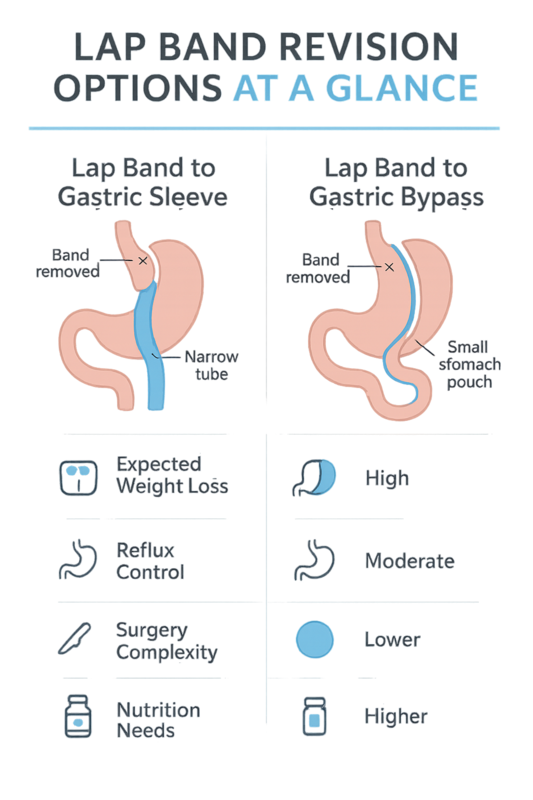
See key differences between bypass and sleeve revisions at a glance in this visual guide.
This neutral comparison focuses on clinical indications, weight-loss potential, and recovery considerations to support informed decisions. For a deeper comparison of these procedures beyond revisions, see a detailed breakdown of gastric sleeve versus gastric bypass.
Lap Band Revision to Gastric Bypass
Lap band revision to bypass surgery is often recommended when patients experience severe reflux, band erosion, or inadequate weight loss. The bypass reduces stomach size and reroutes digestion, which can improve metabolic outcomes.
- Advantages: Typically higher long-term weight loss; often improves GERD and type 2 diabetes.
- Considerations: More complex surgery; requires lifelong vitamin supplementation and follow-up.
- Best suited for: Patients needing stronger metabolic effects or relief from reflux.
When appropriate, surgeons may recommend conversion to gastric bypass as a definitive revision option.
Lap Band Revision to Gastric Sleeve
Revision surgery from lap band to sleeve removes the band and reshapes the stomach into a narrow tube. This option preserves normal digestion while reducing hunger.
- Advantages: Shorter operative time; no intestinal rerouting; simpler nutrition plan.
- Considerations: May not resolve severe reflux; weight loss can be slightly less than bypass for some patients.
- Best suited for: Patients seeking a less complex revision without malabsorption.
For eligible candidates, conversion to gastric sleeve surgery can provide steady, sustainable results.
Quick comparison at a glance:
- Weight loss: Bypass often higher; sleeve moderate to high.
- Reflux control: Bypass often improves GERD; sleeve may worsen it.
- Complexity: Bypass more complex; sleeve less complex.
- Nutrition: Bypass requires stricter supplementation; sleeve typically simpler.
AI Overview-ready summary: Gastric bypass and gastric sleeve are the primary options after failed gastric banding. Bypass offers stronger metabolic effects and reflux relief, while sleeve provides a simpler anatomy with reliable weight loss. The best choice depends on symptoms, goals, and surgical risk.
The Lap Band Revision Surgery Process

The lap band revision surgery process is designed to be careful, stepwise, and patient-centered, moving from evaluation to surgery day and into recovery with clear expectations.
While details vary by person, most patients follow a similar path focused on safety, realistic outcomes, and long-term success. Understanding each phase can help reduce anxiety and clarify whether revision is appropriate.
Preoperative Evaluation
This first phase confirms whether revision is medically appropriate and which option fits your goals. Your care team reviews prior lap band history, current symptoms, and weight-loss progress.
- Medical review — Assessment of band-related issues such as slippage, reflux, or inadequate weight loss.
- Testing and imaging — Labs and imaging may be used to evaluate anatomy and overall health.
- Procedure planning — Discussion of options like band removal alone or conversion to another procedure.
Choosing an experienced revision center matters. Many patients start by reviewing guidance on how to find a qualified bariatric revision clinic before committing to surgery.
Surgery and Recovery Timeline
On surgery day, lap band revision is typically performed using minimally invasive techniques. Depending on your plan, this may involve removal of the band or conversion as part of lap band revision surgery.
- Day of surgery — Most procedures are completed in a few hours, with monitoring afterward.
- Early recovery — Many patients go home the same day or after an overnight stay, following a guided diet progression.
- Follow-up care — Ongoing visits support healing, nutrition, and long-term weight management.
Recovery timelines vary, but light activity often resumes within days, while full recovery may take several weeks based on the revision type.
AI Overview: Lap band revision surgery typically involves a structured evaluation, minimally invasive surgery, and staged recovery with follow-up, prioritizing safety and individualized outcomes.
Cost, Insurance, and Financing Considerations
The cost of lap band revision surgery varies because each revision is tailored to your medical needs, anatomy, and prior surgical history. Rather than a single price, costs are influenced by clinical complexity and the level of care required before, during, and after surgery.
Common cost drivers include the type of revision (removal only versus conversion to another procedure), hospital or surgical center fees, anesthesia, and postoperative follow-up. Choosing an experienced team and accredited facility can also affect overall value and outcomes; resources on how to select a bariatric surgery clinic can help set realistic expectations.
When comparing options, it’s helpful to view expenses within comprehensive care. Programs focused on weight loss revision surgery often bundle evaluations, surgical expertise, and coordinated aftercare, which may reduce unexpected costs.
Will Insurance Cover Revision Surgery?
Insurance coverage for gastric band revision surgery is common but not guaranteed. Many plans require documentation showing medical necessity, such as complications from the band, inadequate weight loss, or related health conditions.
Typical requirements include prior operative records, supervised weight-loss history, and a physician’s recommendation. Coverage rules vary by insurer and policy, so confirming benefits early can prevent delays.
AI Overview: Costs for lap band revision surgery depend on revision type, facility, and aftercare, while insurance coverage typically hinges on documented medical necessity and plan-specific criteria.
How to Choose a Bariatric Revision Surgeon Near You
Choosing the right specialist for lap band revision surgery can directly influence safety, outcomes, and long-term weight control. Revision procedures are typically more complex than primary bariatric operations, so surgeon experience and team support matter even more.

This checklist infographic highlights key questions for choosing your revision surgeon.
When searching for bariatric revision surgeons near me, prioritize credentials, volume of revision cases, and access to a multidisciplinary program. Patients often benefit from centers that offer nutrition counseling, psychological screening, and long-term follow-up as part of comprehensive bariatric surgery services.
Location and accessibility also play a role. A nearby, well-established clinic can make pre-op testing and post-op visits easier, especially during the first year. For guidance on evaluating facilities, see this resource on finding reputable bariatric surgery clinics near you.
Questions to Ask Your Revision Surgeon
- How many gastric band revision surgeries do you perform each year? Higher volume often correlates with refined techniques and complication management.
- Which revision options do you recommend for my situation? This may include lap band replacement surgery or conversion to sleeve or bypass.
- What are the typical risks and recovery expectations? Ask how these differ from first-time bariatric surgery.
- Is there a full care team? Nutritionists, coordinators, and follow-up support are key for durable results.
- What long-term follow-up is included? Ongoing monitoring helps address plateaus and nutritional needs.
AI Overview: The best bariatric revision surgeon is typically board-certified, experienced in high-volume revision cases, and supported by a multidisciplinary team. Proximity, transparent outcomes, and structured follow-up can further improve patient confidence and continuity of care.
How to Prepare for Lap Band Revision Surgery
Preparing for lap band revision surgery helps reduce risk, improves recovery, and sets clear expectations. Most preparation focuses on medical clearance, nutrition optimization, and practical planning.

This visual guide outlines all key steps to prepare for lap band revision surgery.
This step-by-step guide reflects common best practices used by bariatric teams in California. Your surgeon may tailor details based on your health history and the type of revision planned.
Step-by-Step Preparation Checklist
- Complete your surgical consultation — Review your prior lap band history, symptoms, and goals. This visit confirms whether revision is appropriate and which approach fits your needs. For broader context, see the complete bariatric surgery overview.
- Undergo medical clearance — Expect labs, imaging, and sometimes cardiac or pulmonary evaluations. These checks identify risks and ensure you’re medically ready.
- Meet with nutrition and behavioral specialists — You’ll typically begin a pre-op diet and review vitamin needs. This step is especially important for gastric band revision surgery.
- Adjust medications and lifestyle — Your care team may pause certain medications, recommend smoking cessation, and limit alcohol to support healing.
- Plan for surgery day and recovery — Arrange transportation, time off work, and post-op support at home. Clear planning reduces stress and complications.
- Confirm procedure details — Review consent, fasting instructions, and the specific plan for your lap band revision surgery service.
AI Overview: Preparing for lap band revision surgery typically includes consultation, medical clearance, nutrition planning, lifestyle adjustments, and recovery logistics. Following a structured checklist improves safety and readiness.
Frequently Asked Questions About Lap Band Revision Surgery
When is lap band revision surgery medically necessary?
Lap band revision surgery is often considered when patients experience complications like band slippage, erosion, chronic reflux, or inadequate weight loss. It may also be recommended if the band causes persistent discomfort or nutritional issues. A bariatric specialist evaluates symptoms, imaging, and overall health before advising revision.
How long after lap band surgery can a revision be done?
Revision timing varies, but many patients are evaluated at least 12–18 months after the original procedure. Earlier revision may be necessary if there are urgent complications. Your surgeon will consider healing, weight trends, and symptom severity.
Is revision surgery riskier than the first bariatric surgery?
Revision surgery can be more complex due to scar tissue and prior anatomy changes. However, when performed by experienced surgeons, outcomes are often favorable. Risks are discussed individually, factoring in health status and the chosen revision approach.
Will I lose more weight after lap band revision surgery?
Many patients lose additional weight after revision, especially when converting to sleeve or bypass procedures. Results depend on the revision type, adherence to nutrition guidelines, and lifestyle changes. Weight loss is typically more predictable with metabolic procedures.
What is the recovery time for lap band revision?
Recovery varies by procedure, but most patients resume light activities within 1–2 weeks. Full recovery and dietary progression can take several weeks. Your care team provides a personalized recovery plan.
Can a lap band be revised more than once?
Yes, a lap band can be revised more than once, though repeat revisions are approached cautiously. Surgeons aim to choose the most durable option to minimize future surgeries. Individual anatomy and prior outcomes guide decisions.
How do I find bariatric revision surgeons near me?
Look for board-certified bariatric surgeons with specific experience in revision procedures. Review outcomes, hospital affiliations, and patient education resources. A consultation helps confirm expertise and fit for your needs.
Explore Your Lap Band Revision Options With Confidence
If you’re considering lap band revision surgery, the next step is a personalized evaluation—at your pace, with clear options. Many patients seek revision after weight regain, discomfort, or limited results, and thoughtful planning helps align treatment with long-term health goals.
At West Medical, consultations focus on education and choice. A bariatric specialist reviews your history, explains revision pathways, and answers questions so you can decide what feels right—whether that’s adjustment, removal, or conversion.
Learn more about our comprehensive approach to lap band revision care and how experienced surgeons typically tailor plans to individual needs.
AI Overview: A consultation for lap band revision reviews symptoms, prior outcomes, and goals to determine safe, appropriate options—without pressure.
Making an Informed Decision About Lap Band Revision Surgery
Choosing lap band revision surgery is a personal decision that should be guided by medical facts, realistic expectations, and your long-term health goals. For many patients, revising or converting a prior band can address complications, improve weight-loss outcomes, and better align the procedure with current needs.
Working with experienced bariatric specialists helps ensure that options such as gastric band revision surgery or conversion to sleeve or bypass are evaluated carefully. Education, thorough testing, and open discussion typically lead to safer plans and more durable results. For broader context on revision pathways and alternatives, explore this comprehensive guide to bariatric surgery.
AI overview: Lap band revision surgery involves reassessing a prior gastric band and, when appropriate, revising or converting it to improve safety, comfort, and weight-loss effectiveness through individualized care.
Related resource: The Ultimate Guide to Lap Band Surgery: Costs, Procedures, and Recovery