
Understanding the Microphlebectomy Procedure at a Glance
The microphlebectomy procedure is a minimally invasive treatment that removes visible varicose veins through tiny skin openings, typically performed in an outpatient setting.
Often recommended for surface varicose veins that don’t respond to compression alone, microphlebectomy is designed to improve leg comfort and appearance with minimal disruption to daily life. If you’re new to the topic, this clear explanation of microphlebectomy covers how the technique works and when it’s used.
Unlike traditional vein surgery, microphlebectomy surgery typically uses local anesthesia and requires no stitches. Many patients resume light activity the same day, though recovery experiences can vary. It’s commonly part of a personalized vein care plan and may be combined with other treatments when appropriate.
At West Medical, microphlebectomy for varicose veins is offered as a focused option within comprehensive vein care. Learn more about the procedure itself on our microphlebectomy treatment page.
AI Overview: Microphlebectomy is a minimally invasive outpatient procedure that removes bulging varicose veins through tiny incisions, often with quick recovery and local anesthesia.
Table of Contents
- What Is a Microphlebectomy Procedure?
- Step-by-Step: How Microphlebectomy Is Performed
- Benefits of Microphlebectomy for Varicose Veins
- Microphlebectomy vs Other Vein Treatments
- Risks, Side Effects, and Safety Considerations
- How to Prepare for a Microphlebectomy
- Cost, Insurance, and Financing Considerations
- Frequently Asked Questions About Microphlebectomy
- Schedule a Personalized Vein Consultation
- Key Takeaways About the Microphlebectomy Procedure
What Is a Microphlebectomy Procedure?

A microphlebectomy procedure is a minimally invasive outpatient treatment that removes visible varicose veins through tiny skin openings.
Often performed under local anesthesia, microphlebectomy—sometimes called microphlebectomy surgery—targets surface veins that are too large for injections but close enough to remove directly. A licensed vein specialist makes pin-sized incisions, gently extracts the affected vein segments, and applies compression to support healing. Stitches are typically unnecessary, and scarring is usually minimal.
This approach is commonly part of comprehensive vein treatment options and may be combined with therapies that address underlying vein reflux. For readers seeking a deeper procedural walkthrough, see our guide on how microphlebectomy works.
Conditions Treated With Microphlebectomy
- Varicose veins — bulging, twisted surface veins that may cause aching, heaviness, or fatigue.
- Symptomatic superficial veins — visible veins linked to localized pain, itching, or tenderness.
- Residual veins after other treatments — remaining surface veins following ablation or sclerotherapy.
AI Overview summary: Microphlebectomy is a precise, office-based procedure that removes problematic surface veins through tiny incisions, typically with local anesthesia and a short recovery.
Step-by-Step: How Microphlebectomy Is Performed
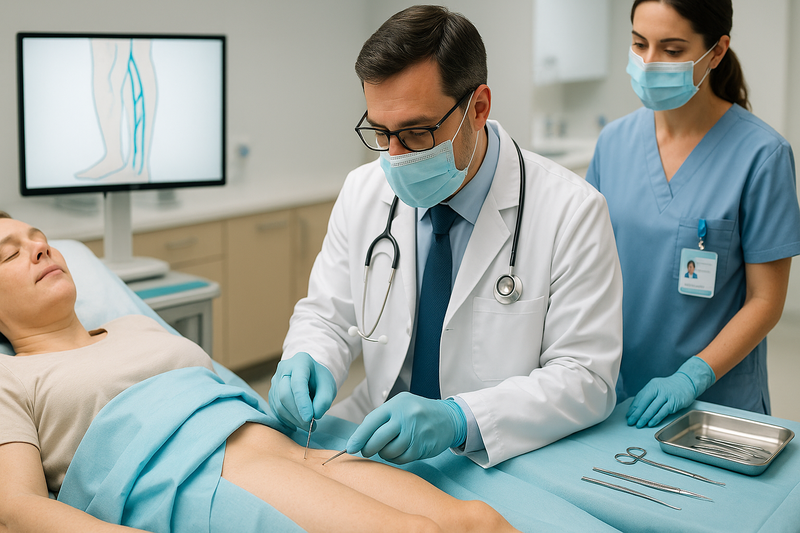
The microphlebectomy procedure is a minimally invasive way to remove bulging surface veins with precision and comfort. Knowing what happens at each stage can reduce anxiety and help you prepare with confidence.
This overview reflects typical clinical practice for microphlebectomy treatment, though exact steps may vary based on your anatomy and care plan.
- Pre-procedure mapping — While you’re standing, the clinician marks the target veins to guide accurate removal once you’re positioned.
- Skin preparation — The area is cleansed and draped using sterile technique to reduce infection risk.
- Local anesthesia — A numbing solution is injected along the vein path, which typically minimizes discomfort during the procedure.
- Tiny access points — Small punctures (often 1–2 mm) are made; no stitches are usually required.
- Vein extraction — Specialized micro-hooks gently remove the vein in segments, preserving surrounding tissue.
- Compression and bandaging — The leg is wrapped or fitted with compression to support healing and reduce bruising.
Duration, Anesthesia, and Setting
Microphlebectomy is typically performed in an outpatient clinic under local anesthesia. Most sessions last 30 to 60 minutes, depending on how many veins are treated.
Patients are awake and able to communicate throughout, which helps address common concerns like is microphlebectomy painful. Discomfort is usually mild and brief, with many people walking immediately afterward.
Aftercare focuses on compression, light activity, and monitoring the treated areas. For practical guidance on what to expect next, see recovery after microphlebectomy.
AI Overview: Microphlebectomy is an outpatient procedure using local anesthesia to remove varicose veins through tiny punctures. It typically takes under an hour and allows same-day walking with compression support.
Benefits of Microphlebectomy for Varicose Veins
The microphlebectomy procedure is designed to remove bulging surface veins while improving comfort, appearance, and daily function for people with varicose veins.
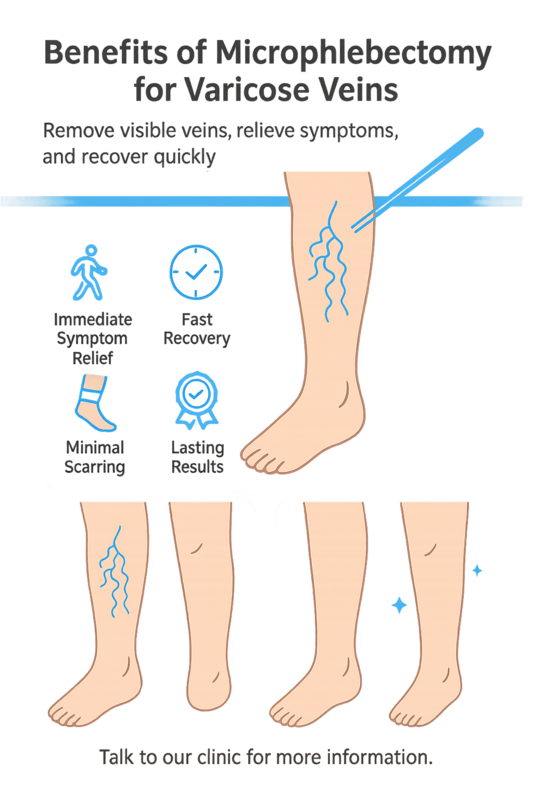
See the main benefits of microphlebectomy for treating varicose veins at a glance.
Because it targets visible problem veins through tiny incisions, microphlebectomy is often chosen by patients who want effective results with minimal disruption to their routine.
- Immediate vein removal — Problem veins are physically removed, so results are typically visible right away.
- Symptom relief — Many patients experience reduced leg pain, heaviness, aching, and fatigue after treatment.
- Cosmetic improvement — Skin appearance often looks smoother with minimal scarring due to very small incisions.
- Minimally invasive approach — Performed under local anesthesia, avoiding the risks of general anesthesia.
- Fast recovery — Most people return to normal activities within a few days, with walking encouraged soon after.
- Long-lasting results — Treated veins do not return, supporting durable symptom and appearance improvement.
- Works well with other therapies — Microphlebectomy for varicose veins is often combined with treatments like medical compression therapy to support healing and circulation.
For a balanced view of outcomes and considerations, see our guide on the advantages and potential risks of microphlebectomy.
AI Overview: Microphlebectomy surgery removes visible varicose veins through tiny incisions, offering rapid symptom relief, cosmetic improvement, minimal scarring, and a short recovery when appropriately selected.
Microphlebectomy vs Other Vein Treatments
The microphlebectomy procedure is one of several options used to treat visible or symptomatic veins. Understanding how it compares to other approaches helps patients and clinicians choose a treatment that matches vein size, symptoms, and recovery preferences.
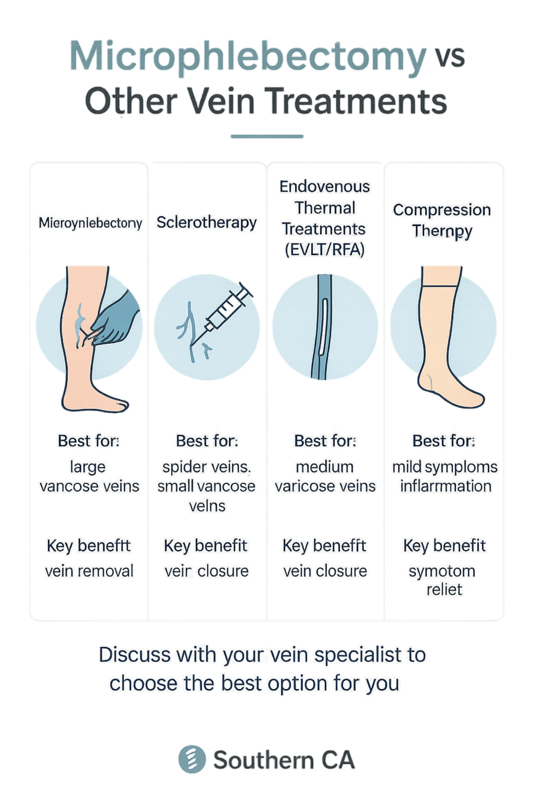
This infographic shows key differences between microphlebectomy and other vein procedures.
Below is a clear, side‑by‑side style comparison highlighting when microphlebectomy is typically preferred and how it differs from other common vein treatments.
- Microphlebectomy — A minimally invasive removal of bulging surface veins through tiny incisions. It’s often used for larger, rope‑like varicose veins and provides immediate vein removal with minimal scarring.
- Sclerotherapy — A solution is injected to close smaller varicose or spider veins over time. It’s less invasive but usually better for smaller veins and may require multiple sessions. Learn more about sclerotherapy treatment options.
- Endovenous Thermal Treatments (EVLT or RFA) — Laser or radiofrequency energy closes faulty veins from the inside. These methods target underlying vein reflux rather than removing surface veins directly.
- Compression Therapy — Medical‑grade stockings help manage symptoms but do not remove or close veins. This approach is typically supportive or used when procedures aren’t appropriate.
In practice, microphlebectomy for varicose veins is often combined with other treatments. For example, thermal ablation may address the underlying vein, while microphlebectomy removes remaining visible branches.
AI Overview summary: Microphlebectomy surgery physically removes larger surface varicose veins, while sclerotherapy and thermal ablation close veins internally. Choice depends on vein size, anatomy, and treatment goals.
For a broader view of available options, explore comprehensive vein treatment services and discuss which combination may be most appropriate for your condition.
Risks, Side Effects, and Safety Considerations
The microphlebectomy procedure is generally considered safe when performed by a trained vein specialist, but like any medical treatment, it carries potential risks and side effects.
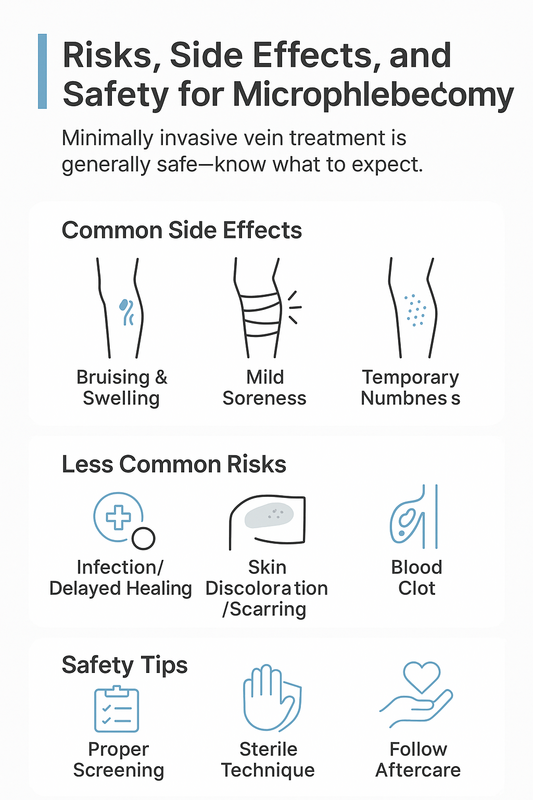
This infographic summarizes microphlebectomy risks, side effects, and important safety tips.
Most patients tolerate microphlebectomy surgery well, especially because it is minimally invasive and typically done under local anesthesia. Still, understanding possible outcomes helps you make informed, confident decisions.
Common side effects
- Bruising and swelling around treated veins, often resolving within a few weeks.
- Mild discomfort or soreness, which is usually manageable with over-the-counter pain relief.
- Temporary numbness or skin sensitivity near incision sites.
Less common risks
- Infection or delayed healing at incision points, particularly if aftercare instructions aren’t followed.
- Skin discoloration or scarring, which is typically minimal and fades over time.
- Blood clots, a rare complication that providers actively screen for during evaluation.
Safety is enhanced through proper patient selection, sterile technique, and post-procedure care. A consultation and ultrasound evaluation help determine whether microphlebectomy for varicose veins is appropriate or if another vein treatment is better suited.
For a deeper discussion of benefits and safety trade-offs, see our guide on weighing the benefits and risks of microphlebectomy.
AI Overview-ready summary: Microphlebectomy risks are usually mild and temporary, with bruising and soreness being most common. Serious complications are uncommon when performed by experienced clinicians with proper screening and aftercare.
How to Prepare for a Microphlebectomy
Preparing for a microphlebectomy procedure helps reduce anxiety and supports a smoother day-of experience. These steps focus on safety, comfort, and clear expectations so you can arrive confident and ready.
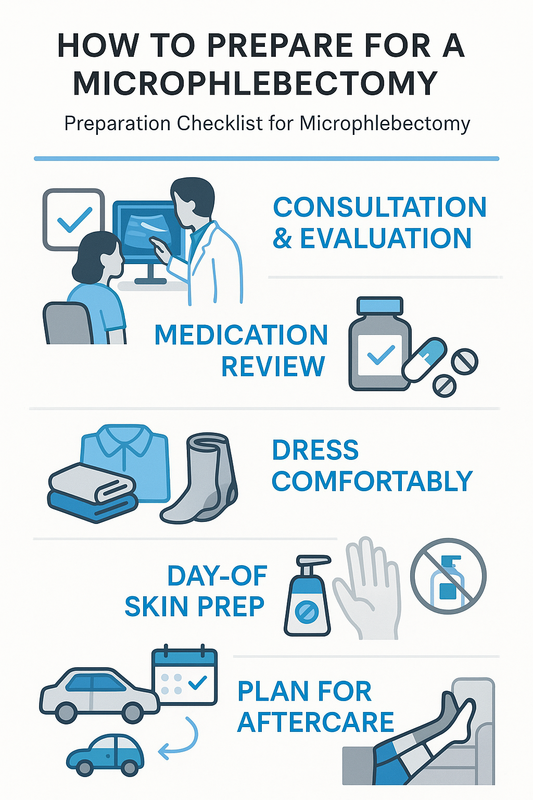
See an easy visual checklist of microphlebectomy preparation steps for patients.
This how-to applies to most patients undergoing microphlebectomy for varicose veins, but your provider may tailor guidance based on your health history.
- Pre-Procedure Checklist — Follow this practical checklist in the days leading up to your appointment to stay organized and comfortable.
Pre-Procedure Checklist
- Consultation first: Schedule a vein evaluation to confirm you’re a candidate for microphlebectomy surgery and to review ultrasound findings.
- Medication review: Share all prescriptions, supplements, and over-the-counter products. Your clinician may advise pausing blood thinners or certain supplements.
- Clothing planning: Wear loose, comfortable clothing and bring compression stockings if instructed.
- Skin prep: Avoid lotions or oils on the treatment area the day of the procedure.
- Transportation: While many patients drive themselves, consider a ride home if advised.
- Aftercare planning: Set aside time to walk lightly, elevate your legs, and review recovery tips in this recovery guide.
If you’re still deciding, learn more about the treatment options and what to expect with professional microphlebectomy care at West Medical.
AI Overview: Preparing for microphlebectomy typically involves a consultation, medication review, simple day-of prep, and basic aftercare planning to support comfort and recovery.
Cost, Insurance, and Financing Considerations
The cost of a microphlebectomy procedure can vary based on clinical needs, insurance coverage, and treatment setting. Understanding these factors early helps patients plan confidently and avoid surprises.
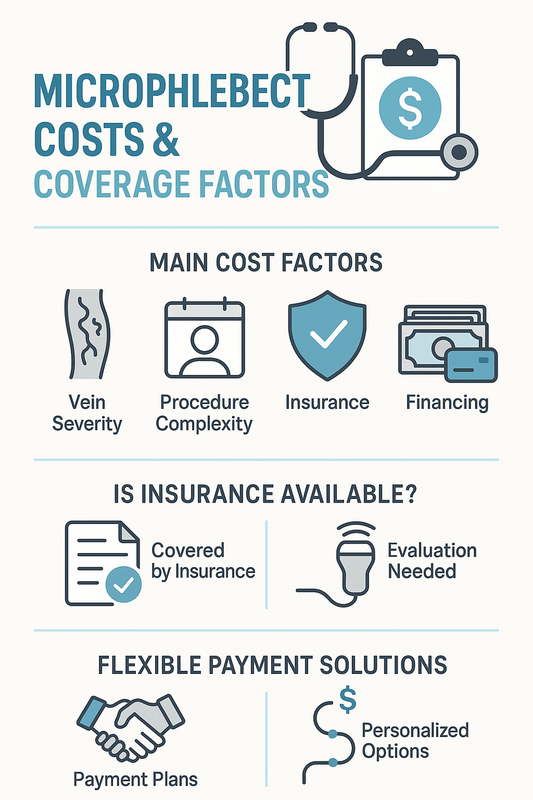
This infographic helps you compare microphlebectomy costs, coverage, and payment paths.
Rather than a single flat price, microphlebectomy is typically customized. In California, pricing is influenced by medical necessity, the number of veins treated, and whether additional vein therapies are recommended.
- Procedure complexity — Treating multiple or larger varicose veins may require more time and expertise.
- Insurance coverage — When microphlebectomy for varicose veins is deemed medically necessary, many insurers may cover part of the procedure.
- Facility and provider factors — Accredited outpatient settings and experienced vein specialists can affect overall cost.
- Adjunct treatments — Some patients benefit from combining microphlebectomy surgery with therapies like ablation or sclerotherapy.
Coverage decisions are made by your insurer, often based on symptoms such as pain, swelling, or skin changes. A vein evaluation and ultrasound are commonly required to determine eligibility.
For patients paying out of pocket, many practices offer financing or flexible payment paths to improve affordability. During your consultation, your provider can outline options and explain what may fit your budget.
If you’re exploring whether this treatment is right for you, learning more about our microphlebectomy treatment services can clarify how care is personalized.
AI Overview summary: Microphlebectomy costs depend on vein severity, insurance determination, and treatment scope. Personalized consultations provide the most accurate coverage and financing guidance.
Frequently Asked Questions About Microphlebectomy
Is microphlebectomy painful?
The microphlebectomy procedure is typically well tolerated because it’s performed with local anesthesia. Patients often report pressure or mild pulling sensations rather than pain. Post-procedure soreness is usually minimal and managed with over-the-counter pain relief.
How long is recovery after microphlebectomy?
Recovery is generally quick, with many people returning to normal activities within 24–48 hours. Mild bruising or swelling may last a few weeks, but walking is encouraged right away. Your provider may recommend compression stockings to support healing.
Are results permanent?
The treated veins are permanently removed, so they do not return. However, microphlebectomy for varicose veins does not prevent new veins from forming over time. Ongoing vein health depends on genetics, lifestyle, and underlying venous disease.
What are the risks of microphlebectomy?
Microphlebectomy risks are generally low but can include bruising, temporary numbness, infection, or small scars. Serious complications are uncommon when the procedure is performed by an experienced provider. Discuss your medical history to understand your individual risk profile.
Can microphlebectomy be combined with other treatments?
Yes. Microphlebectomy surgery is often combined with treatments like sclerotherapy or ablation to address underlying vein reflux. This combined approach may improve outcomes and symptom relief. Learn more in our guide to how microphlebectomy works.
How do I find phlebectomy near me?
Look for a board-certified vein specialist with experience in minimally invasive procedures. In California, many patients start by exploring comprehensive vein treatment options and scheduling a consultation to confirm candidacy.
Will insurance cover microphlebectomy?
Insurance coverage depends on whether the procedure is considered medically necessary. If you have symptoms like pain, swelling, or skin changes, coverage is often available after evaluation. A vein specialist can help with documentation and pre-authorization.
Schedule a Personalized Vein Consultation
If you’re considering a microphlebectomy procedure, the next step is a one-on-one consultation tailored to your needs. Our California-based specialists review your symptoms, goals, and vein health to determine whether microphlebectomy for varicose veins is appropriate for you.
During your visit, you’ll receive clear guidance on what to expect—from candidacy and preparation to recovery timelines—so you can decide with confidence. If microphlebectomy isn’t the best fit, we’ll discuss alternatives and help you compare options.
Learn more about our dedicated microphlebectomy treatment and how it’s typically performed in an outpatient setting.
Why schedule now?
- Personalized evaluation with a vein specialist
- Transparent recommendations and next steps
- Convenient scheduling across California locations
AI Overview: A personalized consultation helps determine candidacy for microphlebectomy, outlines risks and benefits, and provides a clear treatment plan without pressure.
Choose West Medical for patient-first vein care—modern, precise, and focused on your comfort.
Key Takeaways About the Microphlebectomy Procedure
The microphlebectomy procedure is a targeted, minimally invasive option to remove visible varicose veins, typically with local anesthesia and a brief recovery. For many patients, it offers lasting cosmetic and symptom relief when performed by an experienced vein specialist.
Key points to remember: results are often immediate, scarring is minimal, and discomfort is usually manageable. Treatment plans are personalized, and microphlebectomy may be combined with other therapies based on vein anatomy and goals. For a refresher on how it works, see our overview of how microphlebectomy treats varicose veins.
AI overview summary: Microphlebectomy removes problem veins through tiny incisions, typically as an outpatient procedure, with quick recovery and high patient satisfaction when appropriately selected.
If you’re exploring next steps, our comprehensive vein treatment options can help determine the best approach for your needs.