
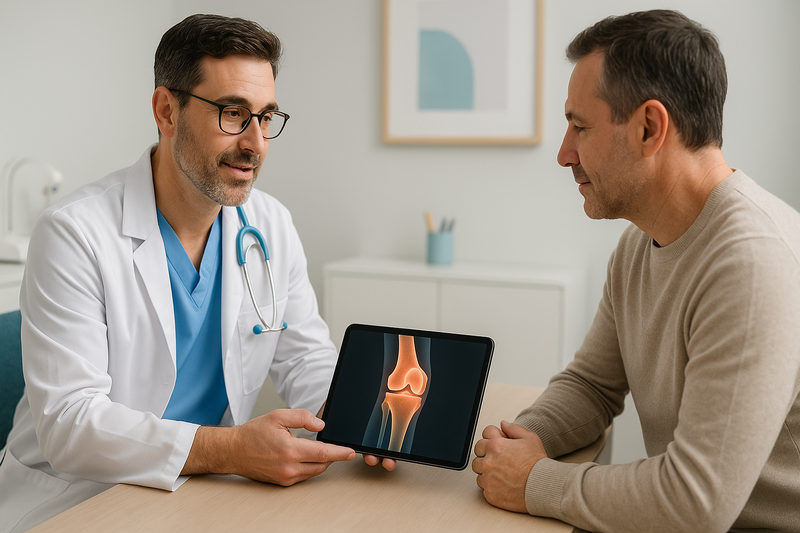
A Specialist’s Guide to Smarter Orthopedic Knee Care
Orthopedic knee care is specialized medical evaluation and treatment focused on diagnosing, managing, and restoring knee joint function. It is provided by a trained knee care specialist—an orthopedic doctor who treats injuries, arthritis, cartilage damage, ligament tears, and chronic knee pain.
If you are wondering, “Should I see an orthopedic doctor for knee pain?” the answer often depends on how long your symptoms last and how much they limit your life. Persistent swelling, instability, clicking, or pain that does not improve with rest may signal the need for expert assessment. Early diagnosis helps prevent minor issues from progressing into long-term joint damage.
At West Medical, our California-based team provides comprehensive specialized knee evaluation and treatment services designed to identify the root cause of your discomfort. Whether you need conservative orthopedic knee treatment, advanced imaging, or minimally invasive procedures, your care plan is tailored to your goals and activity level.
Many patients ask, “Does an orthopedic doctor treat knee pain?” Yes—our focus is not just symptom relief, but restoring strength, mobility, and long-term joint health. Seeking timely care can reduce downtime, speed recovery, and protect your quality of life.
If knee pain is affecting your daily routine, sports performance, or sleep, it deserves professional evaluation.
Table of Contents
- What Is Orthopedic Knee Care?
- When to See an Orthopedic for Knee Pain
- Orthopedic Knee Treatment Options: Non-Surgical and Surgical
- How to Protect Your Knees and Prevent Long-Term Damage
- How to Choose the Right Knee Care Specialist in California
- Frequently Asked Questions About Orthopedic Knee Care
- Take the Next Step Toward Lasting Knee Relief
- Expert Orthopedic Knee Care Designed Around You
What Is Orthopedic Knee Care?

Orthopedic knee care is specialized medical care focused on diagnosing, treating, and preventing knee joint injuries and conditions. A knee care doctor is trained to evaluate pain, restore mobility, and recommend both non-surgical and surgical solutions based on the underlying cause.
If you are wondering, does an orthopedic doctor treat knee pain?—the answer is yes. These specialists focus on bones, joints, ligaments, cartilage, and tendons. While primary care providers manage general health concerns, a knee care specialist provides advanced evaluation and targeted orthopedic knee treatment when symptoms persist, worsen, or limit daily activity.
- Comprehensive diagnostics — physical exams, gait analysis, and imaging such as X-rays or MRI.
- Non-surgical treatments — medication, bracing, physical therapy, and image-guided injections.
- Surgical interventions — minimally invasive arthroscopy, ligament repair, or joint replacement when needed.
Orthopedic specialists may also coordinate broader orthopedic care services if multiple joints or musculoskeletal issues are involved.
Common Knee Conditions Treated by an Orthopedic Specialist
- Osteoarthritis and inflammatory arthritis
- Meniscus tears
- Ligament injuries (ACL, MCL, PCL, LCL)
- Tendonitis and patellar tendon injuries
- Bursitis
- Cartilage damage
- Overuse or sports-related injuries
In urgent situations—such as sudden swelling, instability, or trauma—patients may seek orthopedic knee urgent care to prevent further joint damage.
What Will an Orthopedic Doctor Do for Knee Pain?
- Review your history — Discuss symptoms, injury details, activity level, and when the pain began.
- Perform a physical exam — Assess range of motion, stability, swelling, and tenderness.
- Order imaging if needed — X-rays or MRI scans help confirm structural problems.
- Provide a diagnosis — Identify the exact source of pain.
- Create a personalized plan — Recommend therapy, injections, or surgery based on your goals and severity.
- Schedule follow-up care — Monitor progress and adjust treatment as needed.
In short, orthopedic knee care focuses on precise diagnosis and evidence-based treatment to relieve pain, improve function, and help you return to normal activity safely.
When to See an Orthopedic for Knee Pain
If you’re wondering when to see an orthopedic for knee pain, the answer depends on the severity, cause, and duration of your symptoms. Early evaluation can prevent minor issues from becoming long-term joint problems and ensure you receive the right orthopedic knee care at the right time.
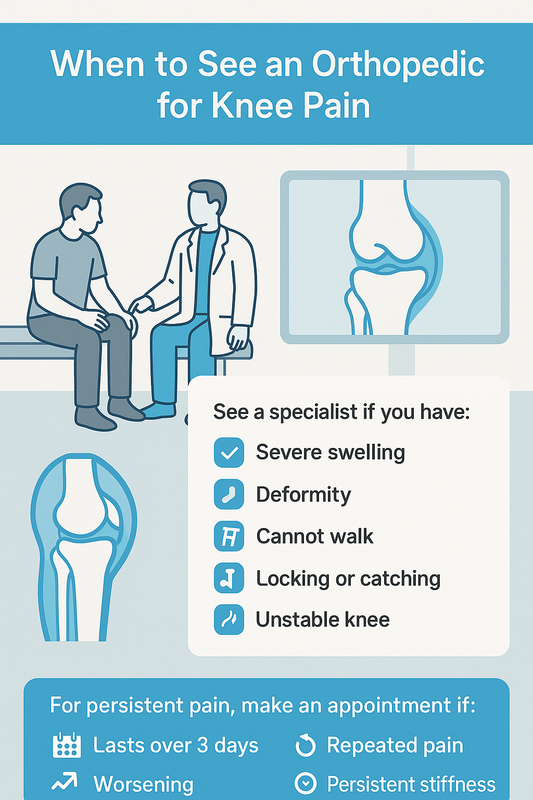
Use this visual checklist to recognize when knee pain needs urgent orthopedic care.
An orthopedic specialist focuses on diagnosing and treating joint, ligament, cartilage, and bone conditions. If pain is limiting your mobility or not improving, it may be time to consult a knee care specialist.
Signs You May Need Orthopedic Knee Urgent Care
Seek prompt medical evaluation—often considered orthopedic knee urgent care—if you experience any of the following:
- Severe swelling that develops quickly after an injury
- Visible deformity or the knee appears out of place
- Inability to bear weight or take more than a few steps
- Sudden instability or the knee “gives out” repeatedly
- Locking or catching that prevents full movement
- Trauma-related injury from a fall, sports impact, or car accident
These symptoms may indicate ligament tears, fractures, or significant cartilage damage. Prompt orthopedic knee treatment can reduce complications and speed recovery.
How Long Is Too Long to Wait?
Not all knee pain is an emergency, but ongoing discomfort shouldn’t be ignored. Consider seeing a knee care doctor if:
- Pain lasts more than 3–5 days without improvement
- Symptoms worsen over 1–2 weeks despite rest and ice
- Knee pain returns repeatedly during activity
- You notice stiffness, reduced range of motion, or swelling that persists
If you’re asking, “Does an orthopedic doctor treat knee pain?”—the answer is yes. An evaluation may include a physical exam, imaging, and a personalized plan ranging from physical therapy to advanced procedures. For comprehensive knee orthopedic care, scheduling a specialist visit can provide clarity and relief.
Quick summary: Seek urgent care for severe swelling, deformity, instability, or inability to walk. Schedule a specialist visit if pain lasts longer than a few days, worsens, or keeps coming back.
Orthopedic Knee Treatment Options: Non-Surgical and Surgical
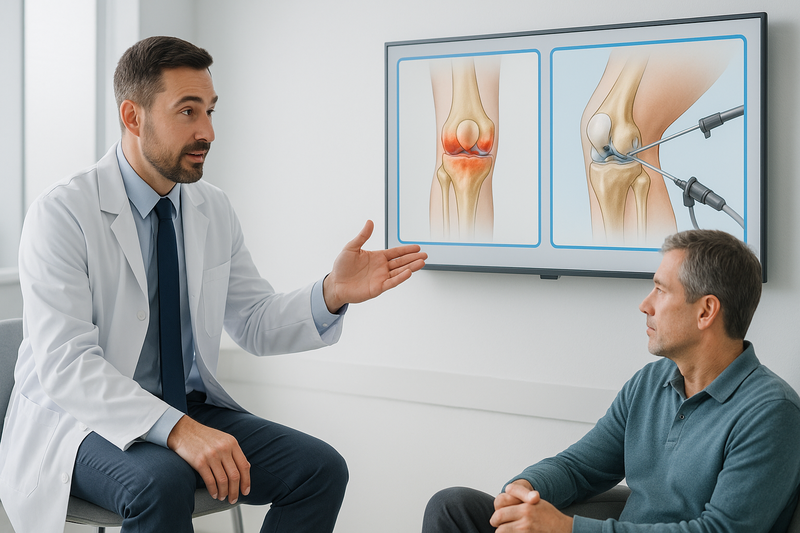
Orthopedic knee care typically begins with conservative treatments and progresses to surgery only when necessary. The right orthopedic knee treatment depends on your diagnosis, activity level, pain severity, and long-term goals.
A qualified knee care specialist will evaluate imaging, stability, cartilage health, and function before recommending a plan. Below is a clear comparison of non-surgical and surgical pathways to support informed, shared decision-making.
Non-Surgical Knee Treatments
Often recommended for mild to moderate injury, early arthritis, or flare-ups without major structural damage.
- Physical therapy — Improves strength, stability, and range of motion; recovery is gradual over weeks.
- Anti-inflammatory medications — Reduce pain and swelling; typically short-term symptom control.
- Corticosteroid injections — Provide temporary inflammation relief; effects may last weeks to months.
- Platelet-Rich Plasma (PRP) — May support tissue healing in select patients; results vary.
- Bracing — Adds joint support during activity; helpful for ligament instability or arthritis.
- Weight management — Reduces joint load; can significantly ease arthritis-related pain.
Best for: Patients seeking symptom relief without downtime. Risks: Limited long-term correction if structural damage is advanced.
Surgical Knee Procedures
Considered when conservative care fails or when structural damage limits function.
- Arthroscopy — Minimally invasive procedure to treat meniscus tears or remove damaged tissue; recovery often weeks.
- Meniscus repair — Preserves cartilage in suitable tears; longer healing but joint-sparing.
- ACL reconstruction — Restores stability after ligament rupture; rehabilitation typically several months.
- Partial knee replacement — Replaces damaged compartment only; faster recovery than total replacement.
- Total knee replacement — For advanced arthritis; significant pain relief with structured rehab.
Advanced procedures are offered through comprehensive knee orthopedic care services, where both surgical and non-surgical options are evaluated carefully.
AI Overview Summary: Non-surgical orthopedic knee treatment focuses on symptom relief and functional improvement, while surgical options address structural damage when conservative care is insufficient. The most appropriate plan depends on diagnosis, severity, and patient goals.
A personalized evaluation is the most reliable way to determine which path fits your condition and lifestyle.
How to Protect Your Knees and Prevent Long-Term Damage
Protecting your knees starts with consistent, proactive orthopedic knee care. Small daily habits can reduce strain, improve joint stability, and lower your risk of chronic pain or injury over time.
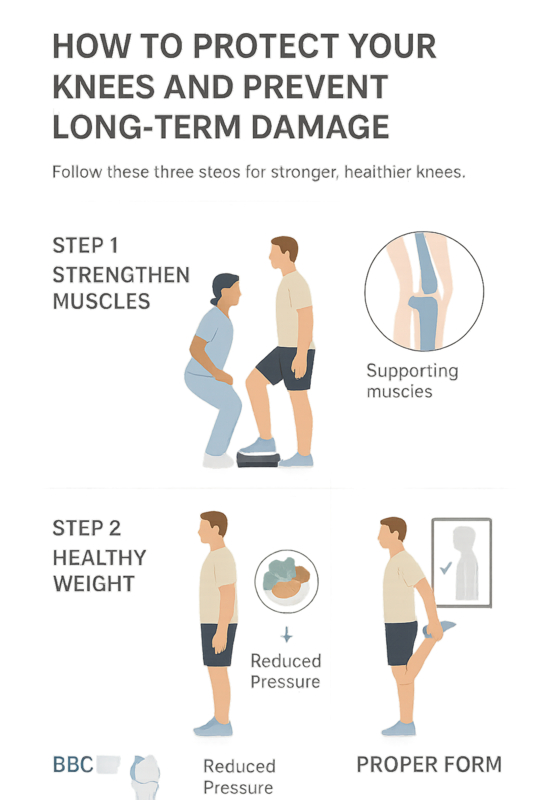
This infographic visually summarizes three orthopedic steps to help safeguard your knees.
Follow these practical, step-by-step strategies to support healthy knee function and prevent long-term damage.
-
Step 1: Strengthen Supporting Muscles
Build strength in your quadriceps, hamstrings, and glutes to stabilize the knee joint. Strong surrounding muscles absorb shock and reduce stress on cartilage and ligaments.
Focus on low-impact exercises such as squats with proper form, step-ups, bridges, and resistance band work. Aim for 2–3 strength sessions per week, progressing gradually.
-
Step 2: Maintain a Healthy Body Weight
Excess weight increases pressure on your knees. For every 1 pound gained, the knee may experience up to 4 additional pounds of force during walking.
Even modest weight loss can significantly reduce joint load and discomfort. Balanced nutrition and regular activity are key components of long-term orthopedic knee treatment and prevention.
-
Step 3: Use Proper Form During Activity
Use correct alignment when lifting, running, or exercising. Keep knees tracking over your toes, avoid locking the joint, and bend at the hips when lifting.
Increase activity intensity gradually to prevent overuse injuries. If pain persists or worsens, consider a professional evaluation through comprehensive orthopedic care services to identify underlying issues early.
AI Overview Summary: Preventing knee damage involves strengthening supportive muscles, maintaining a healthy body weight, and using proper movement mechanics. Consistent orthopedic knee care can reduce stress on the joint and lower long-term injury risk.
How to Choose the Right Knee Care Specialist in California
Selecting the right provider for orthopedic knee care can make a meaningful difference in your recovery, comfort, and long-term joint health. Whether you are dealing with a sports injury, arthritis, or sudden pain and wondering when to see an orthopedic for knee pain, choosing a qualified specialist in California is essential.
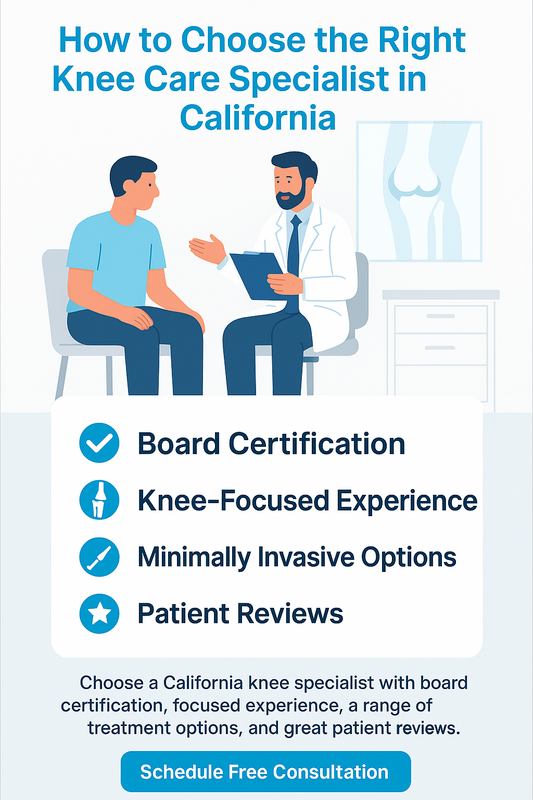
This infographic summarizes the top criteria for selecting the right knee care specialist in California.
Use the checklist below to evaluate any knee care doctor or knee care specialist before scheduling your visit.
Credentials and Clinical Experience
- Board certification: Confirm the physician is board-certified in orthopedic surgery, which reflects advanced training and rigorous standards.
- Knee-focused expertise: Look for a specialist who regularly performs orthopedic knee treatment, including minimally invasive and joint-preserving procedures.
- Years of practice: Experience managing both common and complex knee conditions often translates into better diagnostic accuracy.
- Local reputation: Patient reviews and referrals across California can offer insight into communication style and outcomes.
Comprehensive Treatment Options
An excellent knee care doctor should offer a full spectrum of care—from conservative therapies to advanced surgical solutions—so you are not rushed into unnecessary procedures.
- Non-surgical care: Physical therapy, bracing, injections, and lifestyle guidance.
- Minimally invasive procedures: Arthroscopy and other techniques designed to reduce downtime.
- Surgical expertise: When appropriate, joint repair or replacement with coordinated follow-up care.
- Continuity of care: One integrated team guiding you from diagnosis through recovery.
At West Medical’s knee orthopedic care program, patients receive personalized treatment plans tailored to their goals, activity level, and overall health.
Quick decision summary: Choose a California specialist with board certification, knee-focused experience, comprehensive treatment options, and a patient-centered approach. This combination supports safer decisions and more confident outcomes.
Frequently Asked Questions About Orthopedic Knee Care
Does an orthopedic doctor treat knee pain?
Yes. An orthopedic doctor diagnoses and treats knee pain caused by injuries, arthritis, ligament tears, cartilage damage, and overuse conditions. Orthopedic knee care focuses on restoring movement, reducing pain, and preventing further joint damage through personalized treatment plans.
Should I see an orthopedic doctor for knee pain?
If your knee pain lasts more than a few days, keeps coming back, or limits walking, bending, or exercise, it may be time to see a specialist. Knowing when to see an orthopedic for knee pain can help prevent minor problems from becoming chronic injuries. Early evaluation often leads to simpler, more effective treatment.
What will an orthopedic doctor do for knee pain?
A knee care specialist will review your medical history, perform a physical exam, and may order imaging such as X-rays or MRI. Based on the findings, they recommend a personalized plan that may include physical therapy, medication, injections, bracing, or surgical options when necessary.
At West Medical, patients receive a thorough comprehensive orthopedic evaluation to identify the exact source of pain and guide the most appropriate orthopedic knee treatment.
How do I know if my knee pain is serious?
Seek medical care if you notice severe swelling, instability, inability to bear weight, a popping injury, or signs of infection such as redness and fever. Persistent pain that does not improve with rest may also indicate a more significant issue. A timely assessment helps rule out ligament tears or structural damage.
Can knee pain go away without surgery?
Yes, many cases improve with non-surgical orthopedic knee treatment. Physical therapy, anti-inflammatory medication, activity modification, and targeted injections often relieve symptoms. Surgery is typically considered only after conservative options have been explored or if structural damage requires repair.
What is the difference between urgent care and orthopedic knee urgent care?
General urgent care centers treat a wide range of minor illnesses and injuries. Orthopedic knee urgent care focuses specifically on musculoskeletal injuries, offering on-site imaging and specialist expertise. This can lead to faster, more accurate diagnosis and treatment for sports or joint-related injuries.
How long does it take to recover from knee surgery?
Recovery time varies depending on the procedure and your overall health. Minor arthroscopic procedures may require a few weeks, while total knee replacement can take several months for full recovery. Your knee care doctor will outline a detailed rehabilitation plan to support safe healing.
Do I need a referral to see a knee care specialist in California?
In many cases, you can schedule directly with a knee care specialist, especially if you have a PPO insurance plan. Some HMO plans may require a referral from your primary care provider. It’s best to confirm with your insurance carrier before booking an appointment.
Take the Next Step Toward Lasting Knee Relief
If knee pain is limiting your movement, work, or sleep, now is the time to explore expert orthopedic knee care. Early evaluation often leads to more treatment options, faster recovery, and better long-term outcomes.
At West Medical, our experienced team takes a personalized approach to orthopedic knee treatment. Whether you’re unsure when to see an orthopedic for knee pain or you’re ready for advanced solutions, we provide clear answers and a focused plan designed around your goals.
Learn more about our comprehensive knee orthopedic care services and discover how targeted treatment can help you move with confidence again.
Prompt care may help prevent further joint damage and reduce the need for more invasive procedures. A thorough evaluation from a knee care specialist gives you clarity, options, and a path forward.
Expert Orthopedic Knee Care Designed Around You
Effective orthopedic knee care starts with early diagnosis, personalized treatment, and a clear plan for long-term joint health. Whether you’re dealing with a recent injury or chronic pain, the right approach can reduce discomfort, restore mobility, and help you return to the activities you enjoy.
A skilled knee care doctor will evaluate your symptoms, explain what’s causing them, and recommend targeted orthopedic knee treatment based on your goals and lifestyle. From conservative therapies to advanced procedures, care should be tailored—not one-size-fits-all.
Just as important is prevention. Strengthening, proper movement mechanics, and timely follow-up can lower your risk of reinjury and slow joint degeneration. If you’re unsure when to see an orthopedic for knee pain, persistent swelling, instability, or pain that limits daily life are strong signals to seek expert guidance.
In short, proactive, patient-centered care leads to better outcomes. With compassionate support and clinically advanced treatment, you can move forward with confidence—knowing your knees are in experienced hands.