
Radiofrequency ablation (RFA) for varicose veins
Aching, heaviness, and bulging varicose veins can make it hard to feel comfortable in your own skin. If compression stockings and lifestyle changes haven’t brought enough relief, you may be wondering what minimally invasive options are available.
Radiofrequency ablation (RFA) is a catheter-based treatment that uses controlled heat energy inside the vein to gently close diseased segments and redirect blood flow into healthier veins. At West Medical, this procedure is performed by experienced vein specialists in a clinical setting, using ultrasound guidance to precisely target problem veins, including those with a rope-like texture or behind the knee.
Not everyone is a candidate for RFA, and results vary based on your vein pattern, overall health, and treatment plan. The first step is a thorough, in-person evaluation of your veins so we can discuss whether radiofrequency ablation is an appropriate option for you.
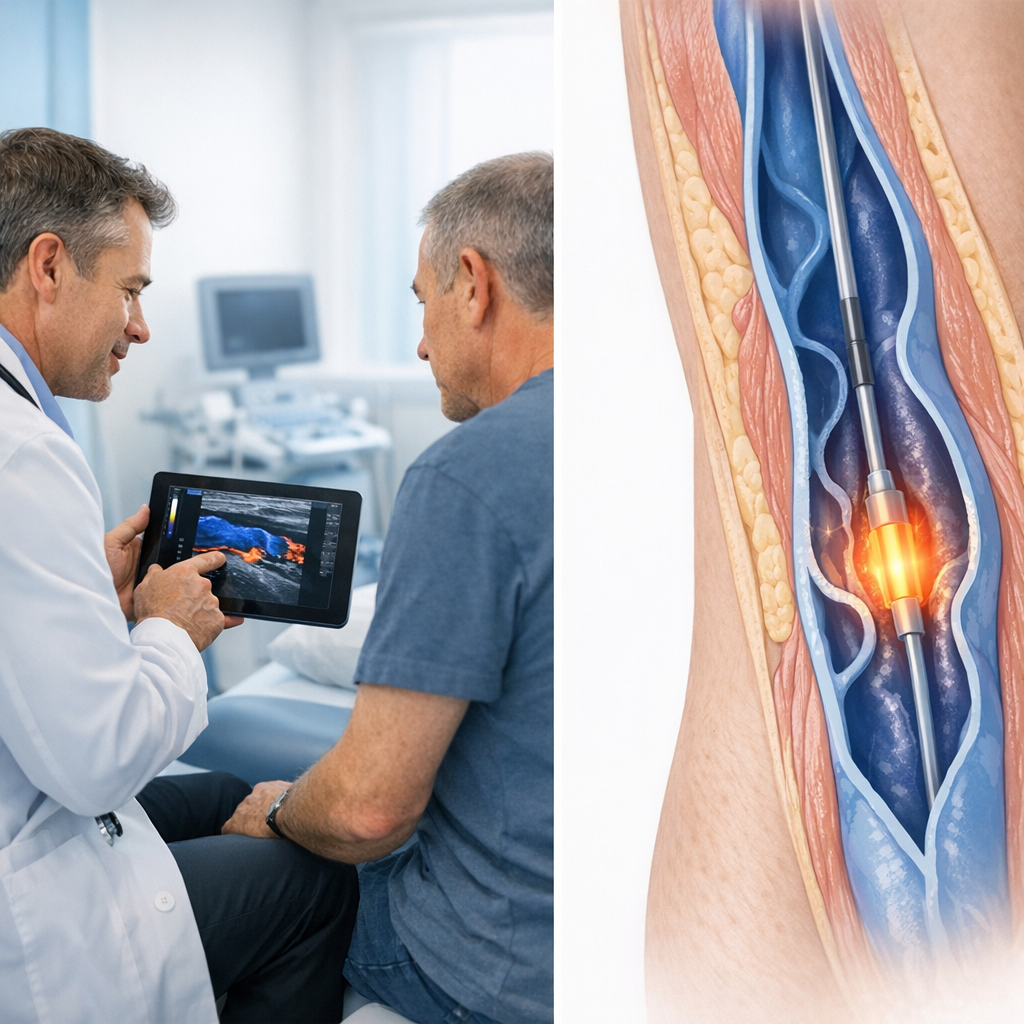
How radiofrequency ablation treats diseased varicose veins
Radiofrequency ablation (RFA) is a minimally invasive way to treat varicose veins from the inside, without large surgical cuts. A tiny catheter is guided into the diseased vein through a small skin puncture, and controlled radiofrequency energy gently heats the vein wall.
As the vein warms, it collapses and seals shut. This is a type of endovenous ablation, meaning the treatment happens within the vein itself. Once the problem vein is closed, your body naturally reroutes blood into nearby healthy veins that can move it more effectively.
Relief from daily vein symptoms
By closing veins that are not working properly, RFA can ease aching, throbbing, heaviness, swelling, and the tired-leg feeling that often worsens at the end of the day.
Quick recovery and convenience
RFA is typically performed using local anesthesia in an office-based setting, with a small incision, minimal downtime, and a rapid return to walking and normal daily activities.
Part of a tailored treatment plan
At West Medical, radiofrequency vein ablation is often combined with lifestyle guidance, compression, or additional procedures, based on your unique pattern of diseased veins.
Before recommending RFA, West Medical commonly uses detailed ultrasound mapping to see which main trunk veins and smaller branches are involved, then plans which veins to treat first so blood flow can be redirected as efficiently and comfortably as possible.

What to expect before, during, and after RFA vein treatment
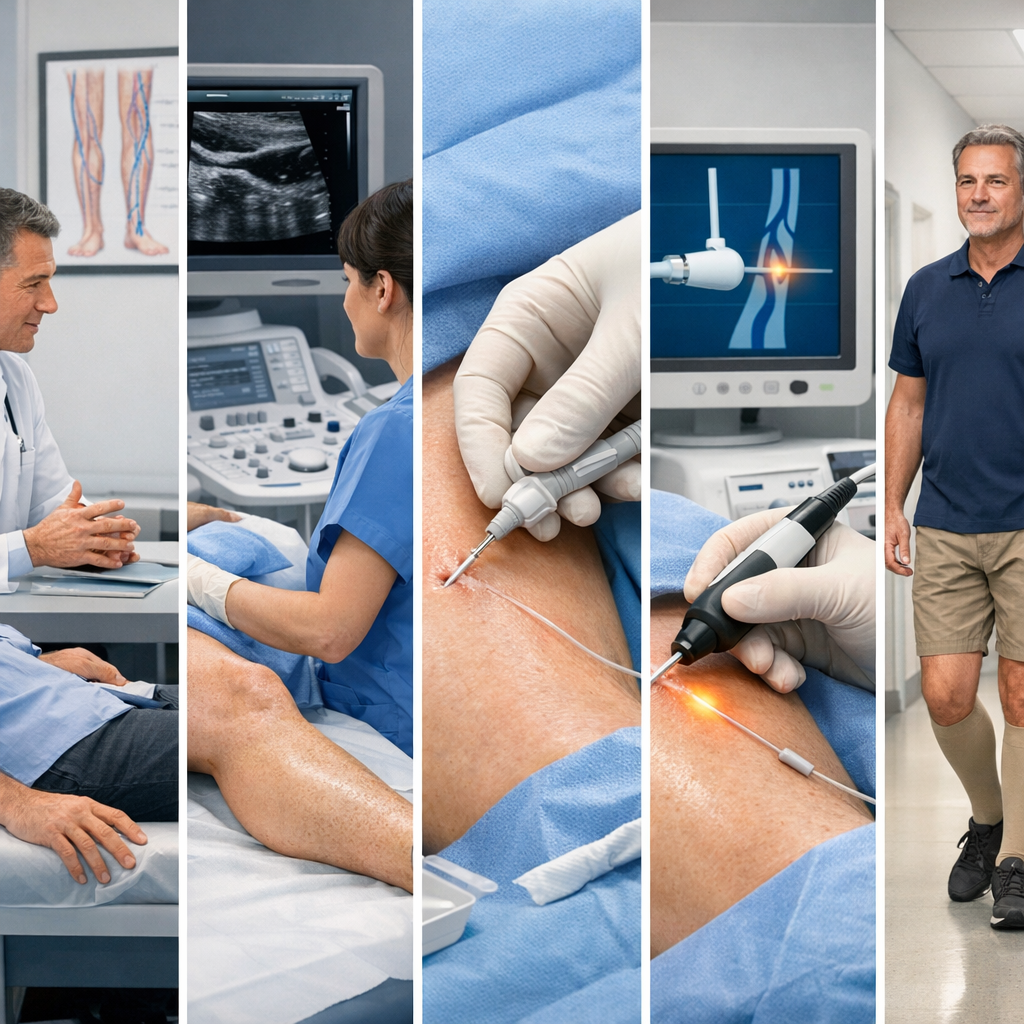
Endovenous radiofrequency ablation for varicose veins is usually an outpatient procedure with a clear, step-by-step process from evaluation through recovery. Understanding what happens at each stage can help you feel more prepared and confident as you decide whether this well-established treatment is right for you.
Evaluation and mapping of diseased veins
Your visit begins with a consultation to review your symptoms, such as aching, heaviness, or visible varicose veins. A detailed ultrasound exam is performed to see how blood is flowing in both surface and deeper trunk veins, including any problem areas behind the knee. This “map” shows which diseased veins are causing issues and helps your vein specialist determine whether radiofrequency catheter ablation of specific varicose vein segments is appropriate or if other treatments should be considered.
Preparing for ablation surgery day
Before your procedure, you’ll receive instructions about which medications to continue or temporarily adjust and whether to bring your own compression stockings. You’ll be asked to wear loose, comfortable clothing that allows easy access to the leg. On arrival, staff will review your medical history, answer last-minute questions, and get you settled. Radiofrequency ablation is usually done under local anesthesia in an outpatient setting, carefully supervised by experienced vein specialists and clinical staff.
During radiofrequency catheter ablation
In the procedure room, the skin over the target vein is cleansed, and the area is numbed with local anesthetic. Using real-time ultrasound guidance, your physician inserts a thin catheter into the diseased vein through a tiny entry point. Controlled radiofrequency energy is then delivered along the length of the vein, causing it to close and be naturally absorbed by the body over time. You may feel pressure, movement, or warmth, but you should not feel sharp pain. Most radiofrequency ablation treatments take less than an hour per leg, though exact times vary.
Immediately after treatment
Once the vein has been treated, your leg is wrapped or placed into compression stockings to support circulation. You’ll be encouraged to get up and walk shortly after the procedure, and most people return to light activities the same day. Your team may advise you to avoid strenuous exercise, heavy lifting, or prolonged standing for a short period. Mild bruising, tightness, or tenderness along the treated vein is common and usually temporary.
Varicose veins radiofrequency ablation recovery
In the days and weeks after treatment, follow-up visits and ultrasound checks help confirm that the treated vein has closed as expected. Soreness, a pulling or tight sensation, and changes in the texture of your varicose veins can occur as the vein seals and the body heals. Most people notice steady improvement over several weeks. Recovery experiences vary based on your overall health, the extent of vein disease, and how closely you follow post-procedure instructions, including walking regularly and wearing compression as directed. Your care team will also review the general risks and benefits of radiofrequency ablation so you can make an informed decision that feels right for you.
RFA vs other ways to treat varicose veins
There is no single “best” treatment for varicose veins; radiofrequency ablation (RFA) is one of several tools a vein specialist may recommend based on your anatomy, symptoms, and overall health.
Conservative options like exercise, leg elevation, weight management, and compression stockings can improve circulation and ease aching, heaviness, and swelling. They help manage the condition but do not close or remove the diseased vein itself, so bulging veins often remain visible. RFA, by contrast, uses controlled heat inside the vein to seal it shut, so blood is redirected into healthier veins.
Many people start with conservative care, including guidance similar to what you would find in Compression Therapy for Varicose Veins, and then consider a procedure if symptoms persist or progress. This stepwise approach helps ensure that any intervention beyond lifestyle changes is truly necessary for your situation.
RFA is one of several minimally invasive procedures used to close problematic veins. It relies on radiofrequency energy, while other options may use laser energy or medication injected directly into the vein. All aim to collapse and seal the vein, but they differ in the type of heat or agent used, the sensation during treatment, and how your body absorbs the treated vein afterward. Each approach has its own profile of benefits, risks, and recovery expectations.
RFA may not be the first choice in every case—for example, very small spider veins, certain vein patterns, or varicose veins related to pregnancy are often managed with other techniques or conservative care. A vein specialist will review your ultrasound findings, symptoms, and goals to recommend a tailored plan that may include RFA, another procedure, or non-procedural management alone.

Costs, insurance, and coverage considerations for RFA
The cost of radiofrequency ablation (RFA) for varicose veins can vary from person to person. Factors include how many diseased veins need treatment, whether one or both legs are involved, the type of facility where your procedure is performed, professional fees, and whether additional treatments are recommended as part of a comprehensive vein care plan.
Many insurance plans may help cover RFA when varicose vein symptoms are medically significant—such as pain, swelling, heaviness, or skin changes—and when the procedure is considered medically necessary. Coverage is typically more limited when treatment is requested for cosmetic concerns alone. Your specific benefits, deductibles, and co-pays will depend on your individual plan.
West Medical accepts AltaMed Medi-Cal, but does not accept all Medi-Cal plans. For every patient, coverage for RFA or any other procedure depends on the exact insurance plan details, medical eligibility criteria, and the results of formal insurance verification. Because of these variables, no particular level of coverage, out-of-pocket cost, or treatment outcome can be guaranteed.
During your consultation, our team will review your symptoms, evaluate whether RFA may be appropriate for your vein concerns, and provide an individualized estimate after your insurance has been verified. Any cost information discussed is an estimate only and should not be interpreted as a promise of coverage, free services, or guaranteed approval.
Radiofrequency ablation FAQs for varicose veins
Have questions about radiofrequency ablation (RFA) for varicose veins? These answers explain what to expect from the procedure, recovery, and results.
Is radiofrequency ablation considered surgery for varicose veins?
RFA is a minimally invasive form of vein surgery performed through tiny skin nicks under local anesthesia. A thin catheter is guided into the vein using ultrasound, and controlled heat closes the diseased vein from the inside. It is not traditional “open” surgery with large incisions or a hospital stay, and most people walk in and walk out the same day.
How long does it take to see results after RFA vein treatment?
Many patients notice symptom relief, such as less aching or heaviness, within days to a few weeks. Bruising and tenderness along the treated vein are common early on and gradually fade. Cosmetic changes in the leg can continue to improve over several months as the body absorbs the closed vein. Every person heals differently, so timelines and results can vary.
Can radiofrequency ablation help with varicose veins that appeared during pregnancy?
Varicose veins that show up or worsen during pregnancy often improve somewhat after delivery, so conservative measures like compression stockings, leg elevation, and gentle exercise are usually the first step. RFA can be considered after pregnancy and breastfeeding if troublesome veins persist and ultrasound confirms they are suitable for treatment. Your clinician will help you time any procedure safely around future pregnancies and overall health.
What are the risks or side effects of radiofrequency ablation for varicose veins?
Most side effects are mild and temporary, such as bruising, skin tenderness, tightness or pulling along the treated vein, and temporary numb patches. Less common but more serious risks include blood clots, skin burns, infection, or nerve irritation. While RFA has a strong safety record, no procedure is completely risk-free. It is performed with ultrasound guidance and careful monitoring to reduce risks as much as possible, and your team will review your individual risk factors beforehand.
Will I need more than one treatment to get my varicose veins treated?
RFA usually targets one main problem vein at a time. Some people achieve their goals with a single session, while others need additional procedures to address other segments or smaller surface veins. Your ultrasound mapping and treatment plan will outline which veins are being treated with RFA and whether follow-up treatments, such as injections or additional ablation, may be recommended to fully address your symptoms and appearance.
Can I exercise after radiofrequency ablation, and how soon?
Light walking is encouraged the same day to promote circulation and reduce the risk of clots. Most patients can return to routine daily activities quickly, but high-impact exercise, heavy lifting, and intense workouts are usually limited for a short period. Your clinician will give you specific guidance based on your procedure, but in general you’ll gradually increase activity and wait for clearance before resuming vigorous exercise or sports.
Is RFA suitable for varicose veins behind the knee or only for larger trunk veins?
RFA is commonly used for larger trunk veins, such as the great or small saphenous veins, and can sometimes be appropriate for veins that contribute to varicose veins behind the knee. Whether it is suitable for your specific veins depends on their size, course, and connection to other veins on ultrasound. Your vein specialist will use these imaging findings to recommend the safest and most effective approach for your anatomy.
Take the next step toward relief from varicose veins
If aching, heavy legs or bulging varicose veins are getting in the way of your daily life, radiofrequency ablation (RFA) may be one option to help treat the underlying diseased veins and improve your comfort.
Your first step is a thorough vein evaluation. During your visit, our team can perform ultrasound mapping of your leg veins, review your medical history, and talk through lifestyle factors like activity level and how exercise affects your varicose veins.
Based on this complete picture, we will explain whether RFA, another vein treatment, or conservative management is recommended for you. We will also review potential benefits, risks, and expected recovery so you can make a confident, informed decision about your care.
If you are ready to explore your options, we invite you to schedule a consultation or contact our team to discuss whether radiofrequency ablation is appropriate for your situation. Coverage and results vary from person to person, and our team can help you understand what to expect.
Related Services
- Compression Therapy for Varicose Veins
For those exploring non-procedural ways to manage vein varicose symptoms, this service page explains how compression therapy can support circulation and comfort.
- vein treatment
If you want to see the full range of options beyond radiofrequency ablation, this overview page outlines the different vein treatments available at West Medical.
- endovenous laser therapy evlt
Patients comparing RFA with laser-based vein closure can review this page to understand how endovenous laser therapy works and how it differs from radiofrequency ablation.
- microphlebectomy
If you have prominent bulging surface veins, this page describes microphlebectomy, a minimally invasive procedure that may be combined with RFA for comprehensive results.
Related Articles
- What Causes Varicose Veins? Key Risk Factors Explained
For readers who want to understand why their diseased veins developed before choosing RFA, this article explains the main causes and risk factors for varicose veins.
- Comprehensive Guide to Vein Treatment: Options, Costs, and Finding the Best Specialists
If you’re comparing radiofrequency ablation with other ways to treat varicose veins, this guide walks through all major options, typical costs, and how to choose a specialist.
- Comprehensive Guide to Radiofrequency Ablation: Procedure, Benefits, Risks, and Costs
Patients who want a deeper dive into radiofrequency ablation in general can use this guide to explore how the procedure works, its benefits, risks, and financial considerations.
- Understanding Varicose and Spider Veins: Causes and Symptoms
If you’re still unsure whether your leg changes are true varicose veins, this article helps you recognize common symptoms and differences from spider veins.