
Personalized uterine fibroid treatment for lasting relief
Heavy periods, pelvic pain, and constant pressure from uterine fibroids can disrupt your work, sleep, intimacy, and plans for growing your family. You deserve to feel heard, understood, and supported with options that go beyond “just live with it.”
At West Medical, our gynecologic specialists carefully evaluate your fibroid size, number, and location—along with your symptoms and life stage, including perimenopause or menopause—before recommending a personalized treatment plan.
- Targeted options to help reduce abnormal uterine bleeding and painful, heavy periods (menorrhagia)
- Thoughtful focus on preserving fertility and uterine health whenever medically appropriate
- A full spectrum of care, from medications and non-surgical therapies to minimally invasive fibroid surgery
- Experienced surgeons and a closely supervised recovery plan designed around your safety and comfort
Schedule a fibroid consultation
Coverage and results vary by individual health and insurance; recommendations follow a thorough medical evaluation.


How expert uterine fibroid care can change your day-to-day life
Uterine fibroids (leiomyomas) can affect your life in very different ways, depending on where they sit in the uterus, how large they are, and whether you have a uterine fibroid with calcification. At West Medical, we focus on understanding your specific pattern of symptoms so that fibroid treatment of the uterus is tailored to what matters most in your daily routine.
Targeted relief from heavy bleeding (menorrhagia)
Heavy, prolonged, or unpredictable bleeding can make it hard to work, exercise, or plan social activities. A careful menorrhagia treatment plan and abnormal uterine bleeding workup can help identify whether fibroids are driving your symptoms and what options may fit you best.
- Helps reduce very heavy periods that soak through pads or tampons quickly, so you can feel more secure leaving the house.
- Lowers the risk of anemia from chronic blood loss, which can improve fatigue, shortness of breath, and overall energy.
- Decreases unexpected bleeding and “flooding” episodes that can interfere with work, travel, and intimacy.
- Aligns treatment choices with whether bleeding is driven by intramural uterine fibroids, submucosal fibroids, or other causes uncovered during your evaluation.
Less pelvic pressure, pain, and bladder or bowel symptoms
Fibroid tumors in the uterus can press on nearby organs, creating a constant sense of fullness or discomfort that wears on you over time.
- Relieving fibroid-related pressure can ease pelvic heaviness and back pain, making it more comfortable to sit, stand, and sleep.
- Reducing the size or impact of fibroids can lessen frequent urination or the feeling that you can’t fully empty your bladder.
- Addressing fibroids located on the outer surface of the uterus may improve constipation or bowel pressure, which often do not respond to diet changes alone.
Because fibroids on the outer uterine surface tend to cause more pressure symptoms than bleeding, we factor their location into every treatment discussion.
Care that adapts to your life stage
Uterine fibroid care looks different if you are hoping to preserve fertility, approaching menopause, or already in menopause with persistent symptoms.
- For those planning future pregnancies, we focus on options that balance symptom relief with protecting the uterus and optimizing fertility.
- If you are nearing menopause, we consider how close you may be to natural symptom improvement and which treatments can bridge that transition safely.
- For patients already in menopause, we pay special attention to new or ongoing bleeding, calcified fibroids, and other changes that may need targeted evaluation.
At West Medical, we routinely see patients who have tried to manage fibroid-related menorrhagia for years before seeking a dedicated fibroid consultation, so we pay close attention to how long your symptoms have been present and what you’ve already tried. While every person’s results are different, many patients report that after appropriate treatment they can plan their days again without constantly worrying about bleeding or pain.
What to expect from uterine fibroid evaluation and treatment planning
Effective treatment for fibroid tumors in the uterus starts with a clear understanding of your unique symptoms, the size and location of your fibroids, and your overall health, so your care team can recommend options that fit your goals and medical needs.
Comprehensive history and symptom review
Your visit begins with a detailed conversation about your health history and the uterine fibroid symptoms you are experiencing day to day.
- Heavy or prolonged menstrual bleeding, including large clots
- Pelvic pain, pressure, or a feeling of fullness in the lower abdomen
- Urinary frequency or urgency from pressure on the bladder
- Painful intercourse or cramping between periods
- Changes in bleeding patterns or new pelvic symptoms around menopause
Your clinician will also ask about prior diagnoses such as endometriosis or adenomyosis, since these can overlap with fibroid symptoms and may influence the best approach to managing both conditions.
Imaging to map fibroids’ size and location
Next, imaging is used to create a clear picture of your uterus and fibroids. Pelvic ultrasound is commonly performed, and in some cases MRI is recommended for additional detail.
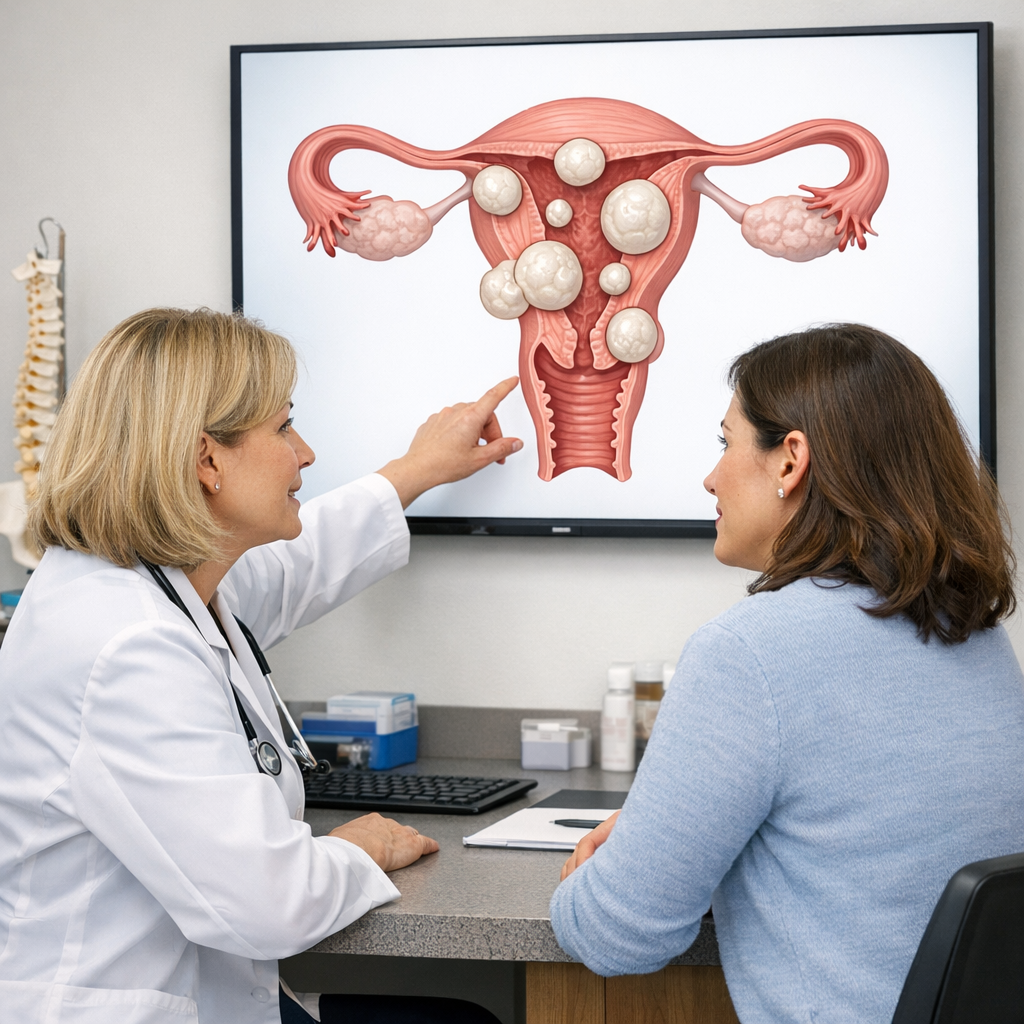
These studies help identify intramural uterine fibroids within the uterine wall, submucosal fibroids that project into the uterine cavity, subserosal fibroids on the outer surface of the uterus, and any uterine fibroid with calcification.
By mapping the number, size, and position of fibroids, your care team can determine whether non-surgical uterine fibroid treatment may be appropriate or whether surgery for fibroids in the uterus should be considered.
Review of treatment options tailored to you
Once your evaluation is complete, the team reviews treatment options in the context of your symptoms, fertility goals, and overall health.
This may include medications that help manage bleeding or pain, non surgical uterine fibroid treatment approaches designed to shrink or control fibroids, and minimally invasive or laparoscopic fibroid surgery in the uterus when a procedure offers the best chance of relief.
If you also have endometriosis, laparoscopic surgery and endometriosis management may be discussed in the same setting, but any plan is individualized so that recommendations match your specific diagnosis and health priorities.
Planning and support before and after treatment
After you and your clinician choose a path forward, you receive clear pre-procedure instructions, including how to prepare, medications to adjust, and what to arrange at home or work.
You will learn how long you may need to modify activity, what to expect in terms of discomfort or bleeding, and how follow-up visits are scheduled to monitor healing and symptom improvement.
Procedures are performed by experienced surgeons or under appropriate clinical supervision, and every procedure carries potential risks such as bleeding, infection, or anesthesia-related complications. Individual outcomes depend on your health status, the specific treatment performed, and how closely you follow post-treatment guidance.
Insurance coverage, including any Medi-Cal coverage, is reviewed on a case-by-case basis and cannot be guaranteed; West Medical accepts only AltaMed Medi-Cal and not all Medi-Cal plans.
Comparing non-surgical and surgical uterine fibroid treatments
There is no single “best” treatment for uterine fibroids. The right plan depends on your symptoms, the size and location of fibroids on the uterus, your age, fertility goals, and other health conditions. Understanding how non-surgical uterine fibroid treatment compares with uterine fibroid surgery can help you prepare for a more informed visit with your clinician.
Some patients also want to explore focused, uterine artery–targeted options alongside traditional surgery for fibroids on uterus, which are discussed further in Targeted Fibroid Therapy.
Every approach has trade-offs. A detailed conversation with your clinician can help you weigh the pros and cons of each option, including how treatment may affect fertility, the timing of menopause, and long-term control of bleeding, pain, and other fibroid-related symptoms.
Understanding costs, insurance, and coverage for fibroid care
The cost of treating uterine fibroids can vary widely, depending on whether your care involves medications, minimally invasive procedures, or uterine fibroid surgery. Facility fees, anesthesia, imaging, lab work, and follow-up visits can also affect the total cost, so it is not possible to provide a single price that applies to every patient.
During your evaluation, your provider will recommend a treatment plan tailored to your symptoms, fibroid size and location, and overall health, which helps our team prepare a more accurate estimate of potential costs.
Insurance and medical necessity
Many insurance plans may cover evaluation and medically necessary treatment for uterine fibroids, especially when there is documented abnormal uterine bleeding, anemia, or significant pain. However, each insurer has its own policies, and coverage can differ even between plans from the same company.
Coverage decisions are made by your insurance company, not by West Medical, and cannot be guaranteed in advance. Authorizations, denials, and the portion you are responsible for are all determined by your insurer based on your specific benefits and their medical-necessity criteria.
West Medical accepts only AltaMed Medi-Cal plans. Not all Medi-Cal plans are accepted, and eligibility for specific fibroid procedures depends on a medical evaluation and the details of your individual AltaMed coverage.
What affects your out-of-pocket costs
Your out-of-pocket costs for fibroid care are influenced by several factors, including:
- Your plan’s deductible, copay, and coinsurance amounts
- Whether West Medical and the treating facility are in-network or out-of-network for your plan
- The specific type of procedure recommended (medication management, minimally invasive treatment, or surgery)
- Whether additional conditions, such as endometriosis requiring laparoscopic surgery, are treated at the same time
- Any imaging, lab tests, or follow-up visits needed as part of your care
After your evaluation, our team can provide a personalized cost estimate based on your recommended treatment and the information available from your insurer. Actual amounts may change if your insurance plan makes different determinations or if your treatment plan needs to be adjusted.
Our financial team works closely with patients to explain benefits, review options, and answer questions before you move forward, so you can make informed decisions about your fibroid care.
Uterine fibroid treatment FAQs
These answers provide general information about uterine fibroids and treatment options and are not a substitute for medical advice. Your symptoms, diagnosis, and eligibility for specific treatments can vary, so always discuss your situation and test results with a qualified clinician.
What are the most common symptoms of uterine fibroids?
Common symptoms uterus fibroids can cause include heavy or prolonged periods (menorrhagia), bleeding between periods, pelvic pain or pressure, back pain, frequent urination, constipation, painful intercourse, and sometimes difficulty becoming or staying pregnant. Some people have fibroids with no symptoms, which are often discovered during routine exams or imaging.
How do fibroids’ size and location affect my treatment options?
Fibroids’ sizes and fibroids location play a major role in treatment planning. Small intramural uterine fibroids that do not distort the uterine cavity may be monitored or managed with medication, while larger or cavity-distorting fibroids may require minimally invasive procedures or surgery of fibroids in uterus. Fibroids on the outer surface of the uterus may cause more pressure symptoms, whereas those inside the cavity more often cause abnormal uterine bleeding.
Can uterine fibroids get better after menopause?
Uterine fibroid symptoms menopause can sometimes improve because fibroids often shrink when hormone levels decline. However, some people continue to have symptoms, and any new or persistent bleeding after menopause should be evaluated promptly to rule out other causes. Treatment decisions after menopause focus on symptom severity, overall health, and ruling out more serious conditions.
Are there non-surgical options for treating fibroids?
Yes, non-surgical uterine fibroid treatment options can include medications to manage menorrhagia and abnormal uterine bleeding, hormonal therapies that may shrink or stabilize fibroids, and certain minimally invasive procedures that reduce blood flow to fibroids without removing the uterus. These approaches are not risk-free, may not be permanent, and are not right for everyone, so they are recommended only after a thorough medical evaluation.
Will fibroid treatment affect my fertility or pregnancy plans?
Some treatments, such as myomectomy (fibroid surgery in uterus that removes fibroids while preserving the uterus), are often chosen specifically to support future fertility, while others, such as hysterectomy, permanently end the ability to carry a pregnancy. The impact on fertility depends on the number, size, and location of fibroids, the type of treatment, and your overall reproductive health, so it is important to discuss your goals in detail with your clinician before deciding on a plan.
Take the next step toward relief from fibroid symptoms
If heavy bleeding, pelvic pain, or other fibroid symptoms are disrupting your life, schedule a consultation to talk through your options with a provider who understands uterine leiomyomas and your goals.
Schedule a fibroid consultation
Recommendations, eligibility for specific procedures, and insurance coverage (including any AltaMed Medi-Cal benefits) are determined after a personalized medical evaluation and can vary from person to person.
Related Services
- Targeted Fibroid Therapy
Relevant for patients interested in a comprehensive, individualized approach to shrinking or controlling fibroids with the least disruption to their daily lives.
- fibroid treatment without surgery
Useful for visitors specifically seeking non-surgical options to manage fibroid symptoms and avoid traditional surgery where possible.
- uterine artery embolization
Appropriate for readers who want to explore uterine artery embolization as a focused, minimally invasive procedure for treating fibroids.
Related Articles
- Fibroid Treatment Uterine Artery Embolization Guide – West Medical
Helpful for patients who want a deeper, step-by-step explanation of how uterine artery embolization works as a minimally invasive option for fibroid treatment.
- Uterine Artery Embolization Benefits and Side Effects Guide
Ideal for readers comparing fibroid treatment choices who need a clear overview of the potential benefits and side effects of uterine artery embolization.