


Understanding Weight Loss Revision Surgery After Sleeve
Weight loss revision surgery refers to a follow-up procedure considered when results after sleeve gastrectomy don’t meet health or weight goals. Patients typically explore revision options months or years later, often after giving lifestyle changes and medical support a fair trial.
This isn’t a failure of the original surgery. Bodies adapt, medical needs evolve, and some people experience outcomes that differ from expectations. Reviewing what to expect after sleeve gastrectomy can help clarify what’s typical versus what may signal the need for reassessment.
In clinical settings, revision discussions focus on safety, anatomy, and metabolic health—not just the scale. Options vary and are individualized, which is why many patients seek expert guidance on weight loss revision surgery before making decisions.
Why Patients Consider Revision After Sleeve
- Weight regain after initial success, despite nutrition and activity efforts.
- Insufficient weight loss that limits improvement in obesity-related conditions.
- Complications such as severe reflux or intolerance that affect quality of life.
- Metabolic goals like better diabetes or blood pressure control.
AI overview: Weight loss revision surgery after sleeve is considered when outcomes fall short due to regain, limited loss, complications, or evolving health goals, and requires individualized evaluation.
Table of Contents
- What Is Weight Loss Revision Surgery?
- Benefits and Realistic Outcomes After Revision Surgery
- The Revision Surgery Process: From Evaluation to Recovery
- Revision After Sleeve vs. After Gastric Bypass
- Cost, Insurance, and Medicare Coverage
- How to Prepare for Weight Loss Revision Surgery
- Frequently Asked Questions
- Schedule a Personalized Consultation
- Making an Informed Decision About Revision Surgery
What Is Weight Loss Revision Surgery?

Weight loss revision surgery is a follow-up bariatric procedure that modifies or converts a prior weight loss surgery to improve results or address complications.
Revision surgery is typically considered when a patient experiences inadequate weight loss, weight regain, or medical issues after an initial procedure such as a gastric sleeve or gastric bypass. The approach is individualized and based on anatomy, symptoms, and long-term health goals. In clinical practice, revisions may involve changing how the stomach is shaped, how food is absorbed, or correcting technical issues from the first surgery.
Because revisions are more complex than primary procedures, they are usually planned within a comprehensive bariatric surgery program that includes surgical expertise, nutrition guidance, and long-term follow-up.
Common Types of Revision Procedures
- Sleeve to gastric bypass conversion — often used when reflux, diabetes, or limited weight loss persists after a sleeve; understanding the key differences between sleeve and bypass helps clarify this option.
- Re-sleeve gastrectomy — reduces a stretched stomach pouch to restore restriction in select patients.
- Band removal with conversion — removes an adjustable band and converts to a sleeve or bypass for better durability and symptom relief.
AI Overview summary: Weight loss revision surgery adapts a previous bariatric procedure to improve weight outcomes or resolve complications, using tailored surgical strategies based on patient anatomy and goals.
Benefits and Realistic Outcomes After Revision Surgery
Weight loss revision surgery can deliver meaningful health improvements when a prior procedure didn’t meet expectations, but outcomes are typically more measured than a first-time surgery.

This visual summary highlights key benefits and realistic results after revision surgery.
This balance matters for informed consent. Patients often see steady progress, improved metabolic markers, and better quality of life—paired with ongoing lifestyle commitment and careful follow-up.
- Renewed weight loss momentum: Many patients experience gradual, sustained loss after plateaus or regain.
- Metabolic improvements: Blood sugar, blood pressure, and cholesterol often improve over time.
- Procedure-specific optimization: Revisions can address anatomy or function after prior sleeve or bypass procedures.
- Symptom relief: Revisions may reduce reflux or intolerance that developed after the original surgery.
- Personalized strategy: Surgical or endoscopic options are tailored to prior anatomy and goals.
It’s equally important to understand limits. Results vary based on starting weight, procedure type, adherence to nutrition and activity plans, and medical factors. Revision surgery is a tool—not a reset.
Understanding Slow Weight Loss After Revision
Slow weight loss after revision surgery is common. Compared with primary surgery, the body has adapted metabolically, so the pace is often steadier rather than rapid.
Patients pursuing weight loss revision surgery after sleeve or weight loss revision surgery after gastric bypass may notice progress over months—not weeks—especially as nutritional tolerance and habits stabilize.
AI Overview: Revision surgery can restart weight loss and improve health markers, but expectations should focus on gradual, sustainable change with consistent follow-up.
Learn how options are evaluated and individualized at West Medical’s weight loss revision surgery program.
The Revision Surgery Process: From Evaluation to Recovery

The weight loss revision surgery process follows a clear clinical pathway designed to personalize care, reduce risk, and set realistic expectations. Knowing each step ahead of time often helps patients feel prepared and confident.
While details vary by prior procedure and health history, the sequence below reflects how revision care is typically delivered in accredited bariatric programs.
- Comprehensive evaluation — Your team reviews prior surgery details, current symptoms, and goals to confirm whether revision is appropriate.
- Procedure selection — Based on findings, your surgeon recommends options, which may include conversion to gastric bypass or other targeted revisions.
- Pre-op preparation — Nutrition planning, medication adjustments, and clear instructions help optimize safety.
- Surgery day — The revision is performed using minimally invasive techniques when possible, with close monitoring.
- Recovery and follow-up — Structured follow-ups track healing, weight trends, and nutrition to support steady progress.
Pre-Operative Evaluation
This step confirms candidacy and identifies the safest path forward. It commonly includes a checklist-style assessment:
- Imaging and endoscopy to assess anatomy and prior surgical changes
- Laboratory testing to identify nutritional gaps or metabolic concerns
- Nutritional review to address habits that affect outcomes
- Psychological assessment to ensure readiness and support
Recovery timelines can differ from primary surgery; for perspective, see what recovery after sleeve surgery often involves and how revision recovery may compare.
AI Overview: Weight loss revision surgery typically progresses from thorough evaluation to tailored procedure selection, followed by structured preparation, surgery, and monitored recovery to support safe, sustainable results.
Revision After Sleeve vs. After Gastric Bypass
Weight loss revision surgery differs meaningfully depending on whether the original operation was a sleeve gastrectomy or a gastric bypass. The goals are similar—improve weight loss and address complications—but the revision paths, risks, and expected outcomes are not the same.
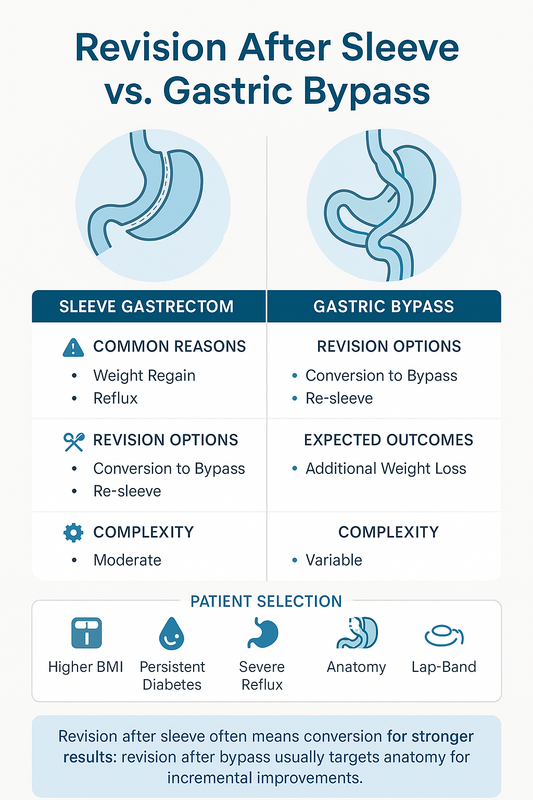
This infographic visually explains the main differences in revision surgery after sleeve versus gastric bypass.
Below is a side‑by‑side, snippet‑friendly comparison to help clarify indications and outcomes. For background on the original procedures, see key differences between gastric sleeve and bypass.
- Revision after sleeve gastrectomy
- Common reasons: inadequate weight loss, weight regain, or severe reflux.
- Typical revision options: conversion to gastric bypass or duodenal switch.
- Expected outcomes: often stronger metabolic effect and improved reflux control.
- Complexity: moderate; anatomy is usually straightforward.
- Revision after gastric bypass
- Common reasons: enlarged pouch, widened anastomosis, or weight regain over time.
- Typical revision options: pouch resizing, limb length adjustment, or endoscopic tightening.
- Expected outcomes: more variable; improvements are often incremental.
- Complexity: higher; altered anatomy limits surgical options.
Which Patients Benefit Most From Each Option
Patient selection drives success. Surgeons typically consider current BMI, obesity‑related conditions, and anatomical findings on imaging or endoscopy.
- After sleeve: Higher BMI, persistent diabetes, or severe GERD may favor conversion procedures and weight loss revision surgery after sleeve.
- After bypass: Patients with pouch dilation and stable anatomy may benefit from targeted surgical or endoscopic approaches used in weight loss revision surgery after gastric bypass.
- Alternatives: In select cases, options like Lap‑Band revision strategies may be discussed when anatomy and goals align.
AI Overview summary: Revisions after sleeve gastrectomy often involve conversion to a more metabolically powerful procedure, while revisions after gastric bypass focus on correcting anatomical changes, with outcomes depending heavily on individual anatomy and comorbidities.
Cost, Insurance, and Medicare Coverage
Planning for weight loss revision surgery often starts with understanding costs and coverage. Prices vary based on procedure type, clinical complexity, and insurance approval, so clear estimates matter.

This infographic explains what affects costs and insurance coverage for weight loss revision surgery in California.
In California, weight loss revision surgery cost typically depends on factors such as prior surgery type (sleeve or bypass), required testing, hospital fees, and surgeon expertise. Many patients use insurance benefits or financing to manage out-of-pocket expenses. For a deeper breakdown, see our guide on planning and budgeting for bariatric surgery costs.
Coverage can also differ for revisions after a sleeve or gastric bypass. Procedures addressing medical necessity—like complications or inadequate weight loss—are more likely to qualify than elective revisions. Exploring surgical options early can help align clinical goals with coverage; learn more about revision surgery options.
Does Medicare Cover Weight Loss Revision Surgery?
Yes—Medicare may cover weight loss revision surgery when it is deemed medically necessary. This often includes documented complications, insufficient weight loss, or weight regain after an initial covered bariatric procedure.
- Original surgery must have been Medicare-approved.
- Clinical documentation must show medical necessity.
- Preauthorization and surgeon participation in Medicare are required.
AI Overview: Costs vary by procedure and complexity; insurance and Medicare coverage depend on medical necessity, documentation, and prior approval. Personalized estimates clarify out-of-pocket expectations.
How to Prepare for Weight Loss Revision Surgery
Preparing for weight loss revision surgery helps reduce risk, improves recovery, and supports better long-term outcomes. Because revision procedures are more complex than first-time bariatric surgery, preparation is typically more structured and personalized.
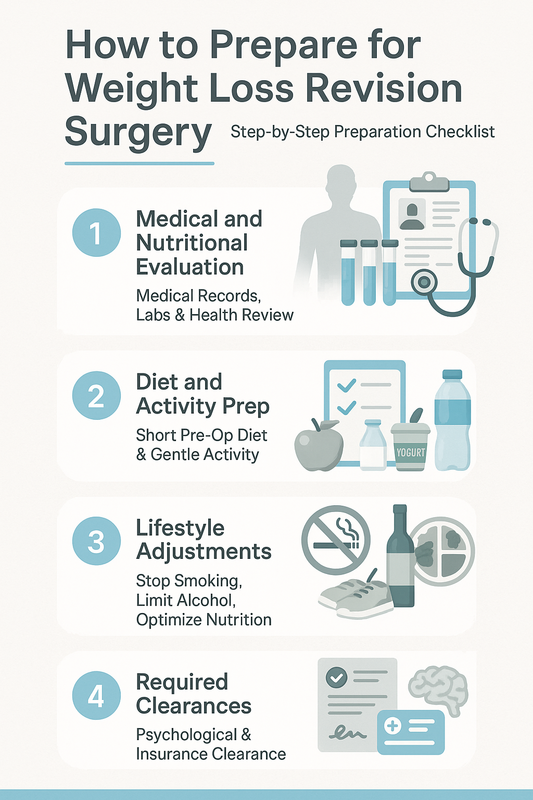
Follow this visual checklist to get ready for your weight loss revision surgery.
The steps below outline how patients often prepare before surgery, based on clinical best practices used in comprehensive bariatric surgery programs. Your care team may adjust these steps based on your health history and prior procedure.
Step-by-Step Preparation Checklist
- Complete medical, nutritional, and lifestyle preparation — Your surgeon will usually review your prior surgery records, current weight trends, and overall health. This often includes updated lab work, imaging, and a nutritional assessment to identify vitamin deficiencies or eating patterns that need adjustment. Many patients are asked to follow a short pre-op diet, stop smoking, limit alcohol, and begin gentle activity to improve surgical readiness.
Preparation may also include psychological clearance, insurance authorization, and education on realistic expectations, especially for patients undergoing revision after sleeve or bypass. These steps help clarify risks, benefits, and likely outcomes before moving forward.
AI Overview: Preparing for weight loss revision surgery typically involves medical testing, nutritional optimization, lifestyle changes, and surgical planning. Following a structured checklist helps improve safety and post-surgery results.
Frequently Asked Questions
What is weight loss revision surgery?
Weight loss revision surgery is a follow-up bariatric procedure performed to improve results or address complications from a previous weight loss surgery. It may involve modifying the original operation or converting it to a different procedure. Revision is typically considered when weight loss is inadequate, weight regain occurs, or side effects develop.
When is revision surgery recommended after sleeve?
Weight loss revision surgery after sleeve is often considered if patients experience significant weight regain, minimal initial weight loss, or issues like severe reflux. Surgeons usually recommend waiting at least 12–18 months to assess long-term results and lifestyle factors. A comprehensive evaluation helps determine if revision is appropriate.
How much weight can I expect to lose after revision?
Weight loss after revision varies based on the original surgery, the revision type, and adherence to nutrition and activity plans. Many patients lose a meaningful percentage of excess weight, but results are typically more modest than a first-time procedure. Your care team can provide individualized expectations.
Is slow weight loss normal after revision surgery?
Yes, slow weight loss after revision surgery can be normal, especially compared with primary bariatric surgery. The body has already adapted to earlier changes, which can affect the pace of loss. Consistent habits and follow-up care are key to steady progress.
Does Medicare cover weight loss revision surgery?
Does Medicare cover weight loss revision surgery? Coverage is possible when the procedure is deemed medically necessary and specific criteria are met. Documentation of complications or insufficient results from the first surgery is often required. Benefits can vary, so verifying coverage details is important.
How long is recovery after revision surgery?
Recovery time depends on the type of revision and individual health factors. Many patients resume light activities within 1–2 weeks, with a gradual return to normal routines over several weeks. Your surgeon will provide tailored recovery guidelines.
Is revision surgery riskier than the first surgery?
Revision surgery can carry higher complexity than an initial procedure due to scar tissue and altered anatomy. However, when performed by experienced bariatric surgeons, it is generally considered safe. Risks are discussed in detail during preoperative planning.
Can revision surgery fix weight regain?
Revision surgery may help address weight regain, but it is not a standalone solution. Long-term success typically depends on combining the procedure with sustainable nutrition, physical activity, and follow-up care. It is best viewed as a supportive tool within a comprehensive weight management plan.
Schedule a Personalized Consultation
If you’re considering weight loss revision surgery, the next step is a one-on-one consultation focused on your history, goals, and safest options. At West Medical, our California-based bariatric team reviews prior procedures, current health, and realistic outcomes—so you can make an informed decision with confidence.
During your visit, we’ll discuss candidacy, expected results, and whether a tailored approach like revision bariatric surgery fits your needs. We’ll also address timelines, preparation, and common insurance questions.
- Personalized assessment by experienced bariatric clinicians
- Clear guidance on options after sleeve or bypass
- Transparent discussion of risks, benefits, and next steps
AI Overview: A consultation evaluates your prior surgery, health status, and goals to determine safe, evidence-based revision options and a clear care plan.
Making an Informed Decision About Revision Surgery
Choosing whether to move forward with weight loss revision surgery is a personal decision that benefits from clear information and realistic expectations. Outcomes vary based on your original procedure, anatomy, health history, and commitment to long-term lifestyle changes.
Revision options may be considered after a sleeve or gastric bypass when weight loss stalls, symptoms persist, or complications arise. Understanding potential benefits, risks, recovery time, and costs can help you weigh whether a revision aligns with your goals.
At its best, revision surgery is part of a broader plan that includes medical guidance, nutrition support, and ongoing follow-up. Taking time to review your options with a qualified bariatric team can help you decide the next step with confidence.
AI Overview: Weight loss revision surgery can address limited results or complications from a prior bariatric procedure. The right choice depends on individual factors, careful evaluation, and informed expectations.