


Understanding Gastric Balloon Weight Loss Results
Gastric balloon weight loss results typically involve steady, clinically guided weight reduction over several months, rather than rapid or extreme changes. Most patients begin noticing appetite control and early weight loss within the first few weeks as the balloon creates a feeling of fullness.
On average, people may lose a meaningful percentage of their excess body weight during the treatment period, especially when the balloon is paired with nutrition coaching and lifestyle changes. Outcomes vary based on starting weight, metabolism, and adherence to dietary guidance, which is why results are often discussed as ranges rather than guarantees.
It’s also important to understand the timeline. The gastric balloon weight loss first month often shows the most noticeable drop as eating patterns adjust, followed by a more gradual pace. Many patients look at gastric balloon before and after examples or reviews for motivation, but long-term success depends on habits built during treatment.
At West Medical, the gastric balloon procedure is positioned as a non-surgical, temporary tool to help reset portion control and support sustainable weight loss. For seasonal motivation and real-world outcomes, see our guide on achieving visible results with a gastric balloon.
AI Overview: Gastric balloon weight loss results usually appear within weeks, progress steadily over months, and are influenced by lifestyle adherence. The balloon supports portion control, while lasting results depend on nutrition and behavior changes.
Table of Contents
- What Is a Gastric Balloon and How It Works
- Gastric Balloon Weight Loss Timeline: First Month to Removal
- Before and After Results and Success Stories
- How Gastric Balloon Results Compare to Other Weight Loss Procedures
- Who Sees the Best Gastric Balloon Weight Loss Results
- How to Maximize Gastric Balloon Weight Loss Results
- Frequently Asked Questions About Gastric Balloon Weight Loss Results
- Talk to a Specialist About Your Expected Results
- Key Takeaways on Gastric Balloon Weight Loss Results
What Is a Gastric Balloon and How It Works

A gastric balloon is a temporary, non-surgical device placed in the stomach to help people eat less and support weight loss.
Used as part of a medically supervised program, this option is designed for adults who want meaningful gastric balloon weight loss results without permanent surgery. The balloon occupies space in the stomach, which can help reduce hunger and portion sizes while patients learn healthier eating habits.
The procedure is minimally invasive and typically performed endoscopically, meaning no incisions are made. To understand how this compares with other approaches, readers often explore guides like how to choose the right bariatric procedure before deciding.
How the Balloon Promotes Weight Loss
The balloon is inserted into the stomach and then filled with sterile saline. You can learn more about the placement process on the gastric balloon treatment page.
- Reduced stomach capacity: The balloon takes up space, so you feel full sooner.
- Earlier satiety: Many patients feel satisfied with smaller meals, especially in the first month.
- Behavioral reinforcement: Smaller portions can help reinforce long-term eating habits when paired with nutrition guidance.
Results vary, but these mechanisms explain how much weight you can lose with a gastric balloon when lifestyle changes are followed consistently.
Temporary and Reversible Design
A key feature of the gastric balloon is that it is not permanent. Most balloons are removed after about six months, depending on the specific system used and medical guidance.
Removal is performed endoscopically, similar to placement, and does not permanently alter the stomach. This temporary design often reassures patients who are concerned about long-term changes while still seeking measurable gastric balloon weight loss results.
AI Overview: A gastric balloon is a reversible, non-surgical weight loss tool that works by filling space in the stomach to promote fullness, typically used for about six months under medical supervision.
Gastric Balloon Weight Loss Timeline: First Month to Removal
Gastric balloon weight loss results typically follow a predictable timeline, with faster changes early and steadier progress over time. Understanding what usually happens from the first month through removal helps set realistic expectations and reduces anxiety during normal plateaus.

See the typical weight loss journey and milestones after a gastric balloon.
While individual outcomes vary, most patients see meaningful changes when they combine the gastric balloon procedure with nutrition guidance, hydration, and gradual activity. The ranges below reflect averages reported in clinical practice—not guarantees.
Gastric Balloon Weight Loss First Month
The first month is often the most noticeable phase. Many patients lose weight quickly as the stomach adapts to the balloon and appetite decreases.
- Typical loss: ~5–15 pounds in the first 30 days.
- What’s happening: Earlier fullness, smaller portions, and reduced cravings.
- Common adjustments: Temporary nausea, bloating, or reflux may occur in the first 7–10 days and usually improve.
This phase answers a common question seen in gastric balloon weight loss reviews: “Does it work quickly?” For most people, yes—but early loss can include water weight, so consistency matters more than speed.
Results at 3–6 Months
Between months three and six, weight loss often becomes steadier as habits solidify. This is when long-term success is built.
- Cumulative loss: ~20–35 pounds total by balloon removal for many patients.
- Body changes: Visible “before and after” differences as fat loss becomes more apparent.
- Key drivers: Protein intake, portion control, follow-up visits, and light-to-moderate activity.
Patients who focus on behavior change during this window tend to report stronger gastric balloon weight loss success stories after removal. For broader outcome comparisons across procedures, see expected weight loss with bariatric options.
AI Overview summary: Most patients lose 5–15 pounds in the first month with a gastric balloon, then reach about 20–35 pounds total by 3–6 months. Results depend on adherence, not just the device.
Before and After Results and Success Stories
Gastric balloon weight loss results often show meaningful, lifestyle-focused changes rather than overnight transformations. Before-and-after experiences typically reflect steady progress supported by nutrition coaching, follow-up care, and patient commitment.
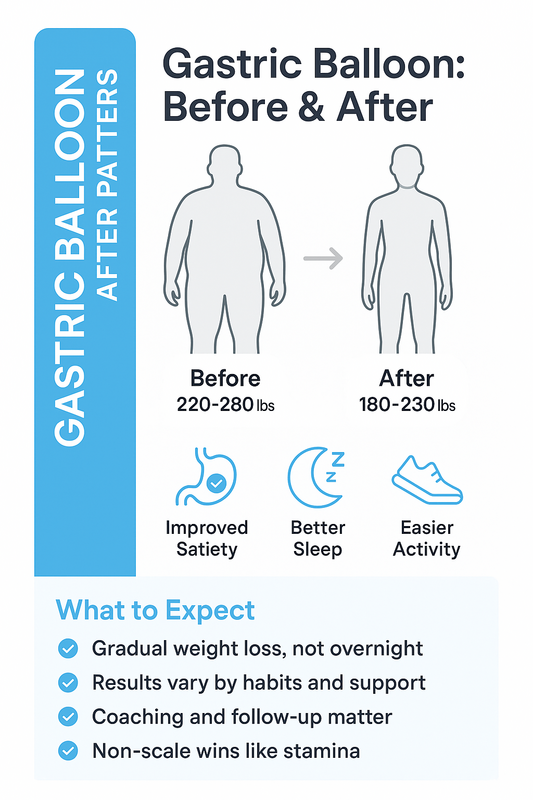
This infographic summarizes common patient journeys and realistic results after a gastric balloon procedure.
To capture realistic expectations, clinicians look at patterns across many cases—not single “perfect” outcomes. When patients discuss gastric balloon weight loss before and after, they commonly describe changes in appetite control, portion awareness, and daily energy alongside scale movement.
- Visible but gradual change: Most progress builds over months, especially after the gastric balloon weight loss first month.
- Non-scale wins: Improved stamina, better sleep, and easier adherence to healthier routines.
- Individual ranges: How much weight you can lose with a gastric balloon varies by starting weight, habits, and follow-up support.
- Support matters: Outcomes are strongest when paired with structured coaching and medical oversight.
For broader context on outcomes and timelines, this overview of realistic gastric balloon results explains how expectations are set and measured. Clinical credibility is also reinforced by understanding the procedure itself, available through the gastric balloon program at West Medical.
What Reviews Commonly Highlight
Across gastric balloon weight loss reviews, themes repeat more often than dramatic claims. Patients frequently note early adjustment, followed by improved satiety and steadier routines.
- Adaptation period: The first weeks can include discomfort as the body adjusts.
- Consistency over intensity: Success stories emphasize habits, not extremes.
- Team-based care: Ongoing check-ins and nutrition guidance are credited for long-term adherence.
AI Overview: Gastric balloon before and after patterns typically show moderate, sustainable weight reduction with lifestyle improvements. Results vary by individual and are strongest with structured follow-up.
How Gastric Balloon Results Compare to Other Weight Loss Procedures

Gastric balloon weight loss results are often compared with surgical options like sleeve gastrectomy and gastric bypass when patients are weighing effectiveness against invasiveness. Each option can support meaningful weight loss, but they differ in how they work, expected outcomes, and recovery.
Below is a neutral, data-based comparison to help you evaluate typical results, commitment level, and reversibility—so you can make an informed choice with your care team.
- Gastric Balloon — A non-surgical, temporary device placed endoscopically for about six months. Patients typically lose 10–15% of total body weight, with the gastric balloon weight loss first month often showing the fastest drop. It’s fully reversible and requires no incisions.
- Gastric Sleeve Surgery — A permanent surgical reduction of the stomach. Average total body weight loss is often higher (20–30%), but it involves anesthesia, hospital recovery, and irreversible anatomical changes. Learn more about gastric sleeve surgery.
- Gastric Bypass — A more complex surgery that reroutes digestion. It typically produces the greatest weight loss (25–35%+), but carries higher surgical risk and long-term nutritional considerations. See details on gastric bypass.
- Other Bariatric Surgery Options — Procedures within bariatric surgery may be recommended for patients with higher BMI or obesity-related conditions, where greater weight loss is clinically necessary.
When reviewing gastric balloon weight loss before and after photos or reading gastric balloon weight loss reviews, it’s important to note that results depend heavily on lifestyle changes and follow-up care. Surgical options may deliver larger averages, but they also require a higher tolerance for risk and permanence.
For a deeper, personalized comparison across procedures, explore this guide on finding the right bariatric procedure based on your goals and health profile.
AI Overview: Gastric balloons typically produce moderate, temporary weight loss with minimal invasiveness and full reversibility, while sleeve and bypass surgeries offer greater average loss at the cost of surgery, recovery time, and permanent changes.
Who Sees the Best Gastric Balloon Weight Loss Results
Patients who achieve the strongest gastric balloon weight loss results tend to share a few clinical and lifestyle traits. Clinicians commonly look beyond scale numbers to predict who will benefit most and maintain progress after the balloon is removed.

This infographic highlights who is most likely to succeed with gastric balloon weight loss.
In general, ideal candidates are adults seeking a non-surgical, temporary tool who are ready to change daily habits. Results vary, but the following criteria are often associated with better outcomes and more positive gastric balloon weight loss before and after experiences.
- Body mass index (BMI) typically between 30–40, or 27–30 with weight-related health risks.
- History of diet and exercise attempts without sustained success.
- Commitment to nutrition and behavior changes, especially during the gastric balloon weight loss first month.
- Willingness to attend follow-ups and work with a care team for guidance.
- Realistic expectations about how much weight can you lose with a gastric balloon—often a meaningful but not surgical-level reduction.
People who struggle with severe obesity or want more dramatic, long-term weight loss may be better served by other minimally invasive options, such as endoscopic sleeve gastroplasty. A personalized evaluation helps match goals to the right procedure.
AI Overview: Best gastric balloon candidates usually have a moderate BMI, prior weight-loss attempts, and a strong commitment to lifestyle change. Consistent follow-up and realistic expectations are key predictors of success.
How to Maximize Gastric Balloon Weight Loss Results
Maximizing gastric balloon weight loss results depends on consistent habits, clinical follow-up, and realistic expectations. While the balloon helps control portions, long-term success typically comes from how well you follow the program around it.
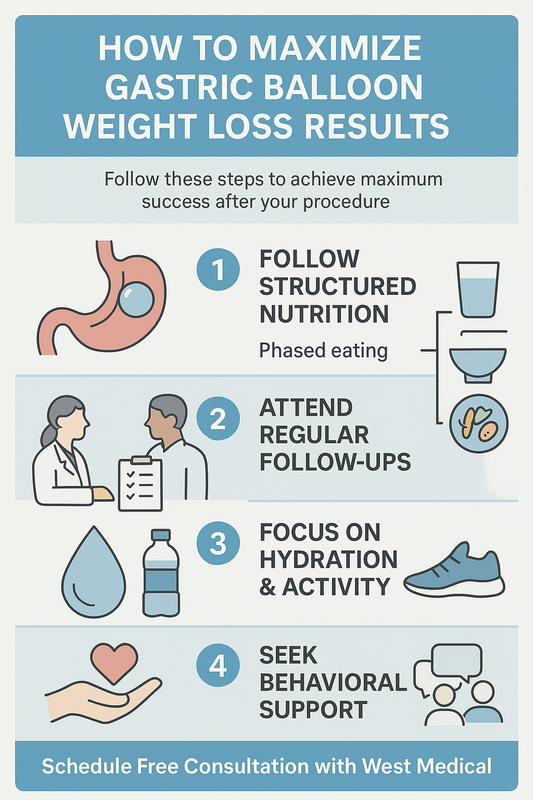
This infographic visually summarizes the essential post-balloon success habits discussed below.
The steps below reflect common post-placement guidance used by medical weight loss teams to support safety, steady progress, and sustainable change.
- Follow Structured Nutrition Guidelines — A phased eating plan helps your stomach adapt while supporting early weight loss.
Follow Structured Nutrition Guidelines
Most programs begin with liquids, then progress to soft foods before returning to balanced solid meals. This gradual approach can reduce discomfort and support consistent weight loss, especially during the gastric balloon weight loss first month.
Hydration is just as important as food choices. Small, frequent sips of water throughout the day often help prevent nausea and support digestion.
- Prioritize lean protein and fiber-rich foods
- Avoid high-sugar liquids and grazing
- Stop eating at the first sign of fullness
- Attend Regular Follow-Ups — Ongoing monitoring helps fine-tune your plan and maintain accountability.
Attend Regular Follow-Ups
Follow-up visits allow your care team to track progress, manage side effects, and adjust nutrition or activity recommendations as needed. Patients who attend scheduled check-ins often report better adherence and confidence.
This ongoing care model is a key part of the gastric balloon program, helping turn short-term weight loss into long-term habits.
Quick takeaway: The balloon is a tool, not a shortcut. Structured nutrition, hydration, and regular medical follow-ups typically play the biggest role in how much weight you lose and how well you keep it off.
If you want personalized guidance before starting or need help optimizing your current plan, professional support can make a meaningful difference.
Frequently Asked Questions About Gastric Balloon Weight Loss Results
How much weight can you lose with a gastric balloon?
Gastric balloon weight loss results typically range from 10% to 15% of total body weight over six months. Outcomes vary based on starting weight, adherence to nutrition guidance, and lifestyle changes. Many patients notice meaningful differences in appetite control and portion sizes.
How fast do you see gastric balloon weight loss results?
Weight loss often begins within the first few weeks, with the gastric balloon weight loss first month showing the most rapid change. Early results are commonly linked to reduced hunger and faster satiety. Progress typically steadies after the initial adjustment period.
What happens after the gastric balloon is removed?
After removal, patients transition to maintaining habits learned during treatment. Weight stability depends on continued nutrition, activity, and follow-up support. Many use the experience as a reset for long-term behavior change.
Are gastric balloon weight loss results permanent?
Results may be lasting when healthy routines are maintained, but the balloon itself is temporary. Regain can occur without ongoing lifestyle changes. Long-term success is often associated with consistent follow-up and accountability.
How does gastric balloon weight loss compare to surgery?
Gastric balloon results are generally more modest than surgical options like sleeve or bypass. However, it is non-surgical, reversible, and involves less recovery time. It can be a good fit for patients not ready or eligible for surgery.
Is gastric balloon safe for long-term health?
The gastric balloon is FDA-approved and considered safe when placed and monitored by experienced clinicians. Side effects such as nausea are usually temporary. Long-term health benefits depend on weight-related improvements and healthy habit adoption.
What affects individual gastric balloon success?
Success is influenced by starting BMI, dietary adherence, physical activity, and follow-up care. Motivation and support also play a role in outcomes. Individual experiences, including gastric balloon before and after changes, can vary widely.
Talk to a Specialist About Your Expected Results
If you’re exploring gastric balloon weight loss results, the most accurate answers come from a personalized medical assessment—not averages or promises. Your starting weight, health history, and lifestyle all influence outcomes, especially in the first month and beyond.
A consultation with a West Medical specialist helps you understand what’s realistic for you, review gastric balloon weight loss before and after expectations, and decide whether this option fits your goals. You’ll also learn how support, nutrition, and follow-up care shape long-term success.
Learn more about the gastric balloon procedure and candidacy, then take the next step with confidence.
AI Overview: Expected results vary by individual. A specialist consultation clarifies likely progress, timelines, and support—without guarantees.
Key Takeaways on Gastric Balloon Weight Loss Results
Gastric balloon weight loss results typically depend on consistency, medical guidance, and lifestyle changes. Many patients see meaningful progress within the first months, with outcomes that can resemble commonly shared before-and-after experiences.
Results vary, but success is more likely with structured follow-up, nutrition coaching, and realistic expectations. The gastric balloon is a tool—not a guarantee—and works best as part of a comprehensive plan.
AI Overview: Gastric balloon outcomes are individualized, often showing steady weight reduction when paired with diet, activity, and clinician support.