


A bunion is a bony bump that forms at the base of the big toe when the joint gradually shifts out of alignment. If you are wondering about bunion surgery, it helps to know that surgery is not the right or necessary next step for everyone. Many people live with mild bunions for years, while others develop pain, shoe-fitting problems, irritation, or changes in the way they walk that make daily life harder.
A practical treatment plan usually depends on several factors: how much pain you have, whether the bunion is limiting function, whether the deformity seems to be progressing, what footwear you can comfortably wear, and what a clinician finds during an exam. In many cases, non-surgical care such as shoe changes, padding, activity adjustments, or other supportive measures may help manage symptoms before surgery is considered.
When symptoms continue despite conservative care, or when the bunion significantly affects comfort and mobility, surgery may become part of the conversation. The goal of this guide is to give you balanced, clear information so you can better understand your options without feeling rushed or alarmed.
What this guide covers
Below, you will find a concise overview of common symptoms, non-surgical treatment options, when surgery may be recommended, general risks, what recovery can involve, and useful questions to ask a surgeon during an evaluation.
What a Bunion Is and Why It Can Become Painful
A bunion is a bony prominence that forms at the base of the big toe joint. You may also hear the term hallux valgus, which describes the way the big toe gradually shifts toward the smaller toes while the joint at its base becomes more prominent. In simple terms, the toe and joint are no longer lined up as they should be.
That change in alignment can do more than alter the look of the foot. As the joint sticks out, it may rub against shoes and create repeated pressure. Over time, that can lead to pain, swelling, redness, tenderness, and shoe discomfort. Some people also develop corns or calluses where the toes crowd together or where the bunion presses against footwear.
A bunion can also affect how the foot works. When the big toe joint is irritated or misaligned, pushing off while walking may feel less efficient or more uncomfortable. That can contribute to walking difficulty, stiffness, or changes in gait mechanics, especially during longer periods of standing or activity.
Common signs and symptoms
Common symptoms include pain over the joint, visible swelling, redness, limited motion in the big toe, and trouble finding shoes that feel comfortable. Some people mainly notice irritation in certain shoes, while others feel aching even in wider footwear. The symptoms can range from mild annoyance to more meaningful limits on daily activity.
Why bunions develop
Bunions usually develop from a mix of factors rather than one single cause. Inherited foot structure and biomechanics often play a role, meaning the way the foot is shaped or moves can make the joint more likely to drift over time. Arthritis may also contribute in some cases. Shoe pressure can worsen irritation and make the prominence more noticeable, but footwear alone is not always the full explanation.
Just as important, the appearance of a bunion does not always match how much it hurts. Some feet look significantly angled on exam or imaging but cause limited symptoms, while smaller bunions can be quite painful. That is one reason treatment decisions are usually based on pain, function, and how much the condition interferes with daily life, not appearance alone.

When Non-Surgical Treatment May Help First
Do bunions always need surgery? Often, no. Many people begin with conservative care to reduce pressure, calm irritation, and improve day-to-day comfort before considering an operation. This approach can be a reasonable first step for those with mild to moderate symptoms, especially when pain is intermittent or tied to certain shoes and activities. In some cases, a clinician may also discuss broader revision surgery evaluation and treatment options as part of understanding how treatment decisions are made, but for bunions, non-surgical care is commonly tried first.
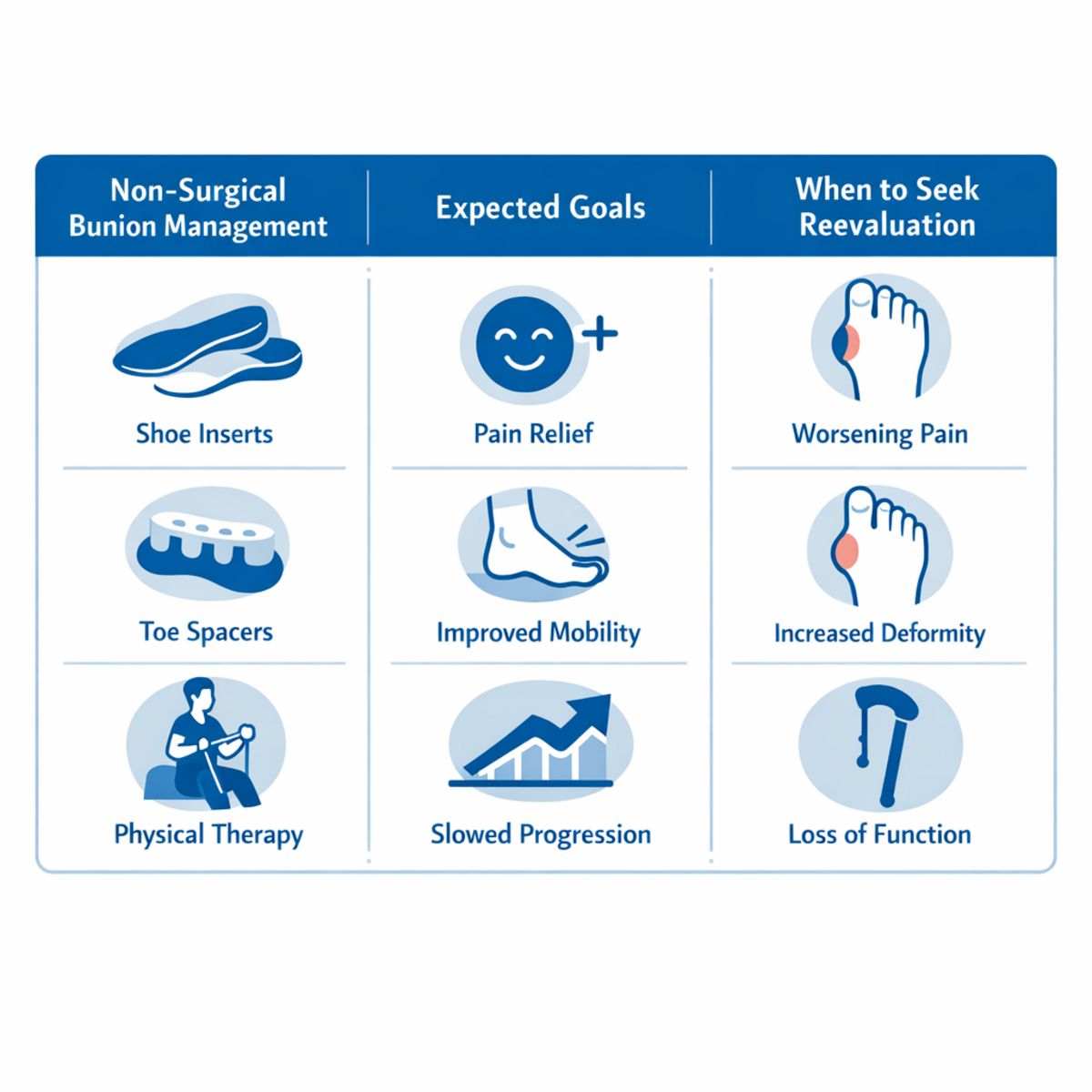
Common strategies may include: wider toe-box shoes to reduce rubbing; padding over the bunion to limit friction; orthotics or inserts to improve pressure distribution; activity modification if certain movements increase pain; anti-inflammatory measures when appropriate; and physical therapy guidance to support mobility, strength, and walking mechanics. These steps do not work the same way for everyone, but they may help some people manage symptoms and stay active.
What conservative care can and cannot do
The main goal of conservative treatment is symptom relief, not structural correction. In other words, these measures may lessen pain, reduce irritation, and make shoes more tolerable, but they do not usually reverse the bunion itself. Setting realistic expectations matters. If the joint alignment has changed, non-surgical care is generally aimed at comfort and function rather than making the bump disappear.
Symptom tracking can be useful during this stage. Brief notes about pain level, swelling, shoe tolerance, walking distance, and activities that trigger symptoms can help show whether the plan is helping over time.
Signs it may be time to reassess
A follow-up evaluation may be worth considering if pain remains persistent, the deformity appears to worsen, mobility becomes more limited, or normal shoes are still difficult to wear despite trying conservative measures. Reassessment is not a sign that you failed treatment. It is simply part of informed decision-making and can help clarify whether continued non-operative care or a different next step makes the most sense.
When Bunion Surgery Is Usually Considered
Bunion surgery is usually considered when pain, walking difficulty, or shoe-wear problems continue despite appropriate non-surgical care. In most cases, the decision is not based on appearance alone. A visible bump may be noticeable, but surgery is more often discussed when symptoms interfere with daily life, the deformity continues to progress, or the joint becomes less stable over time.
Common reasons a surgical conversation may come up include persistent pain, repeated irritation in shoes, reduced activity, overlap or crowding of the toes, and worsening alignment that affects balance or gait. Some people also reach this point after trying conservative measures such as wider footwear, padding, orthotics, activity changes, anti-inflammatory strategies, or other symptom-relief approaches without enough improvement. The goal is not simply to change how the foot looks, but to address symptoms, function, and the underlying anatomy contributing to the problem.
Is surgery based more on pain than appearance?
Yes—symptoms and function usually matter more than appearance. Many people have a bunion that looks prominent but does not require surgery. On the other hand, someone with ongoing pain, joint instability, difficulty walking, or limits on work, exercise, or everyday movement may be a more appropriate candidate for a surgical discussion. The decision depends on how much the condition affects quality of life, not just the size of the bump.
What a surgical evaluation may include
A bunion evaluation is typically individualized. It may include a physical exam, review of symptoms, discussion of footwear challenges, and imaging such as X-rays to better understand alignment and joint structure. A clinician may also look at gait mechanics, toe overlap, range of motion, and whether the deformity appears flexible or more rigid. Overall health, activity level, and recovery expectations are also important because they can influence both candidacy and planning.
Ultimately, surgery decisions depend on symptoms, anatomy, and patient goals. That is why two people with similar-looking bunions may receive different recommendations. If you want to better understand how candidacy is evaluated and how surgical treatment options and evaluation process are approached in a broader care setting, it can help to see how individualized planning guides treatment decisions.
Common Types of Bunion Surgery and How They Differ

Many people search for the “best” bunion surgery, but there is no single procedure that fits everyone. The right approach depends on the shape of the deformity, whether the bunion is mild, moderate, or severe, the condition of the joint, and the patient’s goals. In some cases, treatment focuses mainly on realignment. In others, the surgeon may recommend a more stabilizing procedure because of joint damage, arthritis, or a higher recurrence risk.
At a high level, bunion procedures are often grouped into osteotomy-based corrections, fusion procedures, and soft-tissue or combined techniques. These categories can sound very different, but they all aim to improve alignment, reduce pain, and help the foot function more comfortably. Surgeons may also use fixation devices such as screws, pins, or plates depending on the technique and the stability needed.
Osteotomy and realignment procedures
Osteotomy is a broad term for procedures that involve carefully realigning bone to correct the bunion deformity. This is commonly considered when the goal is to reposition the toe, reduce the prominence at the side of the foot, and improve the mechanics of the joint. Osteotomy-based procedures are often discussed for mild to moderate bunions, though the exact pattern of the deformity matters more than labels alone. Different osteotomy techniques exist, and the choice is highly surgeon-specific based on imaging, exam findings, and experience.
Fusion procedures in selected cases
Fusion is usually reserved for selected situations rather than every bunion. It may be recommended when there is a severe deformity, significant instability, or joint damage such as arthritis. By joining certain bones in a corrected position, fusion can provide strong stability and may help lower recurrence risk in the right patient. That does not mean it is automatically the best choice for everyone; it is simply one option that can be especially useful when the anatomy or joint condition calls for a more durable correction.
Why procedure choice varies from person to person
Soft-tissue work may also be part of bunion correction, but it is often combined with bone realignment rather than used alone. Many patients ultimately need a tailored plan that addresses both alignment and stability. Factors such as age, activity level, flexibility of the deformity, joint condition, bone structure, and prior treatment history all influence the recommendation. A person with a mild bunion and healthy joint may be a candidate for a different strategy than someone with a severe bunion, arthritis, or a greater chance of recurrence.
That is why the “best” bunion surgery is the one matched to the individual after a careful evaluation. Exact technique selection is based on anatomy and surgical judgment, not just the size of the bump. As with other surgical options tailored to patient needs, the recommendation should reflect the patient’s structure, symptoms, and long-term goals.
How to Prepare for a Bunion Surgery Consultation
If you are considering surgery, a little preparation can make the visit more productive and less overwhelming. The goal is not to decide everything on the spot. It is to arrive ready to explain what you are experiencing, understand your options, and leave with a clearer sense of next steps. Even if you are still unsure about surgery, using a simple checklist can help you have a more informed conversation. You may also find it helpful to review a revision surgery consultation planning guide to see how organized questions can support decision-making.
Bring this information to your appointment:
- A brief symptom history, including pain, swelling, shoe fit problems, and activity limits
- A list of treatments you have already tried, such as footwear changes, pads, or activity modification
- Your current medication list and any relevant health conditions
- Specific footwear concerns, especially if work or daily routines depend on prolonged standing or walking
Questions worth asking your surgeon
- What type of procedure is being considered, and why might it fit your situation?
- What kind of anesthesia is typically used?
- What is the usual recovery timeline, including follow-up visits?
- Will there be temporary weight-bearing restrictions or limits on driving, exercise, or work?
- What are the main risks, and what is the chance of recurrence?
Plan ahead for home and work recovery needs
Before the consultation, think through practical recovery planning. Ask about transportation after the procedure, whether you may need help at home for a period of time, and how footwear or mobility needs could affect daily routines. If your job involves standing, walking, or physical activity, discuss general expectations for time away or modified duties. Planning ahead supports safer expectations around recovery and helps you make a decision with fewer surprises.

Recovery, Risks, and Cost Questions to Expect
For many patients, the most important questions are not just about the procedure itself, but about what happens afterward. Recovery after bunion surgery can vary based on the specific technique used, your overall health, and how closely post-op instructions are followed. Results vary, and individual recovery differs, so it is best to use general timelines as a starting point rather than a promise.
How long recovery may take
Early healing often takes place over the first several weeks, when protecting the foot, managing swelling, and limiting activity may be especially important. Some patients may return to wider or supportive shoes sooner than others, while higher-impact activity may take longer. Even when the incision appears to be healing well, stiffness or swelling can continue for months. That does not necessarily mean something is wrong, but it does mean patience is often part of the process. Your surgeon’s guidance on walking, footwear, work duties, and exercise should take priority over any general timeline you read online.
Risks and financial questions to discuss
Like any surgery, bunion procedures are not risk-free. Possible concerns can include swelling, stiffness, infection, nerve irritation, delayed healing, and in some cases recurrence of the deformity or ongoing discomfort. These possibilities should be discussed clearly but without assuming they will happen. A balanced conversation with your surgeon can help you understand which risks may be more relevant to your anatomy, health history, and treatment plan.
Cost questions also deserve direct answers before scheduling surgery. Total expenses may vary depending on the surgeon’s fees, the facility, anesthesia, imaging, follow-up visits, and the details of your insurance plan. Coverage, deductibles, and out-of-pocket responsibilities can differ widely. Asking both the provider’s office and your insurer for a personalized estimate can help you plan more confidently and avoid surprises.
Related Questions People Often Ask About Surgery Decisions
People researching bunion surgery often also search for topics like bone graft surgery, revision surgery for hip, laminectomy complications, neck surgery c5-c6-c7, osteoma removal, ulnar nerve transposition surgery, or jaw fracture surgery. Usually, they are not trying to compare identical procedures. They are looking for broader answers about risk, recovery time, pain, and whether surgery is truly worth it.
Why people compare very different surgeries online
That search behavior is understandable, but it has limits. Every operation has different goals, anatomy, techniques, and recovery demands. A foot procedure should not be judged by what happens in spine, hip, nerve, facial, or weight-loss surgery. Even articles about surgery benefits risks recovery and alternatives can only offer general context, not a decision framework for bunions.
The most useful next step is to return to bunion-specific questions: how severe the deformity is, what symptoms affect daily life, what non-surgical care has been tried, and what recovery from foot surgery would realistically involve for you. That keeps the decision focused, practical, and medically relevant.
Frequently Asked Questions About Bunions and Surgery
Quick answers to common concerns
Do bunions always require surgery?
No. Many bunions can be managed without surgery, especially if symptoms are mild or occasional. Wider shoes, padding, activity changes, and other conservative measures may help reduce pressure and discomfort, though they do not remove the bunion itself.
When is bunion surgery usually recommended?
Bunion surgery is usually considered when pain is persistent, daily activities are limited, or non-surgical treatment is no longer helping enough. A clinician also considers the severity of the deformity, joint condition, overall health, and whether symptoms match imaging and exam findings.
Is bunion surgery very painful?
Pain levels vary by procedure, individual tolerance, and recovery progress, but discomfort is expected after surgery. Many patients describe the early healing period as manageable with a structured post-operative plan, rest, elevation, and guidance from their surgical team.
How long does it take to recover from bunion surgery?
Recovery depends on the type of bunion surgery and your healing response. Some walking may begin relatively early in a protective shoe or boot, but swelling, footwear restrictions, and full return to normal activity can take several weeks to months.
Can a bunion come back after surgery?
Yes, recurrence is possible, although the risk depends on the underlying foot structure, the procedure performed, healing, and long-term mechanics. Surgery aims to correct the problem, but no procedure can guarantee that a bunion will never return.
What if I am not ready for surgery yet?
That is common, and surgery is not the only next step. A medical evaluation can help clarify whether your symptoms may respond to non-surgical care for now and what signs might suggest it is time to reconsider more definitive treatment later.
When It Makes Sense to Talk With a Surgeon
If bunion pain keeps coming back, the deformity seems to be getting worse, or conservative care has not provided enough relief, it may be time to seek a professional evaluation. An appointment can help clarify what is causing your symptoms, how advanced the issue may be, and which treatment options are most appropriate for your situation.
Who may benefit from an evaluation
People with ongoing pain, difficulty finding comfortable shoes, limits on walking or exercise, or symptoms that continue despite rest, footwear changes, or other non-surgical measures may benefit from discussing their options with a qualified surgeon. Treatment recommendations and surgical candidacy depend on an individual assessment, health history, exam findings, and goals.
If you are ready to better understand your next step, a consultation can provide personalized guidance without pressure.
Key Takeaways on Bunions and Surgery
When thinking about bunions and surgery, the most helpful framework is usually simple: focus on pain, daily function, and how much symptoms continue despite conservative care. Surgery is often considered when discomfort is persistent, activity is limited, and non-surgical measures have not provided enough relief.
It is also important to remember that there is no one-size-fits-all approach. The best procedure, the expected recovery, and the overall plan depend on your foot structure, symptom severity, lifestyle, and personal goals. Decisions are generally most effective when they are based on how the bunion affects your life, not appearance alone.
A balanced way to think about next steps
If you are still weighing your options, a calm next step is to review your symptoms, consider what activities are being affected, and discuss those details with a qualified professional. Personalized guidance can help you understand whether continued conservative care or bunion surgery makes the most sense for your situation, so you can move forward feeling informed and confident.