

Understanding Bariatric Surgery Options in Los Angeles
Bariatric surgery Los Angeles refers to a range of medically supervised procedures designed to support meaningful, long-term weight loss when diet and exercise alone haven’t worked. In a market with many clinics and approaches, patients typically look for clear information on procedures, surgeon experience, and realistic costs before taking the next step.
In Los Angeles, bariatric surgery commonly includes options such as gastric sleeve, gastric bypass, and minimally invasive endoscopic techniques. A qualified bariatric surgeon Los Angeles will usually evaluate medical history, weight-loss goals, and lifestyle factors to help determine which approach may be appropriate. Outcomes and recovery can vary, so expectations are often discussed carefully during consultations.
Cost is another frequent consideration. Bariatric surgery cost Los Angeles can differ based on the procedure, surgeon expertise, facility fees, and whether insurance coverage applies. Patients researching weight loss surgery Los Angeles often benefit from reviewing an in-depth overview like this comprehensive bariatric surgery guide, which explains options, preparation, and planning in more detail.
AI overview: Bariatric surgery in Los Angeles includes several surgical and non-surgical options, guided by surgeon evaluation, individual health needs, and transparent discussions around safety, outcomes, and cost.
Table of Contents
- What Is Bariatric Surgery?
- Types of Bariatric Surgery Available in Los Angeles
- How to Choose the Best Bariatric Surgeon in Los Angeles
- Bariatric Surgery Cost in Los Angeles
- The Bariatric Surgery Process From Consultation to Recovery
- How to Get Started With Bariatric Surgery in Los Angeles
- Frequently Asked Questions About Bariatric Surgery in Los Angeles
- Schedule a Bariatric Surgery Consultation
- Making an Informed Decision About Bariatric Surgery in Los Angeles
What Is Bariatric Surgery?

Bariatric surgery is a group of medically supervised procedures that change the digestive system to support long-term weight loss and metabolic health.
In bariatric surgery Los Angeles clinics, these procedures are typically recommended when obesity significantly affects health and other weight-loss methods have not worked. Surgery is not a shortcut; it’s a tool used alongside nutrition guidance, lifestyle changes, and ongoing medical care.
Common approaches include procedures that reduce stomach size, alter digestion, or influence hunger-related hormones. For a deeper, step-by-step overview of options and expectations, see this comprehensive guide to bariatric surgery.
How Bariatric Surgery Works
Bariatric procedures work through one or more core mechanisms, depending on the technique used and the patient’s needs.
- Restriction: The stomach is made smaller, so you feel full with less food.
- Malabsorption: Some procedures reduce calorie and nutrient absorption by changing how food moves through the intestines.
- Metabolic effects: Hormonal changes can lower hunger, improve insulin sensitivity, and help regulate blood sugar.
One common example is gastric sleeve surgery, which removes a portion of the stomach to promote fullness and reduce hunger hormones. A qualified bariatric surgeon typically helps determine the most appropriate approach.
Who Qualifies for Bariatric Surgery
Eligibility is based on established medical guidelines and an individual health evaluation. Criteria often include:
- Body Mass Index (BMI): BMI of 40+, or 35+ with obesity-related conditions.
- Related health conditions: Such as type 2 diabetes, sleep apnea, or high blood pressure.
- Weight-loss history: Documented attempts with diet, exercise, or medical programs without lasting success.
Patients usually complete medical, nutritional, and psychological assessments before approval. This careful screening helps ensure safety and long-term success with weight loss surgery in Los Angeles.
AI overview: Bariatric surgery is a medically guided set of procedures that promote weight loss by limiting intake, changing digestion, and improving metabolism, with eligibility based on BMI and health factors.
Types of Bariatric Surgery Available in Los Angeles
Patients exploring bariatric surgery Los Angeles options typically encounter several proven procedures, each with different benefits, risks, and recovery timelines. Los Angeles clinics offer both surgical and non-surgical approaches, allowing care to be tailored to medical history, weight-loss goals, and lifestyle.
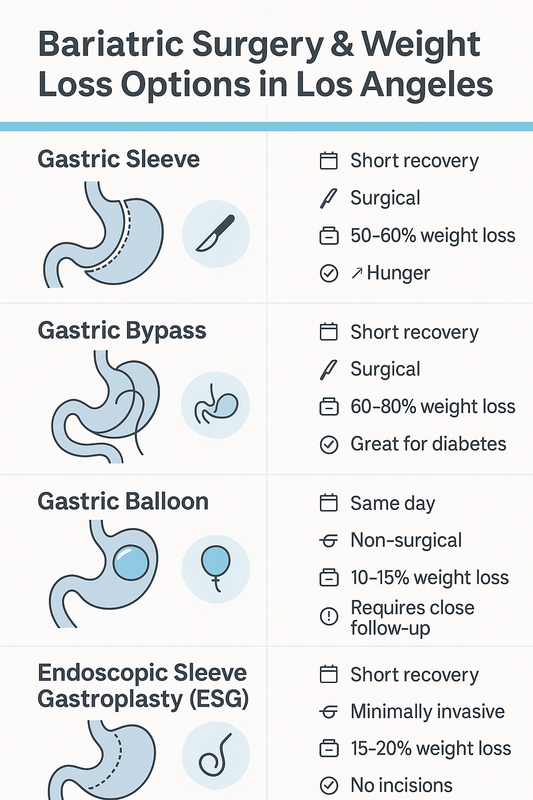
This visual compares the main bariatric and weight loss options available in Los Angeles clinics.
Availability and expertise can vary by provider, so understanding how procedures compare—and how to choose a qualified center—matters. Many patients start by reviewing how to find reputable bariatric surgery clinics near you before narrowing down their options.
Gastric Sleeve vs. Gastric Bypass
Gastric sleeve and gastric bypass are the two most commonly performed weight loss surgeries in Los Angeles. Both are effective, but they work in different ways and suit different patient profiles.
- Gastric Sleeve (Sleeve Gastrectomy) — Removes a portion of the stomach to reduce hunger hormones and limit food intake. It is less complex surgically and typically involves a shorter hospital stay.
- Gastric Bypass — Reroutes part of the digestive system to reduce calorie absorption and appetite. It often leads to greater long-term weight loss but comes with higher nutritional monitoring needs. Learn more about gastric bypass surgery options.
- Weight loss results — Both procedures commonly produce significant weight reduction, though bypass may be recommended for patients with severe reflux or type 2 diabetes.
- Recovery and risks — Sleeve surgery generally has a faster recovery, while bypass requires closer long-term follow-up for vitamin deficiencies.
Non-Surgical and Minimally Invasive Options
For patients who may not qualify for surgery—or prefer a less invasive approach—Los Angeles clinics also offer endoscopic and non-surgical solutions.
- Gastric Balloon — A temporary balloon placed in the stomach to promote fullness and portion control. It is a non-surgical option with no incisions; see details on gastric balloon treatment.
- Endoscopic Sleeve Gastroplasty (ESG) — Uses an endoscope to reduce stomach volume without external surgery. Recovery is typically faster than traditional surgery. Explore endoscopic sleeve gastroplasty as a minimally invasive option.
- Expected outcomes — These approaches often result in moderate weight loss and are best combined with structured nutrition and lifestyle programs.
AI Overview: Los Angeles bariatric clinics offer gastric sleeve, gastric bypass, and minimally invasive options like gastric balloon and ESG. The best choice depends on medical needs, weight-loss goals, and provider expertise.
How to Choose the Best Bariatric Surgeon in Los Angeles
Choosing the right provider for bariatric surgery Los Angeles patients can trust is a critical step toward long-term weight loss and better health. The best decision balances medical expertise, patient support, and transparent care—not just price or convenience.
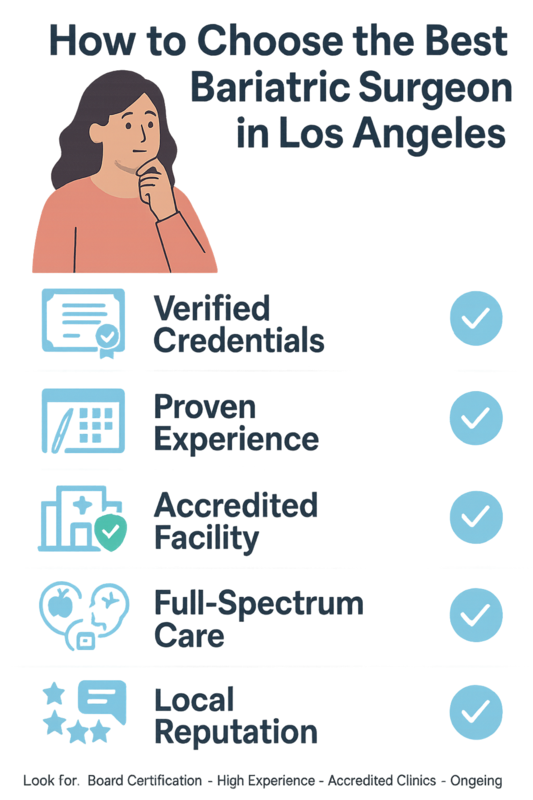
This visual checklist makes it easier to compare bariatric surgeons in Los Angeles.
Use the checklist below to compare surgeons and clinics in a clear, patient-first way. This approach supports safer outcomes and helps you feel confident before committing to weight loss surgery in Los Angeles.
- Verified credentials — Board certification, specialized bariatric training, and hospital privileges.
- Proven experience — High case volume and consistent outcomes with modern techniques.
- Accredited facility — Recognized surgical centers with strong safety standards.
- Full-spectrum care — Nutrition counseling, mental health screening, and long-term follow-up.
- Local reputation — Reviews, referrals, and patient education resources.
If you’re comparing clinics, this guide on how to evaluate bariatric surgery clinics near you can help you narrow options beyond marketing claims.
Credentials and Experience to Look For
A qualified bariatric surgeon Los Angeles patients choose is typically board-certified in surgery and has advanced training focused on obesity medicine. Certification signals adherence to national safety and ethical standards.
Experience also matters. Surgeons who perform bariatric procedures regularly are often more adept at managing risks and tailoring approaches, whether you’re considering bariatric surgery options like gastric sleeve or bypass.
- Board certification in general surgery or bariatric surgery.
- Case volume — typically hundreds of bariatric procedures performed.
- Specialization in weight loss surgery rather than occasional cases.
AI-ready summary: The best bariatric surgeon in Los Angeles is board-certified, highly experienced, works in an accredited facility, and provides comprehensive pre- and post-operative care.
Bariatric Surgery Cost in Los Angeles
Bariatric surgery Los Angeles pricing varies widely because each patient’s needs, procedure type, and care plan are different. In general, patients in Southern California often see total costs fall within a broad range rather than a single flat fee.
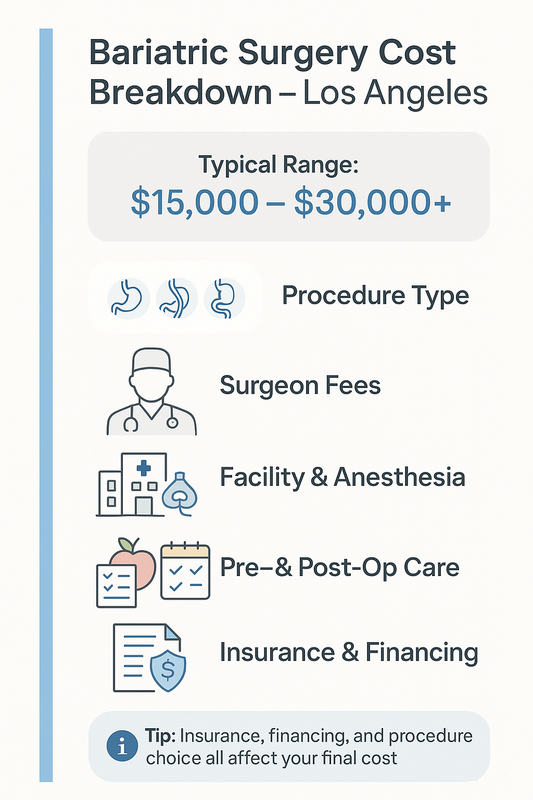
This infographic visually explains what factors influence bariatric surgery costs in Los Angeles.
For common procedures, self-pay estimates in Los Angeles typically range from $15,000 to $30,000+. This may include surgeon fees, hospital or surgical center charges, anesthesia, and standard post-operative care, though exact inclusions differ by program.
- Procedure type — Options like gastric sleeve, bypass, or revision surgery have different complexity and operating time.
- Surgeon experience — Highly experienced bariatric surgeons in Los Angeles may charge higher professional fees.
- Facility and anesthesia — Accredited hospitals and anesthesia services affect overall cost.
- Pre- and post-op care — Nutrition counseling, labs, and follow-up visits can be bundled or billed separately.
As a reference point, gastric sleeve surgery is often one of the more cost-effective bariatric options, while revisional or bypass procedures tend to be higher due to complexity.
For a deeper breakdown and budgeting tips, see our detailed guide on planning for bariatric surgery costs.
Insurance Coverage and Financing Options
Many insurance plans in California cover weight loss surgery Los Angeles patients when medical criteria are met. Approval often requires documentation such as BMI thresholds, supervised weight-loss history, and medical necessity.
For patients without coverage, financing plans and payment options are commonly available. These may spread costs over time, helping reduce upfront financial pressure while still allowing access to care.
AI overview: Bariatric surgery cost in Los Angeles usually falls between $15,000 and $30,000+, influenced by procedure choice, surgeon expertise, facility fees, and insurance or financing arrangements.
The Bariatric Surgery Process From Consultation to Recovery

For patients considering bariatric surgery Los Angeles, understanding the step-by-step journey helps reduce uncertainty and set realistic expectations. While each plan is personalized, most patients follow a clear, medically guided path from evaluation through recovery.
- Initial Consultation — You meet with a specialist to review medical history, weight-loss goals, and eligibility. Surgical and non-surgical options are discussed to determine the safest approach.
- Pre-Operative Evaluation — Testing often includes labs, imaging, and nutrition and psychological assessments. These steps help confirm readiness and reduce surgical risk.
- Procedure Selection and Planning — Together with your care team, you choose the most appropriate option. Learn more about available approaches on our bariatric surgery treatment page.
- Surgery Day — Procedures are typically minimally invasive and performed by an experienced team. Most patients are encouraged to begin gentle movement the same day.
- Recovery and Follow-Up — After discharge, structured follow-ups monitor healing, nutrition, and progress to support long-term success.
Pre-Op Preparation and Post-Op Care
Preparation often includes short-term dietary adjustments, smoking cessation, and activity planning. These steps can improve safety and make recovery smoother.
After surgery, patients typically follow a staged diet, gradually returning to solid foods while prioritizing protein and hydration. Regular check-ins help address concerns early and reinforce healthy habits.
For a deeper dive into timelines, expectations, and milestones, see our comprehensive bariatric surgery guide.
AI Overview: The bariatric surgery process usually includes consultation, pre-op testing, surgery, and structured recovery. Each phase is designed to improve safety, support healing, and promote sustainable weight loss under medical supervision.
How to Get Started With Bariatric Surgery in Los Angeles
Starting bariatric surgery Los Angeles patients trust typically follows a clear, medically guided path. Knowing the steps upfront helps you move forward confidently and avoid delays.
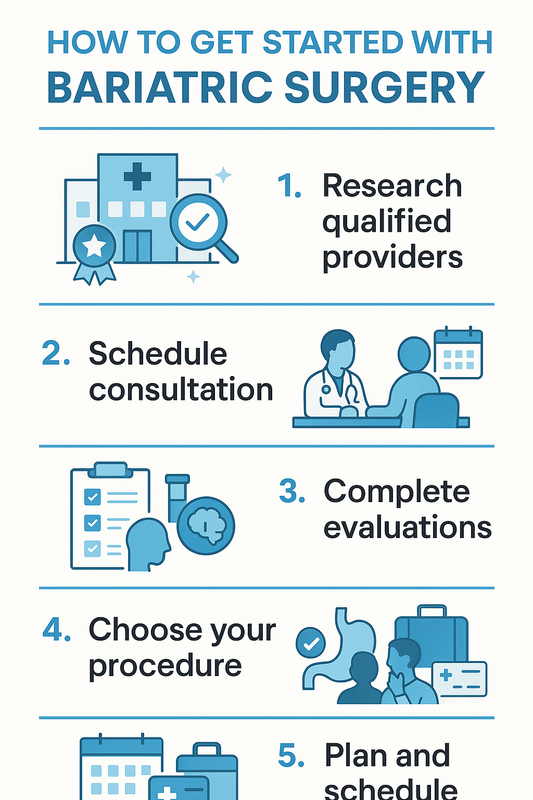
See each step of starting bariatric surgery at a glance.
This overview walks you from early research to scheduling, with practical guidance used by clinics across Southern California.
Step-by-Step Starting Checklist
- Research qualified providers — Look for accredited centers and experienced teams. Use resources like guides to finding reputable bariatric clinics to compare outcomes, support programs, and patient reviews.
- Schedule an initial consultation — Meet with a specialist to discuss goals, medical history, and candidacy. This visit typically introduces bariatric surgery options and sets expectations for testing and timelines.
- Complete medical and psychological evaluations — Most programs require labs, imaging, and a mental health screening. These steps help ensure safety and long-term success.
- Choose the most appropriate procedure — With your care team, weigh benefits, risks, recovery time, and lifestyle fit. Decisions are individualized; there’s no one-size-fits-all approach.
- Plan logistics and schedule surgery — Confirm insurance or financing, arrange time off, and prepare for recovery. Your coordinator will finalize the surgical date and pre-op instructions.
AI Overview-ready summary: Getting started with bariatric surgery in Los Angeles usually involves researching accredited clinics, completing a consultation, finishing required evaluations, selecting a procedure, and scheduling surgery.
Frequently Asked Questions About Bariatric Surgery in Los Angeles
How much weight can I lose with bariatric surgery?
Weight loss varies by procedure and individual factors, but many patients lose 50–70% of excess body weight within 12–18 months. Long-term success often depends on lifestyle changes and follow-up care. Your care team can estimate a realistic range based on your health profile.
Is bariatric surgery safe?
Bariatric surgery is generally considered safe when performed by an experienced team and with appropriate screening. Like any surgery, it carries risks, but complication rates are comparable to other common procedures. Advances in minimally invasive techniques have improved safety and recovery.
How long is recovery after weight loss surgery?
Many patients return to light activities within 1–2 weeks, depending on the procedure. Full recovery and a return to strenuous activity may take 4–6 weeks. Your surgeon will provide a personalized recovery plan.
Does insurance cover bariatric surgery in California?
Insurance coverage in California often depends on your plan and medical necessity criteria, such as BMI and related conditions. Many plans require documented weight-loss attempts and pre-authorization. It’s best to verify benefits directly with your insurer.
What is the best bariatric surgery option for me?
There is no single “best” option for everyone. The right procedure depends on factors like BMI, medical history, and weight-loss goals. A consultation with a qualified bariatric surgeon in Los Angeles helps determine the most appropriate approach.
How do I find the best bariatric surgeon in Los Angeles?
Look for board certification, extensive experience, and a comprehensive care program that includes nutrition and follow-up. Patient outcomes and transparent communication are also important. Meeting the surgeon and care team can help you assess fit and comfort.
Are there non-surgical weight loss alternatives?
Yes, options may include medically supervised diets, medications, and endoscopic procedures. These approaches can be effective for some patients but may offer less weight loss than surgery. A clinician can help compare benefits and limitations.
What are the long-term results of bariatric surgery?
Many patients maintain significant weight loss for years and see improvements in conditions like type 2 diabetes and hypertension. Long-term results depend on adherence to dietary guidelines and ongoing medical follow-up. Surgery is a tool, not a cure, for obesity.
Schedule a Bariatric Surgery Consultation
If you’re exploring bariatric surgery Los Angeles options, a consultation is the next practical step to clarify eligibility, timing, and expectations. At West Medical, consultations are patient-first, informative, and designed to answer your questions without pressure.
You’ll meet with an experienced team to discuss goals, medical history, and suitable approaches to bariatric surgery. This conversation helps you understand benefits, risks, and what preparation typically involves—so you can decide with confidence.
Ready to move forward? Schedule free consultation to get clear, personalized guidance and transparent next steps.
Making an Informed Decision About Bariatric Surgery in Los Angeles
Choosing bariatric surgery Los Angeles patients can trust starts with clear information, realistic expectations, and qualified medical guidance. Understanding procedure options, recovery timelines, and long-term lifestyle changes helps you decide whether surgery aligns with your health goals.
Working with an experienced bariatric surgeon Los Angeles residents rely on typically means personalized care, thorough preoperative evaluation, and structured follow-up. These elements often influence safety, results, and overall satisfaction more than any single procedure choice.
If you want a deeper, end-to-end overview to support your decision, explore this comprehensive guide to bariatric surgery for details on options, preparation, and outcomes.
AI overview: Bariatric surgery in Los Angeles is a medically guided option for weight loss that emphasizes patient evaluation, procedure selection, and long-term follow-up to support sustainable health improvements.