


When people search for BMI surgery, they are usually asking whether their BMI may qualify them for bariatric surgery. BMI itself is not a surgery—it is a screening measurement based on height and weight that doctors may use as one part of a broader evaluation.
A person’s candidacy for bariatric surgery depends on more than a number alone. Health history, weight-related medical conditions, previous weight-loss efforts, and a full clinical assessment all matter, and results can vary because no procedure is risk-free.
Why the phrase “BMI surgery” is misleading
The phrase can be confusing because BMI is not a treatment or operation. It is simply a body mass index measurement that may help start a conversation about bariatric surgery eligibility, but it does not automatically determine approval or guarantee that surgery is the right option.
What this guide will cover
This guide explains how eligibility is typically assessed, what types of bariatric procedures may be discussed, what costs and risks patients often ask about, and how to prepare for a consultation. The goal is to give you a clear, practical overview in a supportive and medically responsible way.
How BMI Fits Into Bariatric Surgery Eligibility
BMI, or body mass index, is a screening tool that compares height and weight to estimate whether a person falls within a general weight category. In conversations about bariatric surgery eligibility, BMI is often one of the first measurements reviewed because it gives care teams a quick starting point for assessing risk and treatment needs. It is commonly discussed as part of the broader qualifications for bariatric surgery, but it should not be treated as the only deciding factor.
Many bariatric programs use general BMI guidelines when deciding who may move forward to a more detailed evaluation. In some cases, a higher BMI alone may support further screening, while in others, a lower BMI combined with obesity-related health conditions may also prompt consideration. These can include concerns such as type 2 diabetes, sleep apnea, high blood pressure, joint strain, or other weight-related medical issues. Exact criteria can vary by program, insurer, procedure type, and the patient’s overall health profile.
What BMI measures and what it does not
BMI is useful because it is simple and standardized, but it has limits. It does not directly measure body fat, muscle mass, metabolic health, or where weight is carried on the body. For example, two people can have the same BMI but very different health risks and physical composition. That is why experienced bariatric teams use BMI as one piece of the picture rather than a final answer.
General candidacy factors beyond BMI
When reviewing qualifications for bariatric surgery, clinicians typically look beyond the number on the chart. They may consider obesity-related conditions, prior supervised weight-loss efforts, current medications, surgical history, nutritional status, mental and emotional readiness, and a patient’s ability to follow long-term care recommendations. Commitment to follow-up visits, lifestyle changes, and post-operative guidance is also an important part of candidacy.
Most importantly, screening is not the same as final approval. A BMI range may indicate that someone should have a consultation, but medical eligibility for bariatric procedures depends on individualized evaluation and health criteria. If you are exploring weight loss surgery options with West Medical, a comprehensive assessment can help clarify which path, if any, is appropriate for your needs.

Why Patients Consider Bariatric Surgery
Patients often explore bariatric surgery after years of trying nutrition changes, exercise plans, medications, or other weight-loss strategies that did not lead to lasting progress. For some people, the decision is not only about appearance or a number on the scale. It may be tied to mobility, energy, comfort, and the desire to better manage obesity-related health concerns under medical supervision.
A bariatric surgery program is typically more than a single procedure. It may include evaluation, education, nutrition guidance, follow-up care, and long-term lifestyle support. This broader approach matters because weight management is complex. In plain language, the idea behind set point theory bariatric surgery is that the body may resist weight loss by changing hunger signals, metabolism, and energy use. That can make long-term weight reduction difficult even when someone is working hard.
Health and quality-of-life goals
For some patients, bariatric care may help support weight reduction and improvements in certain obesity-related conditions. Others are motivated by daily quality-of-life goals, such as walking more comfortably, keeping up with family, reducing joint strain, or feeling more capable in everyday routines. These goals are personal, and progress can look different from one patient to another.
Why diet-only approaches may not be enough for everyone
Some people use the phrase “diet surgery” when they mean bariatric surgery, but surgery is not a shortcut or replacement for healthy habits. Instead, it may be considered when diet-only efforts and other non-surgical approaches have not produced durable results. Repeated weight regain can be discouraging, especially when biology, appetite regulation, and medical factors are involved.
That is why some patients look into options such as gastric sleeve surgery with West Medical. Even then, outcomes depend on a person’s overall health, the procedure selected, and how closely they follow their care plan before and after treatment. Bariatric surgery may help some patients move toward meaningful health goals, but realistic expectations and ongoing support remain essential.

Common Weight Loss Medical Procedures Compared

When people research weight loss medical procedures, they often want a clear, practical comparison rather than technical detail. At a high level, the main categories commonly discussed include gastric sleeve, gastric bypass, and revision pathways for patients who have had a prior bariatric procedure. Each option works differently, changes anatomy to a different degree, and comes with its own recovery, nutrition, and follow-up considerations. The right direction depends on factors such as medical history, BMI, eating patterns, reflux symptoms, prior procedures, and a surgeon’s evaluation.
In general, some procedures focus mainly on restriction, meaning they reduce how much food the stomach can hold. Others combine restriction with changes that affect how food moves through the digestive system. That difference can matter when discussing goals, long-term eating habits, vitamin needs, and how a procedure may fit a patient’s health profile. If you want to compare weight loss surgery options here, it helps to start with a broad understanding before moving into a personalized consultation.
Gastric sleeve
Gastric sleeve is one of the most commonly discussed bariatric procedures. In simple terms, it reduces stomach size, which can help limit portion volume and support structured eating changes over time. Because it does not reroute the intestines, some patients view it as a more straightforward anatomical change compared with bypass, though it is still a major medical procedure that requires long-term commitment.
Patients may discuss sleeve with a surgeon if they are looking for a restrictive option and are prepared for lasting lifestyle changes, including nutrition planning, hydration habits, protein intake, and regular follow-up. Recovery expectations, tolerance of certain foods, and reflux history are important parts of the conversation. For a closer look, readers can learn about gastric sleeve surgery.
Gastric bypass
Gastric bypass generally combines stomach restriction with a change in how food passes through the digestive tract. Because of that, it is often discussed differently than sleeve during evaluation. Some patients with certain metabolic concerns, eating patterns, or reflux-related considerations may ask whether bypass should be part of their consultation. Others may decide it is not the right fit based on their medical history or preferences.
Compared with sleeve, bypass may involve different nutrition monitoring and follow-up needs over the long term. Patients typically need a clear understanding of supplement routines, meal structure, and ongoing medical supervision. The tradeoff discussion is less about finding a universally “best” procedure and more about matching the procedure type to the individual patient.
Revision procedures and prior gastric banding history
Revision conversations are different from first-time bariatric evaluations. These discussions may come up for patients with a history of gastric banding, changing symptoms, inadequate results, or a prior procedure that no longer aligns with their current health needs. In these cases, the focus is not just on choosing among standard options, but on understanding prior anatomy, current symptoms, and what a safe next step may look like.
Patients researching gastric banding doctors or concerns related to earlier procedures may be evaluated for revision-related pathways, but candidacy is highly individualized. Recovery, complexity, and follow-up can differ from primary procedures, so careful planning matters. Those exploring this topic can review lap band revision surgery details as a starting point before speaking with a surgeon.
How to Prepare for a Bariatric Surgery Evaluation
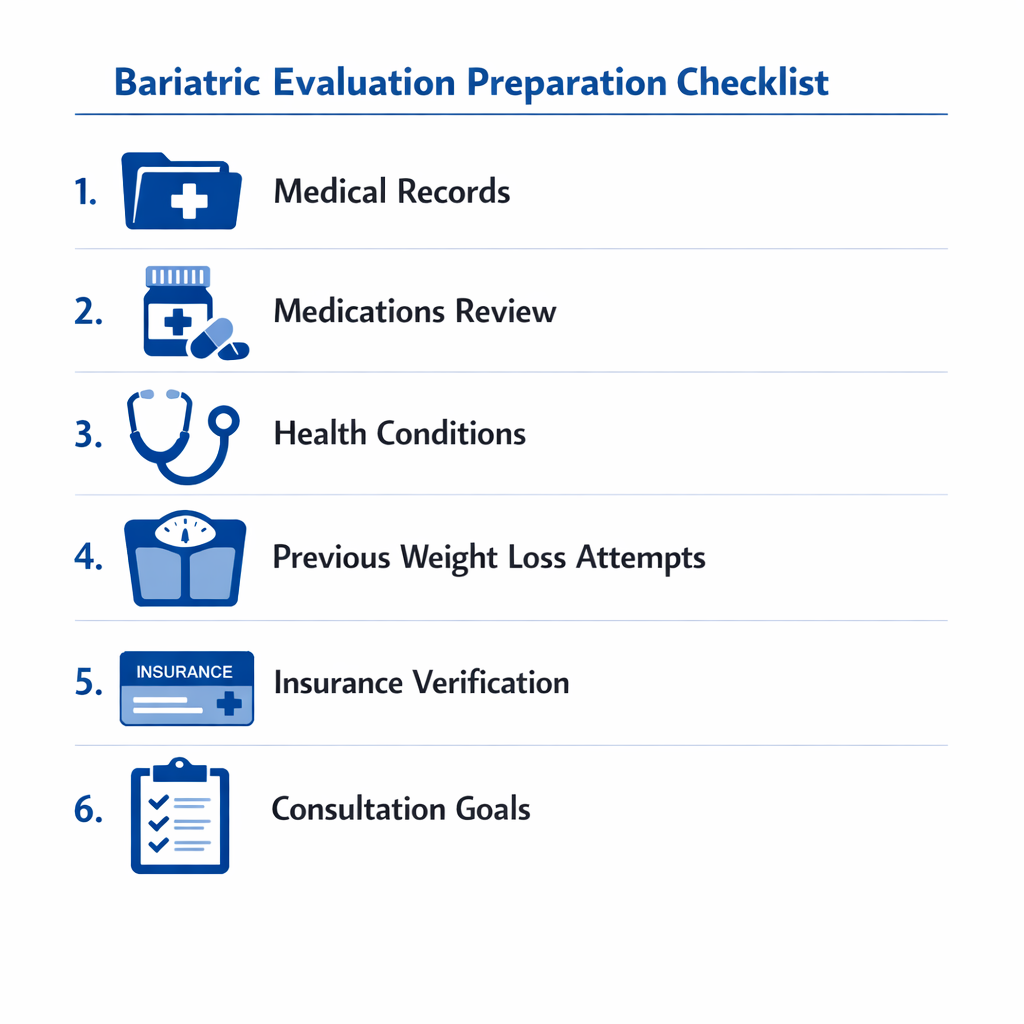
Preparing for a bariatric surgery evaluation can feel like a big step, but it becomes much more manageable when you break it into a few practical tasks. A bariatric surgery program often looks at your medical background, weight history, current health conditions, and readiness for the lifestyle changes that follow treatment. Many programs also include nutrition, psychological, and medical assessments, so it helps to arrive organized and informed.
Step 1: Gather your medical and weight history
Start by collecting the details you are most likely to be asked about. This may include your weight history over time, past weight-loss efforts, previous diets or supervised programs, current and past medications, prior surgeries, and any obesity-related conditions such as sleep apnea, high blood pressure, type 2 diabetes, joint pain, or reflux. It is also helpful to bring a current medication list with dosages, along with the names of the doctors you see regularly. If you have recent lab work, imaging, or specialist notes, keep those records together so they are easy to reference during the evaluation.
Step 2: Prepare questions about options, risks, and follow-up
Next, write down the questions you want answered. Ask which procedure options may be appropriate for your health profile, what recovery may look like, what nutrition changes are expected, and how long-term follow-up is handled. You may also want to ask about support from dietitians, behavioral health professionals, and the broader care team. Having questions prepared can help you make the most of your visit and feel more confident about what comes next.
Step 3: Check insurance and program requirements
Before your appointment, contact your insurance plan and ask about bariatric surgery benefits, referral requirements, documentation needs, and any pre-approval steps. Coverage depends on your specific plan terms and medical eligibility, so it is important to verify the details directly rather than assume what is included. You can also ask the program whether they require a supervised weight-management period, nutrition visits, psychological clearance, or other evaluations before surgery is considered. Taking these steps ahead of time can reduce delays and help you arrive at your consultation prepared.
Cost, Insurance, and Coverage Questions
The cost of bariatric surgery can vary based on several factors, including the type of procedure, the facility where surgery is performed, the surgeon’s fees, regional differences, and any pre-op testing or program requirements. Because each patient’s situation is different, it is best to think in terms of cost drivers rather than assuming one standard price applies to everyone.
Insurance coverage also varies by individual plan and by whether specific medical eligibility criteria are met. Coverage is not guaranteed, and requirements may differ depending on prior authorization rules, documentation standards, and network participation. If you are researching related expenses for non-surgical options, our gastric balloon cost guide and factors may also be helpful.
What affects the total cost
Total cost may include more than the procedure itself. Common components can include hospital or surgical center fees, anesthesia, lab work, imaging or other testing, specialist evaluations, and follow-up care. Some patients may also need nutritional counseling, psychological clearance, or other pre-op steps before surgery is scheduled.
When comparing options, ask what is included in the quoted amount and what may be billed separately. This can help you better understand the full financial picture and avoid surprises later in the process.
Questions to ask about insurance coverage
A practical next step is to ask both the provider and your insurer specific questions. You may want to confirm whether prior authorization is required, what documentation must be submitted, whether a supervised weight-loss period is necessary, and whether the surgeon and facility are considered in network under your plan.
It can also be useful to ask about consultation fees, financing availability, and any records you should gather in advance. Clear answers to these questions can help you set realistic expectations and move forward with better information.
Common BMI Surgery Misconceptions
Myth: BMI alone decides everything
Fact: BMI is not a procedure, and it is not the only factor used in an evaluation. It is one screening measure that may help guide next steps.
Fact: A higher BMI does not automatically mean surgery is recommended. Clinical history, current health conditions, prior treatment efforts, and program criteria all matter.
Fact: Some people with a lower BMI and certain related health conditions may still need individualized review, depending on the program and medical assessment.
Myth: Online research can replace a clinical evaluation
Fact: A bariatric surgery directory, search results, or forum posts can help you learn basic terms and options, but they cannot determine whether a specific treatment is appropriate for you.
Fact: Online information is a starting point. A full clinical consultation is where medical history, risks, benefits, and eligibility are reviewed in context.
Fact: The most accurate answer comes from an individualized evaluation rather than assumptions based on BMI alone or generalized internet advice.
Frequently Asked Questions About BMI and Bariatric Surgery
Quick answers to common candidacy questions
Is BMI the only factor used to qualify for bariatric surgery?
No. BMI is an important screening tool, but it is not the only factor. A bariatric team may also review obesity-related health conditions, prior weight-loss efforts, surgical history, nutrition status, mental health readiness, and overall medical risk before recommending whether surgery is appropriate.
What BMI is commonly considered for bariatric surgery?
Common BMI thresholds often include 40 or higher, or 35 or higher with significant obesity-related conditions such as type 2 diabetes, sleep apnea, or high blood pressure. These are general benchmarks, not automatic approvals, and recommendations depend on a full clinical evaluation.
Can you qualify for bariatric surgery if your BMI is lower but you have health conditions?
Sometimes, yes. In select cases, patients with a lower BMI and serious metabolic disease may still be evaluated for surgery. Whether that applies depends on current medical guidance, the severity of related conditions, and the judgment of the treating specialists after reviewing your health history.
Do you need to try diet and exercise before bariatric surgery?
In many cases, yes. Doctors and insurers often want to see documented attempts at medically appropriate weight-loss efforts before surgery. This helps show that less invasive options have been considered and can also prepare patients for the long-term nutrition and lifestyle changes needed after a procedure.
What if you had a gastric band or another prior procedure?
A previous bariatric procedure does not automatically rule out future treatment. Some patients may be candidates for revision or conversion surgery, depending on symptoms, weight changes, anatomy, and the reason the earlier procedure is no longer working well. Prior operative records and imaging may be important in planning next steps.
How do doctors decide which bariatric procedure may fit you best?
The choice depends on several factors, including BMI, reflux symptoms, diabetes, eating patterns, prior abdominal surgery, medication needs, and personal goals. Your care team weighs expected benefits, risks, and long-term follow-up requirements to recommend an option that best matches your medical situation.
Does insurance always cover bariatric surgery?
No. Coverage varies by insurance plan, employer benefits, medical criteria, and required documentation. Even when bariatric surgery is a covered benefit, patients may still need prior authorization, supervised weight-loss records, specialist evaluations, or other steps before approval can be determined.
How long does the evaluation process usually take?
It varies. Some patients move through evaluation in a matter of weeks, while others take several months depending on medical testing, nutrition visits, psychological assessment, insurance requirements, and scheduling. The process is designed to confirm safety, readiness, and the most appropriate treatment plan for each individual.
When It May Be Time to Speak With a Bariatric Specialist
If you have been working hard to manage your weight but keep experiencing regain, are dealing with obesity-related health concerns, or simply feel unsure about which options may fit your situation, a consultation may be a helpful next step. Reaching out does not commit you to treatment. It is a chance to get clear, individualized information based on your health history, goals, and questions.
Who may benefit from a consultation
A bariatric consultation may benefit people who want to better understand candidacy, compare surgical and non-surgical pathways, or learn what next steps make sense after past efforts have not led to lasting results. It can also be useful if you are trying to understand how weight may be affecting conditions such as sleep apnea, joint pain, high blood pressure, or type 2 diabetes.
The most appropriate recommendation depends on a medical evaluation, and not every person will be a candidate for the same approach. If you are looking for guidance tailored to your needs, scheduling a consultation can help you make an informed decision.
The Bottom Line on BMI Surgery
BMI can be a useful starting point in conversations about bariatric surgery, but it is only one screening factor. It is not a type of surgery, and it is not a standalone tool for approval or decision-making. What matters most is the full picture of your health, your medical history, your goals, and whether a long-term treatment plan is the right fit for you.
A clearer way to think about BMI and surgery
A more accurate way to approach this topic is to think about candidacy as individualized care rather than a single number. The right path depends on a complete medical evaluation, a clear understanding of benefits and responsibilities, and support that continues well beyond the procedure itself. If you are exploring your options, the next best step is to get reliable guidance and a personalized assessment so you can move forward with clarity and confidence.