

Understanding Sclerotherapy Vein Treatment
Sclerotherapy vein treatment is a minimally invasive procedure used to improve the appearance and symptoms of problematic leg veins. It involves targeted injections that cause treated veins to collapse and gradually fade as the body reabsorbs them.
This approach is commonly chosen for cosmetic concerns and mild vein-related discomfort, and it is typically performed in an outpatient setting. Patients often ask about expected results, recovery time, and how factors like sclerotherapy vein treatment cost and potential risks may vary based on vein size, location, and overall vein health.
As a form of venous sclerotherapy treatment, outcomes depend on proper evaluation and technique. If you want a deeper, step-by-step explanation of how the procedure works and what to expect before and after treatment, see our comprehensive guide to sclerotherapy. You can also explore the clinical details of our sclerotherapy services for treatment options available in California.
Vein Conditions Commonly Treated
- Spider veins — small, visible surface veins often addressed with sclerotherapy spider vein treatment.
- Small varicose veins — mild bulging veins that may respond well to sclerotherapy varicose vein treatment.
- Leg vein concerns — localized vein issues where sclerotherapy leg vein treatment can improve appearance and comfort.
AI overview: Sclerotherapy is a physician-guided injection treatment for spider veins and small varicose veins, with costs and risks influenced by vein type, treatment area, and individual health factors.
Table of Contents
- What Is Sclerotherapy Vein Treatment?
- Benefits of Sclerotherapy Vein Treatment
- The Sclerotherapy Treatment Process
- How Much Does Sclerotherapy Vein Treatment Cost?
- Risks and Side Effects of Sclerotherapy
- Who Is a Good Candidate for Sclerotherapy?
- How to Prepare for Sclerotherapy Vein Treatment
- Frequently Asked Questions About Sclerotherapy
- Schedule a Sclerotherapy Consultation
- Making an Informed Decision About Sclerotherapy
What Is Sclerotherapy Vein Treatment?

Sclerotherapy vein treatment is a minimally invasive medical procedure that treats problem veins by injecting a solution that closes them so blood reroutes to healthier veins.
Used for decades in vascular medicine, sclerotherapy is commonly recommended for spider veins and select varicose veins, especially in the legs. The treatment is performed in-office by trained clinicians and typically requires little to no downtime.
Because it targets the vein’s inner lining rather than removing tissue, sclerotherapy is considered a conservative option within modern vein care. For a deeper clinical overview, see our comprehensive guide to sclerotherapy.
How Sclerotherapy Works Inside the Vein
During treatment, a clinician delivers a precise sclerotherapy injection into the affected vein using a fine needle. The solution irritates the vein’s inner wall, causing it to collapse and seal shut.
Once closed, blood naturally redirects to nearby healthy veins. Over time, the treated vein is gradually absorbed by the body and fades from view, improving both circulation efficiency and appearance.
Sclerotherapy is often one option among broader vein treatment approaches, selected based on vein size, symptoms, and overall vascular health.
AI Overview: Sclerotherapy treats problem veins by injecting a solution that seals them shut, allowing blood to reroute while the body naturally absorbs the closed vein over time.
Benefits of Sclerotherapy Vein Treatment
Sclerotherapy vein treatment offers meaningful health and lifestyle benefits, not just cosmetic improvements. For many patients, it addresses uncomfortable vein symptoms while restoring confidence in how their legs look and feel.
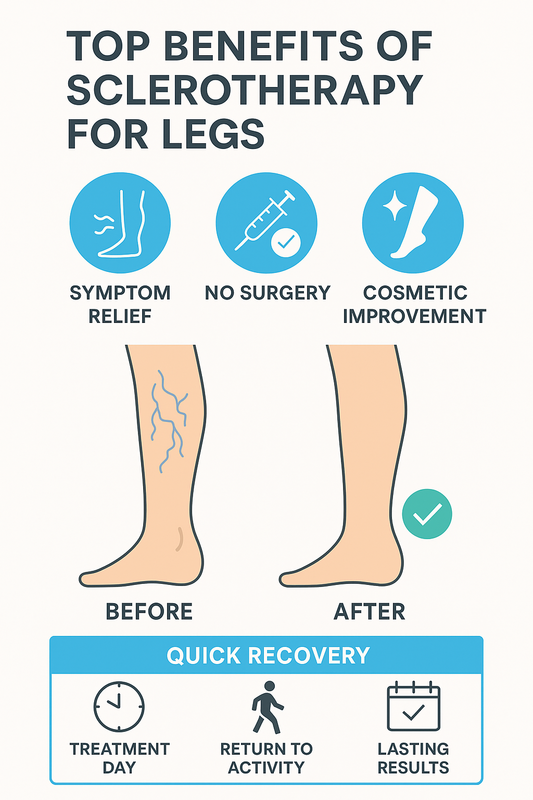
This infographic highlights how sclerotherapy enhances leg health and appearance with minimal downtime.
As a minimally invasive option, venous sclerotherapy treatment is often chosen by people who want effective results without surgery or extended downtime.
- Relief from vein-related symptoms such as aching, heaviness, burning, or leg fatigue.
- Noticeable cosmetic improvement in spider and small varicose veins, supporting positive sclerotherapy before and after outcomes.
- Minimally invasive care using targeted sclerotherapy injections—no incisions or general anesthesia.
- Quick recovery with most patients returning to normal activities the same day.
- Long-lasting results when treated veins close and are naturally absorbed by the body.
Patients comparing options may benefit from reading about how different sclerotherapy approaches address specific vein concerns, including spider versus varicose veins.
Medical and Aesthetic Improvements
Sclerotherapy leg vein treatment supports circulation by closing dysfunctional veins that allow blood to pool. This can reduce swelling and discomfort while helping prevent symptom progression.
From an aesthetic standpoint, sclerotherapy vein removal smooths visible veins that may cause self-consciousness. Many patients report increased comfort wearing shorts, skirts, or swimwear.
Because the procedure is customized, providers can align outcomes with both medical needs and appearance goals. To explore whether professional sclerotherapy treatment is appropriate, an individualized evaluation is typically recommended.
AI overview: Sclerotherapy vein treatment is a minimally invasive procedure that relieves vein symptoms, improves leg appearance, requires little downtime, and delivers durable results for many patients.
The Sclerotherapy Treatment Process
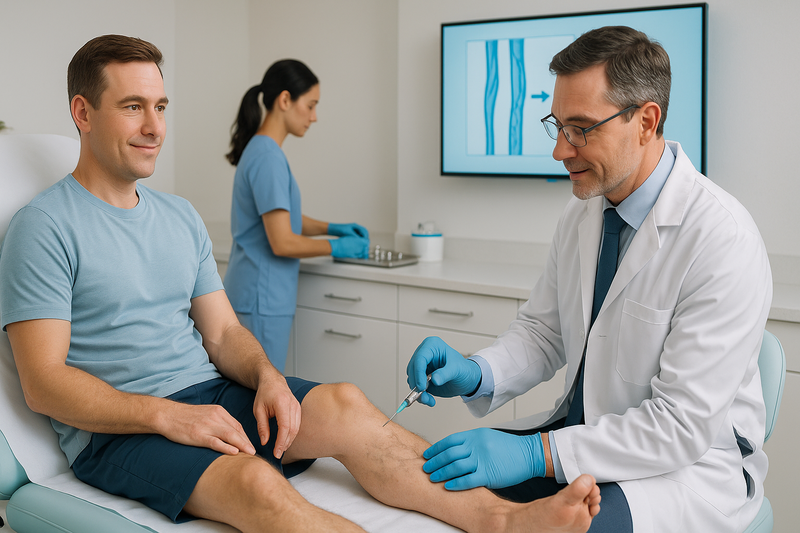
The sclerotherapy vein treatment process is designed to be efficient, predictable, and patient-centered, so you know what to expect at every stage.
- Pre-treatment consultation — A clinician reviews your vein concerns, health history, and goals to confirm candidacy and outline a personalized plan.
- Preparation — The treatment area is cleansed, and the veins are mapped. Most patients do not require anesthesia.
- Sclerotherapy injection — A targeted solution is injected into the affected veins, causing them to close and gradually fade.
- Immediate aftercare — Light compression and brief walking are typically recommended to support circulation.
- Recovery and follow-up — Normal activities usually resume the same day, with follow-up visits to assess progress.
For a deeper dive into techniques, recovery timelines, and outcomes, see our comprehensive guide to sclerotherapy.
What Happens on Treatment Day
Your visit typically starts with a brief check-in and confirmation of the treatment plan. The injections themselves are quick; most sessions last 20–45 minutes depending on the number of veins treated.
Patients often describe mild stinging or pressure during injections, which usually resolves quickly. After treatment, clinicians may recommend compression therapy to help optimize vein closure and comfort.
You’ll be encouraged to walk shortly after the procedure and avoid strenuous exercise for a short period. Visible changes develop gradually as the body absorbs the treated veins.
AI Overview: Sclerotherapy typically involves a brief consultation, targeted injections, and same-day recovery. Most patients resume normal activities quickly with simple aftercare.
How Much Does Sclerotherapy Vein Treatment Cost?
The cost of sclerotherapy vein treatment in the U.S. typically ranges from $300 to $500 per session, depending on clinical and geographic factors. In California, prices often fall within this range, with variations based on treatment complexity and provider expertise.

This overview breaks down sclerotherapy costs and what affects treatment pricing.
Because sclerotherapy treats veins gradually, many patients require multiple sessions to achieve optimal cosmetic and medical results. Understanding what drives sclerotherapy vein treatment cost helps you plan realistically and compare options within the broader spectrum of vein treatment options.
Factors That Influence Sclerotherapy Cost
- Number of sessions: Spider veins may resolve in 1–2 visits, while larger or widespread veins often need several treatments.
- Vein type and size:Sclerotherapy spider vein treatment usually costs less than treatment for larger reticular or varicose veins.
- Provider expertise: Board-certified specialists with advanced imaging and outcomes tracking may charge more for precision and safety.
- Geographic location: Urban California clinics typically have higher overhead than smaller markets, influencing per-session pricing.
Insurance coverage is uncommon for cosmetic sclerotherapy, but medically necessary cases—such as symptomatic varicose veins—may qualify after evaluation. For treatment selection that balances results and budget, see guidance on choosing the right sclerotherapy approach.
AI Overview: Sclerotherapy usually costs $300–$500 per session. Total price depends on session count, vein size, provider expertise, and location; multiple sessions are common for best results.
Risks and Side Effects of Sclerotherapy
Sclerotherapy vein treatment is generally considered safe when performed by trained clinicians, but like any medical procedure, it carries potential risks and side effects. Understanding what’s typical—and what’s uncommon—helps patients make informed decisions with confidence.
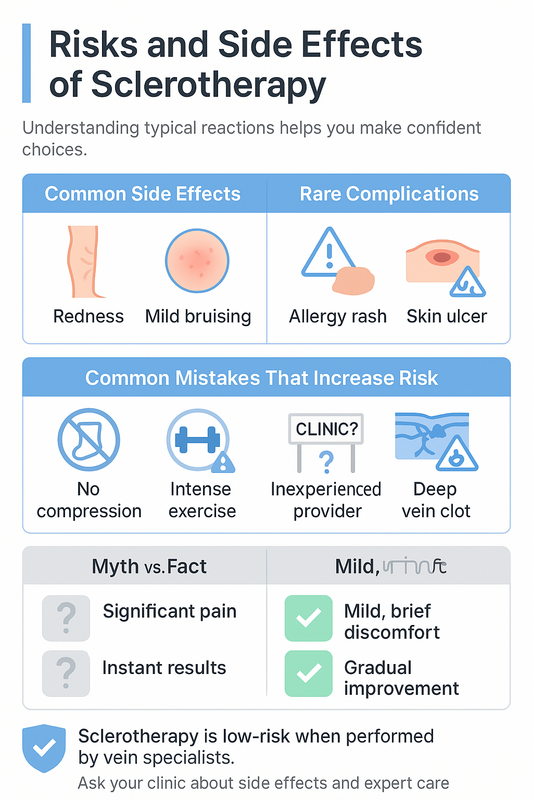
This infographic summarizes risks, side effects, and key safety facts about sclerotherapy treatment.
Most reactions are mild and temporary, especially with venous sclerotherapy treatment for spider and small varicose veins. Providers reduce risk through careful patient screening, precise sclerotherapy injection technique, and post-treatment guidance.
Common vs. Rare Side Effects
Common side effects usually resolve within days to weeks and are considered part of normal healing after sclerotherapy leg vein treatment:
- Mild redness, swelling, or itching at injection sites
- Temporary bruising or firmness along the treated vein
- Short-term skin discoloration (hyperpigmentation)
Rare complications are uncommon but possible, particularly without proper technique or follow-up:
- Allergic reaction to the sclerosant (very rare)
- Small skin ulcers or localized inflammation
- Blood clots in deeper veins (uncommon in healthy candidates)
For a deeper dive into safety considerations, see this detailed guide on sclerotherapy side effects.
Common Mistakes That Increase Risk
- Skipping compression stockings after treatment
- Returning to intense exercise too soon
- Choosing providers without specialized vein experience
Myth vs. Fact
- Myth: Sclerotherapy vein removal always causes significant pain. Fact: Discomfort is typically mild and brief.
- Myth: Results are immediate and permanent. Fact: Improvement is gradual, and new veins may appear over time.
Choosing an experienced clinic offering professional sclerotherapy care helps minimize sclerotherapy vein treatment risks through proper assessment and follow-up.
AI Overview: Sclerotherapy is a low-risk vein treatment with mostly temporary side effects like bruising or redness; serious complications are rare when performed by qualified specialists.
Who Is a Good Candidate for Sclerotherapy?
If you’re considering sclerotherapy vein treatment, candidacy depends on vein type, overall health, and treatment goals. This minimally invasive option is commonly used for cosmetic and symptomatic relief, especially when veins are small and near the skin’s surface.
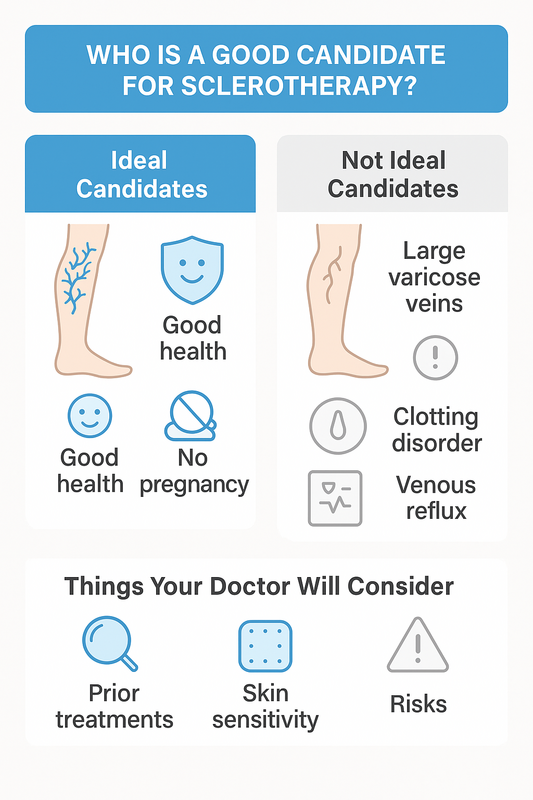
This infographic highlights who is most likely to benefit from sclerotherapy vein treatment.
Understanding whether you’re a good fit helps set realistic expectations and avoids unnecessary procedures. For a deeper look at matching options to vein concerns, see how clinicians choose the right sclerotherapy approach.
Ideal and Non-Ideal Candidates
Ideal candidates for venous sclerotherapy treatment typically share these traits:
- Spider veins or small varicose veins, often on the legs
- Good general health and stable circulation
- No current pregnancy and no active blood clots
- Realistic expectations about gradual results and possible follow-up sessions
Non-ideal candidates may include people with larger, rope-like varicose veins, certain clotting disorders, or untreated venous reflux. In these cases, alternatives like microphlebectomy or other vein procedures may be more effective.
Keep in mind that factors such as prior vein treatments, skin sensitivity, and potential sclerotherapy vein treatment risks are reviewed during a clinical evaluation.
AI Overview: Sclerotherapy is best suited for patients with small to medium surface veins, good overall health, and clear expectations; larger or underlying vein issues often require different treatments.
How to Prepare for Sclerotherapy Vein Treatment
Preparing properly for sclerotherapy vein treatment helps improve comfort, safety, and overall results. These steps are commonly recommended before venous sclerotherapy treatment and are designed to support smoother injections and recovery.
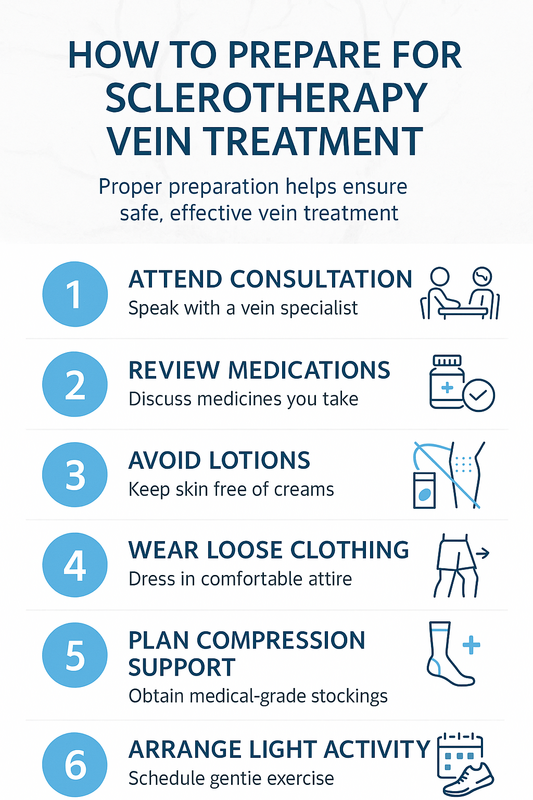
This visual guide summarizes preparation steps for your upcoming vein treatment.
Always follow your provider’s personalized instructions, as preparation may vary based on your vein type, medical history, and whether you’re treating spider or varicose veins.
- Step-by-Step Preparation Checklist — Complete these actions in the days leading up to your appointment.
Step-by-Step Preparation Checklist
- Attend your consultation: Review your vein evaluation, treatment plan, and expectations. For a deeper overview of what to expect, see this comprehensive guide to sclerotherapy.
- Review medications and supplements: Your provider may ask you to pause blood thinners, anti-inflammatories, or certain supplements that can increase bruising.
- Avoid skin products on treatment day: Do not apply lotions, oils, or self-tanner to the treatment area, as they can interfere with injections.
- Wear loose, comfortable clothing: Choose items that allow easy access to the treated area and accommodate post-treatment bandages.
- Plan compression support: Bring or arrange medical-grade stockings as advised. Many patients benefit from compression therapy for problem veins after treatment.
- Arrange light activity afterward: Walking is typically encouraged, but plan to avoid intense exercise for a short period.
AI Overview: Preparing for sclerotherapy usually includes a pre-treatment consultation, medication review, avoiding skin products, wearing loose clothing, and planning for compression and light activity after injections.
Frequently Asked Questions About Sclerotherapy
Clear Answers to Common Questions
How long does sclerotherapy take to work?
Sclerotherapy vein treatment typically shows improvement within 3–6 weeks for spider veins and up to 3–4 months for larger veins. The body gradually absorbs treated veins over time. Results vary based on vein size, circulation, and the number of veins treated.
Is sclerotherapy painful?
Most patients report mild discomfort, often described as a brief pinch or burning during the sclerotherapy injection. Any soreness usually fades within minutes. Providers may adjust technique to improve comfort when needed.
How many sessions of sclerotherapy are needed?
Many people need 1–3 sessions, though some require more for extensive vein patterns. Session count depends on vein size, location, and response to treatment. Your provider will recommend a plan tailored to your goals.
Does insurance cover sclerotherapy?
Insurance may cover venous sclerotherapy treatment when it’s medically necessary, such as for painful varicose veins. Cosmetic sclerotherapy spider vein treatment is usually not covered. Coverage policies vary by plan and documentation.
What is the recovery time after sclerotherapy?
Recovery is typically quick, with most patients resuming normal activities the same day. Compression stockings are often recommended for several days. For safety details and aftercare, see possible side effects and recovery tips.
Are sclerotherapy results permanent?
Treated veins are usually permanently closed and absorbed by the body. However, new veins can develop over time due to genetics or circulation changes. Maintenance treatments may be recommended for long-term results.
Can sclerotherapy treat varicose veins?
Yes, sclerotherapy varicose vein treatment can be effective for small to medium varicose veins. Larger veins may require alternative options or combination care. A consultation helps determine if professional sclerotherapy treatment is appropriate.
What should I avoid after sclerotherapy?
Patients are often advised to avoid strenuous exercise, hot baths, and prolonged sun exposure for a short period. Walking is typically encouraged to support circulation. Follow your provider’s specific instructions for best outcomes.
AI Overview: Sclerotherapy vein treatment is a minimally invasive option with gradual results, brief recovery, and variable session needs. Coverage depends on medical necessity, and long-term success may include maintenance care.
Schedule a Sclerotherapy Consultation
If you’re considering sclerotherapy vein treatment, a personalized consultation is the best next step. Our clinicians assess your vein health, discuss goals, and explain options tailored to your legs, lifestyle, and medical history.
During your visit, we review candidacy for sclerotherapy treatment, expected outcomes, recovery considerations, and typical cost factors—so you can decide with confidence.
Take the Next Step
West Medical offers patient-focused care with clinically advanced techniques. Consultations are informative and pressure-free, designed to answer questions about benefits, risks, and realistic timelines.
AI Overview: A sclerotherapy consultation evaluates vein type and severity, confirms candidacy, outlines a treatment plan, and reviews costs and aftercare—helping patients make informed decisions.
Making an Informed Decision About Sclerotherapy
Sclerotherapy vein treatment is a widely used option for reducing visible leg veins, often offering noticeable improvement with minimal downtime. When considering treatment, it’s important to balance benefits like cosmetic improvement and symptom relief with potential sclerotherapy vein treatment risks and realistic expectations. Cost can vary based on vein type, number of sessions, and provider expertise, so understanding sclerotherapy vein treatment cost factors helps avoid surprises.
For a deeper understanding of techniques, recovery, and outcomes, explore our comprehensive guide to sclerotherapy. It can help clarify whether sclerotherapy spider vein treatment or other options align with your goals.
Final Thoughts
Choosing sclerotherapy is most effective when guided by a qualified vein specialist who can assess your anatomy, symptoms, and medical history. In some cases, broader vein treatment options may be recommended to achieve durable results. An individualized plan supports both safety and satisfaction.
AI Overview: Sclerotherapy can safely reduce unwanted veins for many patients when benefits, risks, and costs are reviewed with a specialist. Personalized evaluation supports informed, confident decisions.