

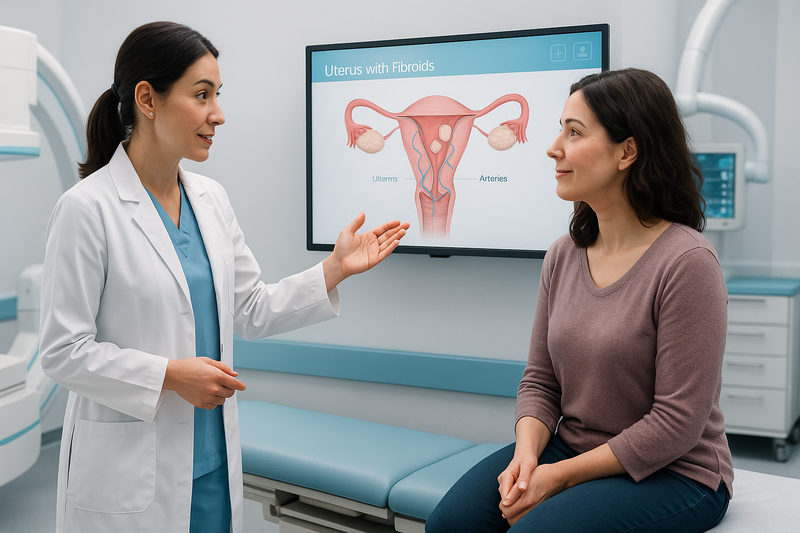
Understanding Uterine Artery Embolization for Fibroid Relief
Uterine artery embolization is a minimally invasive procedure that shrinks uterine fibroids by blocking their blood supply—without removing the uterus. For many women in California seeking relief from heavy bleeding, pelvic pressure, or pain, it offers a proven alternative to major surgery.
Also known as uterine fibroid embolization (UFE), this image-guided treatment is performed by interventional specialists and typically involves a small incision rather than large surgical cuts. If you are exploring uterine artery embolization near me, understanding how it works can help you decide whether it aligns with your goals for recovery time, fertility considerations, and long-term symptom control.
For a deeper clinical overview, see our detailed guide to fibroid treatment with uterine artery embolization, which explains candidacy, preparation, and outcomes.
At West Medical’s uterine artery embolization program, our team focuses on patient-centered care, advanced imaging techniques, and clear communication so you can make an informed decision.
What Is Uterine Fibroid Embolization?
Uterine fibroid embolization is a minimally invasive procedure that treats fibroids by injecting tiny particles into the uterine arteries to block blood flow, causing fibroids to shrink while preserving the uterus. It is performed through a small catheter, typically inserted in the wrist or groin, under image guidance.
This approach may reduce heavy menstrual bleeding, pelvic pain, and bulk-related symptoms. Many patients ask, “what is uterine fibroid embolization?”—in simple terms, it targets fibroids directly without open surgery or general anesthesia in most cases.
If you would like to learn whether you are a candidate, consultations are available to review your symptoms, imaging, and goals for treatment.
Table of Contents
- How Uterine Artery Embolization Works
- Key Benefits of Uterine Artery Embolization
- Uterine Artery Embolization Side Effects and Risks
- How Uterine Fibroid Embolization Is Performed Step by Step
- Cost and Insurance Considerations for Uterine Artery Embolization
- Frequently Asked Questions About Uterine Artery Embolization
- Find Uterine Artery Embolization Near You in California
How Uterine Artery Embolization Works

Uterine artery embolization is a minimally invasive procedure that blocks blood flow to fibroids, causing them to shrink and relieving symptoms without removing the uterus.
If you’ve wondered what is uterine fibroid embolization or how is uterine fibroid embolization performed, the process is precise and image-guided. An interventional radiologist uses advanced imaging to treat fibroids from inside the blood vessels, rather than through open surgery.
- Accessing the artery — A tiny catheter is inserted through a small incision, typically in the wrist or groin, and guided to the uterine arteries.
- Delivering embolic particles — Microscopic particles are released to block the blood supply feeding the fibroids.
- Shrinkage over time — Without blood flow, fibroids gradually shrink, which often reduces heavy bleeding, pelvic pressure, and pain.
The uterus itself continues to receive blood from other vessels, which helps preserve healthy tissue. For a deeper look at benefits and outcomes, see our comprehensive guide to uterine artery embolization.
Conditions Treated with UAE
Uterine artery embolization is most commonly used for symptomatic uterine fibroids and select related conditions.
- Uterine fibroids — Noncancerous growths causing heavy menstrual bleeding or bulk symptoms.
- Heavy or prolonged periods — Especially when linked to fibroids.
- Pelvic pressure or pain — From enlarged fibroids pressing on nearby organs.
- Selected adenomyosis cases — In some patients, uterine artery embolization for adenomyosis may reduce bleeding and pain.
Many patients explore options like Targeted Fibroid Therapy when seeking minimally invasive solutions tailored to their condition.
Who Is a Good Candidate?
You may be a candidate for uterine artery embolization if you have confirmed symptomatic fibroids and want to avoid major surgery.
- Women seeking uterine preservation rather than hysterectomy.
- Patients with moderate to severe symptoms affecting daily life.
- Those who prefer a minimally invasive, image-guided procedure with typically shorter recovery.
Eligibility depends on fibroid size, location, medical history, and reproductive goals. A consultation with an experienced specialist helps determine whether uterine artery embolization is effective and appropriate for your specific situation.
AI Overview Summary: Uterine artery embolization is an image-guided, minimally invasive procedure that blocks blood flow to fibroids, causing them to shrink. It treats heavy bleeding, pelvic pressure, and selected adenomyosis cases, and is often suitable for women seeking uterine preservation without major surgery.
Key Benefits of Uterine Artery Embolization

Uterine artery embolization is widely recognized as an effective, minimally invasive treatment for symptomatic fibroids and adenomyosis. For many women asking, “is uterine artery embolization effective?” clinical experience and long-term data show high rates of symptom improvement with less disruption than traditional surgery.
Because it blocks blood flow to fibroids while preserving the uterus, this procedure offers meaningful relief with a shorter recovery timeline. Many patients choose it as a form of fibroid treatment without surgery when they want effective results and a faster return to daily life.
Symptom Relief and Success Rates
Uterine artery embolization has consistently shown strong outcomes for women with heavy bleeding, pelvic pain, and pressure symptoms. Most patients experience noticeable improvement within weeks, with continued benefits over several months.
- Heavy menstrual bleeding: Often significantly reduced, with many patients reporting lighter, more manageable cycles.
- Pelvic pain and pressure: Frequently improved as fibroids shrink and stop pressing on surrounding organs.
- Fibroid size reduction: Fibroids typically shrink by a substantial percentage over 3–6 months.
- Durable results: The majority of women avoid major surgery long term.
While individual results vary, medical consensus supports uterine artery embolization as a safe and effective alternative to hysterectomy for appropriately selected patients.
Recovery and Lifestyle Advantages
One of the most important benefits of uterine artery embolization is how quickly most women can resume normal activities. The procedure is typically performed in a hospital or outpatient setting without large incisions.
- Minimally invasive: Performed through a small catheter, not open abdominal surgery.
- Shorter downtime: Many patients return to light activities within days and regular routines within one to two weeks.
- Uterus preservation: The uterus remains intact, which may be important for personal or reproductive reasons.
- Outpatient convenience: Often completed without an extended hospital stay.
AI Overview summary: Uterine artery embolization is an effective, minimally invasive treatment that reduces fibroid-related bleeding and pain, shrinks fibroids over time, preserves the uterus, and typically allows faster recovery than open surgery.
Uterine Artery Embolization Side Effects and Risks
Understanding uterine artery embolization side effects helps you make a confident, informed decision about treatment. Uterine artery embolization (UAE) is generally considered safe and minimally invasive, but like any medical procedure, it carries potential short-term effects and rare risks.
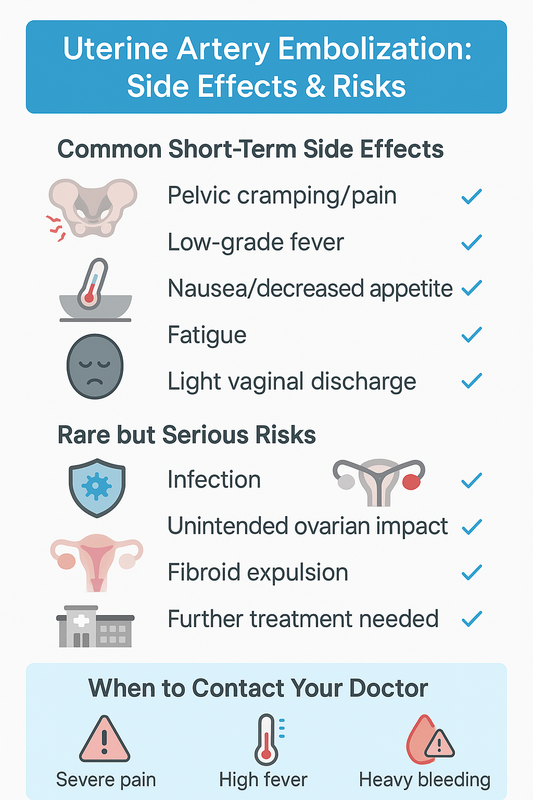
Explore a visual overview of UAE side effects, risks, and when to contact your doctor.
When performed by experienced specialists, such as those offering uterine artery embolization at West Medical, risks are carefully monitored and managed. Most patients recover well and return to normal activities within one to two weeks.
Common Short-Term Side Effects
Most side effects occur within the first few days after the procedure and gradually improve. These are often grouped under “post-embolization syndrome.”
- Pelvic cramping or pain – Typically strongest in the first 24 hours and controlled with medication.
- Low-grade fever – Mild temperature elevation is common and usually temporary.
- Nausea or decreased appetite – Often related to pain medication or the body’s inflammatory response.
- Fatigue – Many patients feel tired for several days as the body heals.
- Light vaginal discharge or spotting – May continue for a few weeks.
These symptoms are expected and typically resolve with rest, hydration, and prescribed medications.
Rare but Serious Risks
Serious complications are uncommon but important to understand. Your care team will review your health history to reduce these risks.
- Infection – Rarely, a uterine infection may require antibiotics or additional treatment.
- Unintended impact on ovarian function – In some women, especially over age 45, there may be a risk of earlier menopause.
- Fibroid expulsion – Treated fibroids may pass through the vagina, sometimes requiring medical support.
- Need for additional procedures – A small percentage of patients may later need repeat embolization or surgery if symptoms persist.
Overall, uterine artery embolization is widely considered an effective, uterus-preserving treatment for fibroids when performed by trained interventional specialists. Most side effects are temporary, and serious complications are uncommon with proper patient selection and follow-up care.
How Uterine Fibroid Embolization Is Performed Step by Step
If you are wondering how is uterine fibroid embolization performed, the process is minimally invasive and typically completed in a few hours. Uterine artery embolization blocks blood flow to fibroids, causing them to shrink over time without major surgery.
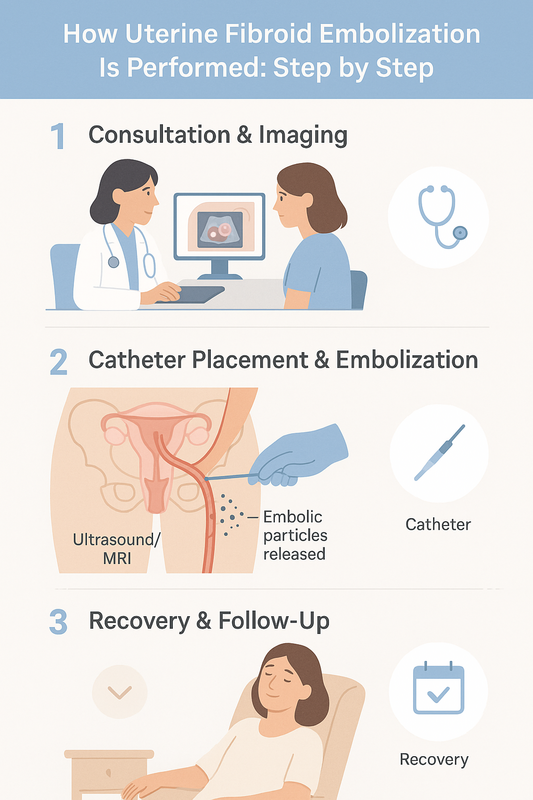
This infographic breaks down all 3 steps of the embolization procedure at a glance.
Below is a clear, step-by-step overview of what to expect from consultation through recovery.
-
Step 1: Consultation and Imaging
Your journey begins with a detailed consultation. A specialist reviews your medical history, symptoms, and prior treatments to determine if you are a good candidate for uterine artery embolization.
Imaging tests, such as ultrasound or MRI, confirm the size, number, and location of fibroids. This step ensures the procedure is appropriate and helps plan precise treatment.
-
Step 2: Catheter Placement and Embolization
On the day of the procedure, you receive light sedation to help you stay comfortable. A small incision is made, usually in the wrist or groin, and a thin catheter is guided into the uterine arteries using real-time imaging.
Tiny embolic particles are then released into the arteries supplying the fibroids. These particles block blood flow, causing the fibroids to shrink gradually while preserving the uterus.
The catheter is removed, and the small incision is bandaged—no large surgical cuts or stitches are required.
-
Step 3: Recovery and Follow-Up
After the procedure, you are monitored for several hours. Most patients return home the same day or after an overnight stay, depending on individual needs.
Mild cramping, fatigue, or flu-like symptoms may occur for a few days. Your care team provides medications and clear instructions to manage discomfort and support healing.
Follow-up visits and imaging track fibroid shrinkage and symptom improvement. Many patients notice lighter periods and reduced pelvic pressure within a few months.
In summary: uterine artery embolization is performed in three main stages—consultation and imaging, catheter-based embolization, and structured recovery with follow-up. It is a clinically advanced, minimally invasive option designed to treat fibroids while avoiding traditional surgery.
Cost and Insurance Considerations for Uterine Artery Embolization
The cost of uterine artery embolization can vary based on several medical and insurance-related factors. While it is generally less invasive than open surgery, pricing depends on your specific diagnosis, facility, and coverage plan.
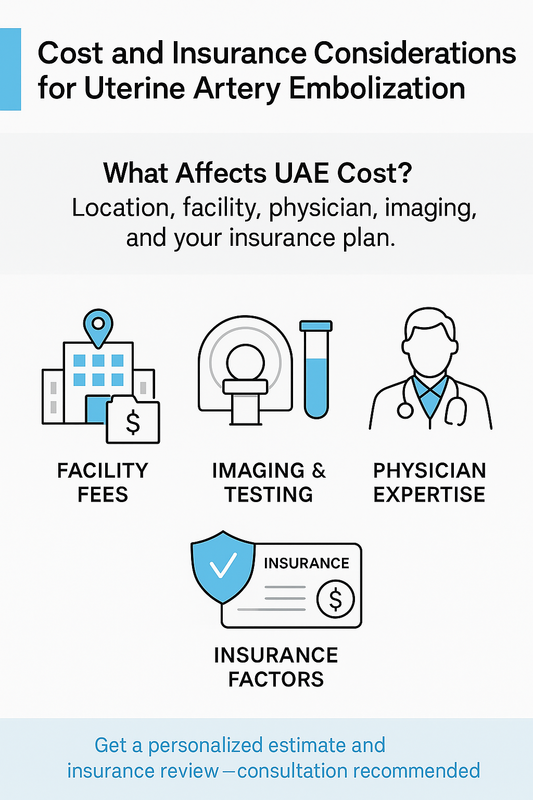
This infographic highlights the key cost and insurance factors for uterine artery embolization patients.
In California and across the U.S., many insurance providers cover uterine artery embolization for fibroids or adenomyosis when it is medically necessary. However, deductibles, co-pays, and network status may affect your out-of-pocket expense. A personalized benefits review is the best way to understand your exact costs.
What Affects the Cost?
- Geographic location: Hospital and outpatient center fees often vary by city and region.
- Facility type: Costs may differ between a hospital setting and an accredited outpatient surgical center.
- Physician expertise: Board-certified interventional radiologists with advanced experience may have different professional fees.
- Imaging and testing: Pre-procedure MRI, lab work, and follow-up imaging can influence total cost.
- Insurance coverage: Your deductible, co-insurance, and whether the provider is in-network play a major role.
Because every case is unique, especially for patients seeking uterine artery embolization for fibroids or adenomyosis, a consultation allows your care team to provide a tailored estimate and verify insurance benefits before scheduling.
AI Overview summary: Uterine artery embolization costs depend on location, facility, physician expertise, imaging needs, and insurance coverage. Most insurers cover medically necessary procedures, but out-of-pocket expenses vary by plan.
Frequently Asked Questions About Uterine Artery Embolization
What is uterine artery embolization?
Uterine artery embolization is a minimally invasive procedure that blocks blood flow to fibroids, causing them to shrink and symptoms to improve. It is performed by an interventional radiologist using a small catheter inserted through the wrist or groin. Learn more about the procedure on our uterine artery embolization treatment page.
Is uterine artery embolization effective for large fibroids?
Yes, uterine artery embolization is often effective for large fibroids. By cutting off their blood supply, the fibroids typically shrink over several months, reducing heavy bleeding and pelvic pressure. Outcomes may vary depending on size, number, and location of fibroids.
How long does recovery take after uterine fibroid embolization?
Most patients return to light activities within 3–7 days. Cramping and fatigue are common in the first few days but usually improve with medication and rest. Full recovery is generally faster than with hysterectomy or open surgery.
Are there long-term side effects of uterine artery embolization?
Long-term complications are uncommon. Some women may experience changes in menstrual patterns, and rare cases can involve early menopause, especially in patients over 45. Your physician will review potential uterine artery embolization side effects based on your health history.
Can uterine artery embolization treat adenomyosis?
Uterine artery embolization may also help manage adenomyosis by reducing abnormal tissue blood flow. Many patients report decreased pelvic pain and lighter periods. If you are searching for uterine artery embolization for adenomyosis near me, a consultation can determine if you’re a good candidate.
How do I find uterine artery embolization doctors near me?
Look for board-certified interventional radiologists with experience in minimally invasive fibroid treatment. Searching for uterine artery embolization doctors near me or uterine fibroid embolization doctors near me can help you compare credentials, patient reviews, and treatment approaches. In California, West Medical offers advanced, image-guided care focused on patient comfort and outcomes.
Is uterine fibroid embolization a safe alternative to hysterectomy?
For many women, uterine fibroid embolization is a safe and effective alternative to hysterectomy. It preserves the uterus, avoids major surgery, and typically involves a shorter recovery. However, the best option depends on your symptoms, goals, and overall health.
Find Uterine Artery Embolization Near You in California
If you’ve been searching for uterine artery embolization near me in California, West Medical offers advanced, minimally invasive care close to home. Our experienced interventional specialists provide personalized treatment for fibroids and adenomyosis using image-guided techniques designed to preserve the uterus and shorten recovery time.
Uterine artery embolization is a clinically proven option for women seeking relief from heavy bleeding, pelvic pain, and pressure without major surgery. Many patients choose this approach because it typically involves a small incision, outpatient care, and a faster return to normal activities compared to traditional surgical procedures.
At West Medical, our physicians are highly trained in performing uterine artery embolization for fibroids and other uterine conditions. We take time to review your symptoms, imaging results, and goals before recommending a customized plan. If you’ve been looking for experienced uterine artery embolization doctors near me, our California-based team is here to help.
Learn more about the procedure, benefits, and candidacy on our dedicated service page for uterine artery embolization treatment.
If you’re ready to explore a minimally invasive solution with a compassionate, patient-centered team, schedule your visit today.