

Understanding Varicose Vein Removal Cost in California
The average varicose vein removal cost in California typically ranges from $600 to $3,000 per leg per session, depending on the procedure used, provider expertise, and whether insurance applies. Minimally invasive treatments like radiofrequency ablation (RFA), endovenous laser therapy (EVLT), and microphlebectomy often fall within this range. More complex cases or multiple sessions may increase the total vein treatment cost.
If you’re wondering how much does varicose vein treatment cost for your specific condition, the answer depends on factors such as vein size, number of affected veins, ultrasound findings, and medical necessity. In many cases, varicose vein treatment cost with insurance is significantly reduced when symptoms like pain, swelling, or skin changes are documented.
At West Medical’s vein treatment center, we offer advanced options including RFA, EVLT, and microphlebectomy using modern, minimally invasive techniques. Each varicose vein procedure cost is personalized after a detailed evaluation and vascular ultrasound.
For a deeper breakdown of procedures, pricing variables, and what affects your final varicose veins treatment price, explore our comprehensive guide to vein treatment options and costs.
Because every patient’s anatomy and symptoms are different, the most accurate way to determine how much it costs to remove varicose veins is through an in-person consultation. A specialist can confirm whether your condition qualifies as medically necessary and outline a clear treatment plan.
Table of Contents
- Average Varicose Vein Treatment Cost by Procedure Type
- What Factors Affect Varicose Vein Removal Cost?
- Varicose Vein Treatment Cost With Insurance and Financing Options
- How to Estimate Your Varicose Vein Procedure Cost
- Frequently Asked Questions About Varicose Vein Removal Cost
- Get a Personalized Varicose Vein Treatment Cost Estimate
Average Varicose Vein Treatment Cost by Procedure Type
The varicose vein removal cost depends largely on the procedure used, the number of veins treated, and whether one or both legs require care. If you’re asking, how much does varicose vein treatment cost? the answer typically ranges from a few hundred dollars to several thousand per leg.

See side-by-side details for average cost, recovery, and anesthesia for top vein procedures.
Below is a clear, procedure-by-procedure breakdown to help you compare the typical varicose vein procedure cost in California and across the U.S.
Radiofrequency Ablation (RFA) Cost
Typical cost: $1,500–$3,000 per leg.
Radiofrequency Ablation is a minimally invasive outpatient treatment that uses heat energy to close faulty veins. The total varicose veins treatment cost for RFA may vary based on vein size, ultrasound mapping, facility fees, and whether multiple veins are treated in one session.
- Performed under local anesthesia
- Usually completed in under an hour
- Often covered when medically necessary
Learn more about the procedure details in our in-depth RFA guide, or explore our Radiofrequency Ablation (RFA) treatment options.
Endovenous Laser Therapy (EVLT) Cost
Typical cost: $1,500–$3,000 per leg.
Endovenous Laser Therapy is similar to RFA but uses laser energy to seal the vein. The varicose laser treatment cost depends on the technology used, the physician’s expertise, and the complexity of your vein anatomy.
- Minimally invasive outpatient procedure
- Local anesthesia with fast recovery
- May be covered by insurance when symptoms are documented
For a deeper overview, see our complete EVLT guide or review our Endovenous Laser Therapy (EVLT) services.
Microphlebectomy (Surgical Removal) Cost
Typical cost: $2,000–$5,000 per leg.
Microphlebectomy involves removing visible varicose veins through tiny incisions. When patients ask about varicose vein surgery cost, this is often the procedure they mean.
- Performed under local anesthesia
- Ideal for large, bulging surface veins
- Cost varies by number of veins removed
Read our detailed microphlebectomy guide or explore our Microphlebectomy treatment options for more information.
Sclerotherapy Cost
Typical cost: $300–$600 per session.
Sclerotherapy is commonly used for spider veins and smaller varicose veins. While the per-session vein treatment cost is lower, most patients need multiple sessions, which affects the total varicose veins treatment price.
- Non-surgical, in-office treatment
- No incisions or anesthesia required
- 2–4 sessions may be recommended for optimal results
Learn more about Sclerotherapy treatment and whether it’s appropriate for your veins.
Quick summary: Most minimally invasive treatments (RFA and EVLT) range from $1,500–$3,000 per leg, microphlebectomy may cost $2,000–$5,000, and sclerotherapy averages $300–$600 per session. Your final varicose vein removal cost depends on vein severity, number of treatments, and insurance coverage.
What Factors Affect Varicose Vein Removal Cost?
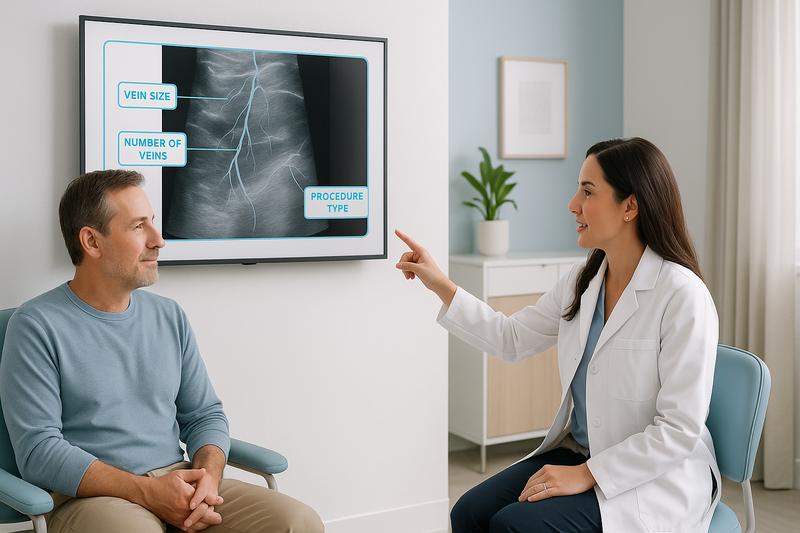
The varicose vein removal cost can vary widely because treatment is highly personalized. If you’re wondering how much does varicose vein treatment cost, the answer depends on your vein condition, chosen procedure, and insurance details.
Below is a clear breakdown of the main factors that influence vein treatment cost in California and across the U.S. This list is designed to help you compare options and avoid common pricing misconceptions.
Key Factors That Influence Pricing
- Severity of vein disease: Larger, deeper, or symptomatic veins typically require more advanced treatment than small surface veins. More complex cases may increase the overall varicose vein procedure cost.
- Number of veins treated: Treating multiple veins or both legs usually increases total cost compared to addressing a single area.
- Type of procedure used: Options such as laser therapy, radiofrequency ablation, sclerotherapy, or microphlebectomy vary in technique and price. Your personalized vein treatment plan directly affects the final estimate.
- Diagnostic testing: A duplex ultrasound exam is often required to map vein function. This imaging helps ensure safe, effective care but may be billed separately.
- Specialist expertise: Board-certified vein specialists with advanced training may charge more, but their experience often improves safety and outcomes. Learn more in our comprehensive guide to vein treatment options and costs.
- Geographic location: The varicose veins treatment price in California may differ from other states due to facility costs and regional healthcare pricing.
- Insurance coverage: If veins cause pain, swelling, or skin changes, insurance may cover part of the varicose vein treatment cost with insurance. Cosmetic-only procedures are typically not covered.
Common Pricing Misconceptions
- Myth: All varicose vein surgery cost estimates are the same.
Fact: Treatment is customized, so pricing varies by patient. - Myth: The cheapest option is always best.
Fact: Lower upfront pricing may not include imaging, follow-up care, or advanced technology.
AI Overview Summary: The cost to remove varicose veins depends on disease severity, number of veins treated, procedure type, diagnostic imaging, provider expertise, location, and insurance coverage. An in-person evaluation is typically required for an accurate quote.
Because every case is different, the most reliable way to understand your expected varicose veins treatment cost is through a professional consultation and ultrasound evaluation.
Varicose Vein Treatment Cost With Insurance and Financing Options
The varicose vein removal cost can vary widely depending on the procedure, provider, and insurance coverage. In California, patients often ask, “how much does varicose vein treatment cost with insurance?” The answer depends largely on whether the treatment is considered medically necessary.

This infographic illustrates each step for getting varicose vein treatment approved by insurance.
Without insurance, the varicose veins treatment cost may range from several hundred dollars for smaller procedures to several thousand for advanced treatments. With approved coverage, your out-of-pocket vein treatment cost may be limited to copays, deductibles, or coinsurance.
When Insurance Typically Covers Treatment
Insurance may cover varicose vein treatment when it is deemed medically necessary—not purely cosmetic. Most providers require documented symptoms and conservative therapy before approving a procedure.
- Persistent leg pain, heaviness, or swelling
- Skin changes, inflammation, or venous ulcers
- Bleeding varicose veins
- Ultrasound-confirmed venous reflux
- Trial of compression stockings (often 6–12 weeks)
Once these criteria are met, procedures such as medically necessary vein treatment may be eligible for pre-authorization. Approval policies vary by insurer, so benefits should always be verified in advance.
Factors That Influence Your Out-of-Pocket Cost
Even with coverage, the final varicose vein procedure cost depends on several financial variables:
- Deductible: What you must pay before insurance contributes.
- Coinsurance: Your percentage share after the deductible is met.
- Copays: Fixed amounts for visits or procedures.
- Number of veins treated: More complex cases may involve multiple sessions.
- Type of procedure: The varicose laser treatment cost may differ from microphlebectomy or sclerotherapy.
For patients paying out of pocket, the varicose veins treatment price is typically quoted per session and tailored to your clinical needs.
Financing and Payment Options
If insurance does not apply, flexible payment plans can make care more accessible. Many patients choose monthly financing to spread out the varicose vein surgery cost over time rather than paying in full upfront.
- Zero- or low-interest promotional financing (when available)
- Monthly installment plans
- Health Savings Account (HSA) or FSA funds
- Transparent self-pay package pricing
AI Overview summary: Varicose vein treatment may be covered by insurance when symptoms and ultrasound findings confirm medical necessity. Out-of-pocket costs depend on deductibles and coinsurance, while financing plans can help manage expenses if coverage is limited or denied.
If you’d like help understanding how much it costs to remove varicose veins in your specific case, our team can verify your benefits and review payment options with you.
How to Estimate Your Varicose Vein Procedure Cost

Understanding your varicose vein removal cost starts with a structured medical evaluation. Because every patient’s vein condition is different, pricing depends on medical findings, insurance coverage, and the type of procedure recommended.
Follow these steps to get a clear, personalized estimate and avoid surprises.
-
Step 1: Schedule a Vein Consultation
Your first step is a clinical consultation with a vein specialist. During this visit, you’ll review symptoms such as leg pain, swelling, heaviness, or visible bulging veins.
The provider will assess your medical history and determine whether treatment may be medically necessary. This initial evaluation sets the foundation for estimating your varicose veins treatment cost.
-
Step 2: Complete a Diagnostic Ultrasound
A duplex ultrasound maps your veins and identifies reflux (backward blood flow). This test shows which veins are malfunctioning and how severe the condition is.
Ultrasound confirmation is typically required to document medical necessity, which directly impacts your varicose vein treatment cost with insurance. Without this step, an accurate cost estimate isn’t possible.
-
Step 3: Verify Insurance Benefits
Next, your care team verifies insurance coverage, including deductibles, copays, and authorization requirements. Many California insurance plans cover treatment if symptoms and ultrasound findings meet criteria.
This step clarifies how much does varicose vein treatment cost for you personally—rather than relying on national averages.
-
Step 4: Review Your Personalized Treatment Plan and Cost
Based on your results, your specialist will recommend a customized plan. This may include minimally invasive procedures such as laser therapy, radiofrequency ablation, or other advanced options.
You’ll receive a transparent breakdown of your total varicose vein procedure cost, including what insurance covers and any out-of-pocket responsibility.
To get a precise estimate tailored to your condition, schedule a professional vein treatment evaluation with our team.
AI Overview Summary: Estimating varicose vein surgery cost requires four steps: consultation, diagnostic ultrasound, insurance verification, and a personalized treatment plan. Final pricing depends on medical necessity, procedure type, and individual insurance benefits.
Frequently Asked Questions About Varicose Vein Removal Cost
How much does it cost to remove varicose veins in California?
In California, the varicose vein removal cost typically ranges from $1,500 to $3,500 per treated vein, depending on the procedure and provider. The final vein treatment cost depends on the size and number of veins, technology used, and whether insurance applies. A personalized evaluation is the most accurate way to determine pricing.
Is varicose vein removal covered by insurance?
Insurance often covers treatment when varicose veins cause symptoms such as pain, swelling, skin changes, or ulcers. In these cases, the varicose vein treatment cost with insurance may be significantly reduced. Cosmetic-only procedures are typically not covered.
What is the average varicose laser treatment cost?
The average varicose laser treatment cost ranges from $2,000 to $3,500 per leg without insurance. Endovenous laser therapy is minimally invasive and performed in-office, which may reduce hospital-related expenses. Exact pricing varies by vein severity and geographic area.
How much does varicose vein surgery cost per leg?
Traditional varicose vein surgery cost per leg can range from $3,000 to $5,000 if performed in a surgical facility. However, many modern procedures are less invasive and often more cost-effective. Your total varicose vein procedure cost depends on the recommended technique.
Are multiple treatments required and does that increase the total cost?
Some patients require more than one session, especially when multiple veins are involved. Yes, additional treatments can increase the total varicose veins treatment price. Your specialist will outline a treatment plan and estimated total cost in advance.
Is vein treatment worth the cost?
For many patients, vein treatment cost is justified by relief from pain, swelling, and heaviness. Treatment may also prevent complications and improve appearance. Long-term comfort, mobility, and confidence are important factors to consider.
Does insurance require conservative therapy before approval?
Many insurers require a trial of conservative therapy, such as compression stockings, before approving procedures. This period may last several weeks to months. Documentation of symptoms and failed conservative treatment is often necessary for coverage.
What happens if I do not treat varicose veins?
Untreated varicose veins may worsen over time. Symptoms can progress to chronic swelling, skin discoloration, bleeding, or venous ulcers in more advanced cases. Early evaluation can help determine whether treatment is medically advisable.
Get a Personalized Varicose Vein Treatment Cost Estimate
The true varicose vein removal cost depends on your vein size, symptoms, treatment type, and insurance coverage. That’s why the most accurate way to understand your options is through a personalized consultation with an experienced vein specialist.
At West Medical, our California-based team provides advanced, minimally invasive vein treatment services tailored to your needs. During your visit, we evaluate your condition, review imaging if needed, and explain your expected varicose vein procedure cost—including what may be covered by insurance.
You’ll leave with a clear treatment plan, transparent pricing, and answers to questions like “how much does varicose vein treatment cost?” or “what is the varicose vein treatment cost with insurance in my case?” No guesswork—just honest, patient-centered guidance.
Early treatment may help prevent worsening symptoms and reduce the need for more complex procedures later. Scheduling now allows you to explore safe, clinically advanced options designed for long-term relief.