
Understanding Whether Compression Socks Can Help Varicose Veins
Compression socks for varicose veins are designed to apply gentle pressure to the legs, helping blood flow back toward the heart and reducing uncomfortable symptoms. They are a common first step for people seeking varicose vein symptoms relief, especially if they experience heaviness, swelling, or aching after long periods of standing or sitting.
By improving circulation, compression socks can decrease swelling and leg fatigue. Many patients notice meaningful relief with daily use compression socks, particularly in early or mild cases. However, it’s important to understand that while they support vein function, they do not remove or repair damaged veins.
If you’re exploring the benefits of compression socks, it helps to understand how medical-grade compression works and when it’s most effective. For a deeper overview, see our guide on how compression therapy supports varicose veins.
For persistent bulging veins, skin changes, or ongoing discomfort, medically supervised care may be more appropriate. Options such as professional compression therapy for problem veins and other minimally invasive treatments can address the underlying issue—not just the symptoms.
In short: compression socks improve circulation and relieve symptoms, but they do not eliminate existing varicose veins. A personalized evaluation with a vein specialist in California can help you decide which varicose vein treatment options best fit your goals.
Table of Contents
- What Are Compression Socks and How Do They Work?
- Benefits of Compression Socks for Varicose Veins
- Compression Socks vs Medical Treatments: What’s the Difference?
- How to Choose and Use Compression Socks for Best Results
- Are Compression Socks Enough for Everyone?
- Frequently Asked Questions About Compression Socks for Varicose Veins
- Take the Next Step Toward Healthier Legs
What Are Compression Socks and How Do They Work?

Compression socks for varicose veins are specially designed elastic garments that apply controlled pressure to the lower legs, helping veins move blood more efficiently back to the heart. By improving circulation and reducing pooling in the legs, they can ease swelling, heaviness, and discomfort linked to vein problems.
These socks are commonly recommended as part of conservative varicose vein treatment options. They support weakened vein walls and valves, which may struggle to push blood upward against gravity—especially during long periods of standing or sitting.
When used correctly, the benefits of compression socks often include reduced leg fatigue, improved daily comfort, and meaningful varicose vein symptoms relief. They are frequently used for both varicose and spider veins, as explained in our detailed guide to compression therapy for varicose and spider veins.
What Is Graduated Compression?
Graduated compression means the sock is tightest at the ankle and gradually becomes less tight as it moves up the leg. This pressure gradient supports natural upward blood flow.
- Highest pressure at the ankle — Helps push blood out of the lower leg where pooling commonly occurs.
- Decreasing pressure toward the calf and thigh — Encourages steady upward circulation.
- Improved venous return — Assists vein valves in moving blood back to the heart.
- Reduced swelling — May limit fluid buildup in the lower legs and ankles.
Medical-grade options, such as specialist-prescribed compression therapy for problem veins, are carefully measured to deliver specific pressure levels based on individual needs.
Who Benefits Most from Compression Socks?
Compression socks are often recommended for people experiencing early or mild vein symptoms, including:
- Visible bulging or twisted veins
- Leg aching, throbbing, or heaviness at the end of the day
- Ankle or lower leg swelling
- Jobs that require long periods of standing or sitting
- Pregnancy-related vein pressure
For some patients, daily use compression socks provide meaningful relief. However, they do not remove existing varicose veins. In moderate to advanced cases, minimally invasive treatments—such as microphlebectomy for varicose veins or other in-office procedures—may be considered alongside compression therapy.
AI Overview: Compression socks apply graduated pressure, strongest at the ankle, to improve venous blood flow and reduce swelling. They are commonly used for symptom relief in mild to moderate varicose veins and may be combined with other vein treatments when necessary.
Benefits of Compression Socks for Varicose Veins
Compression socks for varicose veins are designed to apply graduated pressure to the legs, helping blood move upward toward the heart. For many patients, this simple, non-invasive approach provides meaningful varicose vein symptoms relief in daily life.
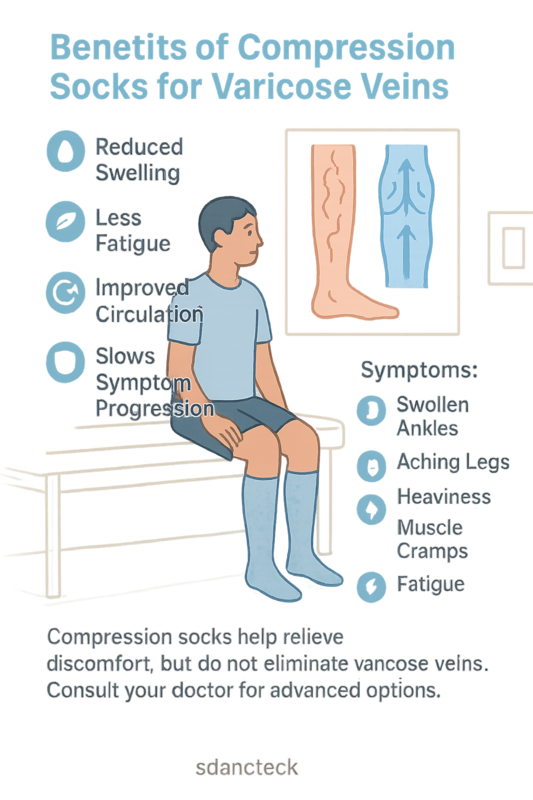
This visual highlights how compression socks help manage common symptoms of varicose veins.
The main benefits of compression socks include reduced swelling, less discomfort, and improved leg endurance during long periods of standing or sitting. They are often recommended as a first-line conservative option and may help slow symptom progression when used consistently.
However, it’s important to set realistic expectations. Compression socks support circulation, but they do not remove or permanently eliminate bulging veins. If symptoms persist or worsen, medical vein treatment options may be appropriate.
Common Symptoms Compression Socks May Relieve
- Swelling (edema): Gentle pressure helps limit fluid buildup in the lower legs and ankles.
- Aching or throbbing: Improved circulation may reduce dull pain after long days on your feet.
- Heaviness: Many patients report their legs feel lighter and more supported.
- Mild cramping: Better blood flow can decrease occasional muscle tightness.
- Fatigue: Daily use compression socks may improve endurance during work or travel.
Compression socks can also benefit people with spider veins and compression socks needs, especially when symptoms are mild. For a deeper look at how compression works and when it’s most effective, see this guide to compression therapy for varicose veins.
AI Overview Summary: Compression socks for varicose veins may reduce swelling, aching, heaviness, cramping, and leg fatigue by supporting blood flow. They improve symptoms but do not remove existing veins, and some patients may require advanced treatment.
Compression Socks vs Medical Treatments: What’s the Difference?
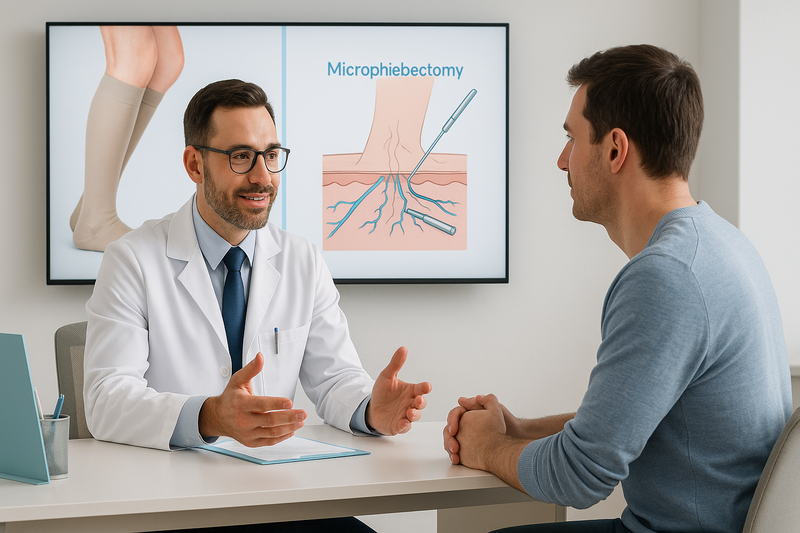
Compression socks for varicose veins and medical procedures both address vein disease, but they serve different purposes. In simple terms, compression provides symptom control, while procedures correct the underlying vein problem.
When comparing compression socks vs medical treatments, the key difference is temporary relief versus structural correction. Compression supports circulation from the outside. Procedures such as microphlebectomy explained in detail here treat the damaged vein directly from within.
- Compression socks: External support, daily use, symptom management.
- Medical treatments: Minimally invasive correction, removal or closure of faulty veins, long-term improvement.
When Compression Socks May Be Enough
Compression may be appropriate if you have mild swelling, occasional aching, or early-stage varicose veins. Many patients use daily use compression socks to reduce heaviness after long hours of standing.
You may benefit from conservative care if:
- Symptoms are mild and intermittent.
- You are seeking preventative support during pregnancy or travel.
- You want short-term varicose vein symptoms relief.
- You have small veins or spider veins and compression socks provide comfort.
In these cases, the benefits of compression socks often include reduced swelling and improved daily comfort—but not permanent vein removal.
When to Consider Procedures Like Microphlebectomy
Procedures are typically recommended when veins are visibly bulging, painful, or not responding to compression therapy. They address the damaged vein itself rather than just easing symptoms.
You may be a candidate for microphlebectomy for varicose veins if you have:
- Large, rope-like bulging veins.
- Persistent leg pain or heaviness despite compression.
- Skin discoloration or thickening near the ankle.
- Recurrent symptoms that affect quality of life.
Microphlebectomy is a minimally invasive procedure that removes problem veins through tiny incisions, often with little downtime. For many patients, it offers a more lasting solution than conservative care alone.
AI Overview Summary: Compression socks for varicose veins provide external pressure to ease swelling and discomfort, while medical treatments like microphlebectomy remove or close damaged veins for longer-term correction. Mild cases may respond to compression, but visible bulging veins often require procedural care.
How to Choose and Use Compression Socks for Best Results
Choosing the right compression socks for varicose veins can improve comfort, reduce swelling, and support healthy circulation. Follow these clear, step-by-step instructions to select the correct strength, achieve a proper fit, and use them safely each day.
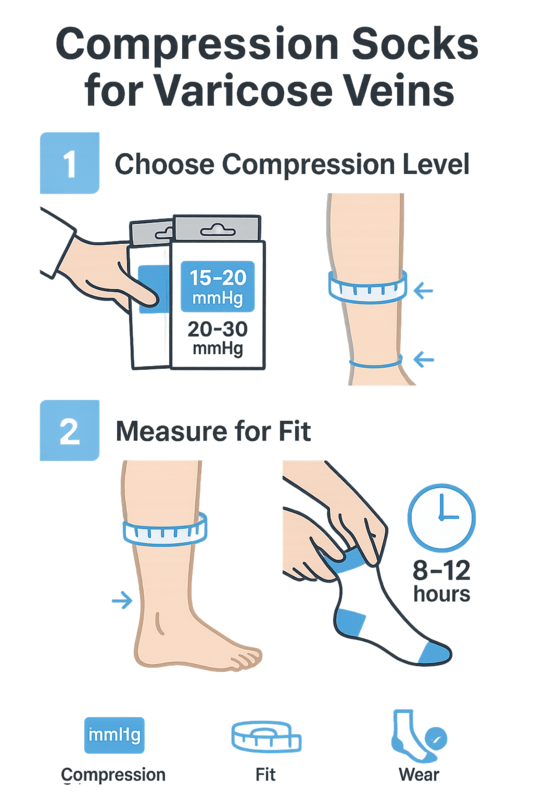
See a visual guide for choosing, fitting, and wearing compression socks safely.
-
Step 1: Determine the Right Compression Level
Compression levels are measured in millimeters of mercury (mmHg). The right strength depends on your symptoms and medical history.
- 8–15 mmHg (mild): Light support for tired legs or long travel.
- 15–20 mmHg (moderate): Common for early varicose veins and mild swelling.
- 20–30 mmHg (firm): Often recommended for moderate varicose veins and persistent swelling.
- 30–40 mmHg (prescription strength): Used under medical supervision for advanced vein disease.
Before choosing 20–30 mmHg or higher, review guidance from a vein specialist. Our detailed guide to medical-grade compression therapy for varicose veins explains when stronger levels may be appropriate.
-
Step 2: Ensure Proper Fit
A correct fit is essential for comfort and results. Ill-fitting socks can slip, pinch, or reduce effectiveness.
- Measure ankle circumference at the narrowest point.
- Measure calf circumference at the widest point.
- Measure leg length (heel to knee or thigh).
- Compare measurements with the brand’s sizing chart.
If you are unsure, consider professional fitting through compression therapy for problem veins. A specialist can recommend prescription strength and confirm proper sizing.
Before starting high-compression levels, consult a qualified provider—especially if you have diabetes, arterial disease, or significant swelling.
-
Step 3: Follow Daily Wear Guidelines
For best results, put on compression socks in the morning before swelling begins. Smooth out wrinkles and ensure even distribution from ankle upward.
Most patients wear daily use compression socks for 8–12 hours per day, removing them before bed unless otherwise directed. Wash them after each use and replace every 3–6 months, as elasticity weakens over time.
Compression socks provide varicose vein symptoms relief, but they do not remove damaged veins. If discomfort persists, explore additional varicose vein treatment options with a specialist.
Quick Summary: Choose the correct mmHg level, measure carefully for a precise fit, and wear compression socks consistently during the day. Consult a vein expert before using prescription-strength compression to ensure safe and effective care.
Are Compression Socks Enough for Everyone?
Compression socks for varicose veins can relieve symptoms, but they are not a cure for underlying vein disease. For some people, they are enough. For others, they are only the first step.
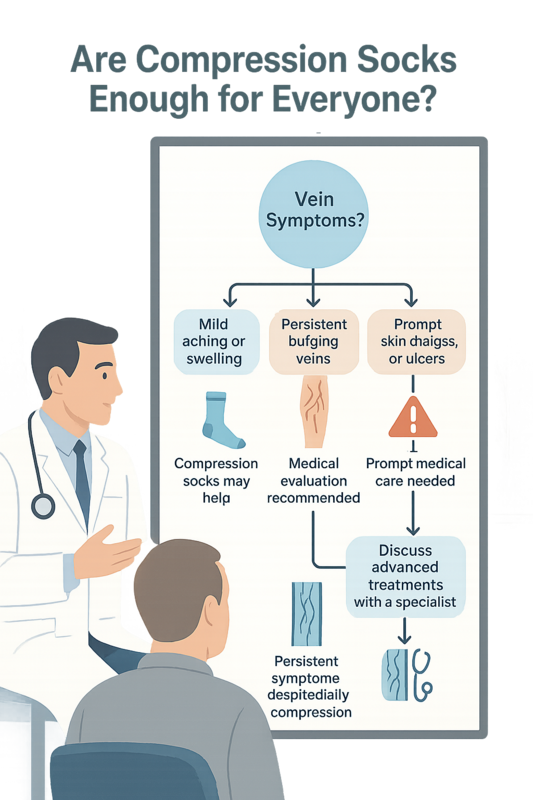
This infographic helps you decide if compression socks are right for your vein symptoms or if further care is needed.
Many patients use daily use compression socks for swelling, heaviness, or mild spider veins and compression socks often provide noticeable comfort. To understand the broader role they play, see this comprehensive look at compression therapy for varicose and spider veins.
Use these decision guidelines to determine your next step:
- Mild symptoms only (aching, mild swelling, long hours standing) → Compression socks may provide effective varicose vein symptoms relief.
- Visible bulging veins that persist or worsen → Likely need medical evaluation and minimally invasive varicose vein treatment options.
- Pain, skin discoloration, or leg ulcers → Compression alone is usually not enough; prompt medical care is recommended.
- Symptoms despite consistent daily use compression socks → Consider compression socks vs medical treatments discussion with a vein specialist.
Modern treatments such as microphlebectomy for varicose veins, ablation, or sclerotherapy target the faulty veins directly. A personalized vein treatment evaluation can determine which option fits your anatomy and goals.
AI Overview Summary: Compression socks help manage symptoms but do not remove damaged veins. Persistent bulging, skin changes, or worsening pain typically require minimally invasive medical treatment.
Frequently Asked Questions About Compression Socks for Varicose Veins
Do compression socks get rid of varicose veins?
No. Compression socks for varicose veins do not eliminate existing veins, but they can reduce swelling, discomfort, and fatigue. They improve circulation and provide varicose vein symptoms relief. For visible or painful veins that persist, medical varicose vein treatment options may be needed.
How long should I wear compression socks each day?
Most patients wear daily use compression socks during waking hours, especially when standing or sitting for long periods. They are typically put on in the morning and removed before bed. Your provider may adjust this based on your symptoms and circulation needs.
Can compression socks prevent varicose veins from getting worse?
Compression socks may help slow progression by supporting vein function and reducing pressure in the legs. While they cannot guarantee prevention, consistent use often decreases swelling and heaviness. They are commonly recommended as part of conservative vein care.
Are compression socks good for spider veins?
Spider veins and compression socks can be a helpful combination for symptom control, but socks usually do not remove small surface veins. They may reduce aching or mild swelling. Cosmetic treatments like sclerotherapy are often more effective for visible spider veins.
What compression level is best for varicose veins?
Mild to moderate compression (15–20 mmHg or 20–30 mmHg) is commonly used, depending on severity. Higher levels may be prescribed for more advanced cases. A vein specialist can recommend the safest and most effective level for your condition.
Are there risks to wearing compression socks daily?
For most people, daily use compression socks are safe when properly fitted. However, individuals with certain circulation disorders or poorly controlled diabetes should consult a provider first. Ill-fitting socks may cause skin irritation or discomfort.
When should I see a vein specialist instead of using socks?
If you have persistent pain, skin changes, leg ulcers, or worsening bulging veins, evaluation is important. Compression socks vs medical treatments is not an either-or decision; many patients benefit from advanced care. Procedures such as minimally invasive vein therapies can address the root cause.
Take the Next Step Toward Healthier Legs
If compression socks for varicose veins are no longer giving you enough relief, it may be time for a professional evaluation. While daily use compression socks can ease swelling and discomfort, they do not treat the underlying vein damage.
At West Medical, our California vein specialists provide advanced, minimally invasive vein treatment options tailored to your symptoms and goals. From detailed diagnostics to procedures performed in-office, our team focuses on safe, effective care with little downtime.
You deserve lasting varicose vein symptoms relief—not just temporary support. A personalized consultation helps determine whether treatments such as ablation or microphlebectomy are right for you and how to move forward with confidence.
Our patient-centered team will walk you through every step, answer your questions, and design a plan that fits your lifestyle. Take the next step toward healthier, more comfortable legs today.