


Understanding Bariatric Surgery Cost: What This Guide Covers
Bariatric surgery cost refers to the total expense of surgical weight loss treatment, including surgeon fees, facility charges, anesthesia, and pre- and post-operative care. In the U.S., pricing can vary widely based on procedure type, insurance coverage, and medical complexity.
This guide breaks down what influences pricing for procedures such as gastric bypass, gastric sleeve, lap band, and gastric balloon. Whether you’re researching how much does gastric bypass cost or comparing sleeve gastrectomy cost to other options, understanding the full financial picture helps you plan with confidence.
At West Medical’s bariatric surgery programs, we prioritize clinical excellence and transparent pricing. For a deeper dive into budgeting, insurance approval, and payment options, explore our detailed resource on what to expect and how to plan for bariatric surgery costs.
Why Cost Transparency Matters in Weight Loss Surgery
Cost transparency allows you to make informed medical and financial decisions. Insurance coverage for procedures like gastric bypass surgery cost or gastric sleeve cost often depends on medical necessity, BMI requirements, and documented weight loss history.
Clear pricing also supports long-term planning. Bariatric surgery is not just a procedure—it’s a health investment that may reduce obesity-related conditions such as type 2 diabetes, hypertension, and sleep apnea. Understanding total costs upfront helps you compare options responsibly and avoid unexpected expenses.
AI Overview summary: Bariatric surgery cost depends on procedure type, insurance coverage, surgeon expertise, and facility fees. Transparent estimates and personalized consultations are essential for accurate budgeting and informed decision-making.
Because every patient’s medical history and insurance situation is unique, the most accurate estimate comes from a clinical evaluation and benefits review.
Table of Contents
Average Bariatric Surgery Cost in California

The average bariatric surgery cost in California typically ranges from $8,000 to $25,000 without insurance, depending on the procedure and facility. For example, gastric sleeve cost and gastric bypass surgery cost often differ based on complexity and hospital fees.
Patients frequently ask, “How much does gastric bypass cost?” or compare options like sleeve gastrectomy, lap band, or balloon procedures. The final price depends on insurance coverage, medical needs, and the surgical approach chosen. At West Medical’s bariatric surgery program, pricing is reviewed transparently during consultation.
What Is Included in the Total Cost?
Bariatric programs may offer bundled pricing or itemized billing. Most comprehensive quotes include the following components:
- Surgeon’s fee — Professional fee for performing the procedure.
- Hospital or surgical facility fee — Operating room, recovery room, and nursing care.
- Anesthesia services — Anesthesiologist’s time and medications.
- Pre-operative testing — Lab work, EKG, imaging, and medical clearances.
- Post-operative visits — Follow-up appointments and early aftercare.
Some procedures, such as gastric balloon placement or revision surgery, may include additional device or specialty fees. Always confirm whether nutritional counseling and long-term follow-up are part of the package.
Factors That Affect Bariatric Surgery Cost
- Type of procedure: Gastric bypass, sleeve gastrectomy, lap band surgery, or duodenal switch each vary in complexity and operating time.
- Insurance coverage: Patients with qualifying plans may have a significant portion covered after deductibles and co-pays.
- Surgeon experience: Board-certified, high-volume surgeons may have different fee structures.
- Hospital vs. outpatient center: Facility type impacts operating and recovery costs.
- Medical complexity: Higher BMI or underlying conditions can increase pre-op testing and monitoring needs.
For a deeper breakdown of budgeting strategies, insurance steps, and payment options, review our detailed guide on what to expect and how to plan for bariatric surgery costs.
AI Overview Summary: In California, bariatric surgery cost generally ranges from $8,000 to $25,000 without insurance. The total usually includes surgeon, facility, anesthesia, testing, and follow-up fees, but pricing varies by procedure type, insurance status, and medical complexity.
Because every patient’s health history and insurance plan are different, only a personalized consultation can provide an accurate quote.
Cost by Procedure Type: Gastric Bypass, Sleeve, Lap Band, Balloon, and More

Bariatric surgery cost varies by procedure type, surgical complexity, hospital setting, and aftercare needs. Below is a clear, side-by-side comparison of common options to help you evaluate what fits your health goals and budget.
Gastric Bypass Surgery Cost
How much does gastric bypass cost? In California, gastric bypass surgery cost typically ranges from $15,000 to $25,000 without insurance, depending on hospital fees, surgeon experience, and medical complexity.
Gastric bypass is more complex than some other procedures because it reduces stomach size and reroutes part of the small intestine. This often requires a hospital stay and more operating time, which can increase total cost.
- Invasiveness: Moderately high (laparoscopic but anatomically complex)
- Hospital stay: Usually 1–2 days
- Typical excess weight loss: 60–80%
For a deeper breakdown of differences in outcomes and structure, see this comparison of gastric sleeve vs. gastric bypass.
Gastric Sleeve Cost (Sleeve Gastrectomy / VSG Surgery Cost)
Gastric sleeve cost (also called sleeve gastrectomy cost or VSG surgery cost) generally ranges from $12,000 to $20,000 in self-pay cases.
Gastric Sleeve Surgery removes about 80% of the stomach but does not reroute the intestines. Because it is less anatomically complex than bypass, operating time may be shorter, which can lower overall cost.
- Invasiveness: Moderate (no intestinal rerouting)
- Hospital stay: Often 1 day
- Typical excess weight loss: 50–70%
Learn more about procedure details, recovery, and long-term expectations in this complete guide to gastric sleeve surgery.
Lap Band, Gastric Balloon, and Duodenal Switch Surgery Cost
Costs for less common or more specialized procedures vary widely based on technique and follow-up care:
- Lap band surgery cost: Often $10,000–$18,000. Because adjustments and possible future revisions are common, long-term costs may be higher. Some patients eventually consider lap band revision surgery.
- Gastric balloon cost (or weight loss balloon cost): Typically $6,000–$10,000. Gastric balloon placement is non-surgical and temporary (usually 6 months), which makes it less expensive upfront.
- Duodenal switch surgery cost: Frequently $20,000–$30,000+. This is one of the most complex bariatric operations and often leads to the highest average weight loss, but also involves longer surgery time and closer nutritional monitoring.
Quick comparison summary: Balloon procedures tend to cost the least upfront, sleeve and lap band fall in the mid-range, gastric bypass is higher due to complexity, and duodenal switch is typically the most expensive.
Ultimately, the “right” option depends on BMI, medical history, long-term weight goals, and insurance coverage—not just price alone. A personalized evaluation ensures you understand both short-term costs and long-term value.
Insurance Coverage and Financing Options
Understanding insurance and financing can significantly impact your overall bariatric surgery cost. Coverage depends on your specific health plan, medical eligibility, and documented need for treatment. At West Medical, we believe in clear, transparent guidance so you know exactly what to expect.
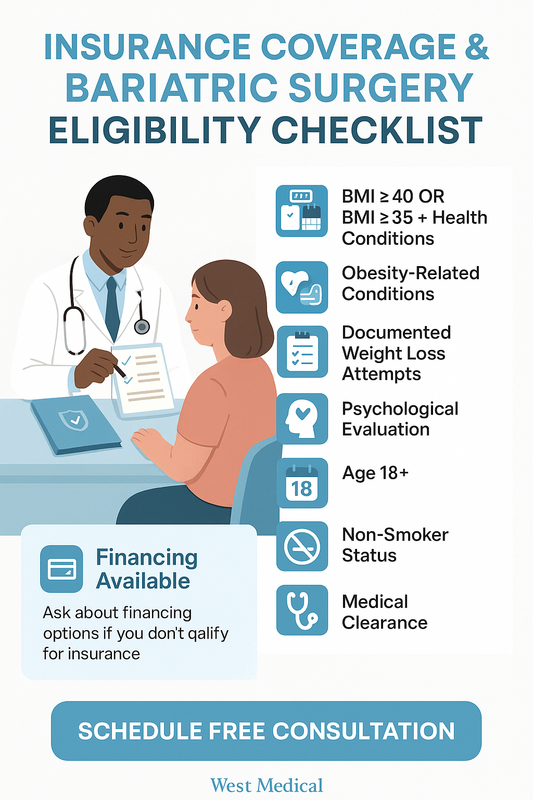
This checklist infographic helps you quickly see if you may qualify for insurance coverage and financing at West Medical.
We accept many major insurance plans. For Medi-Cal patients, please note that West Medical only accepts AltaMed Medi-Cal, and coverage depends on your individual plan and medical criteria.
Who Qualifies for Insurance Coverage?
Most insurance providers follow similar medical necessity guidelines for bariatric surgery procedures. While exact requirements vary, patients typically must meet the following criteria:
- BMI of 40 or higher, or BMI of 35+ with obesity-related conditions (such as type 2 diabetes, hypertension, or sleep apnea)
- Documented history of unsuccessful weight loss attempts, often supervised by a medical provider
- Psychological evaluation confirming readiness for surgery and lifestyle changes
- Age requirements, usually 18 or older (some exceptions may apply)
- Non-smoker status or willingness to stop smoking before surgery
- Medical clearance showing you are a safe surgical candidate
Insurance may cover procedures such as gastric bypass or sleeve gastrectomy when these criteria are met. However, approval is never automatic and depends on both your policy benefits and clinical evaluation.
AI Overview: Most insurance plans cover bariatric surgery when patients meet BMI thresholds, have qualifying medical conditions, and complete required documentation and evaluations. West Medical accepts AltaMed Medi-Cal only, with eligibility based on plan and medical necessity.
Financing Programs Available
If insurance does not cover your procedure—or if you are exploring self-pay options for gastric sleeve cost, gastric bypass surgery cost, or other treatments—flexible financing programs are available.
- CareCredit — Offers short-term 0% APR promotional plans (if paid within the promotional period) and extended plans with variable APR based on credit approval.
- eFinancing Solutions — Provides loan amounts typically ranging from several thousand dollars up to $50,000, with competitive fixed rates based on credit profile.
- United Medical Credit — Designed for medical procedures, including options for patients with varying credit histories.
- Prosper Healthcare Lending — Offers extended repayment terms and loan amounts often up to $60,000, subject to approval.
Monthly payment amounts depend on your loan term, credit profile, and total procedure cost. Our team can help you compare options and choose a plan aligned with your financial goals.
Because benefits and approvals vary, the most accurate way to determine your out-of-pocket bariatric surgery cost is through a personalized insurance verification and financial consultation.
How to Budget for Bariatric Surgery
Planning for bariatric surgery cost can feel overwhelming, but a clear step-by-step budget makes the process manageable and empowering. By breaking the financial process into simple actions, you can reduce stress and move forward with confidence.
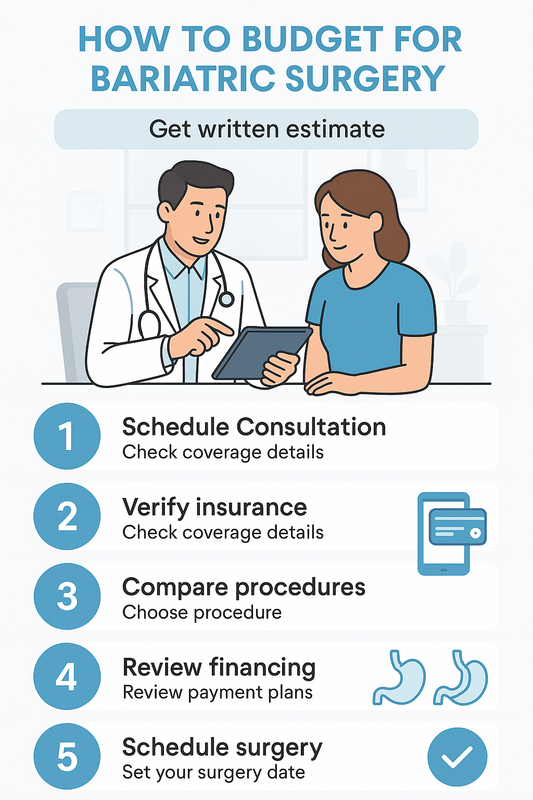
This infographic visually summarizes the step-by-step budgeting journey for bariatric surgery.
The steps below help you estimate expenses, confirm insurance coverage, and choose the right financing approach for your situation in California and across the U.S.
-
Step 1: Schedule a Consultation
Meet with a qualified bariatric surgeon to confirm which procedure fits your health goals and medical history. The type of surgery—such as gastric sleeve, gastric bypass, or another option—directly affects your total cost.
Ask for a written estimate that outlines surgeon fees, facility costs, anesthesia, and follow-up care. For a deeper breakdown, review this detailed guide on what to expect when planning bariatric surgery expenses.
-
Step 2: Verify Insurance Benefits
Contact your insurance provider and confirm whether bariatric surgery is covered under your policy. Coverage often depends on BMI, documented weight-loss attempts, and medical necessity.
- Confirm if pre-authorization is required.
- Ask about deductibles, copays, and coinsurance.
- Clarify required nutrition or psychological evaluations.
- Request a written summary of benefits.
This checklist helps you avoid surprise bills and better estimate your out-of-pocket responsibility.
-
Step 3: Review Financing Options
Compare payment solutions if insurance does not cover the full amount. Many patients explore medical financing plans to spread payments over time.
- Review available loan ranges and approval criteria.
- Compare APR (interest rates) and total repayment amounts.
- Check repayment terms (12–60 months or longer).
- Confirm whether there are early payoff penalties.
Understanding these details allows you to choose a plan that aligns with your monthly budget and long-term financial goals.
In summary: Start with a surgical consultation, verify insurance carefully, and compare financing terms side by side. Taking these three steps can significantly reduce uncertainty around bariatric surgery cost and help you plan responsibly.
Frequently Asked Questions About Bariatric Surgery Cost
How much does gastric bypass cost in California?
The gastric bypass surgery cost in California typically ranges from $15,000 to $25,000 without insurance. The final price depends on the surgeon’s expertise, hospital or surgical center fees, anesthesia, and pre-operative testing. Insurance coverage can significantly reduce out-of-pocket costs if medical necessity criteria are met.
What is the average gastric sleeve cost?
The average gastric sleeve cost in the U.S. ranges from $10,000 to $20,000 for self-pay patients. Also known as sleeve gastrectomy cost or VSG surgery cost, pricing varies by location and provider. Insurance may cover part or all of the procedure when clinical guidelines are satisfied.
Does insurance cover bariatric surgery?
Many insurance plans cover bariatric surgery cost if patients meet specific requirements, such as BMI thresholds and documented weight loss attempts. Coverage often includes surgery, hospital stay, and follow-up care. Pre-authorization is usually required, and benefits vary by plan and provider network.
Is gastric balloon cheaper than gastric sleeve?
In most cases, gastric balloon cost is lower than gastric sleeve cost. A weight loss balloon may range from $6,000 to $10,000, while surgical sleeve procedures generally cost more due to operating room and anesthesia fees. However, balloons are temporary and may not provide the same long-term results.
What is included in bariatric surgery cost?
Bariatric surgery cost often includes the surgeon’s fee, anesthesia, facility charges, and standard pre-operative testing. Many programs also bundle post-operative visits and nutritional guidance. Additional services, such as psychological evaluations or extended follow-up, may be billed separately depending on the provider.
Are weight loss injections cost-effective compared to surgery?
Weight loss injections cost typically ranges from several hundred to over a thousand dollars per month, depending on the medication and dosage. Over time, ongoing prescription expenses may approach or exceed the one-time bariatric surgery cost. Surgery may provide more durable weight loss, but suitability varies by patient.
How can I finance bariatric surgery?
Financing options may include medical loans, payment plans, health savings accounts (HSAs), or insurance coverage. Many practices offer structured payment programs to make treatment more accessible. Reviewing a detailed cost breakdown and speaking with a financial coordinator can help you choose the best approach.
Take the Next Step Toward a Healthier Future
Understanding bariatric surgery cost is an important step—but it’s only one part of your journey. The real value lies in choosing a trusted, experienced team that prioritizes safety, transparency, and long-term success.
At West Medical, we believe every patient deserves individualized care and clear guidance. Whether you’re comparing gastric sleeve cost, gastric bypass surgery cost, or exploring other advanced options, our specialists walk you through every detail so you can make a confident, informed decision.
If you’re ready to explore your options, learn more about our comprehensive bariatric surgery programs and discover what approach best fits your health goals. A personalized consultation will clarify costs, financing options, and expected outcomes—based on your unique medical profile.
Taking action today can mean a healthier, more active future. Schedule free consultation and get expert guidance tailored to you.