

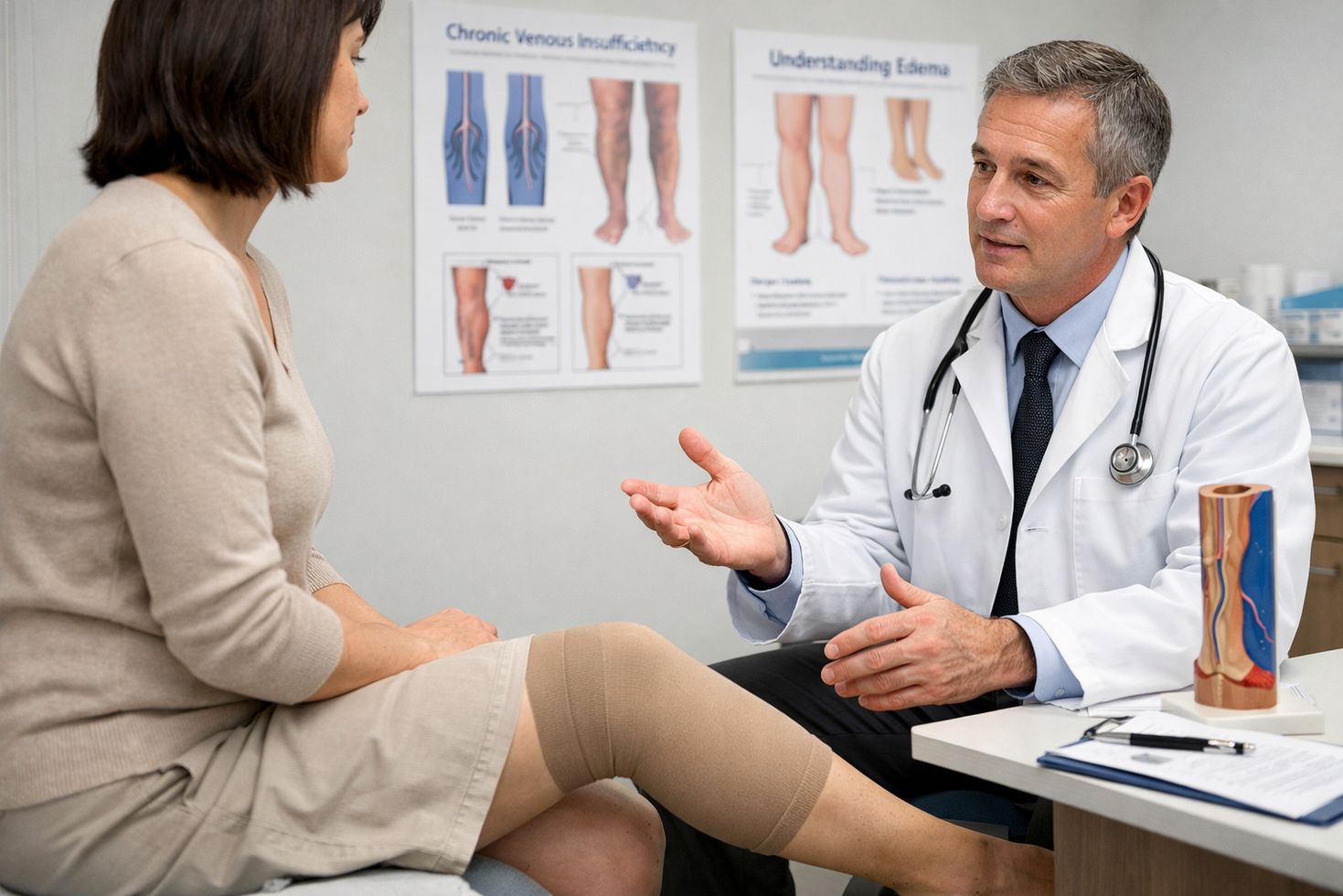
Compression garments for edema are often something people look into when swelling starts to affect comfort, movement, or everyday routines. If you are dealing with puffiness, heaviness, tight skin, or aching in the legs or another limb, it is understandable to want relief and clear next steps. Compression may help support circulation and symptom management when it is medically appropriate, but it is not a one-size-fits-all solution.
Edema can happen for many reasons, including standing or sitting for long periods, vein problems, lymphatic issues, injury, pregnancy, medication effects, or underlying heart, kidney, or liver conditions. Because the cause matters, swelling sometimes needs medical evaluation before choosing a garment. The right level of compression, garment style, and fit can depend on your diagnosis, overall health status, and whether one or both limbs are affected.
This guide will walk through common types of compression garments, potential benefits, basic fit considerations, and situations where professional advice is especially important. The goal is practical, medically cautious information so you can better understand when compression may be useful as one part of a broader care plan.
Why swelling leads people to consider compression
Swelling can make shoes feel tight, limit mobility, leave limbs feeling heavy, and interfere with work, exercise, rest, or daily tasks. That is why many people explore compression garments: they may offer support that helps manage symptoms and improve day-to-day comfort. Still, individual results vary, and persistent, worsening, or unexplained edema should not be ignored.
What Compression Garments for Edema Are and How They Work
Compression garments for edema are medically designed wearables that apply controlled pressure to part of the body. Unlike ordinary tight clothing, they are made to deliver a specific amount of compression in a planned pattern, not just a snug fit. That structure is what makes them different from leggings, shapewear, or athletic gear that may feel firm but are not intended to provide measured support.
In simple terms, compression works by gently supporting the tissues and the vessels beneath them. This may help encourage venous and lymphatic return, especially in the legs or arms, by promoting movement of fluid upward rather than allowing it to collect more heavily in one area. Readers exploring compression therapy for varicose veins care will often see this same idea described as graduated support.
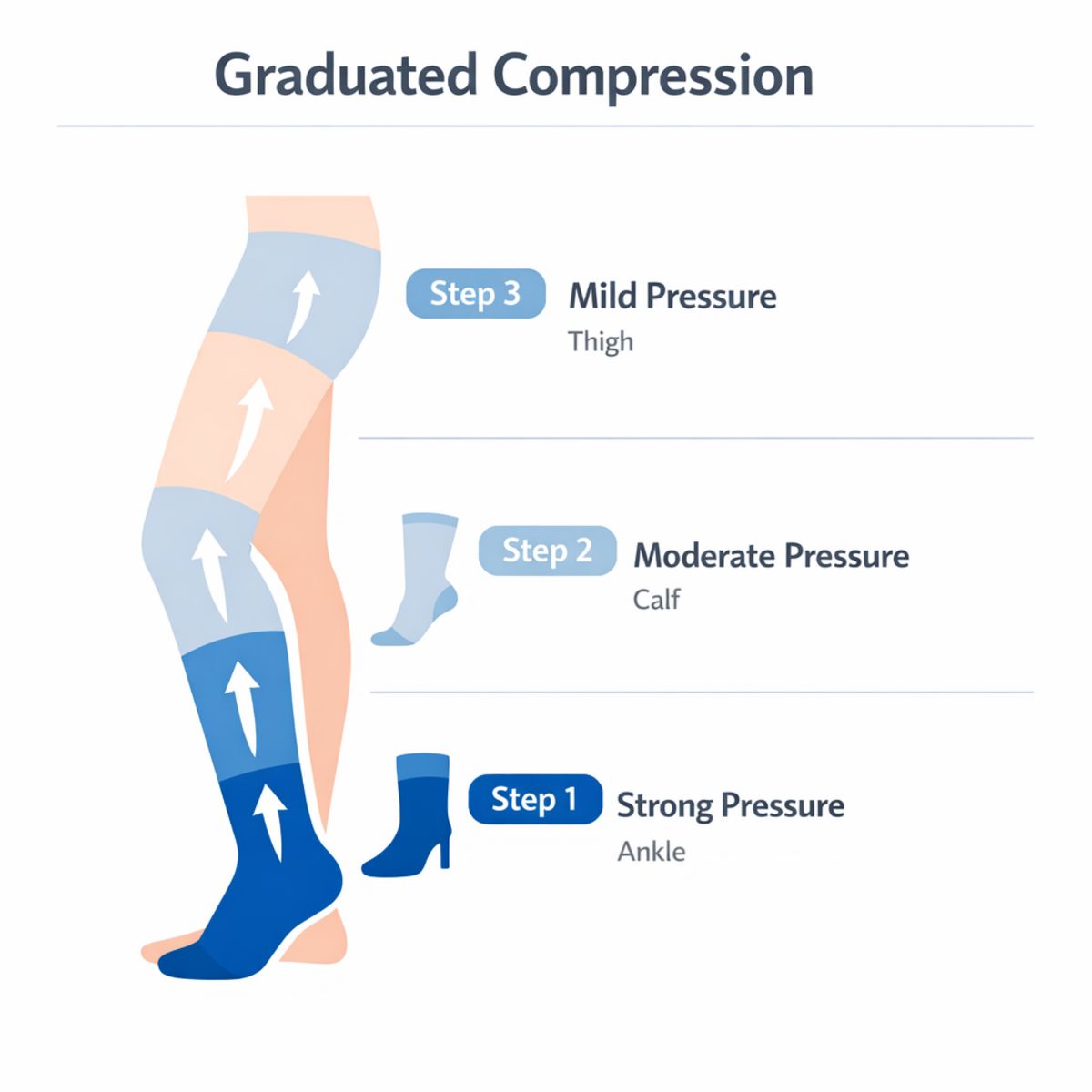
What graduated compression means
Graduated compression means the pressure is strongest at the lower part of the limb, such as the ankle, and gradually becomes lighter higher up the leg or arm. That pattern matters because it is designed to work with the body’s natural circulation rather than pressing equally everywhere. For example, compression stockings for venous stasis are often shaped and measured to create this downward-to-upward pressure change. The goal is not to squeeze as hard as possible, but to apply support in a way that is intentional and consistent.
Common types of compression garments
Common categories include socks, stockings, sleeves, wraps, and some maternity support options. Compression sleeves for edema are often used on the arms, while socks and stockings are more commonly associated with the lower legs. You may also come across search terms like compression socks for blood clots, though product choice and use can depend on the situation and should not be assumed to be the same across all needs.
It is also important to distinguish everyday compression garments from anti embolism stockings. Anti embolism stockings are typically used in specific medical settings, such as during limited mobility or hospital care, and they are not automatically interchangeable with standard daily compression wear without guidance. In short, compression garments are effective because they are structured, measured, and purpose-built—not simply because they feel tight.
When Compression May Help With Edema
Compression garments may help some people manage edema symptoms, especially when swelling is mild, fluctuates during the day, or is linked to venous circulation issues. Rather than curing the underlying cause, they are typically used to support comfort and daily function. Some people notice their legs feel less heavy, less achy, or less tired after long periods of standing, sitting, or travel. Others may find that compression helps limit the “full” or tight feeling that can come with lower-leg swelling.
That said, results vary. How much benefit someone feels often depends on why the swelling is happening, whether the garment fits correctly, how consistently it is worn, and whether other steps are also being used. Persistent, worsening, or one-sided swelling should be medically evaluated, since edema can have causes that need more than supportive care.
Potential day-to-day symptom relief
For everyday symptom management, compression may help reduce mild swelling and improve comfort during routine activities. People who spend hours on their feet, sit for extended periods at work, or travel frequently sometimes use compression to support circulation and reduce fatigue by the end of the day. In some cases, support stockings for pregnancy varicose veins are also recommended, but pregnancy-related swelling and vein symptoms should be discussed with a clinician to make sure the level and type of compression are appropriate.
Realistic expectations matter. Compression can support symptom control, but it may not fully resolve swelling, especially if the cause is more complex or the garment is not well matched to the person’s needs.
How compression relates to varicose vein symptoms
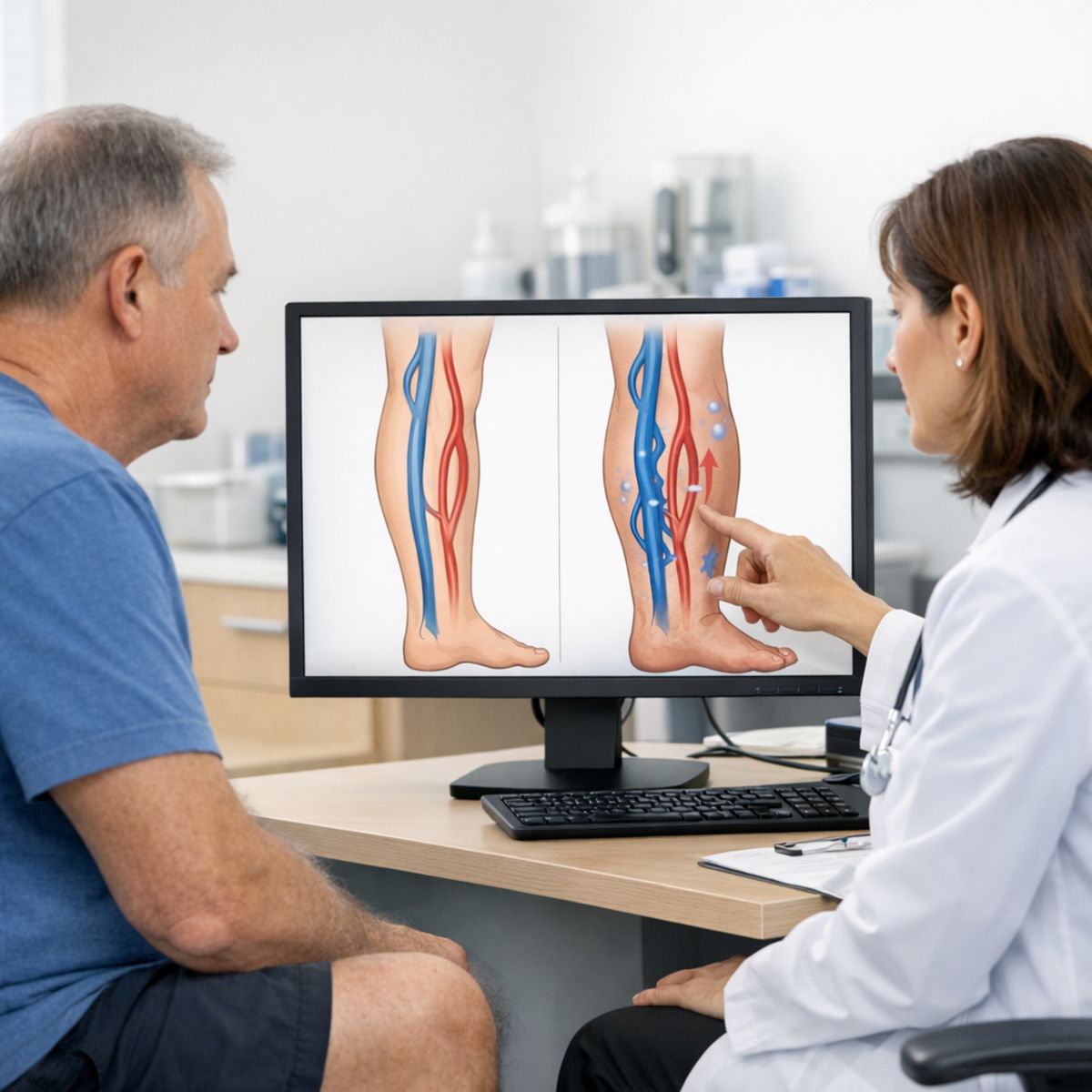
Compression treatment varicose veins is often part of conservative care for people who have leg swelling along with visible veins, aching, or a sense of pressure. Compression stockings for varicose veins treatment may help support the veins and improve day-to-day comfort, particularly when symptoms are triggered by prolonged standing or sitting. They are commonly used before, during, or alongside a broader treatment plan rather than as a one-size-fits-all solution.
If symptoms continue despite regular use, or if varicose veins are becoming more painful or limiting activity, further evaluation may be needed. In some cases, a clinician may discuss additional options such as radiofrequency ablation for varicose veins as part of a more complete approach.
Compression Socks, Stockings, Sleeves, and Anti-Embolism Stockings Compared
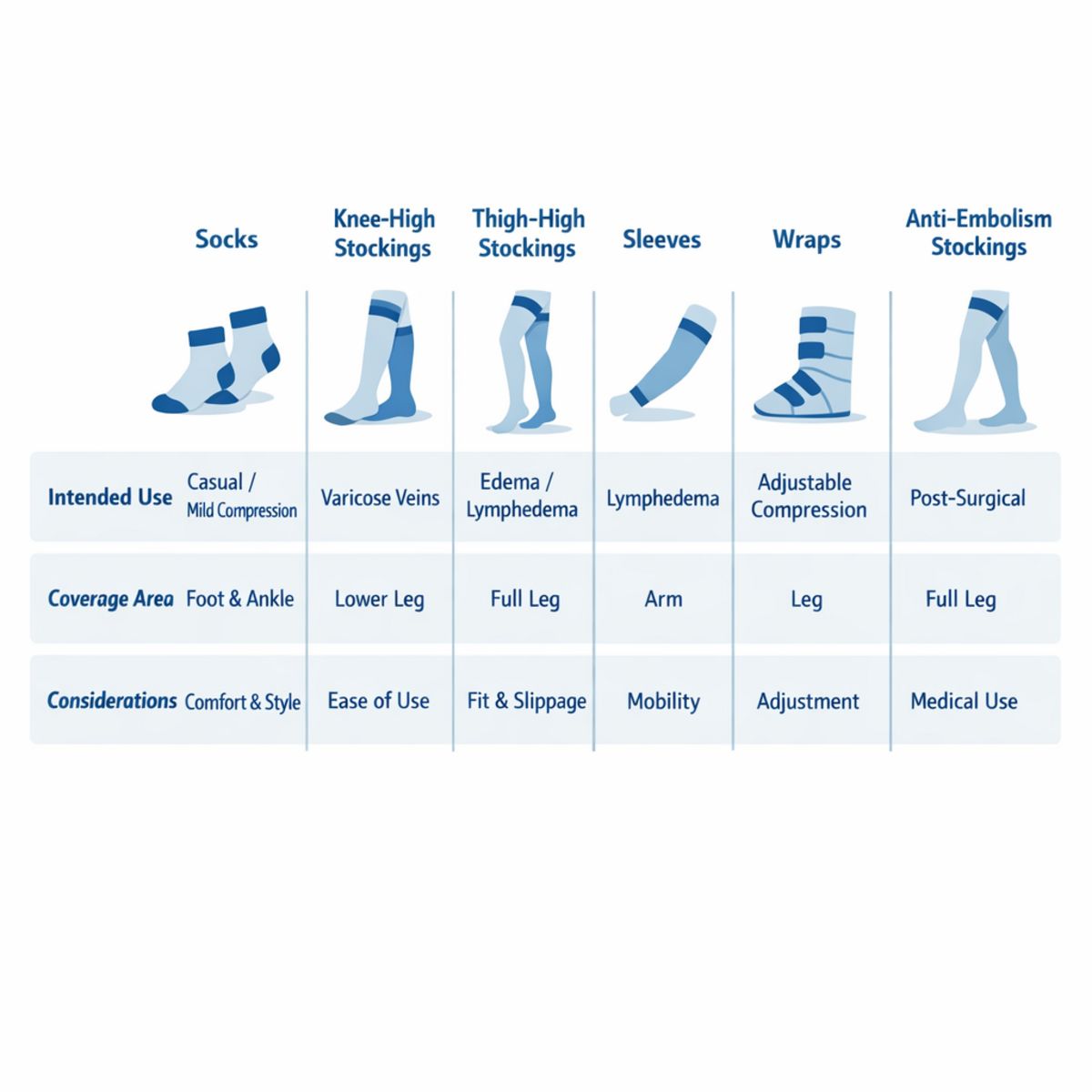
Not all compression garments are designed for the same body area, symptom pattern, or situation. Compression socks, compression stockings, sleeves, wraps, and anti embolism stockings can look similar at a glance, but they differ in coverage, intended use, and how they may be discussed with a clinician or fitter. A helpful way to compare them is by asking where swelling occurs, how far support needs to extend, how easy the garment is to put on, and whether the garment is meant for daily walking or a more specific medical circumstance.
Lower-body options for leg swelling
Socks and knee-high styles are commonly considered when symptoms are focused in the feet, ankles, or lower legs. They cover less area than higher garments, which may make them easier for some people to wear consistently.
Thigh-high stockings extend support above the knee and may come up in conversations when swelling, discomfort, or venous concerns affect more of the leg. They offer broader coverage but can feel less convenient for some wearers.
Pantyhose or full-length styles provide the widest lower-body coverage. These may be discussed when support is needed across both legs with a more continuous fit, though comfort, heat, and bathroom convenience can influence whether they are practical.
In general, the best garment type depends on where swelling or heaviness appears, whether symptoms stay below the knee or extend higher, and what a person can realistically manage day to day.
When sleeves differ from stockings
Compression sleeves are not simply another name for compression stockings. Stockings are typically used for the legs and are shaped for lower-body wear. Sleeves are more often associated with the arms or with localized support for a specific limb segment. That means compression stockings for venous stasis and compression sleeves for edema are usually discussed in different contexts.
A calf sleeve, for example, does not replace a full stocking if foot or ankle swelling is also part of the problem. Likewise, an arm sleeve is designed for a different body area than a leg garment. Wraps are another separate category and may be considered when adjustability, fluctuating swelling, or limited hand strength makes a pull-on garment harder to use.
Why anti-embolism stockings are a separate category
Anti embolism stockings are generally intended for specific medical circumstances, often involving reduced mobility or hospital-based care. They should not be assumed to be equivalent to standard ambulatory compression wear used by people who are up and walking during daily life.
This distinction matters because products that appear similar may be designed for different risk profiles, fitting approaches, and care settings. Readers should not self-substitute anti-embolism products for regular compression socks or compression stockings without professional guidance.
When choosing among garment types, useful discussion points for a clinician or fitter include swelling location, whether symptoms affect one limb or both, comfort preferences, skin sensitivity, and dexterity. Those details often matter just as much as the garment category itself.
How to Choose, Fit, and Wear Compression Garments Safely
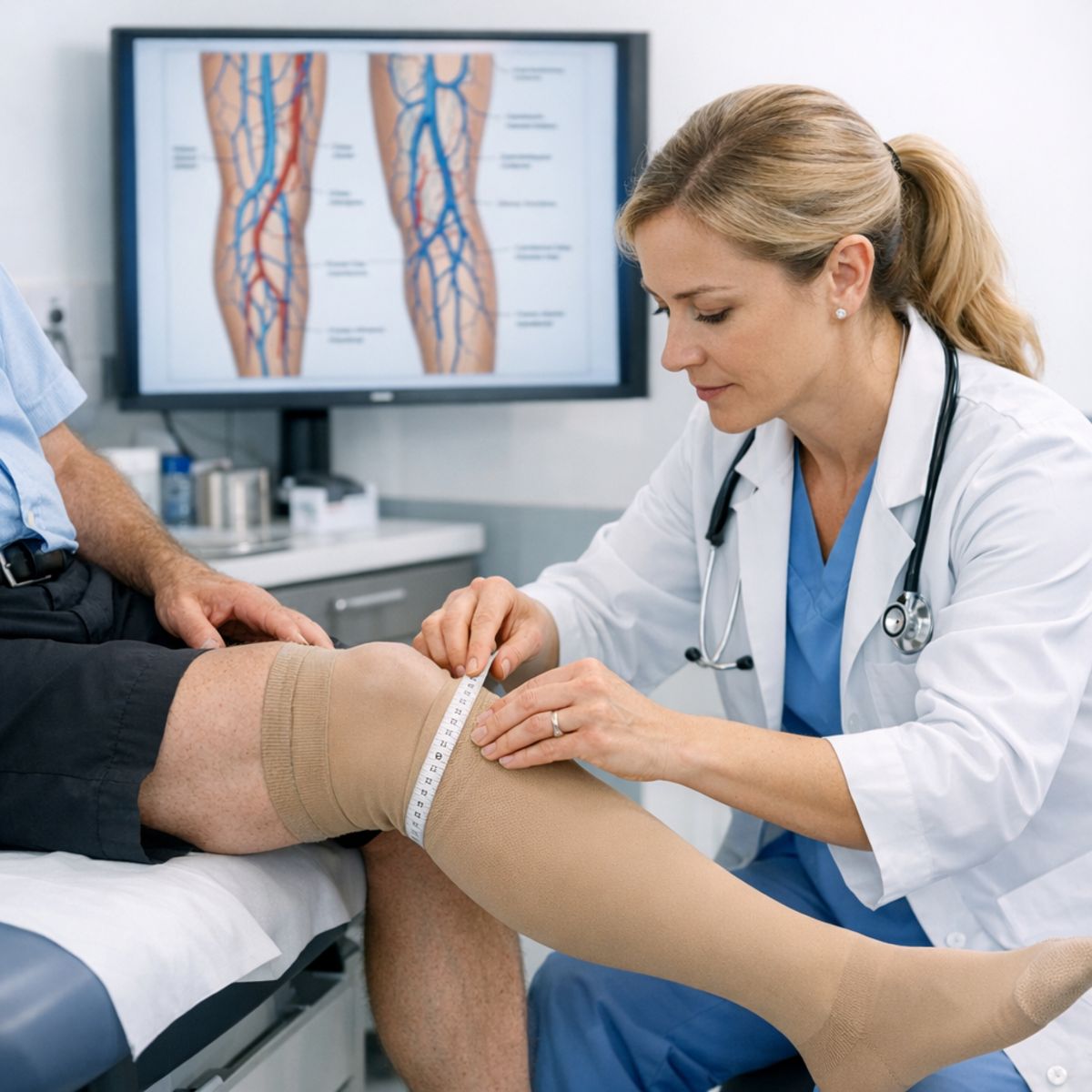
Choosing compression garments is not just about picking a size off the shelf. The best approach is to match the garment to the area affected, your symptoms, and your overall health situation. If you are exploring compression therapy options for vein symptoms, it helps to think of fit and daily use as part of the process, not an afterthought. Garments should feel supportive and snug, but they should not feel painfully tight, create sharp pressure, or make symptoms worse.
Because individual outcomes depend on health status, the type of swelling, and how consistently the garment is worn, general guidance works best when paired with professional input for uncertain cases. That is especially important if there is significant pain, skin discoloration, numbness, open areas, or concerns about circulation.
1. Start with the reason for swelling
Before choosing a garment, identify where the swelling or discomfort occurs and what pattern you notice. Is it occasional after long standing, more chronic, mainly in one leg, related to pregnancy, or accompanied by visible veins? This is not about self-diagnosis. It is about gathering useful details so you can choose more appropriately and have a better conversation with a clinician or fitter if needed. Also note any medical history that may affect use, including prior vein problems, circulation issues, skin sensitivity, or recent changes in symptoms.
2. Get the right measurements
Fit is one of the biggest factors in comfort and effectiveness. Measure at the time of day recommended by the manufacturer, often when swelling is at its lowest, such as earlier in the morning. Use the brand’s own sizing chart rather than assuming the same size will work across products, since sizing varies. Depending on garment style, measurements may include ankle, calf, thigh, or other points. If you are between sizes, have unusual limb shape, or have trouble matching your numbers to a chart, a professional fitting can help reduce trial and error.
When selecting style, think about the exact area that needs support. Knee-high, thigh-high, pantyhose-style, sleeves, or other designs may be used for different needs. The right choice depends on where symptoms are present, how well you can apply the garment, and what you are most likely to wear consistently.
3. Put garments on correctly
In general, compression stockings or similar garments are easiest to put on in the morning before swelling increases. Apply them carefully and smooth the material so it lies flat against the skin. Avoid bunching, rolling, or leaving wrinkles in place, since those can create uncomfortable pressure points. The garment should feel evenly supportive rather than pinching in one spot. If application is difficult, ask about donning aids or technique tips instead of forcing the garment on in a way that may damage it or irritate your skin.
It is also helpful to learn a realistic wear schedule. Some people wear compression garments during the day and remove them later, while others may receive different instructions based on their health needs. Follow the guidance provided with the product or by your clinician rather than assuming one routine fits everyone.
4. Monitor comfort, skin, and symptom changes
Check your skin regularly, especially when starting a new garment. Mild awareness of pressure can be normal, but ongoing pain, marked indentation, new numbness, unusual coldness, skin irritation, or worsening swelling are signs to stop and get advice. Pay attention to whether the garment is helping you feel more supported through the day or whether it is creating new discomfort. Small fit issues can sometimes be corrected, but persistent problems should not be ignored.
If you are unsure whether compression wear is appropriate for you, or if symptoms are significant or changing, clinician guidance is the safest next step. A proper evaluation can help confirm whether compression socks or other garments are suitable, what style may fit best, and how to use them in a way that supports comfort and safety.
Cost, Replacement, and Everyday Practical Considerations
When comparing compression garments, the upfront price is only one part of the decision. Day-to-day comfort, how easy the garment is to put on and take off, how well it fits your routine, and how often it may need to be replaced can all affect whether you will actually keep wearing it as recommended. Thinking about these practical details early can help you choose an option that supports long-term use rather than focusing only on the initial purchase.
What affects the price of compression garments
Several factors can influence cost. Garment type matters, since socks, sleeves, gloves, stockings, and more specialized pieces may differ in construction. Compression level can also affect selection, as some garments are designed for lighter support while others are made for more structured compression. Standard sizing may be suitable for some people, while custom sizing can add complexity when body shape, measurements, or treatment goals require a more individualized fit. Brand, fabric features, seam design, breathability, and donning aids may also influence overall value.
Replacement is another practical consideration. Over time, repeated wear and washing can reduce elasticity, which may change how the garment performs. Many people find it helpful to have rotation pairs so one can be worn while another is being washed or dried according to care instructions. Proper laundering, following label guidance, and avoiding practices that may damage the fabric can help support the garment’s lifespan.
Before purchasing, it can help to consider comfort features such as softness, moisture management, grip bands, toe style, and how manageable the garment feels during daily use. A garment that fits your body and routine well may offer better practical value than one chosen on price alone. Coverage and reimbursement can vary, so it is best to confirm any insurance questions directly with your provider or clinic rather than assuming benefits.
When Swelling Needs Medical Attention
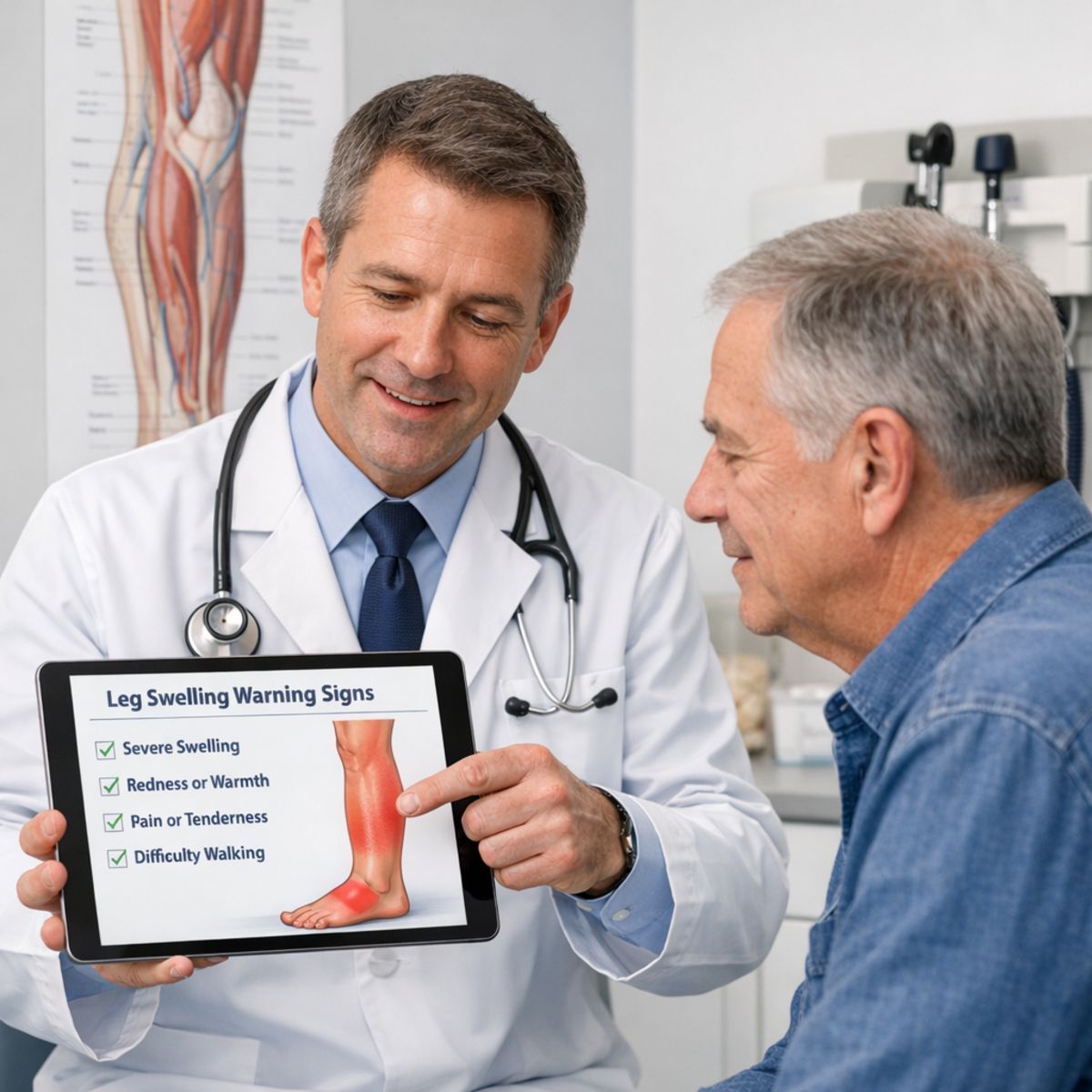
Most swelling is not an emergency, but some symptoms should be evaluated promptly. Seek medical attention for sudden swelling in one leg, rapidly worsening edema, severe pain, skin breakdown, new redness with warmth, or swelling paired with chest pain or shortness of breath. These warning signs deserve professional assessment rather than routine self-care.
Symptoms that should not be ignored
Readers may come across the phrase compression socks for blood clots, but suspected blood clots require urgent medical evaluation, not self-treatment. Compression products can support circulation in some situations, yet they are not a substitute for diagnosis when symptoms are sudden, unexplained, or severe.
If swelling keeps returning, has no clear cause, or does not improve, it is wise to speak with a qualified clinician. For non-urgent support after proper evaluation, some people explore compression therapy for ongoing vein issues as part of a broader care plan.
Frequently Asked Questions About Compression Garments for Edema
Do compression garments help all types of edema?
No. Compression may help some kinds of swelling, but whether it is appropriate depends on the cause, the location of the edema, and your overall circulation and health status. Not all swelling should be self-managed, especially if it is new, severe, or unexplained.
What is the difference between compression socks and anti-embolism stockings?
Compression socks are typically used to help manage symptoms such as leg swelling or venous discomfort during daily activity. Anti-embolism stockings are usually designed for specific medical settings, such as limited mobility or recovery, and they are not automatically interchangeable with everyday compression garments.
Can I wear compression garments all day?
Sometimes, but wear time varies by garment type, compression level, symptoms, and clinician guidance. Some people are told to put them on in the morning and remove them later in the day, while others may need a different schedule. Sleeping in compression should only be done if a clinician specifically recommends it.
Are support stockings for pregnancy varicose veins safe to use?
Many pregnant patients use support garments for leg discomfort or visible veins, and they are often well tolerated. Still, it is wise to ask a clinician which style and compression level make sense for you, especially if swelling is significant, painful, or accompanied by other symptoms.
When should I talk to a doctor about swelling?
Talk to a doctor if swelling is sudden, one-sided, painful, persistent, worsening, or linked with skin color changes, warmth, shortness of breath, or chest symptoms. Those signs can point to causes that need medical evaluation rather than self-treatment. When in doubt, get checked before relying on compression alone.
Next Steps if You Are Considering Compression Therapy
If you have ongoing leg swelling, heaviness, aching, or visible varicose veins, it may be time to seek a professional evaluation. Compression therapy can be helpful for some people, but the right approach depends on your symptoms, circulation, medical history, and overall vein health.
A clinician can assess whether compression therapy is appropriate for your needs and whether additional care should be considered. In some cases, symptoms may call for further evaluation or other treatment options for troublesome varicose veins based on your individual condition.
Schedule a consultation for personalized guidance
If your symptoms are persistent or affecting daily comfort, West Medical can be a supportive next step. A consultation can help clarify what is causing your symptoms and what care plan makes sense for you. Recommendations are always based on medical evaluation and your individual needs.
Key Takeaways on Compression Garments for Edema
Compression garments for edema may help manage swelling symptoms by supporting fluid movement when they are properly selected, fitted, and used as directed. They can be a practical part of care, but they are not one-size-fits-all, and the best choice depends on the area affected, the amount of compression needed, and the person wearing them.
A practical, medically informed approach
It is also important to remember that not all swelling has the same cause. Temporary swelling, chronic edema, and symptoms linked to circulation, lymphatic concerns, or other medical issues may each call for a different approach. If swelling is persistent, worsening, painful, or unexplained, medical evaluation matters.
A calm, practical next step is to focus on proper fit, thoughtful garment selection, and professional guidance when needed. With the right plan, compression can be a helpful tool, and if symptoms continue, seeking medical advice is a supportive and sensible choice.