

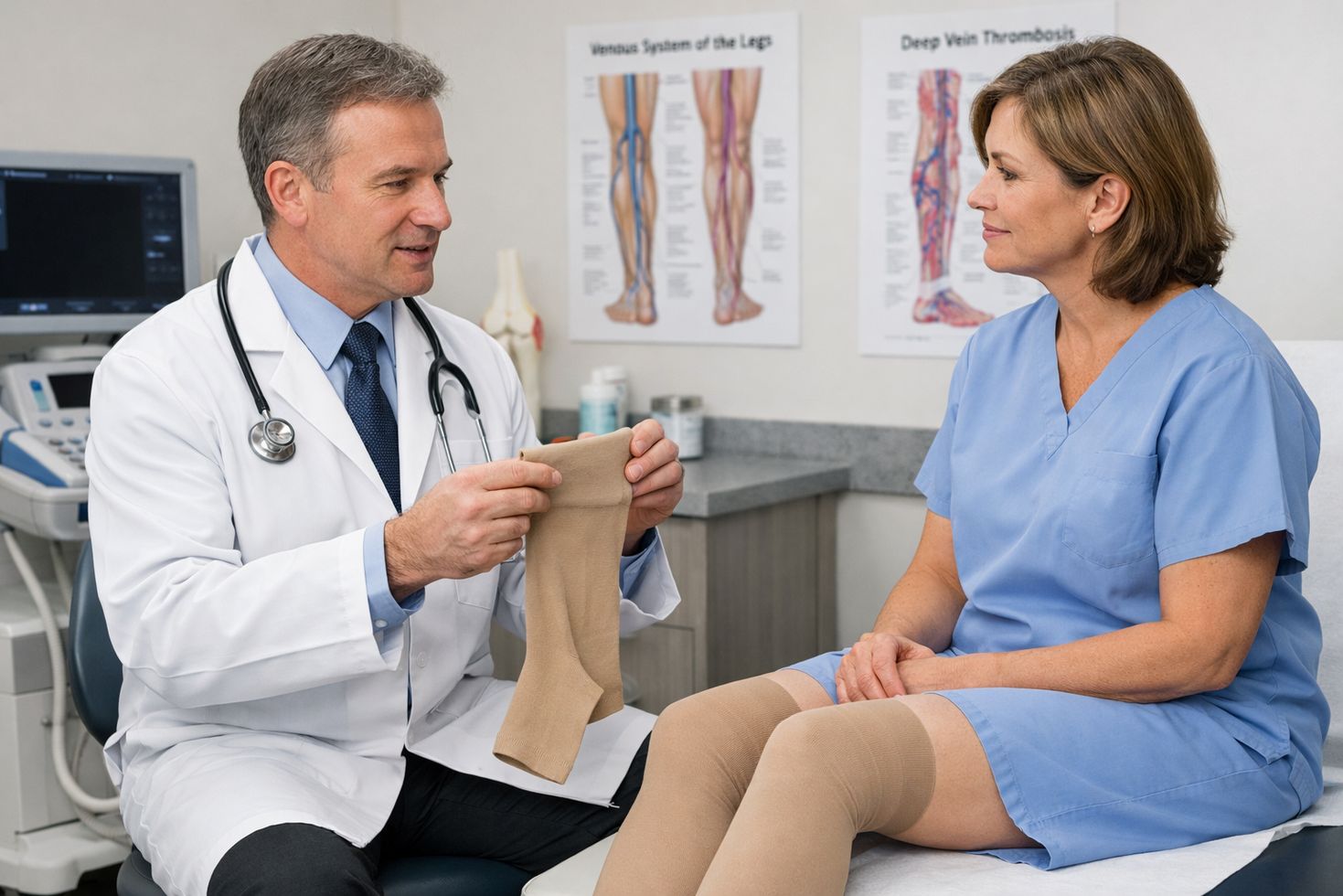
If you are looking into compression stockings for venous stasis, you are likely trying to understand whether they can help with symptoms like leg swelling, heaviness, aching, or skin changes. Venous stasis happens when blood does not move back up through the leg veins as efficiently as it should, which can lead to fluid buildup and ongoing discomfort. Compression stockings are commonly used to support circulation and may help manage symptoms, but the best type and pressure level depend on your specific symptoms, health history, and overall circulation.
A practical, medically cautious approach matters. Not every stocking is the same, and stronger compression is not always better for every person. Fit, material, length, and compression level can all affect comfort and safe use. In some cases, a clinician may recommend an exam before starting compression, especially if symptoms are new, worsening, or linked with skin breakdown, significant pain, or other circulation concerns.
This guide is designed to answer the core question quickly while helping you make informed next steps. You will learn how compression works, what benefits people often look for, how to think about sizing and pressure levels, and when it is important to seek medical advice rather than self-treating.
What this guide covers
Below, we will cover potential benefits of compression stockings, how proper fit affects comfort and effectiveness, the difference between pressure levels, tips for daily wear, and red flags such as worsening swelling, skin ulcers, sudden pain, or other symptoms that warrant medical evaluation.
How Compression Stockings Help Venous Stasis
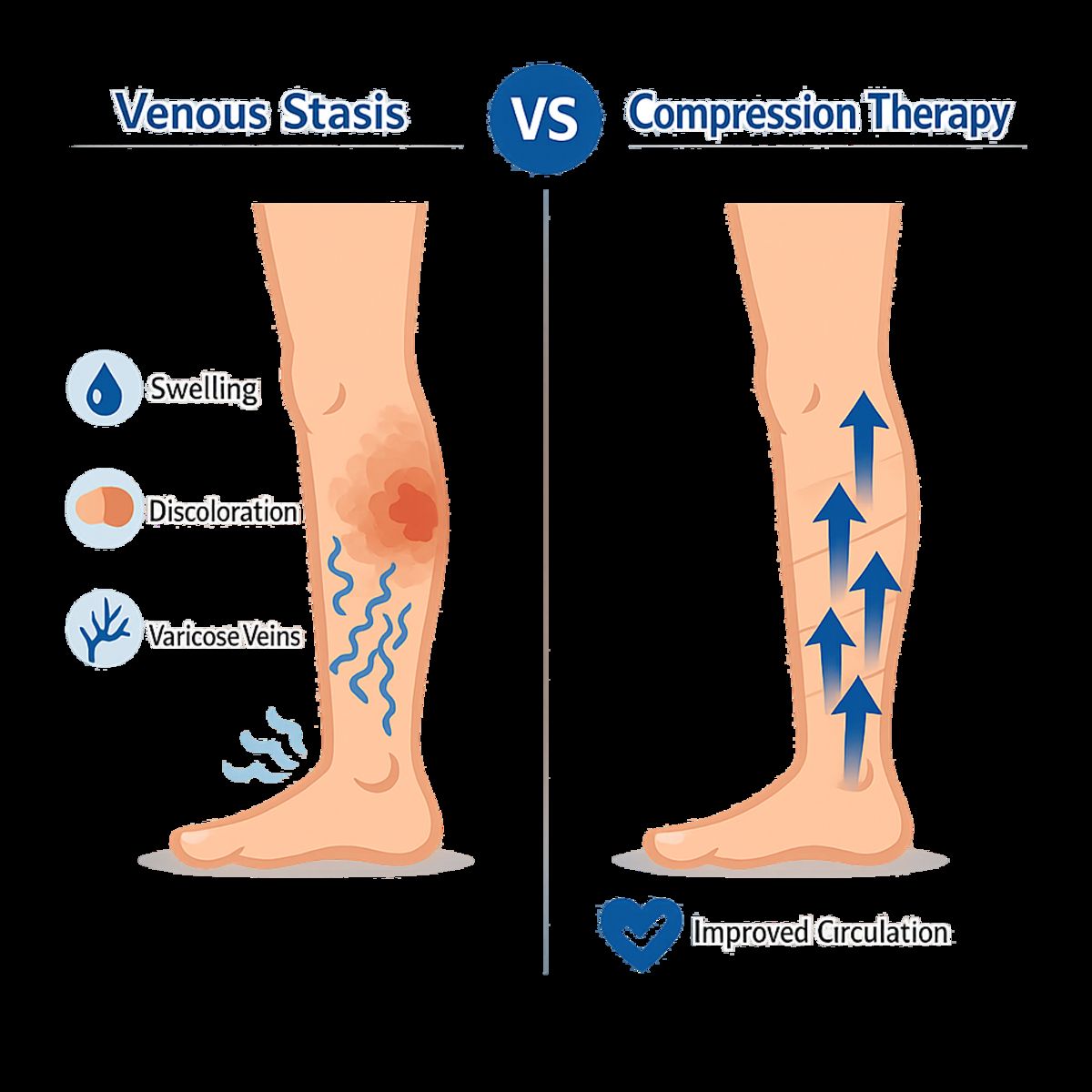
Compression stockings help venous stasis by applying graduated pressure to the leg. In simple terms, they are designed to be snugger at the ankle and gradually less tight as they move up the leg. This pressure pattern may help support venous return, meaning it can encourage blood to move upward instead of pooling in the lower legs.
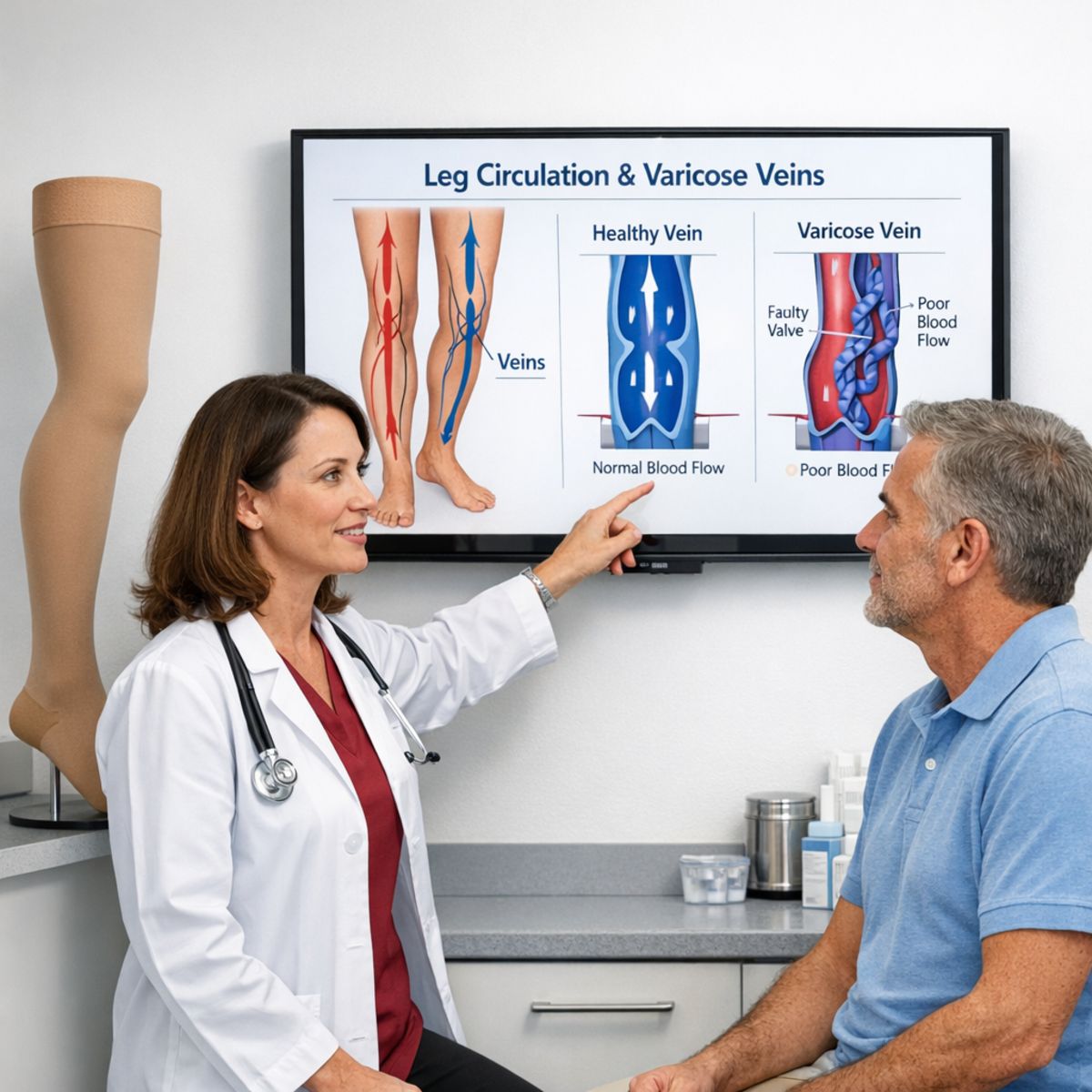
When blood collects in the veins, people may notice swelling, aching, heaviness, or tired legs. Graduated compression may help reduce some of that pooling, which can ease day-to-day discomfort and help manage edema in certain cases. That is why compression stockings are often used as part of conservative care for varicose veins and chronic venous insufficiency. For people exploring compression therapy for varicose veins, stockings are a common first-line support option.
What graduated compression means
Graduated compression means the pressure is strongest at the ankle and decreases up the calf or thigh. This matters because the lower leg is where venous pressure and fluid buildup are often most noticeable. By giving more support at the bottom of the leg, the stocking may help veins and surrounding tissues handle blood flow more efficiently. The goal is not to force a cure, but to provide external support that may improve comfort and help limit swelling over time.
You may also hear related terms such as compression stockings for varicose veins treatment or compression sleeves for edema. These products can sound similar, but sleeves, socks, and full stockings are not interchangeable for every situation. The right style depends on where swelling or venous symptoms occur and what a clinician recommends.
What stockings can and cannot do
Compression stockings may help manage symptoms such as swelling, mild discomfort, and a heavy feeling in the legs. They are often used during daily activity, long periods of standing, or travel when symptoms tend to worsen. For some people, they are an important part of ongoing conservative care.
At the same time, stockings do not cure the underlying vein problem in every case. They do not replace a diagnosis, and they may not be the only treatment needed if symptoms are persistent or worsening. Think of them as a support tool that may improve comfort and help manage venous stasis symptoms, rather than a guaranteed fix.
Potential Benefits of Compression Stockings
Properly fitted compression stockings may help some people with venous stasis feel more comfortable during the day. Rather than curing the underlying vein problem, they are typically used to support circulation and manage symptoms. For many people, that means practical improvements such as less leg swelling, reduced aching, a lighter feeling in the legs, and less end-of-day fatigue.
Results vary from person to person. Your health status, the level of compression recommended, how well the stockings fit, and how consistently they are worn can all affect the outcome. Realistic expectations are important: compression therapy is usually most helpful as part of an overall care plan, not as a stand-alone fix.
Swelling and comfort support
One of the most common reasons people use compression stockings is to help manage lower-leg swelling. Graduated compression applies more pressure near the ankle and less higher up the leg, which may help limit fluid buildup and support venous return. In everyday terms, this can translate to legs that feel less tight, less heavy, and more comfortable by the end of the day.
Some people also notice less soreness or throbbing when stockings are worn regularly and fit correctly. This symptom support can be especially meaningful for those whose discomfort tends to build gradually over hours of activity. Still, benefits are not identical for everyone, and stockings that are the wrong size or compression level may be uncomfortable or less effective.
Support for daily routines
Compression stockings may also be useful during long workdays, extended sitting, prolonged standing, or travel when medically appropriate. People who spend many hours on their feet or seated may find that their legs feel less fatigued and more supported. This is one reason support stockings are often discussed for symptom management in daily life.
Another common use case is support stockings for pregnancy varicose veins. During pregnancy, increased pressure on the veins can contribute to swelling and discomfort, and compression may offer symptom relief for some individuals. Even so, clinician guidance remains important to help choose the right fit and make sure compression is appropriate for your situation.
Overall, the main benefit to expect is symptom support: potentially less swelling, less aching, and better day-to-day comfort. The degree of improvement depends on individual factors, but when prescribed or selected appropriately, compression stockings can play a helpful role in informed self-care.
How to Choose the Right Compression Stockings

Choosing the right compression stockings starts with three basics: where your symptoms occur, what stocking length matches that area, and what level of pressure is appropriate for your situation. The goal is to improve support and comfort without guessing at a strength or style that may not fit your needs. Because compression products range from light support wear to medical-grade options, it helps to follow a simple step-by-step process rather than buying based on packaging alone.
This framework is meant to reduce confusion around fit, pressure, and product type. It does not replace medical advice or provide an individualized prescription. If symptoms are severe, changing, or difficult to explain, a clinician should guide the decision before you move into stronger compression categories.
Step 1: Start with your symptoms
Begin by noticing where symptoms are actually happening. Mild tiredness, a sense of heaviness, or visible vein concerns limited to the lower leg may point you toward a different product than swelling that extends above the calf. If discomfort is concentrated around the ankle and calf, a shorter style may be enough to discuss or consider. If symptoms continue into the thigh or involve more widespread swelling, that usually changes the conversation about length and evaluation.
It is also important to separate routine leg fatigue from symptoms that deserve medical review first. Significant pain, sudden swelling, new skin color changes, warmth, open areas, or rapidly worsening symptoms should not be managed by self-selecting stronger compression. Those signs call for professional assessment before choosing a product.
Step 2: Choose the right length
Compression stockings come in common lengths such as knee-high, thigh-high, and pantyhose or full-length styles. In general, the right length should match the area where support is needed. Knee-high stockings are often considered when symptoms are below the knee. Thigh-high styles may be relevant when symptoms extend higher. Full-length options can provide broader coverage when support is needed through more of the leg.
This is also where product type matters. Varicose veins compression leggings may look similar to medical stockings, but they are not always designed to deliver the same measured, graduated support. Non-medical support wear may feel snug and comfortable for everyday use, while medical-grade stockings are typically made to meet defined compression standards. Understanding that difference can help you avoid assuming all tight-fitting legwear works the same way.
Step 3: Understand pressure levels
Pressure is usually described in mmHg, and in general, higher numbers mean firmer support. That does not mean higher is automatically better. Lower ranges are commonly used for mild support, while stronger levels are more structured and may be harder to put on, tolerate, or use correctly without guidance. Pressure selection should be based on the reason for wearing compression, not just a desire for the strongest option available.
Some categories, especially graduated compression stockings 40-50 mmHg, are typically specialist-directed rather than a default consumer choice. Stronger compression may be appropriate in certain medical situations, but it should not be treated as a routine starting point. If symptoms are significant or the diagnosis is uncertain, pressure selection should be medically guided.
Step 4: Measure for fit
Even the right style and pressure can fail if the fit is off. Measurements are often most accurate when taken at a time of day when swelling is lowest, commonly earlier in the day. Depending on the product, sizing may involve ankle circumference, calf circumference, and sometimes thigh circumference or leg length. Because sizing varies by manufacturer, always use the specific brand chart instead of assuming your usual clothing size will translate correctly.
A stocking that is too loose may not provide the intended graduated support. One that is too tight may feel uncomfortable, bunch, roll, or create pressure in the wrong places. Accurate measuring is one of the most important steps in getting both comfort and function right.
Step 5: Know when to get professional guidance
Before using compression, or before moving to a stronger level, check whether your situation calls for medical input. A clinician should weigh in if you have significant pain, skin breakdown, ulcers, numbness, severe swelling, or concerns about circulation or arterial disease. Professional guidance is also important if you are unsure why swelling is happening or if symptoms are getting worse despite using support wear.
If vein symptoms are persistent and you are exploring treatment beyond stockings, some people also learn about options such as radiofrequency ablation for varicose veins. The key takeaway is simple: choose compression by matching symptoms, length, fit, and pressure carefully, and involve a clinician whenever symptoms are significant or the right level is unclear.
Compression Socks, Stockings, Sleeves, and Anti-Embolism Garments
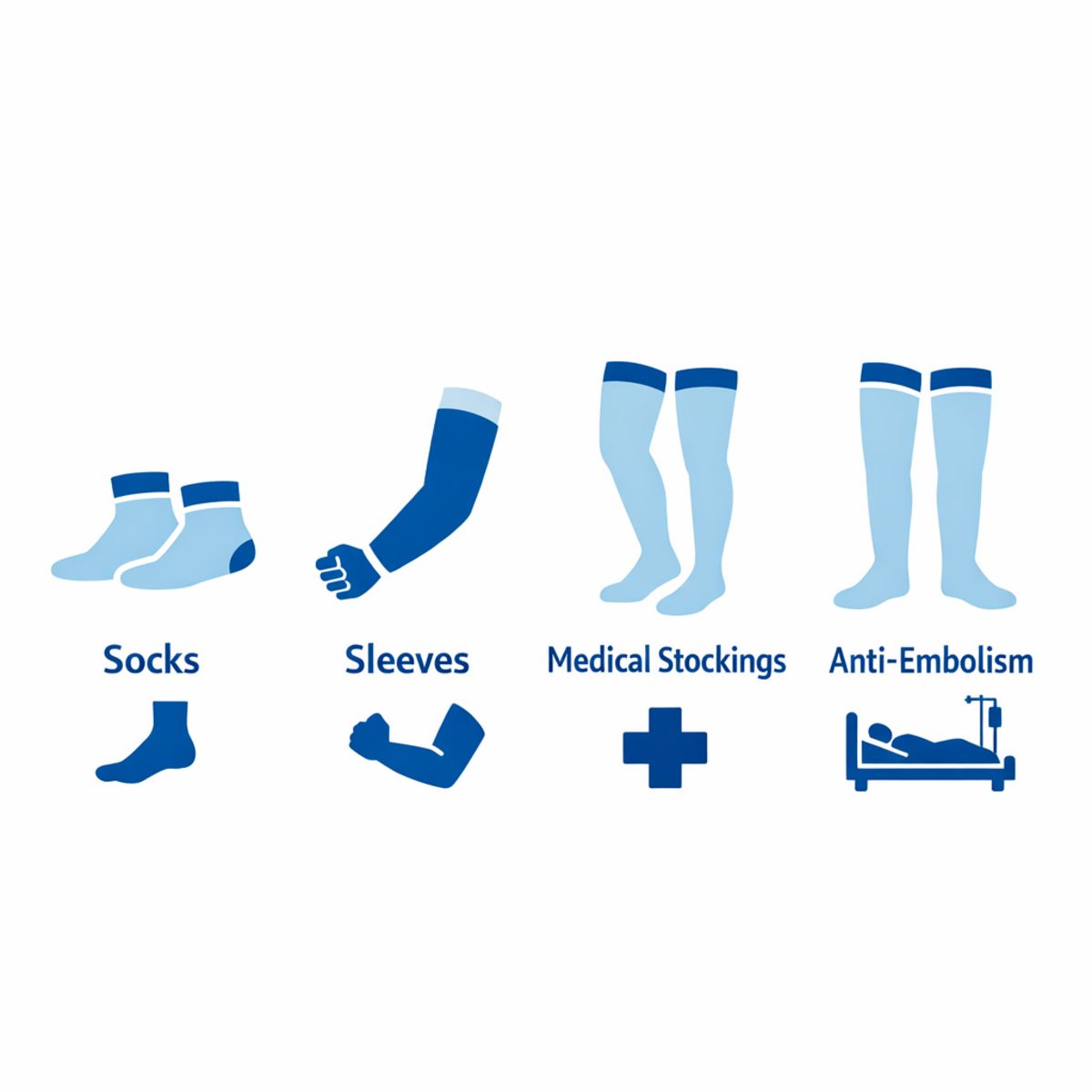
These terms are often used interchangeably, but they do not always mean the same thing. Compression socks, compression stockings, calf sleeves, and anti-embolism garments can differ in coverage, pressure design, intended user, and medical purpose. Understanding those differences helps reduce confusion and supports safer choices, especially when people search for phrases like “compression socks for blood clots” or compare products for swelling, venous stasis, or daily leg fatigue.
A useful starting point is coverage. Compression socks usually cover the foot and lower leg, while compression stockings may extend to the knee or thigh. Compression sleeves often cover only the calf or arm and leave the foot or hand uncovered. That distinction matters: if swelling, venous stasis, or edema involves the foot and ankle, a sleeve may not address the full area of concern the way a full stocking can. By contrast, sleeves may be chosen in more limited situations where targeted support is the goal.
Medical-grade vs non-medical compression
Medical-grade graduated compression is designed to apply measured pressure, typically stronger at the ankle and gradually less upward. That pressure pattern, along with proper sizing, is one reason medical stockings are different from fashion leggings or general athletic compression wear. Non-medical products may feel snug, but they are not always tested, fitted, or labeled in the same way as medical-grade compression stockings. For readers exploring treatment options for vein compression therapy, this is an important distinction.
In practical terms, pressure consistency and fit matter because compression that is too loose may do very little, while a poor fit may be uncomfortable or inappropriate for some users. That is also why “compression socks for blood clots” can be misleading search language. If someone has symptoms that could suggest a deep vein thrombosis, such as sudden one-sided leg swelling, pain, warmth, or redness, compression products are not a substitute for urgent medical evaluation.
Anti-embolism vs everyday compression stockings
Anti-embolism garments and everyday compression stockings are also not identical. In broad terms, anti-embolism products are generally intended for specific medical settings, often for less mobile or recovering patients under clinical guidance. Everyday compression stockings are more commonly discussed for ambulatory users who are walking and managing certain vein-related symptoms or swelling concerns. They are designed for different settings and patient needs, so one should not automatically be swapped for the other.
The safest takeaway is to match the product type to the actual problem rather than the marketing label. Full stockings may be more appropriate than sleeves when foot and ankle involvement matters, and medical-grade graduated compression is not the same as standard athletic wear. Most importantly, suspected blood clot symptoms need prompt medical attention rather than self-treatment with any compression garment.
Best Practices for Wearing and Caring for Compression Stockings
A few simple habits can make compression stockings more comfortable to wear and help them last longer. For many people, the easiest time to put them on is early in the day, before swelling has a chance to build. Starting early often makes application smoother and can improve day-to-day consistency.
Daily wear tips
When putting stockings on, aim for a smooth, even fit from ankle to calf or thigh, depending on the style. Avoid twisting the fabric, and take a moment to smooth out wrinkles so they do not bunch behind the knee or around the ankle. Bunching can create pressure points and make the garment feel less comfortable. Dry skin, rough nails, and jewelry can snag the material, so it helps to handle the fabric gently and adjust it in small sections rather than pulling hard from the top.
Many people wear compression stockings during the day and remove them later, but the best routine depends on the reason they were recommended and how they feel during use. If they slide down, dig in, or leave unusual marks, the size, style, or fit may need to be reassessed rather than forcing continued wear.
Care and replacement basics
Regular washing helps preserve elasticity and keeps the fabric more comfortable against the skin. Follow the garment instructions carefully, but in general, gentle washing and air drying are common ways to protect compression materials. High heat can wear out elastic fibers faster, so it is wise to be cautious with dryers and direct heat.
Over time, stockings may stretch out, feel looser, or stop staying in place as well as they once did. That can be a sign they are no longer providing the intended support. Also pay attention to your body: discomfort, numbness, tingling, skin irritation, unusual color changes, or worsening pain should prompt a reassessment with a qualified clinician. Safe, consistent use is the goal, and comfort matters just as much as durability.
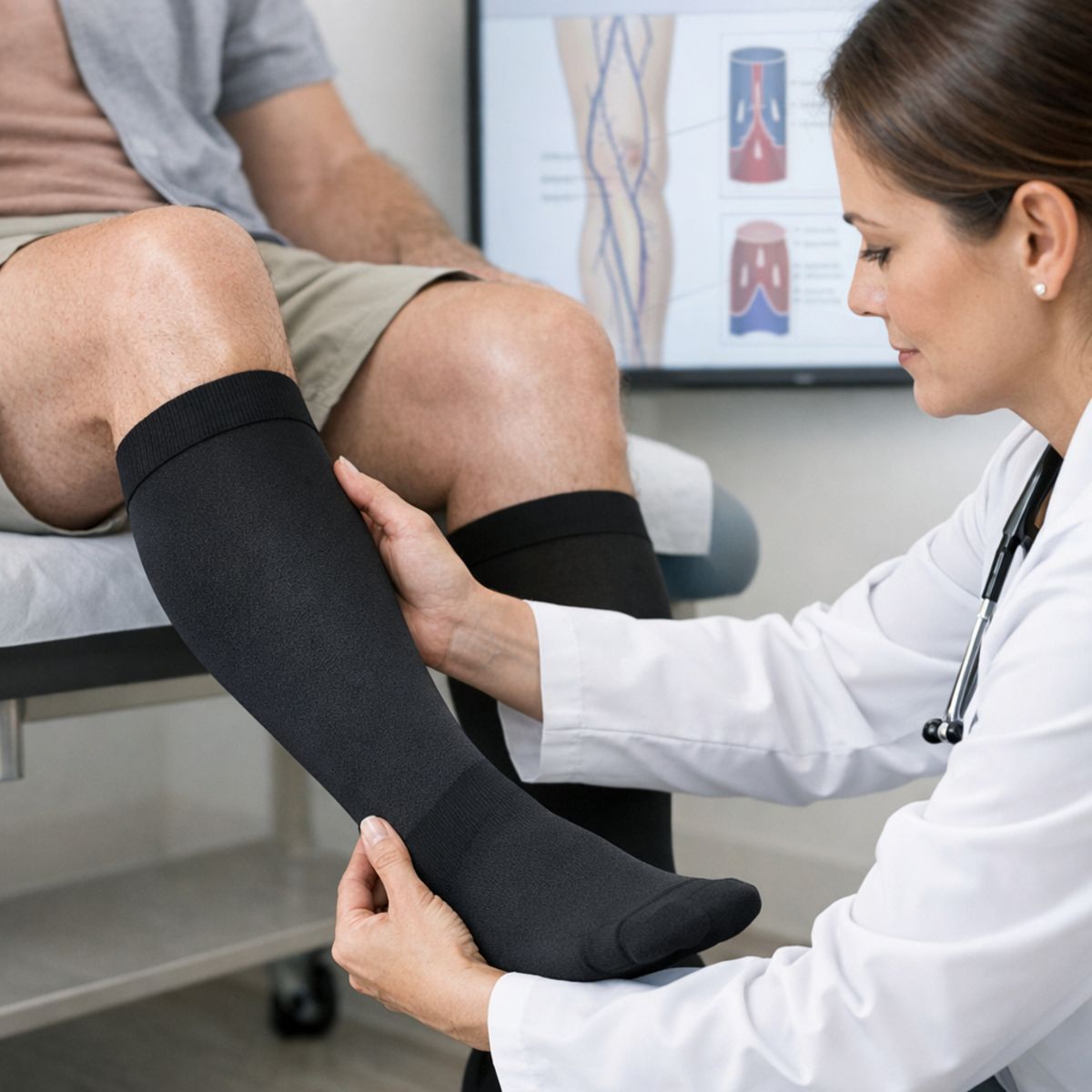
When Compression Stockings May Not Be Enough
Compression stockings can help manage some vein-related symptoms, but they are not the only answer for every patient. If symptoms continue, worsen, or start affecting daily life, it may be time for a fuller medical evaluation. In some cases, a more complete plan than compression therapy care for vein symptoms may be appropriate.
Symptoms that deserve prompt medical attention
- Swelling that is getting worse instead of improving
- Sudden swelling in one leg, especially if it is new
- Skin discoloration, skin breakdown, or leg ulcers
- Severe leg pain or tenderness
- Chest pain, shortness of breath, or other chest symptoms
Chest symptoms or sudden one-sided swelling should be assessed right away. Ongoing heaviness, aching, swelling, or skin changes that do not improve also deserve medical attention, since persistent venous stasis symptoms may need a fuller vein evaluation and treatment plan.
Frequently Asked Questions
Do compression stockings help venous stasis?
Compression stockings may help manage venous stasis symptoms by supporting blood flow back up the legs and reducing swelling, heaviness, and discomfort. They are not a cure for every vein condition, though, so persistent swelling, skin changes, or pain should be evaluated by a clinician.
What strength of compression stockings is used for venous stasis?
The right compression level depends on your symptoms, diagnosis, leg measurements, and circulation status. Mild, moderate, and higher-pressure options are used in different situations, and stronger garments are not automatically better. A clinician can help determine the safest and most effective level for your needs.
Can I wear compression stockings all day?
Many people wear compression stockings during waking hours, especially when standing or sitting for long periods. Whether all-day wear makes sense depends on fit, comfort, skin condition, and your clinician’s instructions. If stockings cause pain, numbness, or bunching, they may need to be rechecked.
Should I sleep in compression stockings?
Not always. Some compression garments are intended for daytime use only, while others may be used overnight in specific medical situations. The safest approach is to follow the product instructions and your clinician’s guidance rather than assuming all compression stockings should be worn to bed.
Are compression sleeves enough for leg swelling?
Sometimes, but not always. Sleeves may help when swelling is limited to the calf area, but they do not cover the foot or ankle. If swelling affects those areas, full stockings may be more appropriate. The best option depends on where symptoms occur and how the garment fits.
What is the difference between anti-embolism and compression stockings?
Anti-embolism stockings are generally designed for people who are less mobile, often in medical or surgical settings. Compression stockings are commonly used for ambulatory patients managing vein-related symptoms. They are not interchangeable in every case, so the right choice depends on your medical situation and intended use.
When to Consider a Vein Evaluation
If your symptoms continue despite wearing compression stockings, or if swelling seems to be getting worse, it may be reasonable to seek a vein evaluation. The same is true if you notice skin changes, ongoing leg discomfort, or visible vein changes that are becoming more noticeable over time.
Next steps if symptoms continue
A vein specialist can assess your symptoms, review your history, and help determine whether compression therapy alone is appropriate or whether minimally invasive vein treatment options may be considered. Recommendations depend on your individual symptoms, exam findings, and overall health, so the best next step can vary from person to person.
Seeking an evaluation does not commit you to any particular treatment. It can simply help you better understand what may be contributing to your symptoms and what options, if any, make sense for your situation.
Key Takeaways on Compression Stockings for Venous Stasis
Compression stockings for venous stasis may help manage swelling, leg heaviness, and day-to-day discomfort when they are properly selected and worn as directed. The main takeaway is to focus on consistent use, realistic expectations, and the right level of support for your individual needs.
A practical path forward
Good results often depend on fit and pressure guidance. Stockings that are too loose may not provide enough support, while stockings that are too tight or uncomfortable can be hard to wear regularly. If symptoms continue, worsen, or are accompanied by skin changes or increasing pain, a medical evaluation is important to help confirm the cause and guide next steps safely.
Most importantly, treatment plans should be individualized. A thoughtful approach that considers your symptoms, comfort, and overall circulation needs can make compression therapy more practical and effective over time.