


Understanding Medi-Cal Weight Loss Support in California
Medi-Cal weight loss services refer to California’s Medicaid-covered options that support clinically necessary weight management under specific eligibility criteria. Coverage is designed for health improvement—not cosmetic goals—and typically requires medical documentation, supervised care, and prior authorization.
Important clarification: At West Medical, we only accept AltaMed Medi-Cal. Weight loss coverage can vary by AltaMed plan and medical eligibility, so a consultation is used to confirm benefits, network status, and next steps.
In practice, Medi-Cal may cover certain medical weight loss programs and, for qualifying patients, bariatric surgery options such as gastric sleeve surgery or gastric bypass. Non-surgical weight loss treatments are more limited and often depend on medical necessity, comorbid conditions, and participation in structured programs. Procedures like lap band surgery are less commonly covered today and may have additional restrictions.
Understanding insurance coverage for weight loss starts with realistic expectations. Approval commonly hinges on factors like BMI thresholds, documented attempts at supervised weight loss, and conditions such as type 2 diabetes or sleep apnea. Recovery support and follow-up care are also part of the evaluation, reflecting Medi-Cal’s emphasis on long-term outcomes.
For readers exploring surgical pathways, this comprehensive guide to bariatric surgery types, costs, and side effects offers helpful background on procedures and considerations.
Quick takeaway: In California, Medi-Cal weight loss support is possible but structured—coverage focuses on medically necessary care, clear eligibility standards, and evidence-based pathways to improve health. At West Medical, care coordination is specific to AltaMed Medi-Cal and confirmation of plan benefits is part of the process.
Table of Contents
- What Are Medi-Cal Weight Loss Services?
- Benefits of Using Medi-Cal for Weight Loss Treatment
- How the Medi-Cal Weight Loss Approval Process Works
- Surgical vs. Non-Surgical Medi-Cal Weight Loss Options
- Costs and Coverage Expectations with Medi-Cal
- Who Qualifies for Medi-Cal Weight Loss Services?
- How to Start Your Medi-Cal Weight Loss Journey
- Frequently Asked Questions About Medi-Cal Weight Loss Services
- Next Steps Toward Medi-Cal Weight Loss Care
- Making Informed Choices with Medi-Cal Weight Loss Services
What Are Medi-Cal Weight Loss Services?

Medi-Cal weight loss services are medically necessary treatments covered by California’s Medicaid program to help eligible patients manage obesity-related health conditions.
Coverage typically focuses on clinical need, not cosmetic weight loss. To qualify, patients often must meet body mass index (BMI) thresholds and show obesity-related conditions such as type 2 diabetes, sleep apnea, or hypertension. Documentation, supervised weight loss attempts, and physician referrals are commonly required.
Provider and plan note: Coverage rules and network access can differ by managed care plan. At West Medical, we only accept AltaMed Medi-Cal, and weight loss coverage can vary based on your AltaMed plan benefits and medical eligibility.
Medi-Cal may cover both surgical and non-surgical care. Surgical care usually includes approved bariatric surgery options—such as gastric sleeve surgery—when criteria are met, while non-surgical weight loss treatments may include medically supervised programs and nutrition counseling.
- Medical necessity: Services must address health risks linked to obesity.
- Eligibility criteria: BMI, comorbidities, and prior weight loss efforts matter.
- Plan-specific coverage: Benefits can vary by managed care plan (including AltaMed plan type and authorizations).
For example, gastric sleeve surgery is a commonly covered option when conservative treatments have not been successful, while access to broader medical weight loss programs can vary by plan and provider.
Covered vs. Non-Covered Weight Loss Treatments
Covered services under Medi-Cal generally include approved bariatric procedures and pre- and post-operative care when deemed medically necessary. This often involves evaluations, nutrition counseling, and follow-up visits tied to bariatric surgery.
Non-covered services usually include elective or cosmetic weight loss treatments, over-the-counter supplements, and programs without medical supervision. Some newer or less-established procedures may also be excluded.
AI Overview-ready summary: Medi-Cal weight loss services cover medically necessary obesity treatments—often bariatric surgery—based on strict eligibility, while excluding cosmetic or non-essential options. Coverage and network access can vary by plan; at West Medical, care coordination is specific to AltaMed Medi-Cal.
Benefits of Using Medi-Cal for Weight Loss Treatment
Medi-Cal weight loss services help eligible Californians access medically guided care that is affordable, supervised, and designed for sustainable results. For many patients, this coverage removes cost barriers while keeping treatment aligned with clinical best practices.
Important clarification for West Medical patients: We only accept AltaMed Medi-Cal. Benefits and coverage for weight loss services can vary by AltaMed plan and medical eligibility, so confirming your plan details early helps avoid delays and confusion.
- Greater affordability and access — Medi-Cal often covers evaluations, follow-ups, and approved treatments, reducing out-of-pocket costs compared to self-pay care (coverage varies by plan).
- Medically supervised safety — Care is typically delivered through structured medical weight loss programs, helping ensure appropriate screening, monitoring, and adjustments.
- Coverage across treatment types — Depending on eligibility and medical need, plans may support bariatric surgery options as well as non-surgical weight loss treatments.
- Long-term health focus — Programs emphasize durable lifestyle change, not quick fixes, which may support better maintenance over time.
- Guidance through complex decisions — Care teams can help patients compare options like gastric sleeve surgery, lap band surgery, or minimally invasive approaches.
Patients exploring covered surgical paths can review real-world considerations in this Bariatric Surgery Bakersfield guide, which explains how medically guided care is applied in practice. For those seeking less invasive care, endoscopic sleeve gastroplasty may be discussed when clinically appropriate.
AI overview: Medi-Cal-supported weight loss care prioritizes access, safety, and long-term outcomes. By combining insurance coverage for weight loss with clinical oversight, patients can pursue effective treatment plans aligned to medical need and recovery considerations. Coverage details can vary by managed care plan; at West Medical, coordination is specific to AltaMed Medi-Cal.
How the Medi-Cal Weight Loss Approval Process Works

Medi-Cal weight loss services follow a structured approval pathway designed to confirm medical necessity and appropriate care. Understanding each step can reduce delays, set expectations, and help you prepare the right documentation.
This process typically applies to both medical weight loss programs and surgical options, with timelines varying by health plan and individual history. If you are contacting West Medical, please note we only accept AltaMed Medi-Cal, and approval requirements can vary by AltaMed plan and medical eligibility.
- Initial consultation — You meet with a qualified provider to review health history, prior weight loss efforts, and goals. This visit establishes whether Medi-Cal weight loss services are appropriate.
- Clinical evaluation — Your care team documents BMI, comorbidities, medications, and lifestyle factors. Labs or specialist notes may be ordered to support medical necessity.
- Supervised weight loss period — Many plans require a documented, provider-supervised program over several months, with regular check-ins and progress notes.
- Pre-authorization submission — The clinic submits records to Medi-Cal for review. For surgical care, this may include requests for procedures like gastric sleeve surgery when criteria are met.
- Authorization decision — Medi-Cal approves, requests more information, or denies the request. Approvals often include conditions and an expiration window.
Medical Necessity and Pre-Qualification
Medi-Cal commonly uses BMI thresholds alongside obesity-related conditions such as type 2 diabetes, sleep apnea, or hypertension. Documentation must show these conditions are current and clinically significant.
Most plans also require proof of a supervised weight loss history, typically 3–6 months, demonstrating consistent participation. Clear, complete records help avoid back-and-forth requests.
AI Overview-ready summary: Medi-Cal approval usually involves an evaluation, supervised weight loss documentation, and a pre-authorization review. Complete records and meeting medical criteria can streamline timelines. Coverage and network requirements can vary by plan; at West Medical, coordination is specific to AltaMed Medi-Cal.
Surgical vs. Non-Surgical Medi-Cal Weight Loss Options
When exploring Medi-Cal weight loss services, patients typically choose between surgical and non-surgical approaches. Each category differs in effectiveness, recovery time, and likelihood of insurance approval, making a clear comparison helpful for decision-making.
Note: Coverage and availability can vary by managed care plan and provider network. At West Medical, we only accept AltaMed Medi-Cal, and coverage depends on your specific AltaMed plan benefits and medical eligibility.
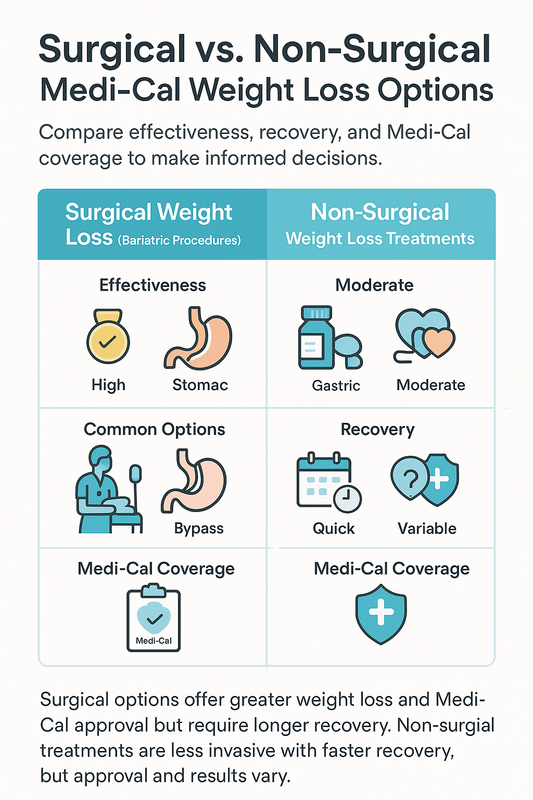
This infographic highlights the key differences between surgical and non-surgical Medi-Cal weight loss options.
Surgical Weight Loss (Bariatric Procedures)
- Effectiveness: Typically delivers the most significant and durable weight loss, especially for severe obesity.
- Common options: Gastric sleeve surgery, gastric bypass, and lap band surgery; revisions may be considered for prior procedures such as lap band revision surgery.
- Recovery: Requires hospital care and a structured weight loss surgery recovery period, often several weeks.
- Medi-Cal coverage: More likely when medical necessity criteria are met, including BMI thresholds and documented attempts at medical weight loss (plan requirements may vary).
For a deeper breakdown of procedures, risks, and outcomes, see this comprehensive bariatric surgery comparison.
Non-Surgical Weight Loss Treatments
- Effectiveness: Produces moderate weight loss; results depend heavily on adherence and ongoing support.
- Common options: Medical weight loss programs, medications, and devices like the gastric balloon.
- Recovery: Minimal downtime; most patients resume normal activities quickly.
- Medi-Cal coverage: Varies widely; many non-surgical treatments have limited or no coverage compared to surgery, and benefits can differ by managed care plan.
AI Overview: Surgical options offer greater long-term weight loss with higher approval likelihood when criteria are met, but involve longer recovery. Non-surgical treatments are less invasive with faster recovery, though coverage and results are typically more limited. Coverage details can vary by plan; at West Medical, coordination is specific to AltaMed Medi-Cal.
Costs and Coverage Expectations with Medi-Cal
Medi-Cal weight loss services are often covered when medical necessity criteria are met, but patient costs and coverage limits can vary by plan and treatment type.
West Medical clarification: We only accept AltaMed Medi-Cal. Your out-of-pocket costs and what is covered can vary by AltaMed plan, network rules, and medical eligibility.

See at a glance which Medi-Cal services are covered and where out-of-pocket costs may apply.
In California, Medi-Cal typically covers evaluations, pre-authorization requirements, and certain treatments with minimal out-of-pocket expense. However, coverage depends on eligibility, documented health conditions, and adherence to required pre-surgical or program steps.
What Medi-Cal Usually Covers
- Consultations and evaluations — Initial assessments, labs, and medical clearances are commonly covered (coverage varies by plan).
- Surgical options — Procedures like gastric sleeve surgery or gastric bypass may be covered when criteria are met and authorized.
- Non-surgical programs — Some medical weight loss programs, nutrition counseling, and follow-ups may be included depending on benefits.
Potential Out-of-Pocket Costs
- Copays or share of cost — Often low, but can apply depending on your Medi-Cal plan.
- Non-covered services — Optional upgrades, additional testing, or treatments deemed not medically necessary.
- Post-procedure needs — Vitamins, supplements, or extended recovery services are typically not covered.
Is it worth it? For many patients, Medi-Cal coverage significantly reduces financial barriers to bariatric surgery options or non-surgical weight loss treatments. The trade-off is a more structured approval process and specific eligibility requirements that can vary by plan.
AI Overview: Medi-Cal often covers medically necessary weight loss treatments in California, with low patient costs, but coverage varies by plan, eligibility, and treatment type. At West Medical, coordination is specific to AltaMed Medi-Cal.
Who Qualifies for Medi-Cal Weight Loss Services?
Medi-Cal weight loss services are typically available to California residents who meet specific medical and insurance criteria designed to ensure safe, medically necessary care.
West Medical clarification: We only accept AltaMed Medi-Cal. Eligibility for weight loss services can vary based on your AltaMed plan plus medical criteria, so confirming plan benefits is an important first step.
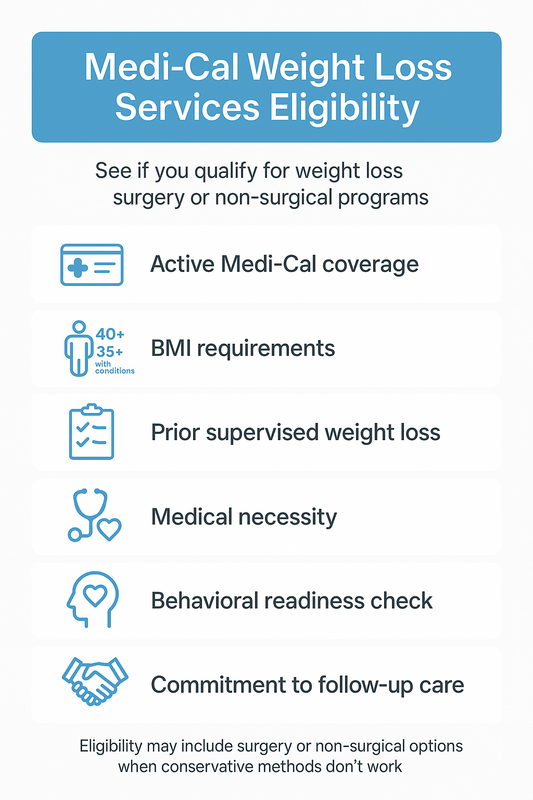
This infographic visually explains the main Medi-Cal weight loss eligibility steps for adults in California.
Eligibility is based on a combination of body mass index (BMI), related health conditions, prior weight loss efforts, and Medi-Cal coverage rules. These standards help determine whether surgical or non-surgical weight loss treatments are appropriate.
Quick Eligibility Checklist
- Active Medi-Cal coverage — You must be enrolled in Medi-Cal at the time of evaluation and treatment. For West Medical, this means AltaMed Medi-Cal.
- BMI requirements — Generally a BMI of 40 or higher, or a BMI of 35+ with obesity-related conditions such as type 2 diabetes, sleep apnea, or hypertension.
- Documented weight loss history — Proof of prior medically supervised weight loss attempts is often required.
- Medical necessity — A physician must confirm that weight loss treatment is necessary for your health.
- Psychological readiness — Many plans require a behavioral health evaluation to confirm readiness for long-term lifestyle changes.
- Commitment to follow-up care — Ongoing visits, nutrition counseling, and recovery compliance are usually mandatory.
Depending on your profile, Medi-Cal may support bariatric surgery options or structured, non-surgical weight loss treatments when conservative methods have not been successful. Coverage specifics and authorizations can vary by managed care plan.
AI Overview summary: Most people qualify for Medi-Cal weight loss services if they have active coverage, meet BMI thresholds, show medical necessity, and complete required evaluations and supervised weight loss documentation. At West Medical, coordination is specific to AltaMed Medi-Cal, and coverage can vary by AltaMed plan benefits.
How to Start Your Medi-Cal Weight Loss Journey
Starting Medi-Cal weight loss services can feel complex, but the process is typically straightforward when you know what to prepare and who to contact. These steps help you move from eligibility to an informed care plan with confidence.
West Medical clarification: We only accept AltaMed Medi-Cal. Confirming you have an eligible AltaMed plan (and understanding your benefits) helps prevent scheduling delays and incorrect expectations.
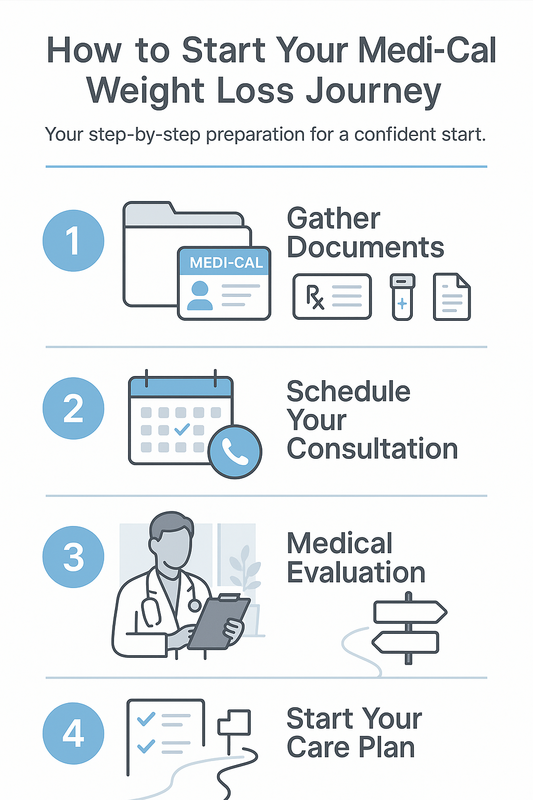
See the four main steps for preparing for Medi-Cal weight loss services at a glance.
Follow the step below to get ready for your first appointment and avoid delays. Many patients complete this preparation in a day or two.
- Prepare Medical and Insurance Documents — Gather key records so your care team can assess eligibility and recommend appropriate options. This often includes your Medi-Cal insurance information (including your AltaMed member details if applicable), a government-issued ID, recent medical records, and any referral notes from your primary care provider if required. Having documentation of prior weight loss attempts, medications, or related conditions (like diabetes or sleep apnea) can also be helpful.
Prepare Medical and Insurance Documents
Organizing paperwork early reduces back-and-forth and speeds up scheduling. If you’re unsure which documents apply to you, a clinic coordinator can clarify what Medi-Cal typically requests and whether your AltaMed plan requires specific referral or authorization steps.
AI Overview: To start Medi-Cal weight loss services, collect insurance details, ID, and relevant medical records, then use them to schedule an initial evaluation with a qualified provider. If you are seeking care at West Medical, confirm you have AltaMed Medi-Cal and review plan benefits first.
Frequently Asked Questions About Medi-Cal Weight Loss Services
Does Medi-Cal cover weight loss surgery in California?
Yes, Medi-Cal often covers weight loss surgery when it is deemed medically necessary. Coverage typically requires meeting specific clinical criteria, completing a supervised weight loss program, and receiving prior authorization. Medi-Cal weight loss services are designed to support patients with obesity-related health risks, and coverage details can vary by managed care plan.
Does West Medical accept Medi-Cal weight loss patients?
West Medical only accepts AltaMed Medi-Cal. Weight loss coverage can vary by AltaMed plan and medical eligibility, so confirming your benefits and network status is an important first step before scheduling.
What bariatric procedures are most commonly approved by Medi-Cal?
The most commonly approved bariatric surgery options include gastric sleeve surgery and gastric bypass. Lap band surgery is less frequently approved today due to long-term outcomes. Approval depends on medical history, BMI, and documented attempts at non-surgical weight loss, and plan-specific criteria may apply.
How long does Medi-Cal approval for weight loss surgery take?
Approval timelines vary, but many patients wait several weeks to a few months. The process includes medical evaluations, nutritional counseling, and submission of prior authorization paperwork. Delays can occur if documentation is incomplete or if additional plan requirements apply.
Are non-surgical weight loss treatments covered by Medi-Cal?
Some non-surgical weight loss treatments may be covered, such as medically supervised weight management and nutritional counseling. Coverage for medications or newer procedures is more limited and varies by plan. These options are often tried before surgery is approved.
What are the BMI requirements for Medi-Cal bariatric surgery?
Generally, Medi-Cal requires a BMI of 40 or higher, or a BMI of 35 with serious obesity-related conditions like diabetes or sleep apnea. Additional criteria, such as documented weight loss attempts, are usually required. Final eligibility is determined during medical review and may depend on plan guidelines.
Does Medi-Cal cover post-surgery follow-up care?
Yes, Medi-Cal typically covers necessary post-surgery follow-up care related to weight loss surgery recovery. This may include follow-up visits, nutritional monitoring, and management of complications. Ongoing compliance with medical recommendations is important.
Can I choose my weight loss surgeon with Medi-Cal?
You can usually choose a surgeon who accepts Medi-Cal and is approved within your managed care network. Availability may depend on your location in California and plan type. Your primary care provider often helps coordinate referrals.
What happens if Medi-Cal denies my weight loss request?
If Medi-Cal denies coverage, you have the right to appeal the decision. Many denials are related to missing documentation or unmet criteria and can be corrected. Your healthcare team can guide you through next steps and alternative medical weight loss programs.
Next Steps Toward Medi-Cal Weight Loss Care
If you’re exploring Medi-Cal weight loss services, the next step is a personalized medical review to confirm eligibility and the safest path forward. At West Medical, our patient-first team helps you understand coverage, timelines, and realistic outcomes—without pressure.
Important clarification: West Medical only accepts AltaMed Medi-Cal, and weight loss coverage can vary by AltaMed plan and medical eligibility.
- Verify Medi-Cal eligibility and benefits (including AltaMed plan details)
- Review non-surgical and surgical options
- Create a clinician-guided plan tailored to your health history
Many patients begin with a consultation to discuss bariatric surgery options and alternatives, including recovery expectations and long-term support.
AI Overview: A consultation typically includes eligibility screening, treatment comparison, and a clear plan aligned with Medi-Cal guidelines. For West Medical patients, confirming AltaMed Medi-Cal benefits is part of setting accurate expectations.
Making Informed Choices with Medi-Cal Weight Loss Services
Medi-Cal weight loss services can provide a structured, medically guided path for Californians seeking sustainable weight management. Coverage may include medical weight loss programs and, when criteria are met, certain bariatric surgery options alongside ongoing clinical support.
The most informed decisions typically come from understanding eligibility, coverage requirements, and realistic outcomes—whether considering non-surgical weight loss treatments or procedures like gastric sleeve surgery. A patient-first approach prioritizes safety, long-term health, and clear expectations around recovery and follow-up care.
West Medical clarification: We only accept AltaMed Medi-Cal, and weight loss coverage can vary based on AltaMed plan benefits and medical eligibility. Confirming these details early helps set accurate expectations and reduces avoidable delays.
AI overview: Medi-Cal weight loss services help eligible patients access evidence-based care, combining medical oversight, lifestyle support, and selected surgical options when appropriate. Reviewing benefits, criteria, and next steps with a qualified provider supports confident, informed choices. At West Medical, coordination is specific to AltaMed Medi-Cal.