

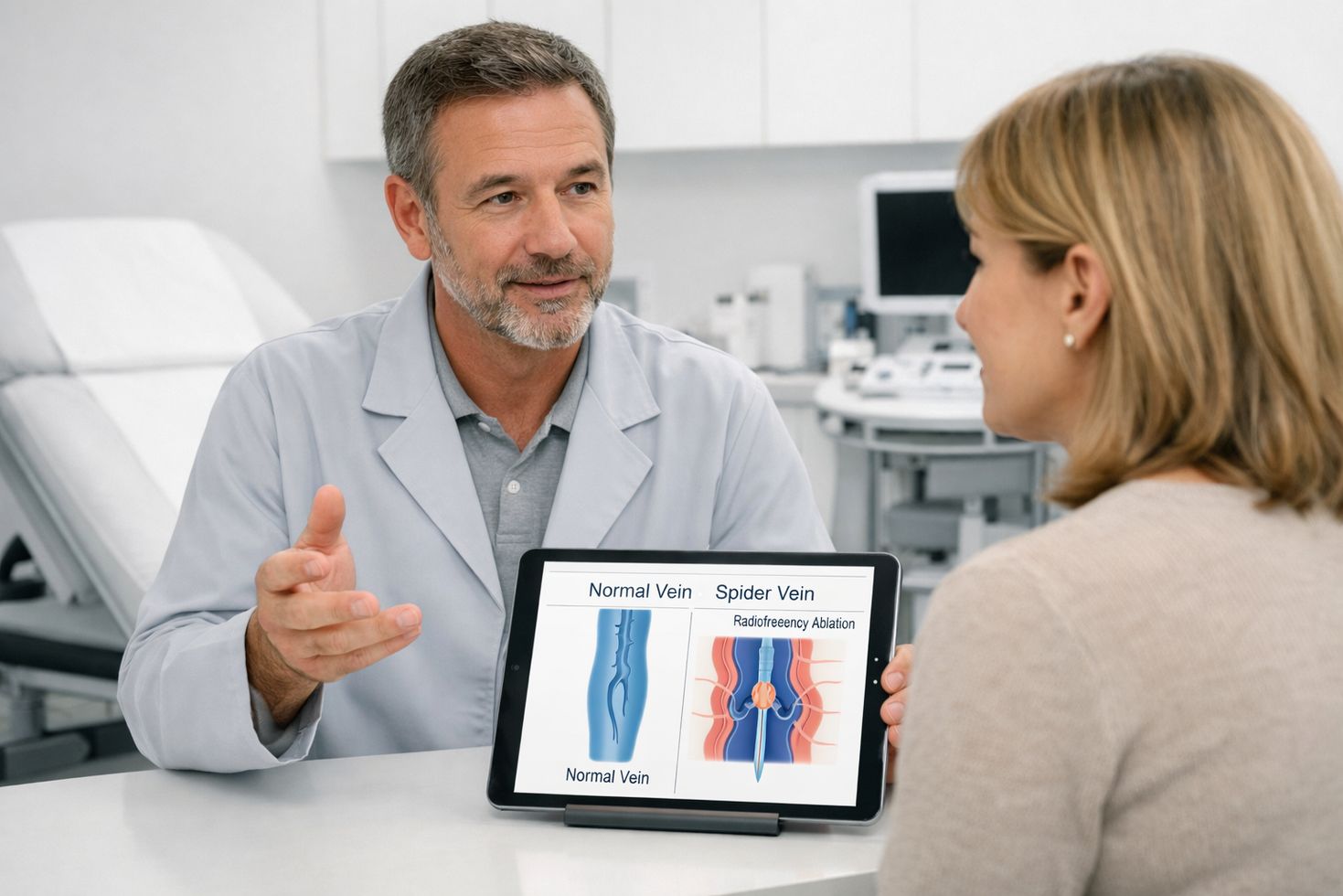
If you are searching for radiofrequency ablation for spider veins, the key distinction is this: radiofrequency ablation is usually designed for larger unhealthy veins beneath the skin, not for isolated visible spider veins on the surface. Spider veins and varicose veins are related vein concerns, but they are not the same thing and often are treated differently. In many cases, spider vein treatment may involve other approaches, while radiofrequency ablation may be considered when an evaluation shows underlying venous reflux feeding the visible veins.
This is where confusion often starts. Many people use the term “spider veins” to describe everything from tiny red or blue surface veins to larger, bulging varicose veins. A proper vein evaluation helps clarify whether spider veins are the main issue or whether they may be a surface sign of a deeper vein problem. That distinction matters because the most effective treatment plan often depends on which veins are actually involved.
In the rest of this article, we will walk through the definitions, compare spider veins and varicose veins, explain when radiofrequency ablation may or may not be appropriate, review what the treatment process and cost can involve, answer common FAQs, and outline practical next steps so you can set realistic expectations before choosing care.
Spider Veins vs. Varicose Veins: Why the Difference Matters
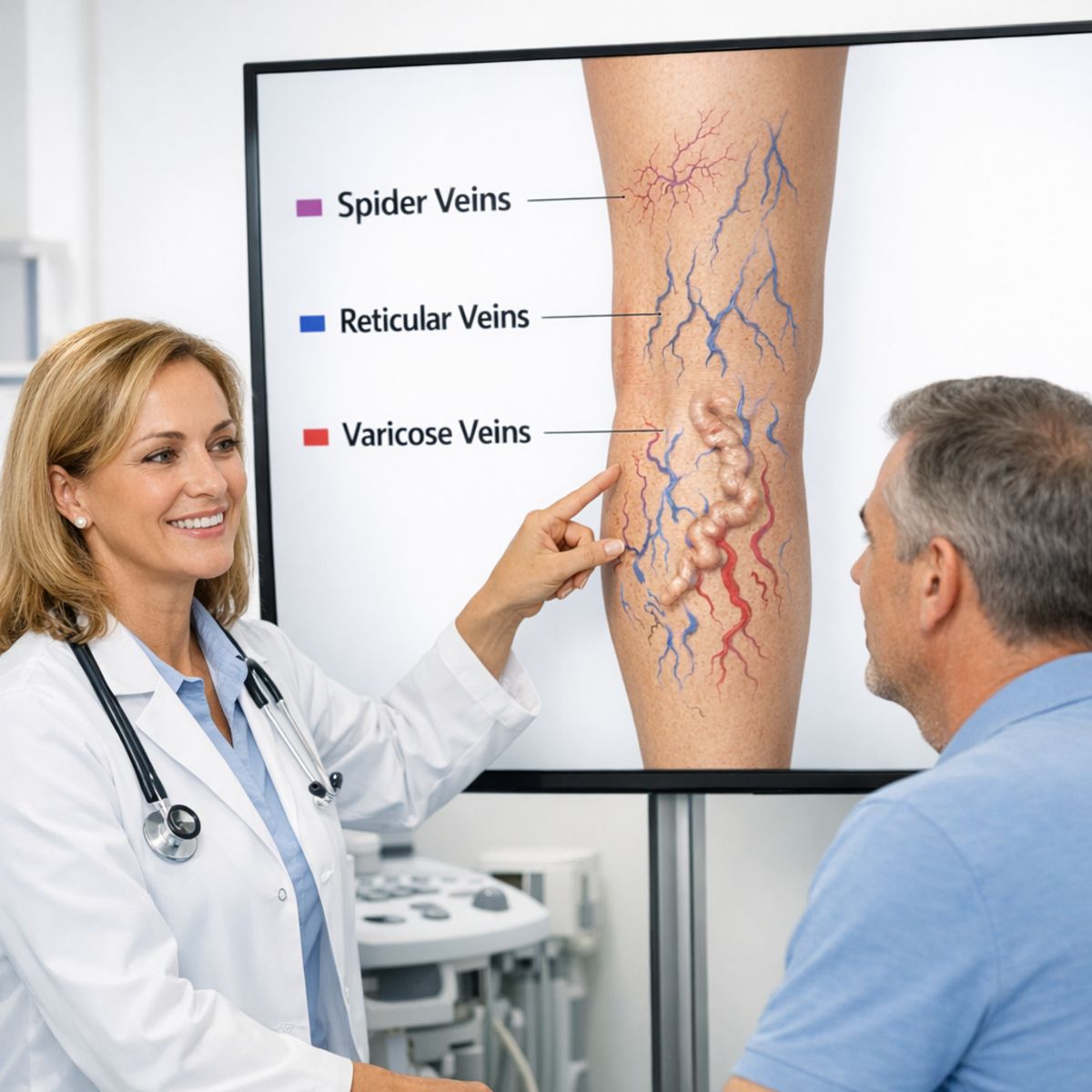
Spider veins and varicose veins are both visible vein conditions, but they are not the same. The difference matters because treatment choices often depend on vein size, depth, symptoms, and whether deeper circulation problems are involved. In plain terms, spider veins are usually small surface veins, while varicose veins are larger veins that may reflect a functional issue such as venous insufficiency.
What spider veins are
Spider veins, also called telangiectasia, are tiny superficial vessels that appear close to the skin. They often look like fine lines, webs, or small branching patterns and may appear red, blue, or purple. These surface veins commonly show up on the legs and sometimes the face. Some people also have reticular veins, which are slightly larger blue or green veins beneath the skin that can feed smaller spider veins.
Many people think of spider veins as mainly cosmetic, and that is often true. Treatments such as laser treatment for telangiectasia may be discussed for certain small visible vessels, depending on location and vein characteristics.
What varicose veins are
Varicose veins are larger veins that may look twisted, raised, or bulging. Unlike spider veins, they are more often associated with changes in vein function. In some cases, the valves inside the veins do not move blood upward efficiently, which can contribute to venous insufficiency. That is why varicose veins are not only about appearance. They may also be linked with aching, heaviness, throbbing, swelling, or leg fatigue.
Because symptoms can vary, treatment planning may include both symptom relief and appearance goals. Conservative options such as compression therapy for varicose veins may be part of a broader care plan.
When visible veins may signal deeper reflux
Appearance alone does not always show whether deeper vein disease is present. Some people with spider veins also notice aching, heaviness, or swelling, and in some cases those surface veins may be connected to underlying reflux in deeper or feeding veins. That does not mean every visible vein points to a medical problem, but it does mean evaluation can help determine whether treatment should focus only on surface veins or address a deeper source first. Understanding that distinction helps set up a more accurate comparison of treatment options in the next section.
Where Radiofrequency Ablation Fits in a Vein Treatment Plan
Radiofrequency ablation, or RFA, is typically used when a medical evaluation shows venous reflux in a larger vein, not as a universal treatment for every visible vein concern. In simple terms, RFA delivers controlled heat inside a problem vein to close it. This is most often considered for larger refluxing veins that may be contributing to symptoms such as heaviness, aching, swelling, or leg fatigue. For patients with vein disease driven by underlying reflux, radiofrequency ablation for varicose veins may be one part of a broader treatment plan.
What RFA is designed to treat
RFA is commonly used for larger veins, such as refluxing saphenous veins, when they are not moving blood efficiently. By closing that source vein, the body can redirect blood flow through healthier veins. Potential benefits may include symptom relief, a minimally invasive approach, and support for overall vein management when reflux is present. That said, whether RFA is appropriate depends on your anatomy, symptoms, ultrasound findings, and the judgment of a qualified vein specialist.
Why RFA may not be enough for visible spider veins
If your main concern is isolated spider veins, RFA may not be the right first treatment because those tiny surface veins are different from the larger veins RFA is meant to close. Treating an underlying refluxing vein can sometimes reduce pressure that contributes to some visible surface veins, but it does not guarantee that spider veins will disappear on their own. Many patients still need separate, direct treatment for cosmetic surface veins after the deeper source issue is addressed. This balanced approach helps set realistic expectations: RFA can be very helpful for selected patients with venous insufficiency, but results vary and treatment recommendations should be based on a personalized medical evaluation.
RFA vs. Laser and Other Spider Vein Treatments
Treatment names for vein care are often used interchangeably online, but they do not mean the same thing. That matters when someone is searching for laser spider veins treatment, laser vein removal, or varicose veins laser treatments. In many cases, radiofrequency ablation (RFA) is used for a larger underlying vein that is not working properly, while surface laser treatment and sclerotherapy are more often used for visible superficial vessels such as spider veins or very small reticular veins.
A simple way to think about the comparison table concept is this: the vein size, depth, and treatment goal usually guide the choice. Larger refluxing veins below the surface may be treated with RFA. Tiny red or purple vessels near the skin may be treated with a surface laser. Small leg spider veins are often treated with sclerotherapy, which places a solution directly into the target vessel. None of these names automatically means the same procedure, and no single option is right for everyone.
RFA vs. surface laser treatment
RFA and surface laser work in very different ways. RFA treats a vein from the inside using a catheter-based approach to close a larger abnormal vein, commonly when venous reflux is contributing to symptoms or feeding visible veins. Surface laser treatment works from outside the skin and is generally aimed at tiny superficial vessels, especially small facial veins or selected fine spider veins. So when people ask about laser treatment for spider veins, the answer depends on which kind of laser treatment they mean.
Candidacy for surface laser can depend on vessel size, location, skin tone, and the desired cosmetic result. Some vessels are too large or too deep for an external laser to be the most practical choice. In addition, skin tone considerations may affect laser selection and settings because clinicians try to balance effectiveness with skin safety. By contrast, RFA is not chosen simply because a vein is visible; it is considered when evaluation suggests a larger vein problem underneath.
RFA vs. sclerotherapy
Sclerotherapy is one of the most common treatments for small leg spider veins. It works by injecting a solution into the target vessel so the vein closes and gradually fades. RFA serves a different purpose. Rather than treating each tiny surface vein directly, it is used for larger refluxing veins that may be driving pressure into smaller visible branches. That is why treatment names are not interchangeable, even when the concern is “spider veins.”
This also explains why varicose veins laser treatments can mean different things in different settings. Sometimes that phrase refers to an endovenous treatment for a larger vein, such as endovenous laser ablation. In other cases, people use it to describe surface laser vein removal for tiny visible vessels. Sclerotherapy may still be the more direct option for many small leg spider veins, but candidacy varies based on anatomy, symptoms, and exam findings.
When combination treatment may be recommended
Clinicians sometimes recommend treatment in stages when both deeper reflux and visible surface veins are present. For example, a larger abnormal vein may be treated first with RFA, and then residual spider veins or reticular veins may be addressed later with sclerotherapy or surface laser. This individualized approach helps match the treatment to the vein type rather than assuming one method should handle every concern.

From Evaluation to Results: What the Treatment Journey May Look Like

For many people, the most stressful part of vein care is not knowing what comes first. In most cases, the process begins with a consultation focused on your symptoms, medical history, and a physical exam. If needed, a duplex ultrasound may be used to look beneath the surface and check how blood is flowing through the veins. This helps the clinician understand whether visible veins are the main issue or whether there is a deeper circulation problem contributing to them.
Step 1: Vein evaluation and ultrasound
During evaluation, the goal is to identify the source of the problem, not just the veins you can see. Some patients mainly have spider veins, which are small surface veins. Others may have reticular veins or larger varicose veins linked to venous reflux, meaning blood is not moving as efficiently as it should. When ultrasound is indicated, it can help map which veins are functioning normally and which may need treatment. That information guides a more precise plan and can reduce guesswork.
Step 2: Matching treatment to the vein type
Treatment is usually based on vein type and underlying cause. If refluxing varicose veins are present, clinicians often recommend addressing that underlying issue first, sometimes with options such as radiofrequency ablation, laser-based treatment, or other physician-directed care. If the concern is limited to smaller surface veins, direct treatment such as sclerotherapy may be considered. In some cases, compression is also part of the plan. It is common for treatment to happen in stages, especially when both deeper and surface veins are involved.
Step 3: Recovery and visible improvement over time
Visible improvement is usually gradual rather than immediate. After treatment, some bruising, tenderness, or temporary discoloration may occur, and treated veins often fade over several weeks. When people search for before and after varicose veins treatment, it is important to remember that results develop over time and may require more than one session. Follow-up visits help the care team assess healing, decide whether additional treatment is appropriate, and set realistic expectations for the next stage of improvement.
How to Prepare for a Vein Consultation
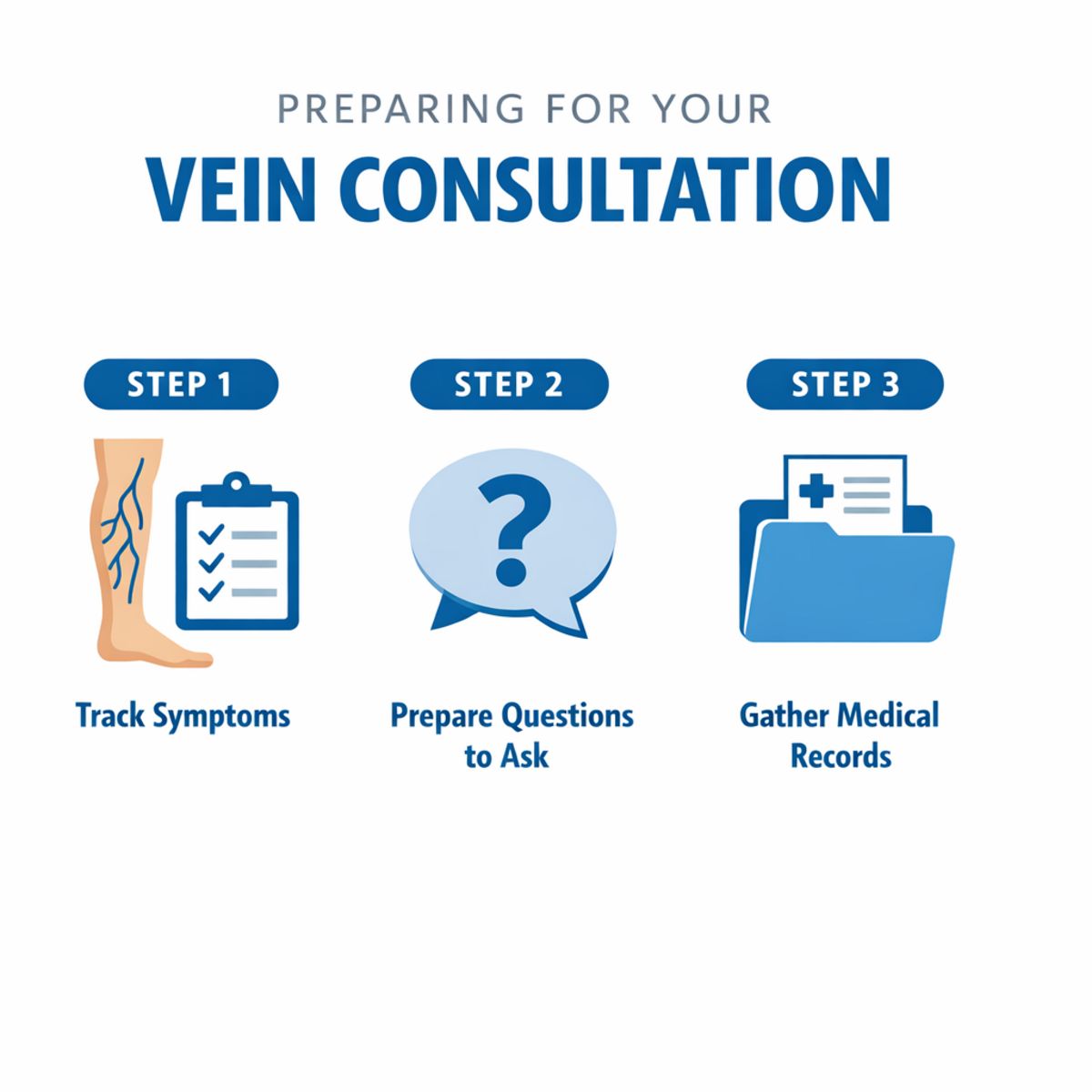
A little preparation can make your appointment more productive and help you feel more confident about next steps. The goal is not to diagnose yourself, but to gather clear details that support a thorough evaluation and a better discussion of options.
Track symptoms and vein changes
- Write down symptoms you notice, such as aching, heaviness, swelling, itching, burning, cramping, or visible vein changes.
- Note when symptoms tend to feel worse, such as after standing, sitting, exercise, or at the end of the day.
- Be ready to describe both comfort concerns and appearance concerns, since both can be important during the visit.
- If you use compression therapy for varicose veins, mention how often you wear it and whether it helps.
Ask the right treatment questions
- Bring a list of current medications, prior vein treatments, and any relevant medical history.
- Prepare questions about treatment goals, expected downtime, number of sessions, recovery, and cost.
- Ask whether visible spider veins could be related to deeper vein reflux and what treatment sequence makes sense.
- Discuss your activity level, any discomfort with daily routines, and what results you hope to achieve.
Bringing organized notes can help you compare recommendations, understand your options more clearly, and make a more informed decision after the evaluation.
Cost Factors: What Affects Vein Treatment Pricing
If you are researching varicose vein laser treatment price, it helps to know that pricing is usually based on the details of the vein problem being treated rather than a single flat number. Costs can vary because different vein conditions call for different techniques, levels of evaluation, and follow-up needs. A quote for one person may look very different from a quote for someone else, even when both are seeking vein treatment.
Why treatment costs vary
Several factors can affect treatment pricing. One is the type of vein being treated. Larger symptomatic veins may be addressed with procedures such as radiofrequency ablation (RFA), while smaller surface veins or spider veins may be treated with surface laser or sclerotherapy. These are not interchangeable services, so they are often priced differently.
Other variables include whether diagnostic imaging is needed, how many areas require treatment, the complexity of the vein pattern, and whether care is completed in one visit or across multiple sessions. Follow-up appointments may also be part of the treatment plan, especially when monitoring results or deciding whether additional treatment is appropriate.
Medical vs. cosmetic considerations
Another reason pricing can differ is whether treatment is being considered for medically significant vein disease or for cosmetic concerns. Treatment for symptomatic refluxing veins may be handled differently from treatment for spider veins that are primarily cosmetic. When insurance applies, coverage depends on the individual plan, medical necessity requirements, and the findings of a clinical evaluation. Coverage is not guaranteed, and eligibility can vary from one patient to another.
Because of these variables, the most accurate way to understand expected cost is through an individualized assessment. That allows the treatment approach, number of sessions, and any imaging or follow-up needs to be matched to the person rather than estimated in the abstract.
Quick Takeaways for Patients Comparing Vein Treatments
Fast answers at a glance
- RFA is usually used for larger refluxing veins, especially when ultrasound shows underlying venous insufficiency.
- Spider veins often respond better to direct treatments such as sclerotherapy or surface laser.
- If symptoms include heaviness, swelling, aching, or visible varicose veins, an ultrasound may be needed to check for deeper venous disease.
- Treatment plans are based on individual evaluation, including vein size, symptoms, and the source of the problem.
- The best option depends on matching the treatment to the type of vein being treated, not on choosing one method for every case.
Frequently Asked Questions
Can radiofrequency ablation treat spider veins directly?
Usually not directly. Radiofrequency ablation is generally used for larger veins with underlying reflux, while spider veins are tiny surface veins. In some cases, treating a deeper problem may be part of the overall plan, but spider veins often need a separate, more direct treatment approach.
What treatment is usually used for spider veins?
Common options often include sclerotherapy or certain surface laser treatments. The most appropriate approach can depend on the size and location of the veins, skin characteristics, symptoms, and cosmetic goals. A clinical evaluation helps determine which option is most suitable.
Is laser vein removal the same as RFA?
No. “Laser vein removal” can refer to different treatments. Surface laser is often used for small visible veins near the skin, while endovenous laser treats larger veins from the inside. Radiofrequency ablation is a different heat-based technique used for similar larger-vein problems, but it is not the same procedure as laser treatment.
Will spider veins disappear after treating varicose veins?
Sometimes they may improve if underlying vein pressure is reduced, but they do not always go away on their own. Many people still need direct treatment for remaining spider veins even after larger varicose veins have been addressed.
How long does recovery take after vein treatment?
Recovery varies by treatment type and by the individual. Some vein procedures involve minimal downtime, while others may require compression, walking, or temporary activity adjustments. Your clinician can give personalized aftercare instructions based on the treatment performed and your medical history.
How many sessions might be needed?
It depends. The number of sessions can vary based on how many veins are present, whether there is underlying reflux, the treatment method chosen, and how your veins respond over time. An evaluation is the best way to understand what kind of treatment sequence may be recommended.
When It Makes Sense to Schedule a Vein Evaluation
If you have aching, heaviness, swelling, visible vein changes, or ongoing concerns about how your legs look, scheduling a vein evaluation can be a helpful next step. It can also make sense if you are unsure whether your symptoms are minor, cosmetic, or related to an underlying vein issue.
Signs it may be time to talk with a specialist
A specialist can assess whether you are dealing with isolated spider veins or whether there may be deeper venous insufficiency contributing to the problem. That clarity can help you better understand your options, including whether treatments such as radiofrequency ablation for varicose veins may be part of the discussion.
An evaluation is also a good opportunity to ask questions about what treatment may involve, what an individualized plan could look like, and how costs may apply to your situation. If you want personalized guidance, you can take the next step and schedule a consultation.
Final Thoughts on RFA and Spider Vein Treatment
In simple terms, radiofrequency ablation is generally used for larger veins with reflux, not for isolated spider veins on the surface of the skin. When the main concern is visible spider veins, direct treatments such as surface laser or sclerotherapy are often more appropriate. The best approach depends on the type of vein involved, whether symptoms are present, and what a medical evaluation shows.
The simplest way to think about it
Treatment works best when it matches the vein problem being treated. With the right evaluation and realistic expectations, you can make a more informed decision and move forward with greater confidence.