
Shoulder orthopedic care tailored to your movement
At West Medical, you’ll find dedicated shoulder orthopedic care designed around how you move, work, and live. Our team provides comprehensive evaluation and treatment—from advanced imaging and precise diagnosis to non-surgical therapies and, when appropriate, modern orthopedic shoulder surgery.
Whether you’re dealing with pain during shoulder external rotation, discomfort with shoulder adduction, or a lingering loss of range of motion after an injury, our orthopedic surgeons and orthopedic doctors focus on protecting your function and relieving pain. We care for adults and, when clinically appropriate, pediatric patients with shoulder concerns.
Every treatment plan is personalized based on your diagnosis, health history, and goals, and individual results can vary depending on many factors, including your overall health and adherence to your care plan.

Why choose West Medical for shoulder orthopedic care
West Medical provides shoulder-focused orthopedic care that goes beyond a generic clinic visit. Patients are evaluated by an orthopedic care team that understands the complex anatomy and motion of the shoulder joint, helping you move from diagnosis to treatment with clarity and confidence.
Focused expertise in shoulder conditions
West Medical’s orthopedic group includes orthopedic surgeons and orthopedic doctors who routinely treat rotator cuff tears, labral injuries, shoulder arthritis, frozen shoulder, and shoulder instability. This repeated exposure to a wide range of shoulder conditions builds a deep understanding of how each problem affects motion, strength, and daily activities. The team is experienced in interpreting shoulder X-ray and shoulder MRI findings, distinguishing normal shoulder X-ray anatomy from subtle joint changes that can influence whether you benefit most from non-surgical care, minimally invasive procedures, or more advanced orthopedic surgery.
Advanced diagnostics and imaging
Shoulder orthopedic care at West Medical incorporates modern diagnostic tools and careful hands-on evaluation. Depending on your symptoms, your provider may recommend X-rays, MRI, and a detailed physical exam that assesses shoulder external rotation, shoulder adduction, and the strength of the shoulder external rotators. These tests help pinpoint whether pain is coming from the rotator cuff, labrum, cartilage, or surrounding soft tissues. With clearer information, your orthopedic team can determine whether non-surgical care is likely to relieve symptoms or if orthopedic surgery, including shoulder replacement surgery, should be considered as part of your treatment plan.
Personalized, stepwise treatment plans
Rather than jumping straight to surgery, West Medical emphasizes a personalized, stepwise approach to shoulder care. Many patients begin with conservative options such as activity modification, targeted physical therapy that includes safe external rotation shoulder exercises, anti-inflammatory medications, or image-guided injections. Your orthopedic team reviews how you respond to these measures before discussing shoulder replacement operations or reverse shoulder replacement when indicated for advanced arthritis or complex rotator cuff disease. Individual outcomes vary based on your overall health, the specific shoulder condition, and how closely you follow the recommended plan, and your provider will explain these factors so you can make informed decisions.
Coordinated care for different ages and needs
Shoulder problems can affect athletes with overuse injuries, active adults with instability, older adults with arthritis, and some pediatric patients with orthopedic pediatric needs. West Medical coordinates care across its orthopedic clinics so you can move smoothly from initial evaluation to imaging, treatment, and follow-up without feeling like you are starting over at each visit. The same orthopedic care team tracks your progress, adjusts your plan as your shoulder improves or your goals change, and helps you safely return to the activities that matter most to you.
What to expect from shoulder orthopedic evaluation
Your first visit is designed to be thorough but straightforward, so you leave with a clear understanding of your shoulder diagnosis and options.
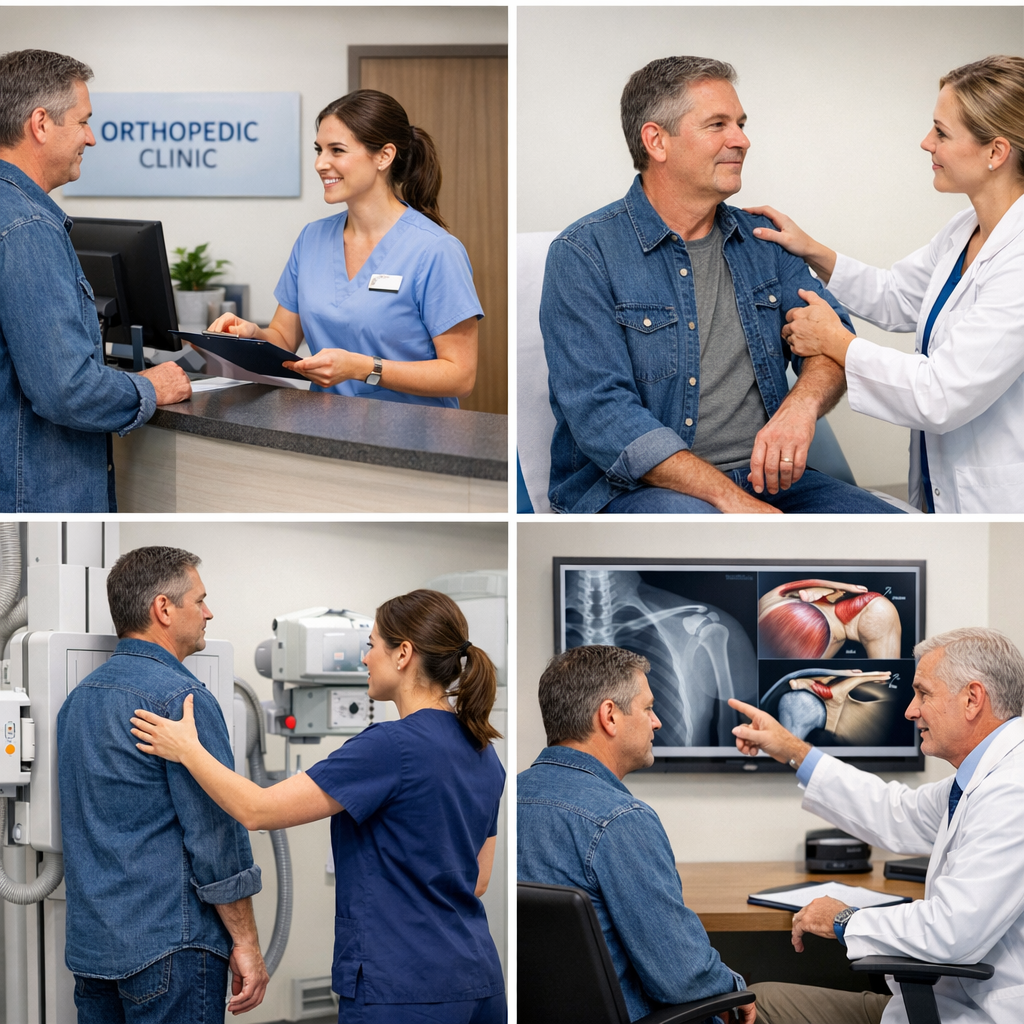
1. Detailed history and physical exam
Your evaluation begins with a focused conversation about your symptoms—whether pain appears at rest, with overhead motion, or during shoulder adduction—as well as your work, sports, and daily activities.
The orthopedic doctor then performs a hands-on exam to assess range of motion, including shoulder external rotation, strength of the shoulder external rotators, joint stability, and specific areas of tenderness that help pinpoint the source of pain.
2. Imaging: shoulder X-ray and MRI when needed
Many patients start with a shoulder X-ray to evaluate bone alignment, joint space, and overall joint health, and to compare these findings with what a normal shoulder X-ray should look like.
If soft tissue structures like the rotator cuff or labrum need closer evaluation, your provider may order a shoulder MRI. Imaging decisions are made case by case, based on your symptoms, physical exam findings, and how much detail is needed to guide treatment.
3. Clear explanation of your orthopedic options
Once imaging and exam results are available, the orthopedic surgeon reviews everything with you in plain language, including a brief explanation of orthopedic meaning and orthopedic definition in the context of shoulder care.
You'll walk through non-surgical options first—such as activity modification, physical therapy, and injections—and then discuss when orthopedic surgery, including shoulder replacement operations or reverse shoulder replacement, might be considered.
4. Personalized plan and follow-up
Before you leave, the team outlines a tailored plan that may include home exercises, formal physical therapy, medications, injections, or a surgical consultation if appropriate.
Follow-up visits are used to monitor your progress and adjust the plan as needed, and urgent concerns can be addressed through orthopedic urgent care pathways when appropriate, always with careful clinical supervision and a strong focus on safety.
Non-surgical care vs. shoulder orthopedic surgery
Understanding when to stay conservative and when to consider surgery can help you feel more confident in your shoulder care plan. West Medical’s orthopedic team offers both non-surgical and surgical options, so your treatment can match your goals, lifestyle, and medical needs.
Choosing between conservative care and surgery is a shared decision with your orthopedic surgeon, based on your pain levels, function, imaging, and personal goals. West Medical’s orthopedic group is accustomed to walking patients through these options, and you can learn more about how this team approaches comprehensive joint health in Orthopedic Care at West Medical. Individual results vary, and your plan will be tailored to your overall health and the specific procedure or therapies recommended.
Understanding costs for shoulder orthopedic care
Cost is an important part of planning your shoulder care, and it can vary widely from person to person. Instead of fixed prices, West Medical focuses on explaining what drives your costs and what to expect at each stage of treatment.
What influences the cost of shoulder care
Your total cost depends on the type and complexity of care you need. An initial consultation is typically different in cost from a follow-up visit, and additional testing can change the overall amount. Imaging such as a shoulder X-ray or shoulder MRI, for example, may be recommended to better understand your condition.
Treatment choices also play a major role. Some patients improve with physical therapy, activity modification, or injections, while others may require orthopedic surgery. Shoulder replacement procedures, including reverse shoulder replacement, usually include separate hospital or surgery center fees, surgeon fees, anesthesia charges, and implant costs, which are all itemized as part of your overall care.
Insurance, financing, and coverage considerations
Coverage for shoulder orthopedic care is highly individualized. It depends on your specific insurance plan, the medical necessity of your condition, and the exact services you receive, from office visits and imaging to physical therapy and surgery.
West Medical can review your insurance information, help estimate expected costs, and explain your benefits before you move forward, but cannot guarantee coverage decisions or final out-of-pocket amounts. Any cost discussion is approximate until your personalized treatment plan is created and your insurance has been fully verified.
Planning your next financial steps
Before your visit, it is helpful to gather your insurance card, any referral information, a list of current medications, and details about prior shoulder treatments. Sharing this information with the team allows for a more accurate conversation about potential costs, coverage options, and any available financing.
The goal is to provide clear, transparent information so you can make confident, informed decisions about your shoulder care and the financial choices that come with it.
Note: All cost estimates are subject to change based on your final treatment plan and your insurance carrier’s determinations.
Shoulder orthopedic care FAQs
These answers provide general information and do not replace an in-person evaluation; your orthopedic care and treatment recommendations are always individualized.
What conditions do shoulder orthopedic specialists at West Medical treat?
Shoulder orthopedic specialists at West Medical evaluate and treat a wide range of conditions, including rotator cuff tears, labral injuries, shoulder impingement, frozen shoulder, arthritis, instability, fractures, and sports-related overuse injuries that affect shoulder external rotation, strength, or stability.
How do I know if I need a shoulder X-ray or MRI?
Your orthopedic doctor will recommend imaging based on your symptoms and physical exam; many patients start with a shoulder X-ray to assess bone and joint alignment, and a shoulder MRI may be ordered if soft tissues like the rotator cuff or labrum need closer evaluation to guide treatment decisions.
Is shoulder surgery always necessary for chronic shoulder pain?
No, many people with chronic shoulder pain improve with non-surgical care such as targeted physical therapy, activity modification, medications, or injections, and shoulder replacement surgery or other orthopedic surgery is typically considered only when conservative measures have not provided sufficient relief and imaging supports a surgical approach.
Do you treat pediatric shoulder orthopedic issues?
West Medical can evaluate some orthopedic pediatric shoulder concerns, and when needed, coordinates care with specialists experienced in treating growing bones and joints so that young patients receive age-appropriate, clinically supervised treatment.
Take the next step toward better shoulder function
If you’re living with ongoing shoulder pain, weakness, or stiffness—especially when reaching overhead, rotating your arm outward, or bringing it across your body—it’s time for an expert evaluation from an orthopedic shoulder specialist at West Medical.
Our team provides comprehensive shoulder care, from precise diagnosis and targeted non-surgical therapies to advanced orthopedic surgery when it’s the right choice for your needs. Every shoulder is different, and individual results vary, which is why the first step is a clinically supervised assessment of your specific situation.
If you’re ready to talk about your symptoms, your goals, and your options for relief and improved function, schedule a consultation with West Medical today.

Related Services
- Orthopedic Care at West Medical
Gives a broader overview of West Medical’s full orthopedic services if you are managing pain in multiple joints beyond the shoulder.
Related Articles
- Orthopedic Shoulder Care Tips From West Medical
Ideal for patients who want practical at-home strategies and expert tips to support their shoulder orthopedic care between clinic visits.
- Frozen Shoulder Exercises for Quick Relief | West Medical
Helpful for readers experiencing stiffness or limited motion who want to learn gentle, medically guided exercises for frozen shoulder.
- Shoulder Replacement Surgery Recovery Time Explained – West Medical
Useful for anyone considering shoulder replacement surgery who wants a clearer picture of typical recovery milestones and timelines.
- How to Find a Good Orthopedic Doctor Near You – West Medical
Provides guidance on evaluating orthopedic doctors and surgeons if you are still deciding where to seek shoulder care.