
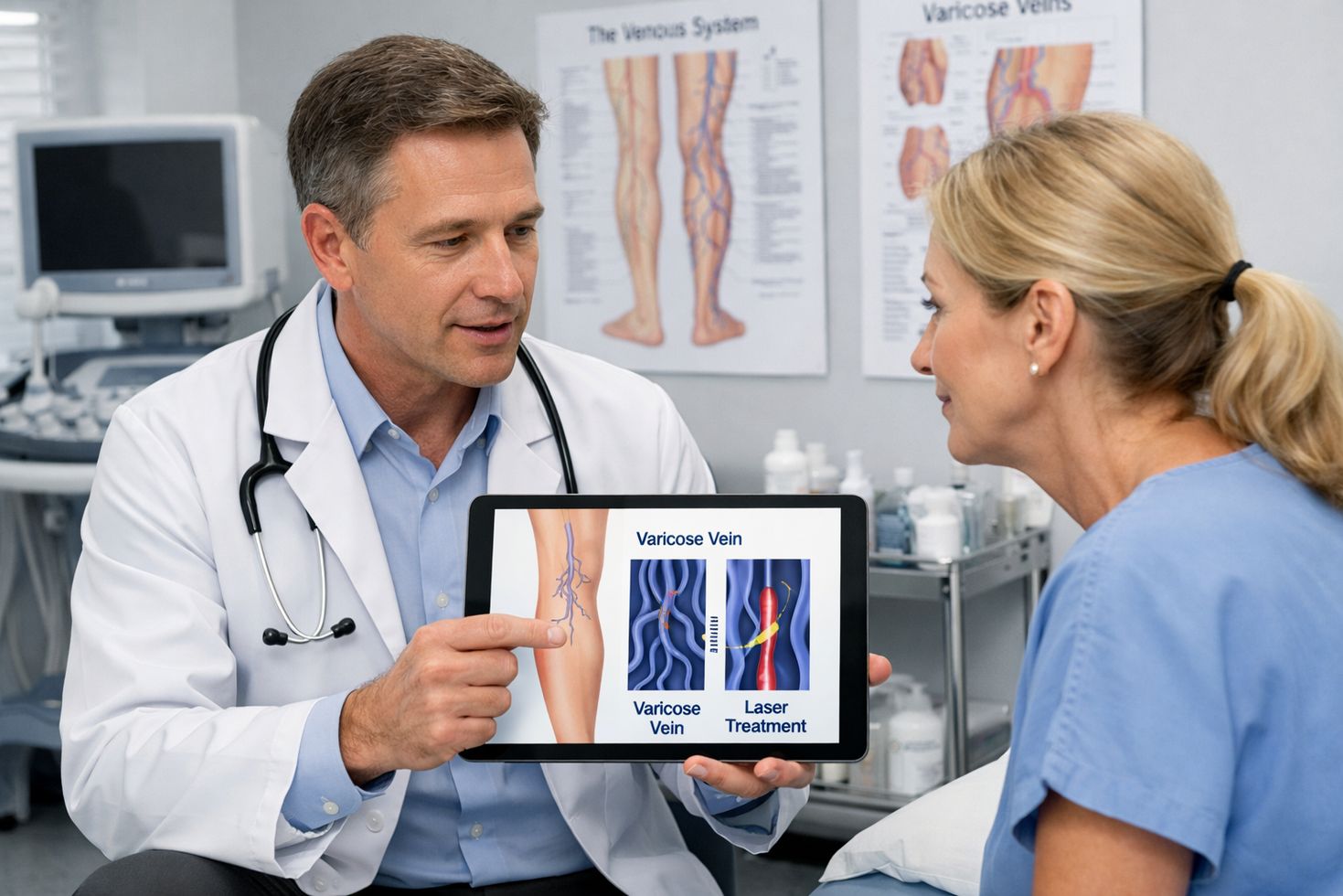
Varicose veins removal laser treatment is a commonly used option for people dealing with enlarged, twisted veins that may cause discomfort, heaviness, swelling, or cosmetic concerns. In simple terms, laser-based vein treatment works by delivering heat to close off a problematic vein so blood can reroute through healthier veins. For many patients, it can be part of a modern treatment plan, but the right approach depends on a medical evaluation, the size and location of the vein, and your overall health.
People often seek treatment for varicose veins because symptoms can interfere with daily life, or because the veins become more noticeable over time. While laser treatment may be appropriate in some cases, results and recovery can vary from person to person. A clinician will usually consider your anatomy, symptoms, circulation, and treatment goals before recommending a plan.
This guide explains how laser vein treatment works, who may be a candidate, what recovery may involve, and what risks or alternatives to discuss. It is designed to give you a practical, patient-friendly overview so you can better understand your options and know what questions to ask during a consultation.
What Is Laser Vein Removal for Varicose Veins?
Laser vein removal for varicose veins usually refers to a treatment that targets a larger unhealthy vein from the inside, not just a cosmetic laser used on the surface of the skin. Varicose veins are enlarged, twisted veins that develop when tiny valves inside the vein stop working well. Instead of moving blood upward efficiently, the vein allows blood to pool, which can lead to bulging, aching, heaviness, swelling, or visible rope-like veins.
When people say “laser treatment for varicose veins,” they are often talking about endovenous laser treatment. In simple terms, this means laser energy is used inside the affected vein to help close it. Once that vein is sealed, blood does not get stuck there anymore. Instead, circulation is naturally redirected through healthier nearby veins that can carry blood more effectively.
Endovenous laser treatment in simple terms
Endovenous laser treatment is designed for problem veins beneath the skin, especially larger veins contributing to varicose vein symptoms. A specialist uses imaging guidance to place a thin laser fiber into the vein. The laser creates controlled heat, which causes the vein walls to close. Over time, the body absorbs or breaks down that closed vein. The goal is not to remove every visible vein instantly, but to treat the malfunctioning vein that is causing the problem in the first place.
Laser treatment for larger veins vs smaller visible veins
This is where confusion often happens. Larger bulging varicose veins are not the same as smaller visible veins near the skin’s surface. Endovenous laser treatment works inside a larger vein. By contrast, some small spider veins or fine visible veins may be treated with a surface laser or with other approaches depending on their size and location. That means not every vein concern is treated with the same kind of laser, even though people may use similar words to describe them.
In some cases, treatment plans may also include supportive options such as compression therapy for varicose veins. The key point is that laser vein removal for varicose veins usually means treating the underlying faulty vein, not simply fading what is visible on the surface.

How Varicose Vein Laser Treatments Work Step by Step
Varicose vein laser treatment is usually a planned, step-by-step process rather than a rushed procedure. While the exact sequence can vary by clinician, vein anatomy, and symptoms, most patients move through a similar path: evaluation, treatment planning, the procedure itself, and immediate aftercare. Understanding each stage can make vein laser therapy feel more predictable and less intimidating.
1. Evaluation and vein mapping
The first step is a consultation focused on your symptoms, medical history, and visible vein concerns. A clinician may ask about aching, heaviness, swelling, skin changes, or discomfort that worsens with standing. This visit helps determine whether varicose veins are mainly a cosmetic issue or part of an underlying vein circulation problem.
In many cases, an ultrasound is used to map the veins and look for reflux, which means blood is flowing in the wrong direction. This imaging helps identify which vein or veins are contributing to symptoms and whether endovenous laser treatment is appropriate. Not every patient is a candidate for the same approach, so this evaluation is what guides the next step.
2. What happens during the procedure
Once the anatomy is reviewed, the treatment plan is tailored to the size, location, and pattern of the affected veins. On procedure day, the treatment area is typically cleaned and prepared, and local numbing medicine is used to improve comfort. Because the area is numbed, many patients find the experience more manageable than they expected.
A small access point is then made so a thin catheter or laser fiber can be positioned inside the targeted vein. The laser delivers controlled energy along the vein wall, causing the vein to close. Blood naturally reroutes through healthier veins nearby. The goal is to seal the problematic vein while minimizing disruption to surrounding tissue. Depending on the treatment plan, clinicians may address one or more veins and may combine laser treatment with other vein care options when appropriate.
3. Immediate aftercare and follow-up
After the laser portion is complete, the treated area is usually covered and compression may be recommended. Many patients are encouraged to walk soon after the procedure, since light movement can support circulation. You may also receive guidance about when to return to work, how long to avoid strenuous exercise, and how to use compression stockings if they are part of your plan.
Follow-up instructions vary, but they may include a return visit or ultrasound to confirm the vein has closed as expected and to monitor healing. In short, varicose vein laser treatment typically follows a clear sequence: consultation and ultrasound mapping, individualized planning, local numbing and laser fiber placement, controlled vein closure, and post-procedure walking and follow-up. Your clinician will adjust these steps based on your anatomy and treatment goals.

Potential Benefits of Varicose Vein Removal by Laser

Laser treatment for varicose veins is often considered because it is a minimally invasive option that may address both symptoms and the appearance of problematic veins. For appropriate candidates, clinicians may recommend it as part of a broader treatment plan for venous insufficiency or related vein concerns. While it can offer meaningful improvement for many people, outcomes depend on factors such as vein size, overall circulation, medical history, and follow-up care.
Many patients seek treatment because varicose veins are not only visible but also uncomfortable. Aching, heaviness, swelling, leg fatigue, or a sense of pressure can affect daily routines, especially after long periods of standing or sitting. In those situations, laser treatment may help reduce symptoms and improve day-to-day comfort, though no procedure works the same way for everyone.
Symptom relief and daily comfort
One of the main reasons people consider laser vein treatment is the possibility of symptom relief. When varicose veins are linked to poor vein function, treatment can improve blood flow in the affected area and may lessen discomfort over time. Some patients report reduced aching or heaviness, while others notice less swelling or improved tolerance for walking, working, or other normal activities. These changes can be gradual, and the degree of improvement varies from person to person.
Because symptoms can overlap with other circulation or musculoskeletal issues, a proper evaluation is important before deciding on treatment. A vein specialist can help determine whether laser therapy is likely to be useful and how it compares with other options.
Recovery profile and appearance changes
Another potential advantage is convenience. Laser vein procedures are typically performed in an outpatient setting, which means many patients do not need a hospital stay. Recovery is often relatively manageable, and many people return to normal routines fairly quickly, although activity restrictions and healing timelines can differ based on the treatment area and the individual patient.
Appearance is also part of the decision for some patients. Visible before and after varicose veins treatment differences may develop gradually as treated veins fade and the body adjusts. Cosmetic improvement may occur over time, but results vary, and more than one treatment or ongoing compression use may sometimes be recommended. A measured discussion with a qualified clinician can help set realistic expectations about both symptom relief and visible change.
Who May Be a Candidate for Laser Vein Removal
Laser vein removal may be an option for some people, but candidacy is usually individualized rather than based on appearance alone. People often seek evaluation because of bulging veins, aching, heaviness, swelling, skin changes, or recurring leg discomfort. In other cases, the concern may be cosmetic. A vein specialist can help determine whether those symptoms and vein patterns match a treatment approach that is likely to be appropriate for your anatomy and goals.
One important point is that not every visible vein is best treated with laser. Some veins are small and close to the skin, while others are larger underlying veins that may be contributing to pressure, reflux, or recurring symptoms. Because of that, treatment planning often depends on more than a visual exam. Ultrasound findings frequently help guide selection by showing how blood is flowing through the veins and whether a deeper source problem is present.
Symptoms and vein patterns that may prompt evaluation
An evaluation may be considered when someone has visible varicose veins along with symptoms such as aching, heaviness, swelling, tenderness, or discomfort that returns after standing or sitting for long periods. Skin irritation or color changes near the ankle can also be reasons to seek medical review. Larger refluxing veins are often assessed differently from small spider veins, so the same treatment is not automatically recommended for every vein pattern.
When another treatment may be more appropriate
Depending on the findings, another treatment may be more appropriate than laser alone. Some patients may be better suited to compression therapy, sclerotherapy, staged treatment, or procedures such as radiofrequency ablation for varicose veins. The best approach may depend on vein size, location, underlying reflux, symptom severity, and personal treatment goals.
Timing and suitability can also be affected by pregnancy, a history of blood clots, circulation concerns, or other health factors. That does not automatically rule treatment in or out, but it does make specialist evaluation especially important. A proper assessment can help set realistic expectations and identify whether laser vein removal fits into the overall treatment plan.
Laser Vein Removal vs Other Varicose Vein Treatments
When comparing varicose veins laser treatments with other options, the main question is not which treatment is universally “best,” but which approach fits a person’s vein anatomy, symptoms, and goals. Some treatments are designed to manage discomfort, while others are intended to close the underlying problem vein. In some cases, a specialist may also recommend follow-up treatment for smaller residual veins after the main refluxing vein is addressed.
Laser treatment vs compression therapy
Compression stockings are often part of conservative care. They can help reduce heaviness, swelling, and aching by improving circulation in the legs during daily activity. For some people, compression therapy for varicose veins may be a useful first step, especially when symptoms are mild, during pregnancy, or while evaluating next steps.
However, compression therapy does not typically close or remove the underlying refluxing vein. Endovenous laser treatment is different because it aims to seal the problematic vein from the inside using heat delivered through a catheter. In practical terms, compression often supports symptom management, while laser treatment is usually considered when the goal is to treat the source of venous insufficiency more directly.
Laser treatment vs radiofrequency ablation
Laser treatment and radiofrequency ablation for varicose veins are both minimally invasive, heat-based procedures used to close diseased veins. The key difference is the energy source: laser uses laser energy, while radiofrequency ablation uses radiofrequency energy to heat the vein wall and cause closure.
Because both methods are designed for a similar purpose, the choice often comes down to details such as vein size, vein path, physician experience, and the overall treatment plan. One clinician may prefer laser in certain anatomical situations, while another may recommend radiofrequency ablation based on comfort, technique, or expected recovery considerations. Both can be effective options when selected appropriately.
A balanced decision framework is helpful: conservative care may ease symptoms, while procedural options such as laser or radiofrequency ablation may better address the underlying vein problem. The right choice depends on anatomy, symptom severity, treatment goals, and whether additional care may be needed for remaining visible veins after the main vein is treated.

Recovery, Risks, and What Results to Expect
Many people want to know how recovery feels, what side effects are possible, and when they may notice improvement. In general, walking is often encouraged soon after treatment, while temporary soreness, bruising, or tenderness can happen in the treated area. Some patients are also advised to wear compression for a period of time, depending on the procedure and their clinician’s aftercare plan.
Common recovery expectations
The first days and weeks can look different from person to person. Some people feel ready to resume many normal routines quickly, while others need more time before discomfort settles. It is also important to understand that symptom relief and visible appearance changes do not always happen on the same timeline. Legs may feel better before veins look noticeably different, or cosmetic improvement may continue gradually as healing progresses.
Possible risks and why follow-up matters
As with many vein procedures, possible risks can include discomfort, bruising, skin irritation, nerve irritation, clot-related concerns, or the need for additional treatment depending on the case. These possibilities should be discussed clearly without assuming they will happen. Follow-up visits, and in some cases ultrasound checks, may be recommended to confirm healing is progressing as expected and to review any ongoing symptoms.
If symptoms persist, worsen, or feel different than expected, they should be reviewed by a clinician. Individual outcomes vary based on vein severity, overall health, the type of treatment performed, and how closely aftercare instructions are followed. A balanced expectation is that treatment may improve symptoms and appearance, but results are personal and not guaranteed on an exact schedule.

How Much Does Laser Vein Removal Cost?
Cost is an important part of deciding whether laser vein removal is right for you. Because each case is different, pricing can vary and is best discussed after an evaluation rather than estimated with a generic number.
The total cost may depend on how many veins are being treated, the size and complexity of the area, whether imaging or other evaluation is needed, the facility setting, and whether more than one treatment session or follow-up care is recommended.
What can affect the total cost
Insurance coverage can also vary. Approval often depends on your specific plan and whether the treatment meets medical necessity requirements, so coverage should never be assumed. Asking for a personalized estimate after your consultation can help you understand expected costs, possible next steps, and any questions to raise with your insurer.
Frequently Asked Questions About Varicose Vein Laser Treatments
Is laser vein removal painful?
Discomfort varies from person to person and depends on the type of laser vein treatment being used. Local numbing is commonly used to improve comfort, but some patients still notice pressure, heat, soreness, or tightness during or after treatment.
How long does it take to recover from varicose vein laser treatment?
Many patients are able to return to routine daily activities relatively quickly after treatment. Recovery can still vary based on the procedure performed, the size and location of the veins, and your provider’s aftercare instructions.
Can laser treatment remove all varicose veins in one session?
In some cases, one session may address the main problem vein, but not every visible vein is always treated at once. Some patients need staged treatment or additional procedures depending on how extensive their vein disease is.
Is laser vein removal permanent?
A treated vein can often be successfully closed, which may provide lasting improvement in that specific vein. However, varicose vein disease can continue to change over time, so new vein issues may still develop and follow-up care may be recommended.
What is the difference between laser vein removal and radiofrequency ablation?
Both treatments are minimally invasive ways to close unhealthy veins using heat-based technology. The main difference is the energy source used inside the vein, and the best option depends on your anatomy, symptoms, and a specialist’s evaluation.
When should I see a specialist about varicose veins?
It may be time to see a specialist if you have leg pain, swelling, heaviness, skin changes, or veins that are becoming more noticeable or uncomfortable. An evaluation can help determine whether symptoms are cosmetic, medical, or related to an underlying vein condition.
When to Schedule a Vein Evaluation
If you have persistent leg symptoms, visible bulging veins, or questions about which treatment may be appropriate, a professional evaluation can help you understand your options. This next step is especially helpful when you are unsure whether laser treatment, compression, RFA, or another approach may be the best fit for your needs.
A personalized plan starts with evaluation
Your symptoms, ultrasound findings, and personal goals all play a role in determining the most appropriate care plan. A consultation offers the chance to ask questions, review possible treatments, and get recommendations tailored to your situation without pressure or assumptions.
The Bottom Line on Varicose Veins and Laser Treatment
Laser vein removal is one of several minimally invasive options that may help address problematic varicose veins. The right approach depends on your symptoms, vein anatomy, and an individual evaluation rather than a one-size-fits-all plan.
Key takeaway
Candidacy, recovery, and results can vary from person to person, so informed guidance from a qualified specialist is important when visible veins or related symptoms are affecting your comfort or confidence. With the right assessment, you can better understand your options and choose the next step that fits your needs.