
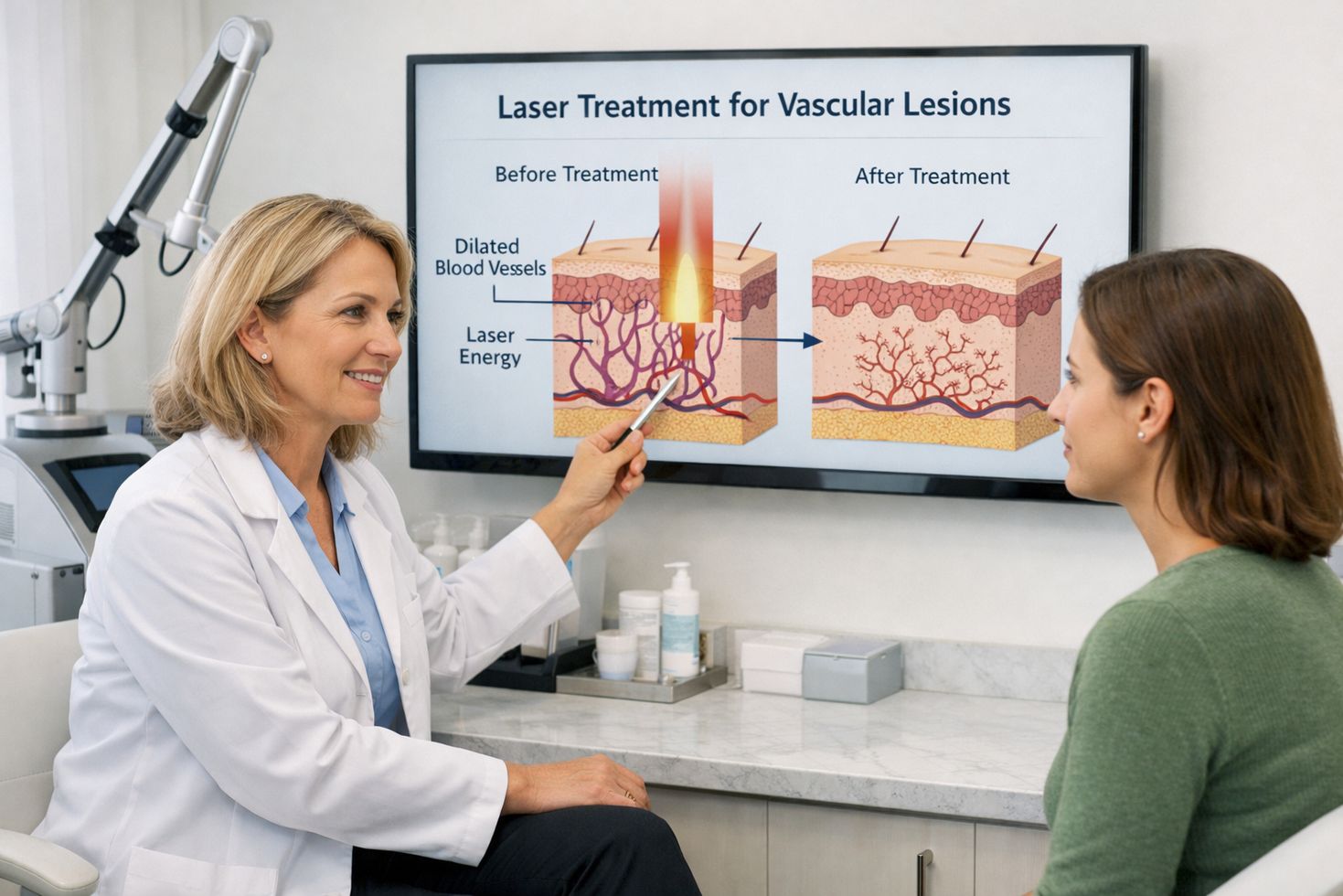
If you are looking into laser for broken capillaries, you are usually trying to improve visible red, blue, or purple vessels that stand out on the face or legs. These marks can be frustrating because they may draw attention even when they are small. In simple terms, vascular lasers use focused light to target certain visible blood vessels beneath the skin. The goal is to reduce their appearance, but not every visible vessel is treated the same way, and not every concern is best addressed with laser alone.
A careful evaluation matters because what people call “broken capillaries” can refer to several different things. Some are tiny facial vessels, some are spider veins, and some may be other small vascular spots that need a different approach. Treatment planning often depends on vessel size, depth, location, skin tone, and overall vein health. That is why a medically grounded assessment is important before deciding what may help.
This guide will walk through what laser may treat, who may be a candidate, what the process is like, what recovery may involve, and when alternatives might make more sense. It will also answer common questions so you can approach treatment with clearer expectations.
What people usually mean by broken capillaries
In everyday conversation, “broken capillaries” is often used as a catch-all term. People may be describing fine facial telangiectasias around the nose or cheeks, small spider veins on the legs, cherry angiomas, or other tiny vascular lesions. They can look similar at first glance, but they do not always respond to the same treatment. Knowing exactly what type of vessel is present helps set realistic expectations about whether laser may be useful and what kind of result may be possible.
What Laser for Broken Capillaries Can Treat
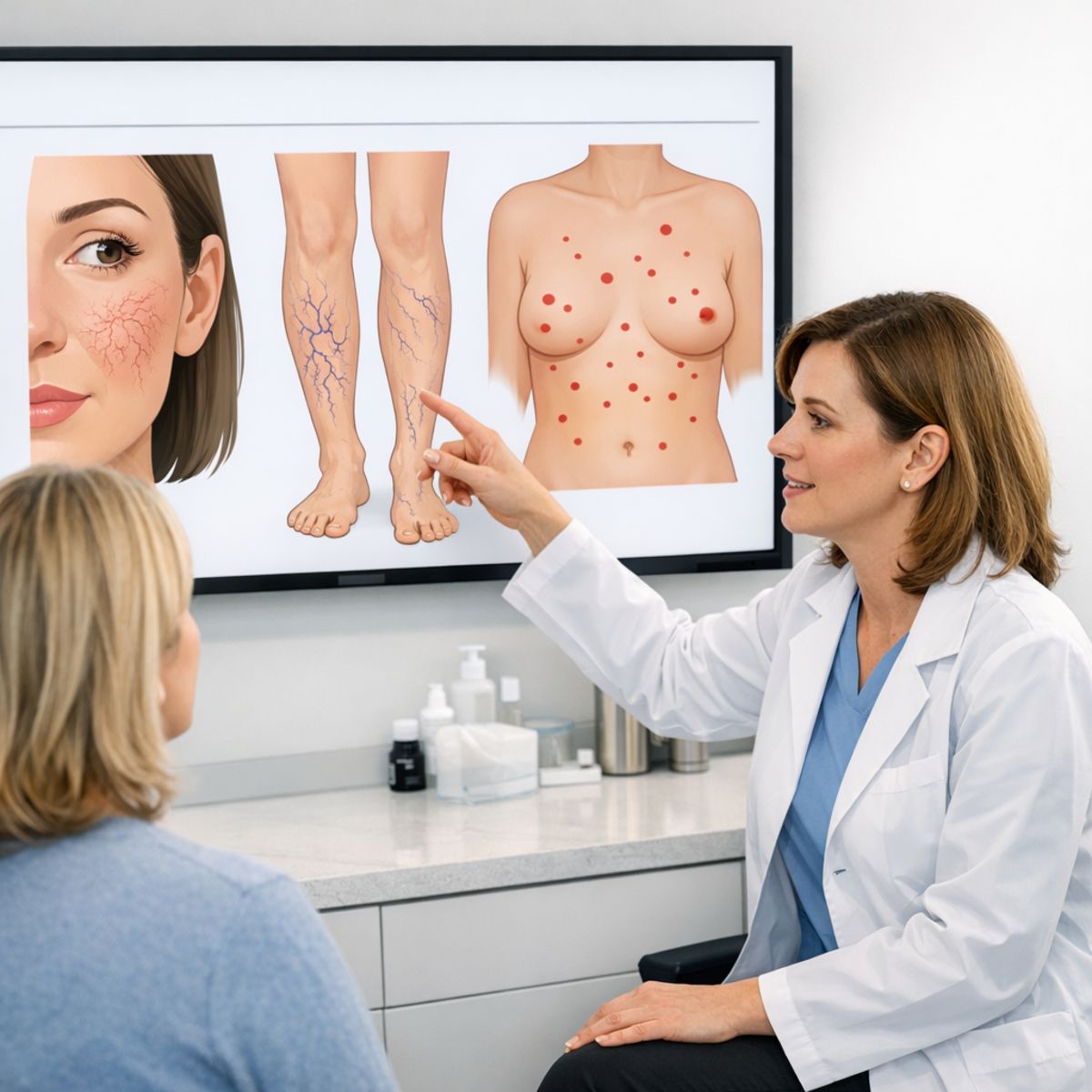
Laser treatment for broken capillaries is most often used for telangiectasias, which are small visible blood vessels close to the skin surface. These may look like fine red lines, tiny branching vessels, or small clusters of redness. In everyday terms, people often notice them around the nose, cheeks, and chin, though some similar surface vessels can also appear on the legs.
A vascular laser targets blood within these superficial vessels so the body can gradually clear them. This is why telangiectasia laser treatment is commonly discussed for facial redness and small broken capillaries. It can also be part of vascular lesions laser treatment for selected benign red lesions, depending on the vessel type, size, and depth.
Facial capillaries vs. leg spider veins
Facial broken capillaries and leg spider veins may look similar at first glance, but they are not always treated the same way. Facial vessels are often very small and close to the surface, which can make them a good fit for laser-based treatment. Leg spider veins can also be superficial, but treatment decisions depend more heavily on vessel diameter, depth, and whether there is underlying venous pressure feeding them.
That distinction matters because some visible leg veins are only part of a bigger vein problem. If a vessel is deeper, larger, or connected to reflux in the veins below the surface, laser alone may not be the best answer. In those cases, a broader vein evaluation may point to other options, including radiofrequency ablation for larger vein issues.
Cherry angiomas and other vascular lesions
Laser may also be considered for cherry angiomas, which are small, bright red vascular growths that often appear on the trunk or other body areas. Patients sometimes search for an angioma removal laser when these spots become more noticeable or cosmetically bothersome. Some other selected vascular lesions may respond as well, but diagnosis comes first because not every red spot is the same.
In short, laser treatment fits best for certain superficial vessels and carefully selected vascular lesions. It is not a one-size-fits-all solution for every visible vein, especially when vessels are larger, deeper, or part of a broader venous condition.
How Vascular Laser Treatment Works
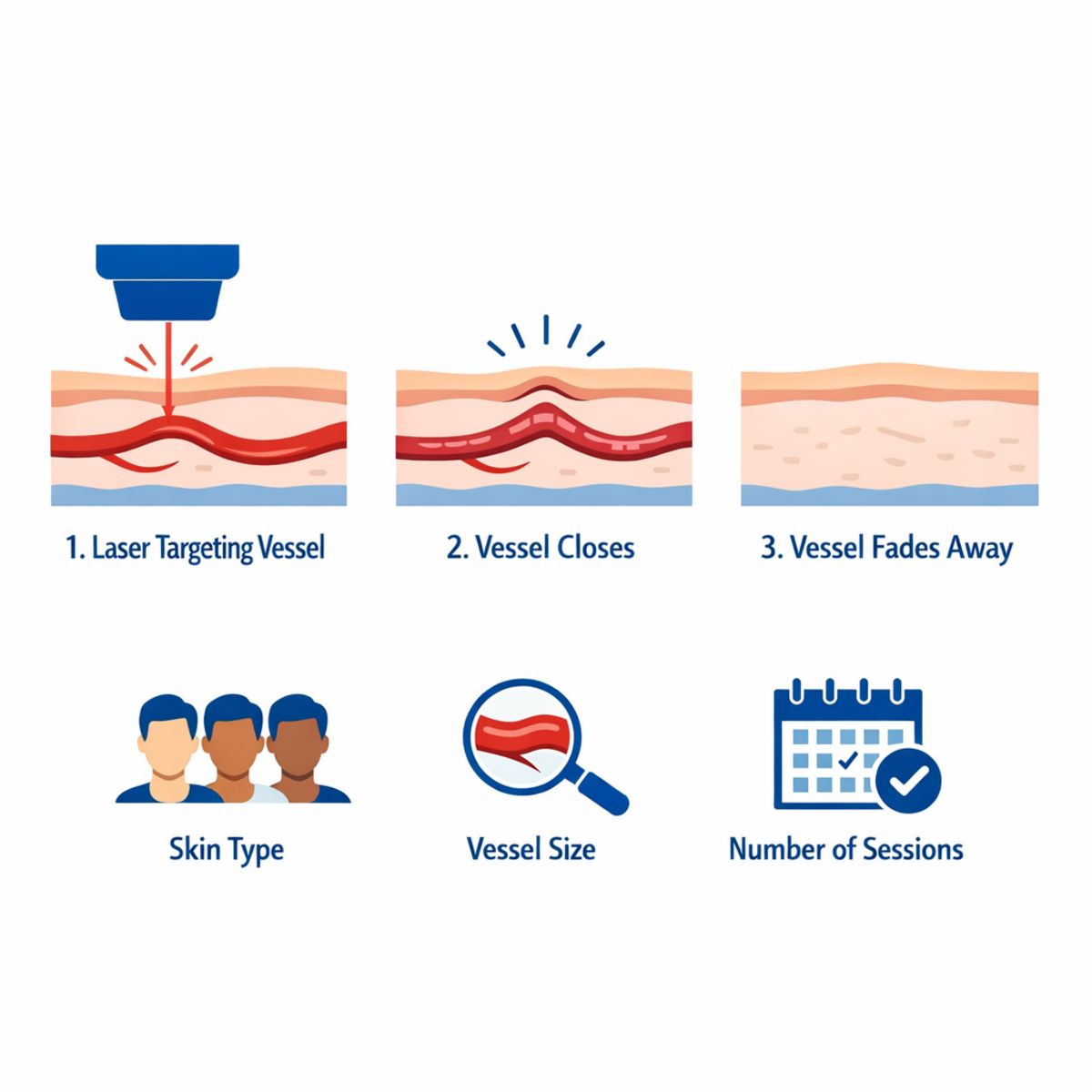
Vascular laser treatment is designed to target visible blood vessels in a precise way. In simple terms, the laser delivers light energy that is absorbed by blood within the selected vessel. That heat can affect the vessel wall so the treated vessel gradually fades over time, while the surrounding skin is intended to be left as undisturbed as possible. This is the basic idea behind many approaches to laser vein removal, although the exact device and settings can vary.
Different lasers use different wavelengths, and that matters because vessels are not all the same. A clinician may choose settings based on the vessel’s color, size, and depth, as well as your skin characteristics and the treatment area. For some deeper or larger vessels, an nd yag laser for vascular lesions may be one option because it can be used for certain vessel types. The best choice depends on the clinical assessment rather than a one-size-fits-all approach.
Comfort and safety are also part of how treatment is planned. Many systems include cooling before, during, or after each pulse, and clinicians can adjust pulse duration, energy, and spot size to balance effectiveness with skin protection and comfort. These adjustments are one reason a personalized treatment plan matters.
Why one person may need more sessions than another
Session count can vary quite a bit. Some people have a small number of superficial vessels, while others have denser networks, deeper vessels, or a larger treatment area. Skin tone considerations may also influence how conservatively settings are chosen. In some cases, visible vessels can also be affected by underlying vein disease, which may change what kind of treatment is appropriate and how much improvement is realistic from laser treatment alone.
It is also important to know that the body clears treated vessels gradually. Results are not always immediate, and more than one session may be recommended to address remaining vessels or to treat them in stages. Because each person heals differently, outcomes and timing can vary.
What treatment usually feels like
Many people describe treatment as a series of quick snapping, stinging, or warming sensations. The feeling is often brief with each pulse, but comfort levels differ from person to person and by treatment area. Cooling methods, careful setting adjustments, and short treatment passes are commonly used to help make the experience more tolerable while supporting safety.
Potential Benefits and Realistic Results
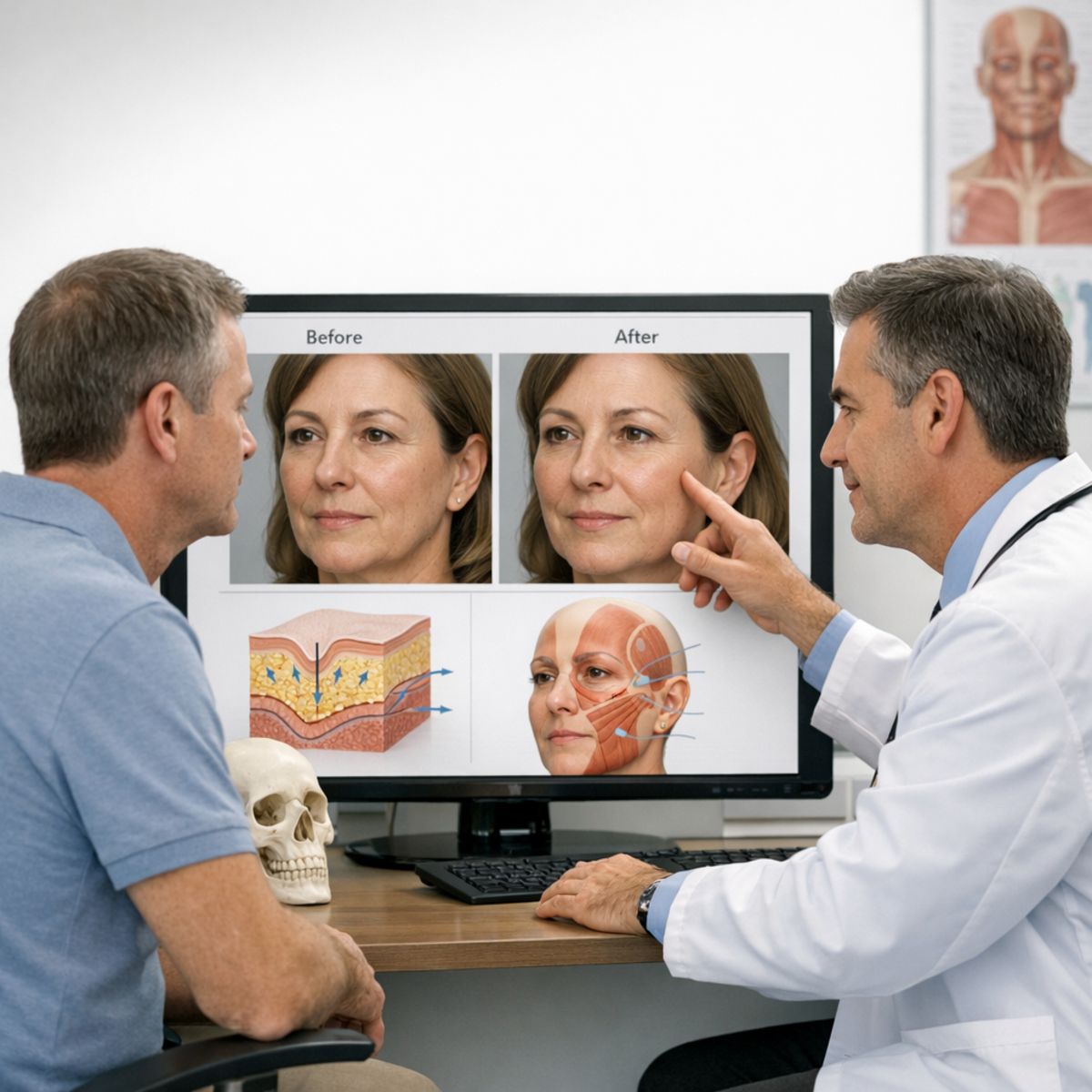
For many patients, treatment can make small visible vessels less noticeable and help the skin look more even overall. In focal areas, some people also appreciate seeing less redness, which may make the treated area feel less distracting in daily life. These changes are often cosmetic in nature, but they can still have a meaningful effect on confidence and comfort with appearance.
That said, results vary. Some vessels respond quickly, while others may fade more gradually over multiple treatments. In some cases, improvement is partial rather than complete, and certain vessels can return or new ones can appear over time. This is one reason laser treatment for spider veins is usually discussed in terms of reduction and improvement rather than permanent removal.
Cosmetic improvement vs. underlying vein health
Treatment goals can differ based on the type of vessel and where it appears. Small facial vessels are often approached as a cosmetic concern, while visible leg veins may sometimes exist alongside broader vein issues that deserve medical evaluation. A clearer surface appearance can be a worthwhile goal, but it is also important to understand whether the visible vessels are part of a larger circulation pattern that may influence outcomes.
Future appearance can also be affected by ongoing triggers such as sun exposure, rosacea, hormones, or venous pressure. For readers learning about supportive measures for leg circulation, compression garments and swelling support basics may provide helpful context. Overall, the best expectation is steady, individualized improvement guided by vessel type, location, and your clinician’s treatment plan.
Laser vs. Other Options for Visible Veins and Vascular Lesions
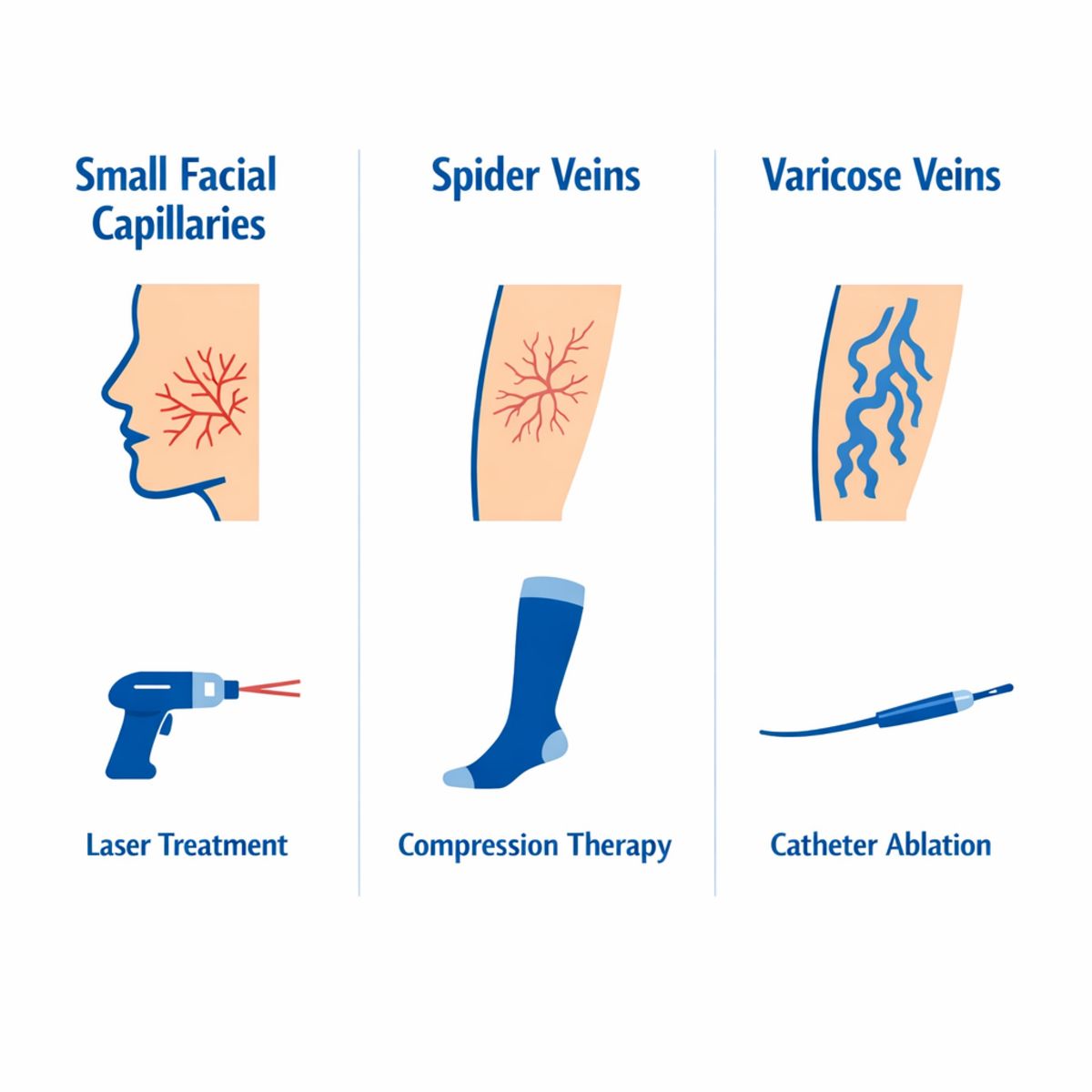
Not every visible vein or vascular mark is treated the same way. Laser can be a useful option for certain small, superficial vessels, including some facial capillaries, spider veins, and selected angiomas. But when veins are larger, symptomatic, or related to underlying venous reflux, a vein specialist may recommend a different path. The right choice depends on anatomy, symptoms, and clinical assessment rather than appearance alone.
A simple way to think about it is this: tiny surface vessels are often evaluated differently from larger leg veins. Laser for spider veins is generally considered for small visible vessels near the skin’s surface. By contrast, conservative support such as compression therapy for varicose vein care may be discussed when leg symptoms like heaviness, swelling, or discomfort are part of the picture. Compression does not remove tiny facial capillaries, but it may help support circulation and symptom management in some leg vein conditions.
When laser may be a better fit
- Small superficial red or purple vessels that are close to the skin
- Selected angiomas or localized vascular spots
- Patients looking for a non-incisional approach for visible surface lesions
- Areas where the concern is primarily cosmetic and not driven by larger vein dysfunction
In these situations, laser may target the visible vessel itself without the need for incisions. That does not mean it is the best answer for every vein concern, only that it may be appropriate when the problem is limited to small surface vessels.
When another treatment may be recommended first
- Larger bulging veins that suggest varicose vein disease rather than tiny capillaries
- Symptoms such as aching, heaviness, swelling, or fatigue in the legs
- Cases where underlying venous insufficiency may need evaluation before cosmetic treatment
- Veins that are too large or too deep for surface laser to be the most practical option
For example, larger refluxing veins are often assessed with a different treatment strategy. A specialist may discuss procedures such as radiofrequency ablation for selected larger veins when the issue involves certain problematic veins beneath the surface. Radiofrequency ablation is generally used for some larger veins and is not the same as treating tiny facial capillaries.
Sclerotherapy may also come up in discussion for some visible leg veins, while compression may be part of symptom support or conservative management. The key point is that treatment selection is individualized. If a recommended option seems different from what you expected, it is often because the clinician is matching the treatment to the vein’s size, location, function, and the symptoms involved.
How to Prepare for Treatment and Support Recovery
A little preparation can make your consultation and treatment day feel more straightforward, and good aftercare can help support a smoother recovery. The exact instructions depend on the treatment area, your skin or vein concerns, and your clinician’s plan, so use the steps below as general guidance rather than a substitute for personalized medical advice.
Before your appointment
-
Arrive ready for an accurate assessment.
If the treatment involves the face or another visible skin area, it may help to arrive with clean skin and minimal products on the area being evaluated. This can make it easier for the clinician to assess tone, texture, vessels, or irritation. -
Share your full history.
Bring up current medications, supplements, recent sun exposure, active skin products, prior cosmetic or vein treatments, and any history of sensitivity, bruising, or slow healing. If you are exploring vein care, describe symptoms such as aching, heaviness, swelling, or visible changes, and mention any previous procedures. -
Be clear about your goals.
Let your clinician know what you want to improve, what concerns you most, and whether you have timing considerations for work, events, or travel. If you are comparing options, you may also want to review educational resources such as this radiofrequency ablation for spider veins overview to better understand how treatment plans can differ. -
Ask practical questions.
Before treatment, ask what you should avoid beforehand, what the expected recovery timeline may look like, and whether you will need to adjust activity, skin care, or sun exposure afterward.
After your session
-
Expect some temporary changes.
Depending on the treatment, mild redness, swelling, tenderness, or sensitivity can be part of the normal short-term recovery process. That does not mean every treatment has the same downtime, and your clinician can give the most realistic expectations for your plan. -
Keep aftercare gentle.
In many cases, gentle skin care and sun protection are common themes after treatment. Avoid adding products or routines your clinician has not cleared, especially if the area feels irritated or sensitive. -
Follow activity guidance for vein treatments.
If you had treatment for leg vessels, ask about walking, exercise, prolonged standing, and whether compression is recommended as part of your specific treatment plan. These details can vary based on the procedure and your symptoms. -
Check in about anything unexpected.
If something seems unusual or more intense than you were told to expect, contact your clinician’s office for guidance instead of trying to self-diagnose. Personalized follow-up is the safest way to understand what is normal for your recovery.
What Affects the Cost of Laser Vein Removal
The cost of laser vein removal can vary from person to person because treatment plans are based on the veins being treated, the size of the area, and the overall goals of care. Rather than relying on a single price point, it is more helpful to understand the factors that commonly influence recommendations.
Common variables include the treatment area, the number and visibility of vessels, the type of laser technology used, and how many sessions may be needed to reach the desired result. Some people are treating a small cluster of surface veins, while others may need a broader plan that addresses multiple areas over time. In some cases, a provider may also recommend a more complete vein evaluation before cosmetic treatment begins, especially if symptoms or underlying vein concerns are present.
It is also important to know that cosmetic vessel treatment may be handled differently from medically necessary vein care depending on the case. Because of these differences, quoting a universal price without clinic-specific information would not be accurate. A consultation helps clarify candidacy, treatment scope, and whether laser vein removal is the right fit for your needs.
Questions to ask during a consultation
To make the most of your visit, consider asking:
- How many sessions are typically expected for my veins?
- What kind of recovery or aftercare should I plan for?
- Am I a good candidate for laser treatment based on my skin and vein type?
- Should any underlying vein issues be evaluated before treatment starts?
Who May Be a Good Candidate and What Risks to Know
Candidacy for vein-related treatment is usually based on several factors, including the type and size of visible vessels, skin characteristics, medical history, and your treatment goals. In many cases, clinically supervised care begins with an evaluation to determine whether a cosmetic concern is isolated or whether it may relate to broader vein health. Outcomes vary from person to person, and the most appropriate next step depends on individual assessment.
It is also important to understand limitations and potential side effects. Temporary redness, swelling, pigment changes, tenderness, or an incomplete response can occur after treatment. Some people may need more than one session, while others may be advised to delay or avoid a procedure based on skin sensitivity, circulation concerns, or other medical considerations. For people also managing leg discomfort, it may help to learn more about compression support for leg swelling concerns as part of a broader conversation about symptoms and support options.
When visible vessels may deserve a deeper vein evaluation
If visible veins are accompanied by aching, heaviness, swelling, or veins that keep returning, it may be worth discussing a more complete vein evaluation with a qualified medical professional. That does not automatically mean something serious is present, but it can help clarify whether treatment should focus only on appearance or also consider underlying vein function. Personalized guidance is the best way to understand candidacy, expected results, and safety considerations.
Frequently Asked Questions
Quick answers to common concerns
Does laser for broken capillaries really work?
It can be very effective for many small visible vessels, especially on the face. Laser for broken capillaries works by targeting the blood vessel so the body can gradually clear it. Results vary by vessel size, depth, skin type, and whether the concern is facial capillaries or leg veins.
How many sessions are usually needed?
Many patients need more than one session. Small facial vessels may improve in fewer treatments, while leg veins often take additional sessions because they can be larger, deeper, or more widespread. Your clinician can estimate a likely treatment plan after examining the area.
Is vascular laser treatment painful?
Most people describe it as brief heat, snapping, or stinging rather than severe pain. Comfort depends on the device used, the treatment area, and your sensitivity. Cooling methods are often used to improve comfort, but some temporary redness, warmth, or swelling can still happen afterward.
Can broken capillaries come back after treatment?
Treated vessels may fade significantly, but new visible capillaries can develop over time. Sun exposure, rosacea, genetics, hormones, and ongoing skin irritation can all contribute to recurrence. Treatment can improve existing vessels, but it does not guarantee that no new ones will appear later.
Is laser for spider veins the same as treatment for larger varicose veins?
No. Small spider veins and facial capillaries may be treated with surface laser in selected cases, but larger varicose veins usually need a different evaluation and treatment approach. If leg veins are bulging, painful, or associated with swelling, a vein assessment may be more appropriate first.
Who should avoid or delay treatment until they are evaluated?
Anyone with active skin infection, a recent tan, certain photosensitizing medications, suspicious skin changes, or uncontrolled medical issues should be assessed first. People who are pregnant, prone to pigment changes, or treating larger symptomatic leg veins may also need a more individualized evaluation before proceeding.
When to Schedule a Consultation
If you are bothered by persistent facial vessels, recurring leg spider veins, or symptoms that may be related to vein health, a consultation can be a helpful next step. An evaluation allows a qualified specialist to review your concerns, examine the affected areas, and discuss whether laser treatment, compression, or another vein treatment may be appropriate for your situation.
Treatment choices depend on your anatomy, symptoms, goals, and medical history. For some people, visible veins are mainly a cosmetic concern. For others, they may be one part of a broader vein issue that deserves closer assessment. Individualized planning helps clarify the safest and most suitable approach.
If you would like guidance tailored to your needs, scheduling a consultation can help you understand your options and next steps.
Key Takeaways on Laser Treatment for Broken Capillaries
The bottom line
Laser treatment can be a helpful option for selected superficial vessels and certain vascular lesions, especially when the concern is cosmetic appearance. At the same time, not every visible vein is treated the same way. Larger veins, deeper vessels, or veins linked to symptoms may need a different kind of evaluation and a different treatment approach.
The most useful next step is a plan based on the specific anatomy involved, whether symptoms are present, and what result you are hoping to achieve. With a clear assessment and realistic expectations, it is possible to choose an approach that is both appropriate and reassuring.